Vermont Insurance Proof at a Trailhead
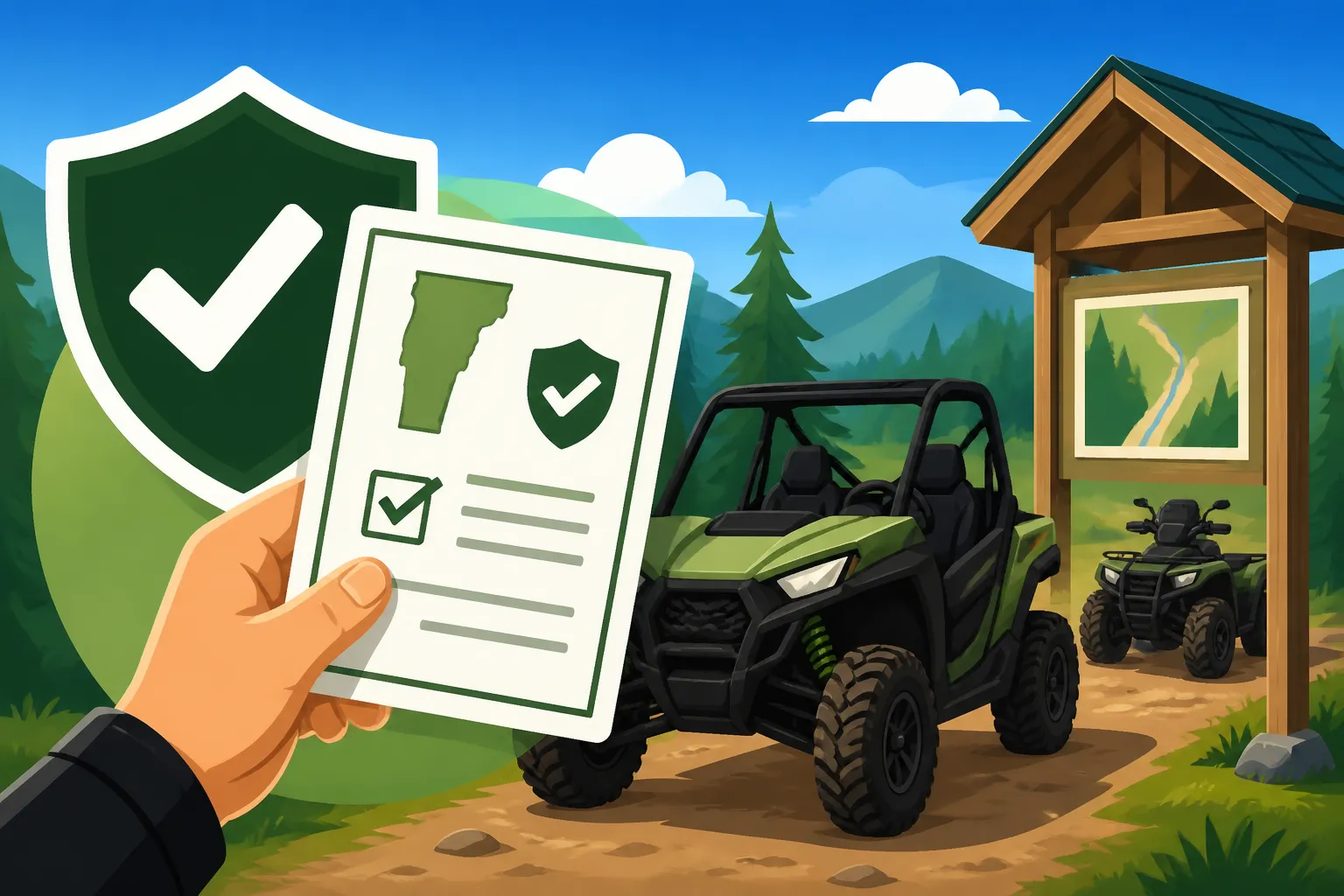
At a Vermont trailhead, registration, a trail access decal and insurance proof are separate things. Having one does not automatically show that you have the others. Before unloading, check that your policy covers the machine you brought, that its dates are current and that you can produce proof without relying on a phone signal.
What to have ready before you ride
Vermont riders should treat proof of insurance as part of their pre-ride paperwork, not as something to sort out after a question comes up. A trailhead may be quiet and unstaffed, but a club representative, warden or other law enforcement officer may still ask to see that the machine is properly covered.
A simple pre-ride set of documents includes:
- Proof of current liability insurance for the machine you are riding
- The machine’s current registration
- The required trail access decal, if you are riding on a trail system that requires one
- Any additional paperwork that applies to your machine or situation, such as rental documents
These items do different jobs. Registration identifies the machine as registered under Vermont’s rules. A trail access decal provides access to the applicable trail system under its requirements. Insurance proof shows that liability coverage is in force. One document should not be used as a substitute for another.
The distinction matters most when a rider has recently bought a machine, switched vehicles, renewed a policy or borrowed someone else’s ATV or UTV. The insurance card in a wallet may be current but may refer to a different machine. A decal may be valid but does not prove that the machine has insurance. And a registration certificate alone does not establish that required liability coverage is active.
For a broad checklist before leaving home, see Vermont Registration Before Your First Ride. If you need to sort out what the state requires for coverage, start with Vermont ATV Insurance Requirements and Vermont Requires ATV Liability Insurance.
Make sure the policy matches the machine
Check the insurance document against the machine’s details. At minimum, the proof should make it reasonably clear that the policy is active and applies to the ATV or UTV you are using. Compare the vehicle description, identification information where shown, policyholder and effective dates.
This is especially important if your household owns more than one machine. A policy card or declarations page for one ATV does not necessarily demonstrate coverage for a side-by-side parked beside it. If the policy covers multiple machines, make sure the documentation you carry makes that clear or contact the insurer for an appropriate proof document.
If you are riding a borrowed machine, do not assume that the owner’s coverage automatically applies to every rider or every use. Ask the owner to confirm the machine is insured and that the policy permits the planned use. If the machine is rented, ask the rental operator who provides liability coverage and what proof should be carried. The answer can depend on the arrangement and policy, so get a clear response before setting out.
Keep the three access documents straight
Think of trail access as a small bundle of separate checks:
| Item | What it generally shows | What it does not replace |
|---|---|---|
| Registration | The machine is registered under the applicable rules | Insurance or a trail access decal |
| Trail access decal | The machine meets the trail system’s access requirement | Registration or liability insurance |
| Insurance proof | Coverage is in force for the machine and period shown | Registration or trail access permission |
The trail access decal requirement is a separate part of riding on Vermont’s organized trail system. Check Vermont Requires Registration Plus a TAD for the relationship between registration and the decal, and Vermont TAD for a Visitor’s Machine if you are visiting with an out-of-state machine. A visitor should not assume that out-of-state registration alone settles every Vermont trail-access requirement.
What insurance proof should show
A useful proof document should be legible and current, and it should connect the policy to the machine being ridden. Depending on the insurer and policy, proof may be an insurance card, an electronic document, a declarations page or another official record. The exact format can vary. Before relying on a digital version, confirm what is accepted for the situation and keep a backup that works without cell service.
Check these details before you leave:
- Policy status. Make sure the policy has not expired, been canceled or been replaced by a new policy with different paperwork.
- Effective dates. Confirm the coverage period includes the day of the ride.
- Named insured. Check whose policy it is and whether the person bringing the machine has permission to use it.
- Machine identification. Match the vehicle description and identifying details shown on the document to the machine.
- Liability coverage. Verify that the policy includes the required liability protection, not just a different kind of coverage such as physical damage.
- Use and location. Review whether the policy covers the type of riding planned, including off-road or trail use, and whether any restrictions apply.
A standard vehicle insurance document should not be assumed to cover an ATV or UTV simply because the same household owns a road vehicle. Likewise, physical damage coverage for theft or repairs is not the same as liability coverage for injury or property damage caused to someone else.
Vermont’s liability requirements and acceptable proof rules can change, so check current official guidance or ask your insurer if you are unsure. The legal minimum is not necessarily the amount that is sensible for your circumstances. A policy with broader limits may offer more protection, but coverage depends on the contract, exclusions and facts of a claim. Do not rely on a summary card alone to answer a detailed question about what the policy covers. Reading Your Policy Before the Season can help frame what to verify with the insurer.
Electronic proof and a paper backup
A digital insurance card can be convenient, but a trail ride may take you beyond reliable service. Save the document to your phone so it is available offline, and make sure the screen is usable if you need to show it. A screenshot can help with access, but it may not show an update if the policy has changed since the image was saved. Refresh the record after renewal or any change to the policy.
A paper copy is a practical backup. Keep it in a protected spot, separate from anything likely to get soaked, crushed or covered in mud. A small waterproof document pouch can keep paperwork readable; riders may find options through ordinary retailers, including Amazon, but a basic sealed pouch works just as well if it keeps the documents dry and accessible.
Do not place the only copy somewhere difficult to reach or where it could be lost if the machine tips. Keep proof protected, but close enough to produce when asked. If your phone contains personal or account information beyond the insurance card, open the insurance document before you arrive at the trailhead and avoid sharing unrelated information.
What may happen at a trailhead or on the trail
Not every trailhead has a staffed check-in, and the absence of a person at the entrance is not proof that paperwork will not be checked. A club trail system can have access rules, while enforcement may occur at another point on the route. A rider should be prepared to show current documents wherever a valid check takes place.
A request may be straightforward: identify the machine, show its registration and provide the requested insurance evidence. If the documents are clear and match the machine, the interaction is usually easier to resolve. If the paperwork is missing, expired or for a different vehicle, the rider may have to stop and clarify the situation rather than continue as planned.
A trail access decal check is not the same as an insurance check. A decal can show that the machine has met a trail access requirement, but it does not prove liability coverage. Similarly, showing insurance does not authorize riding on a closed or unauthorized route. Keep your decal and paperwork visible where required, and be prepared to present insurance proof separately.
For a better sense of what a trail-side check may involve, see What a Trail Warden Checks. The specific circumstances matter: the person checking may be verifying different requirements, and you should answer the question asked rather than assume one document satisfies every part of the check.
If the document is missing or does not match
If you notice a problem before unloading, pause and resolve it before riding. Contact the policyholder or insurer to obtain current proof and confirm that the machine and intended use are covered. If the policy was recently renewed, ask for updated documentation rather than relying on a card with old dates.
If a document is missing while you are already at the trailhead, do not assume that a verbal assurance or an old image will be enough. Contact the insurer for a current record and ask what form of proof is acceptable. If you cannot verify that required coverage is active, the safer choice is not to ride until the issue is resolved.
If the proof names a different machine, have the insurer clarify whether that machine is included on the policy and provide evidence that accurately reflects the coverage. Avoid trying to explain away a mismatch by pointing to a similar model or another machine owned by the same person. The document should support the specific machine being used.
If coverage is in another person’s name, make sure you have permission to ride and understand any restrictions. The policyholder may need to be involved in confirming coverage. A family relationship or informal borrowing arrangement does not, by itself, answer what a particular policy covers.
A practical insurance-proof routine
A short routine can prevent the common mistakes: a lapsed policy, a paper card left in another vehicle, or proof that covers a machine that stayed home.
Before the trip
- Confirm the policy is active and includes the machine you intend to ride.
- Check that the planned use is not excluded or restricted by the policy.
- Save or print current proof showing the relevant coverage period.
- Compare the machine information on the document with the ATV or UTV.
- Put the insurance proof with the registration, but keep the two documents distinguishable.
- Check that the machine has the required trail access decal for the trail system.
- If you are borrowing or renting, ask who carries the insurance and what proof should be available.
A policy can change after a renewal, vehicle replacement or ownership change. When any of those happens, update the document you carry. Do not keep an old insurance card in your riding kit and assume the insurer’s records will automatically appear on your phone.
At the trailhead
Before starting out, confirm that you have the machine you planned to ride and the paperwork for that exact machine. Make sure the phone copy opens offline, if that is the version you plan to use, and that the paper backup is dry and readable. Keep the registration and proof of insurance somewhere you can retrieve them without unloading the entire machine.
If you are leading a group, remind each rider to check their own machine’s documents. One person’s insurance proof does not establish coverage for every ATV or UTV in the group. The same goes for registration and trail access decals: each machine should meet the requirements that apply to it.
During the ride
Keep documents protected and avoid leaving originals loose in a storage box where water, vibration or mud could damage them. If you carry digital proof, keep enough phone battery for the ride and consider that remote areas may have little or no service. An offline copy and a paper backup reduce the chance that a dead battery or poor signal turns a simple request into a delay.
Carry only what is needed for the check and protect personal information. A proof card or relevant page is generally more useful than handing over access to an entire email account or insurance portal. If an officer or authorized representative needs additional information, follow the request and contact the insurer when necessary.
After a policy change
When a policy renews, a machine is added or removed, or the named insured changes, replace old proof in your riding kit. If you sell a machine, buy another one or transfer registration, do not assume the insurance updates automatically. Confirm the effective date and vehicle details with the insurer, then save the revised document.
This is also a good time to confirm that registration and trail access records still line up with the machine. Why Your Policy Must Name the Machine You Ride explains why matching the insurance record to the vehicle is important. For registration questions after a purchase or other change, see Vermont Registration Paperwork Checklist.
The best trailhead preparation is straightforward: carry current proof that actually matches the machine, keep it accessible offline, and treat insurance, registration and trail access as separate requirements. If any detail is uncertain, ask the insurer or check the applicable Vermont and trail-system rules before riding.
Disclaimer
This article is for general informational purposes only and does not constitute professional advice. Laws, prices and regulations vary by location and change over time. Consult a qualified professional for guidance on your specific situation.