Registration Mistakes Vermont Clerks See
Vermont Department of Motor Vehicles clerks explain frequent ATV and UTV registration paperwork mistakes that delay trail access.
Start here, or nothing else is legal.
Resident registration, titling and renewal, and public-use versus private-land fees — plus the age and safety-course rules that decide who may ride.
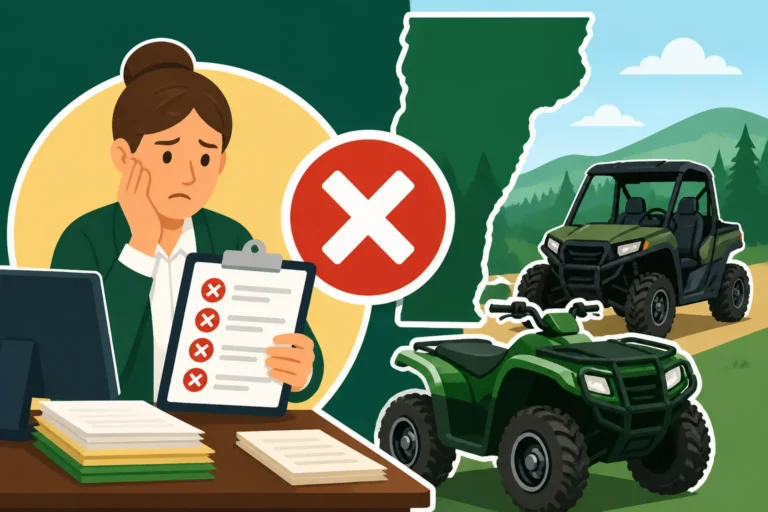
Vermont Department of Motor Vehicles clerks explain frequent ATV and UTV registration paperwork mistakes that delay trail access.
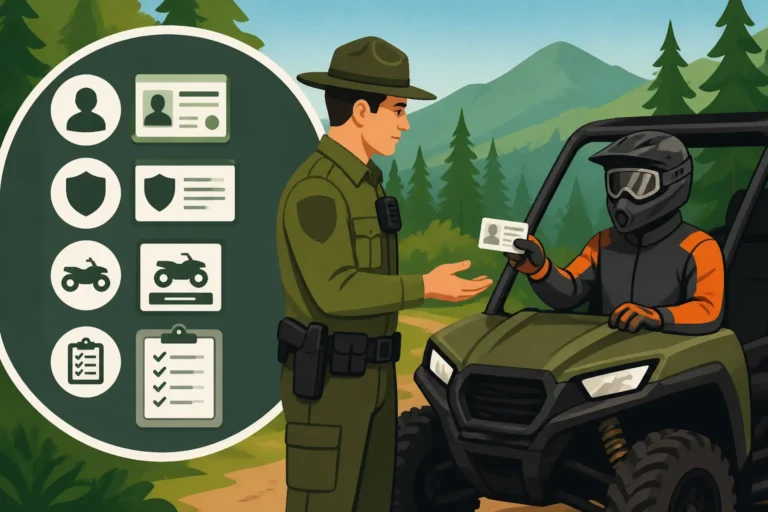
Vermont ATV regulations detail the exact documents, registration certificates, and trail access decals wardens may request during stops.
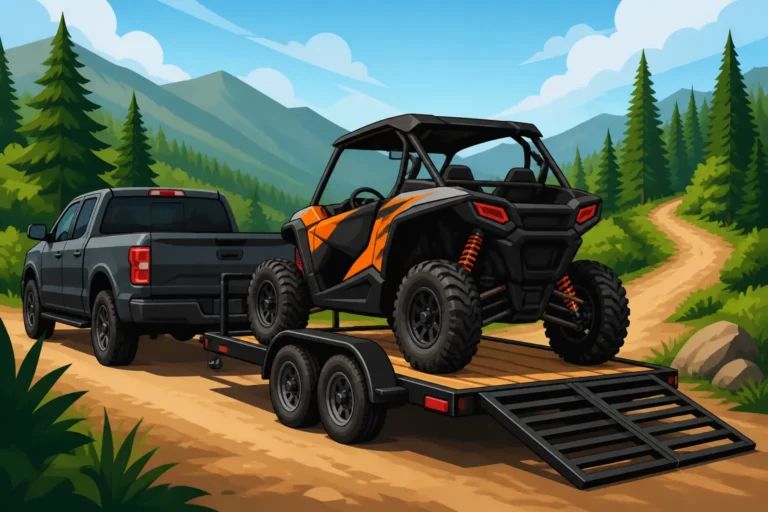
Hauling an ATV or UTV in Vermont requires matching tow capacities, checking trailer conditions, and performing pre-trip inspections.
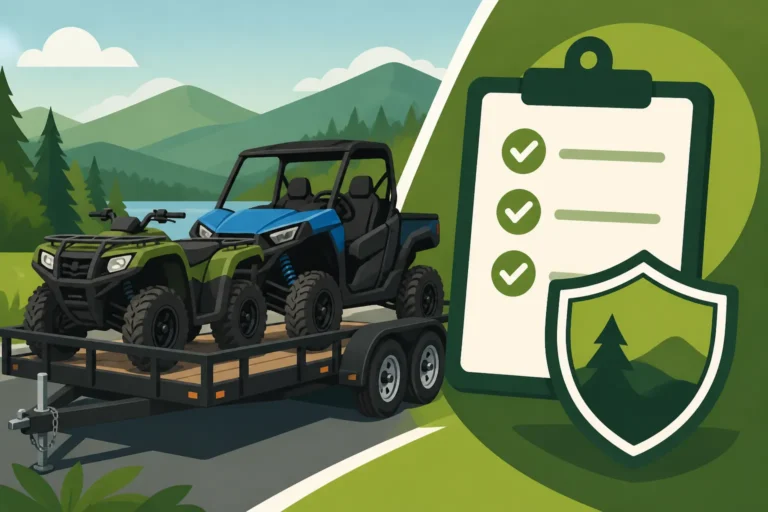
Vermont law requires separate registration for ATV and UTV trailers, preventing costly fines and roadside stops during transport.

Vermont registration rules for electric ATVs and UTVs based on dry weight, vehicle width, and low-pressure tires.
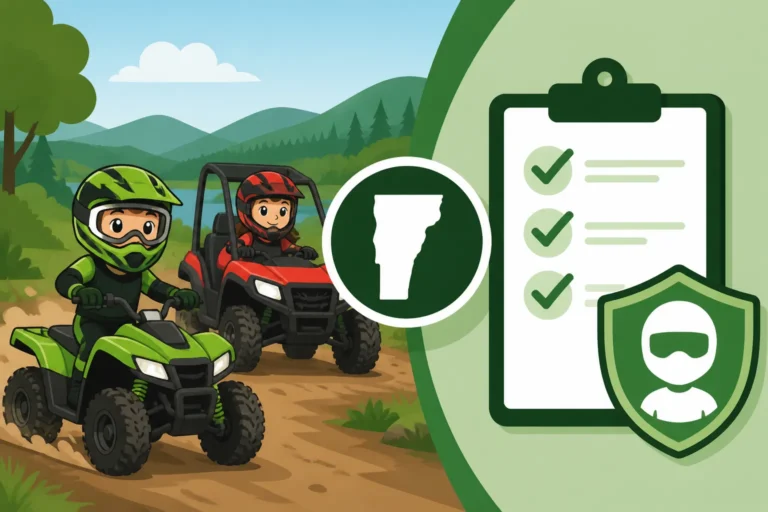
Vermont youth ATV registration rules require mini quads under seventy-two inches wide and twenty-five hundred pounds to have DMV plates.
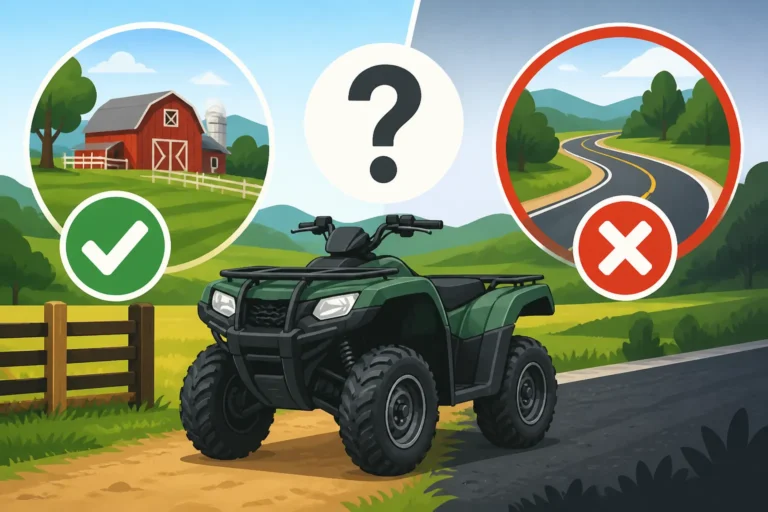
Vermont registration rules for a farm-use ATV, where operating anywhere beyond your own private property, even a neighbor’s field, almost certainly requires it.
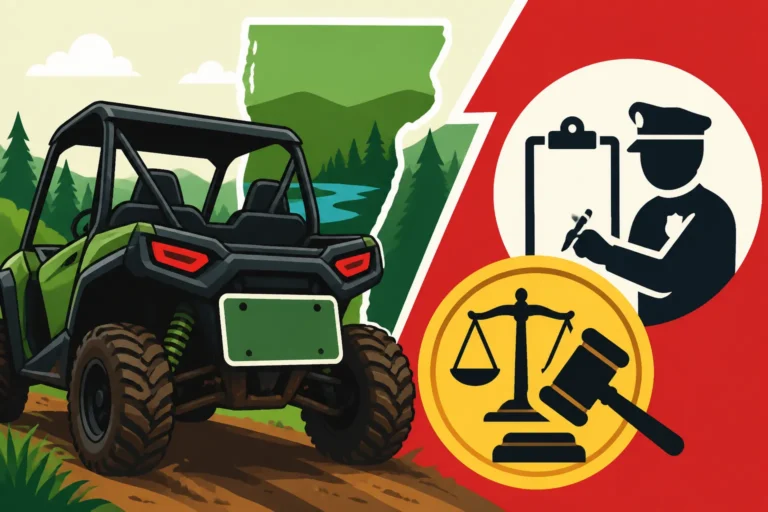
Vermont ATV registration penalties and fines for riding with an expired plate, plus towing and impoundment rules.
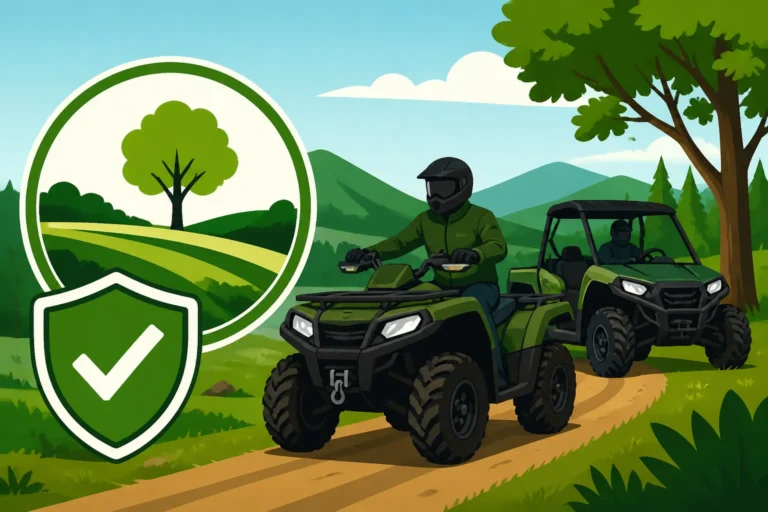
Vermont ATV registration laws require registration even on private land, with very narrow exceptions for farming or isolated use.
A lapsed Vermont ATV registration brings legal fines, loss of VASA trail access, and invalid insurance coverage for riders.