Hauling a Machine to a Trailhead
There’s nothing quite like the anticipation of a day on Vermont’s trails, but that excitement can quickly turn to frustration if you’re not properly prepared to get your machine there. Hauling an ATV or UTV to a trailhead in the Green Mountain State involves more than just throwing it on a trailer and hitting the road; it requires careful planning, adherence to specific regulations, and smart execution to ensure safety for everyone. This guide will walk you through everything you need to know, from preparing your rig to arriving smoothly at your chosen trailhead, helping you avoid common headaches and get to the fun faster.
Preparing Your ATV or UTV and Tow Vehicle for the Journey
Before you even think about loading up, a little preparation goes a long way. Many riders underestimate the importance of ensuring their tow vehicle, trailer, and ATV or UTV are all in prime condition for the journey. Neglecting these steps can lead to breakdowns, unsafe situations on the road, or even legal troubles, none of which you want when all you're trying to do is enjoy a ride.
Matching Your Tow Vehicle and Trailer to Your Machine
One of the biggest mistakes folks make is assuming any truck or SUV can pull any ATV or UTV on any trailer. The reality is far more nuanced. You need to consider the weight of your machine, the weight of your trailer, and any gear you're bringing along. Your tow vehicle has a specific towing capacity – that maximum weight it can safely pull – and exceeding it isn't just risky, it's dangerous. You risk damaging your vehicle, losing control, and putting yourself and others on the road at serious risk.
Think about the terrain you’ll be covering in Vermont. Are you sticking to flat, paved highways, or will you be navigating winding, hilly backroads to reach a remote trailhead? A heavier machine or multiple machines demand a more robust tow vehicle with adequate horsepower and torque, and a trailer with strong brakes. Always check your vehicle’s owner’s manual for its specific towing limits, and make sure your trailer’s gross vehicle weight rating (GVWR) is sufficient for your load. Don't forget to account for the weight of your fuel, tools, and riding gear, too!
Consider the type of trailer as well. An open utility trailer is common, but an enclosed trailer offers protection from the elements and added security. Ramp style, deck height, and the number of axles all play a role in how easy and safe it is to load, haul, and unload your ATV or UTV. Making sure your trailer's tires are properly inflated and in good condition is also critical; a flat trailer tire miles from a service station is a frustrating way to start your day.
Essential Pre-Trip Inspections and Maintenance
Just like you check your ATV before a ride, your tow rig needs a thorough once-over before you head out. This isn't just about preventing a breakdown; it's about ensuring everything works as it should, preventing a potential accident. Start with your tow vehicle: check your oil, coolant, brake fluid, and tire pressure (including your spare!). Make sure your headlights, taillights, and turn signals are all fully functional.
Next, move to your trailer. Inspect the tires for proper inflation, tread wear, and any signs of cracking or damage. Test all trailer lights – running lights, brake lights, and turn signals – to ensure they synchronize correctly with your tow vehicle. A faulty brake light on a trailer is a major hazard, especially on Vermont's often-dark rural roads. Check the hitch connection for any play or looseness, and ensure the safety chains are securely crossed and attached to your tow vehicle. Many a harrowing tale begins with a loose hitch pin.
Finally, give your ATV or UTV a quick look-over. Are all fluid levels good? Is the battery secure? Are there any obvious leaks? While this guide focuses on the haul, ensuring your machine itself is ready means one less thing to worry about when you finally get it off the trailer and on the trail. A well-maintained machine is a safer machine, both on the trailer and off.
Required Documentation for Your Machine and Tow Setup
Getting stopped by law enforcement for a routine check, or worse, after an accident, can quickly turn a fun outing into a major headache if you don't have your paperwork in order. Vermont, like any state, has specific requirements for vehicles, trailers, and the machines they transport. Make sure you have your tow vehicle's registration and proof of insurance readily accessible. Don't forget your driver's license, too!
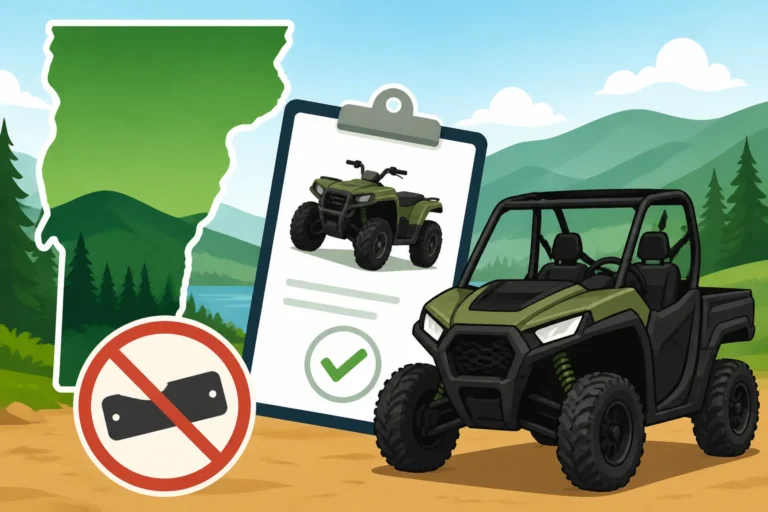
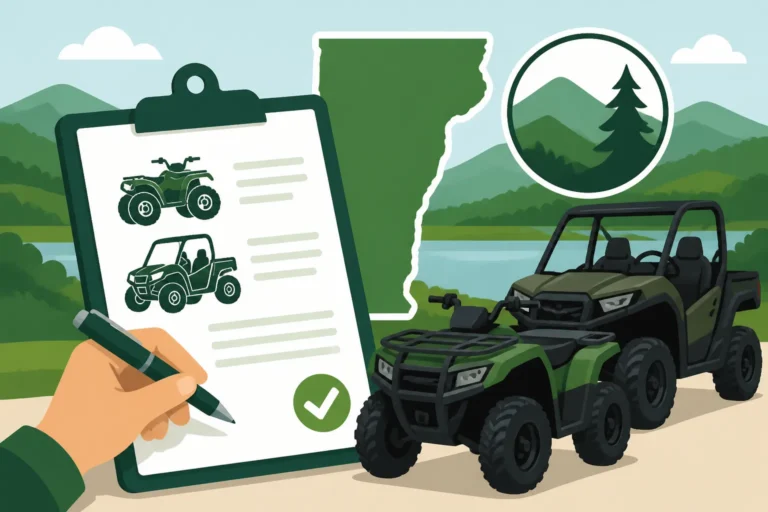
For your ATV or UTV, you'll need to carry proof of its Vermont registration. This usually comes in the form of a physical registration certificate. If you're riding on the VASA trail system, you'll also need a valid Trail Access Decal (TAD) affixed to your machine. [Vermont Requires Registration Plus a TAD]. For those new to the state or just purchased a machine, it’s worth reviewing [How to Register an ATV in Vermont] and knowing what documentation you need.
In some situations, especially if you're borrowing a machine or recently bought it in a private sale, having a bill of sale or other proof of ownership can be incredibly helpful. While not always legally required to be carried on the machine, it provides peace of mind. Services like LawDepot can assist in generating clear, legally sound documents like a bill of sale, which can be invaluable in proving legitimate ownership if questions arise. Always be prepared to show that your machine is legally yours and properly registered, especially if you're traveling a long distance to a trailhead.
Mastering Safe Loading and Securement Techniques
Once your vehicles are prepped, the next crucial step is getting your ATV or UTV onto the trailer and keeping it there. This might seem straightforward, but improper loading and securing are common causes of accidents and can put your expensive machine at risk. Don't let gravity or centrifugal force win the battle against your tie-downs.
Loading Your ATV or UTV Onto the Trailer Safely
Before you even think about driving up the ramps, make sure your trailer is properly hitched to your tow vehicle and the parking brake is engaged on the tow vehicle. This prevents the trailer from shifting or separating during loading, a frightening scenario that can cause serious injury or damage. Choose a level surface, if possible, for loading. Ramps should be securely fastened to the trailer and positioned appropriately for your machine's width.
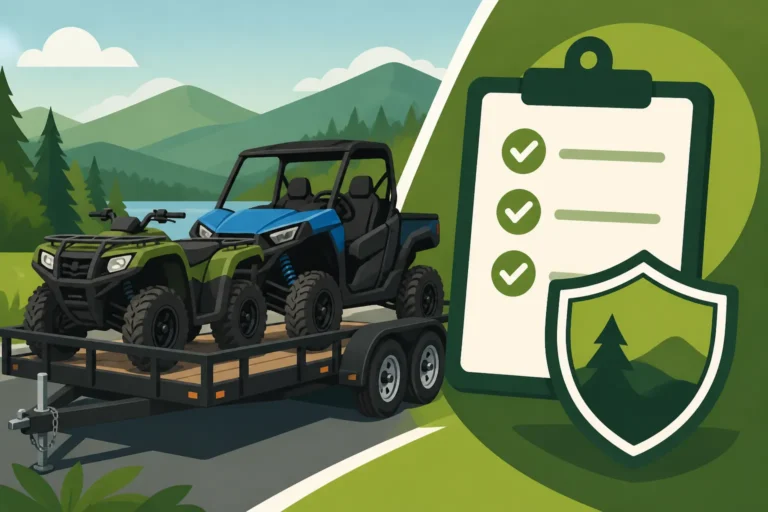
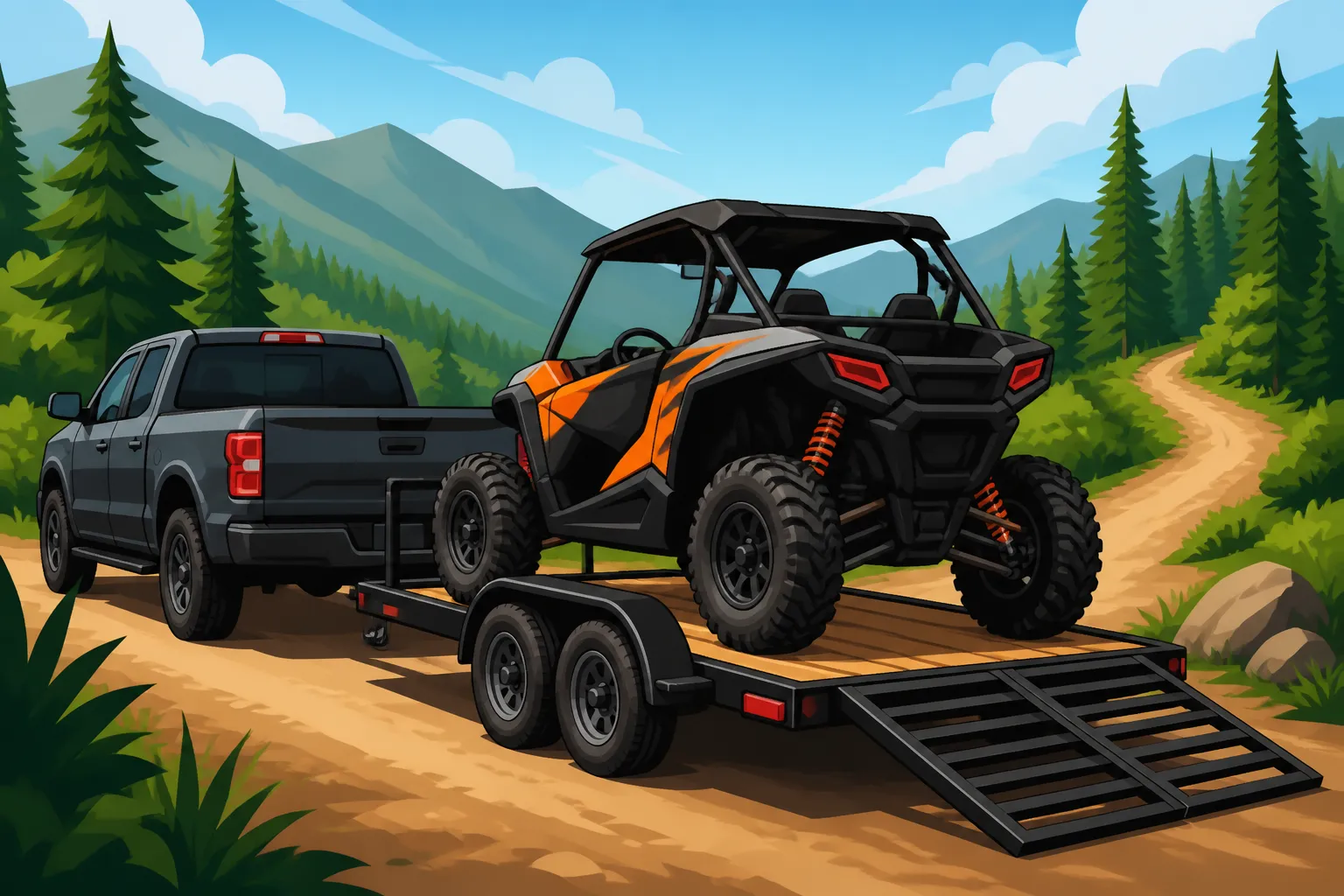
When driving your ATV or UTV onto the trailer, go slowly and steadily. Avoid sudden bursts of speed, which can cause the machine to lurch or even tip. Keep an eye on your mirrors, or, even better, have a spotter guide you if you’re loading a larger UTV or doing it solo for the first time. Once on the trailer, position the machine to achieve proper weight distribution. Generally, about 60% of the weight should be in the front half of the trailer (over or slightly forward of the axle for single-axle trailers, or evenly distributed between axles for tandem). This helps prevent trailer sway, a dangerous condition that can lead to loss of control.
If you’re loading multiple machines, consider their combined weight and how they affect the balance. Smaller machines or youth quads might go towards the back, while heavier side-by-sides should be centered. Never overload your trailer, and always double-check that your machine isn't exceeding the width limits for your specific trailer or for general road legalities.
Securing Your Machine for Vermont's Roads
This is where many riders get complacent, often leading to machines shifting, straps coming loose, or even machines falling off the trailer entirely. The key is to use enough straps, good quality straps, and secure them correctly. Invest in heavy-duty ratchet straps with a high working load limit (WLL) that exceeds the weight of your machine. Avoid using cheap bungee cords or worn-out straps; they're not worth the risk.
Attach straps to sturdy points on your ATV or UTV's frame – not to suspension components or plastic bodywork that could bend, break, or compress. Aim for at least four points of contact: one at each corner, pulling outwards and downwards. This creates tension in multiple directions, effectively "locking" the machine in place. Some riders also like to put the ATV/UTV in gear and engage the parking brake as an extra measure, but the straps are your primary security. As you tighten the straps, ensure the suspension is compressed a bit, but don't over-tighten to the point of damaging components.
After you've secured everything, give each strap a good tug to ensure it's tight. Walk around the trailer and visually inspect all attachment points. It's a good habit to stop after driving a short distance (5-10 miles) and recheck all straps. Road vibrations can sometimes loosen them, especially on Vermont's less-than-perfect roads. Better to spend a few minutes re-tightening than discover a loose machine miles down the highway. Don't forget about securing any loose gear or tools you have with you, preventing them from flying off the trailer. [Vermont Rules for Towing a Trailer] often emphasize general safety and secure loads.
Driving with a Trailer: Tips for Vermont's Terrain
Driving with a trailer is a different beast than driving solo, and Vermont's unique landscape presents its own set of challenges. The state is known for its rolling hills, winding roads, and sometimes narrow lanes. You'll need to adjust your driving style significantly to account for the added weight and length of your rig. This means slower speeds, especially around corners and on downhill grades, and much larger following distances.
Braking is one of the most critical adjustments. The added weight of your trailer and machine will dramatically increase your stopping distance. Always anticipate stops well in advance, and if your trailer has its own braking system, ensure it's properly adjusted and functioning. When descending long hills, downshift your tow vehicle to use engine braking, which helps prevent your brakes from overheating and fading. This is particularly important on some of Vermont's steeper mountain passes.
Turns and backing up also require more attention. Take wider turns to prevent your trailer wheels from clipping curbs or other obstacles. Backing up with a trailer is an art form; practice in an empty parking lot if you're not confident. Use your mirrors constantly, and if you have a spotter, communicate clearly. Remember, patience is your best friend when driving with a trailer. Rushing can lead to mistakes, and mistakes with a heavy load can be very costly.
Navigating Vermont's Rules and Trailhead Logistics
You've successfully hauled your machine, but the journey isn't quite over. Understanding Vermont's regulations for ATVs and trailers, and knowing how to navigate trailheads, will ensure your day starts and ends smoothly.
Understanding Vermont's ATV and Trailer Regulations
Vermont has specific rules that apply not only to riding your ATV or UTV but also to how you transport it on public roads. First and foremost, your ATV or UTV needs to be registered with the Vermont DMV if you plan to ride it anywhere other than your own private property. This also means you'll have a physical plate that needs to be mounted correctly, typically on the rear of your machine. [Vermont Plate Mounted on the Rear] is generally the rule.
Additionally, Vermont requires ATV owners to carry liability insurance. This isn't just a good idea for personal protection; it's a legal requirement before you can register and ride your machine. Make sure your policy meets the state's minimum coverage limits. [Vermont ATV Insurance Requirements] are pretty clear on this front, and failing to meet them can result in fines and other penalties. It’s also crucial to remember that while your machine is on a trailer, your auto insurance policy typically covers the trailer itself and any damage it causes, but the ATV/UTV on the trailer usually falls under its own policy. Verify this with your insurance provider to avoid surprises.
For the trailer itself, if it meets certain weight criteria (typically over 1,500 pounds empty weight), it will also need to be registered in Vermont, even if it's only used for hauling an ATV. Always carry the registration papers for your trailer, just as you would for your tow vehicle. Different rules apply to commercial operations or rental fleets, but for the average enthusiast, these are the main points. Keep all your documentation organized in a waterproof bag in your tow vehicle. A service like LawDepot can also help you understand and prepare various legal forms, including powers of attorney if you're transporting a machine for someone else, which can be useful when dealing with officials.
Finding and Using Trailheads with Trailer Parking
One of the biggest frustrations for ATV and UTV riders in Vermont is finding adequate parking for their truck and trailer at a trailhead. Not all trail access points are created equal, and some smaller, more informal trailheads might have very limited space, making it nearly impossible to turn around a truck with a long trailer. This is why advance planning is absolutely critical.
Before you leave home, consult VASA (Vermont ATV Sportsman’s Association) trail maps or contact local ATV clubs to identify designated trailheads. These official access points are usually designed to accommodate trucks with trailers, often featuring large gravel lots and clear signage. Many communities, especially in the Northeast Kingdom, have embraced ATV tourism and have made significant efforts to provide rider-friendly amenities. [Vermont Trailheads With Trailer Parking] are becoming more common, but they're not everywhere.
When you arrive at a trailhead, pay attention to any posted signs regarding parking regulations, hours of operation, or specific rules for trailers. Park considerately, taking up only the necessary space and ensuring you don't block access for other users or emergency vehicles. Remember, maintaining good relationships with landowners and local communities is vital for the continued access to these trails, and considerate parking is a big part of that. Avoid parking on private land without explicit permission, even if it looks like an unused space.
Unloading, Staging, and Trailhead Etiquette
You've made it! Now it's time to unload and get ready to ride. Just as with loading, safety and courtesy are paramount here. Find a safe, level spot within the designated trailhead area to unload your machine. Take your time undoing the straps, making sure they're completely free before you start to move your ATV or UTV. Rushing can lead to straps getting tangled in wheels or suspension, potentially damaging your machine or causing a fall.
Once your machine is off the trailer, move your truck and trailer to its designated parking spot. Don't leave your rig in the unloading area, especially at busy trailheads, as this can create bottlenecks and frustrate other riders. Many trailheads have separate areas for staging and parking. Keep your machine idling quietly, or better yet, turn it off if you’re going to be gearing up for a while. Loud noise can disturb nearby residents or wildlife, and we want to be good neighbors to everyone in Vermont.
Before hitting the trail, take a moment to double-check your registration, TAD, and insurance paperwork on your person or secured in your machine. Take a final look at your gear – helmet, eye protection, appropriate clothing – and ensure everything is secure. Be mindful of others at the trailhead; a friendly wave and a respectful attitude go a long way in fostering a positive riding community. Remember that [Vermont Trail Etiquette on Private Land] and public corridors is crucial for keeping our trails open. Following these steps ensures your trail adventure begins and ends safely and respectfully, setting the stage for an unforgettable ride through Vermont's beautiful landscapes.
Disclaimer
This article is for general informational purposes only and does not constitute professional advice. Laws, prices and regulations vary by location and change over time. Consult a qualified professional for guidance on your specific situation.