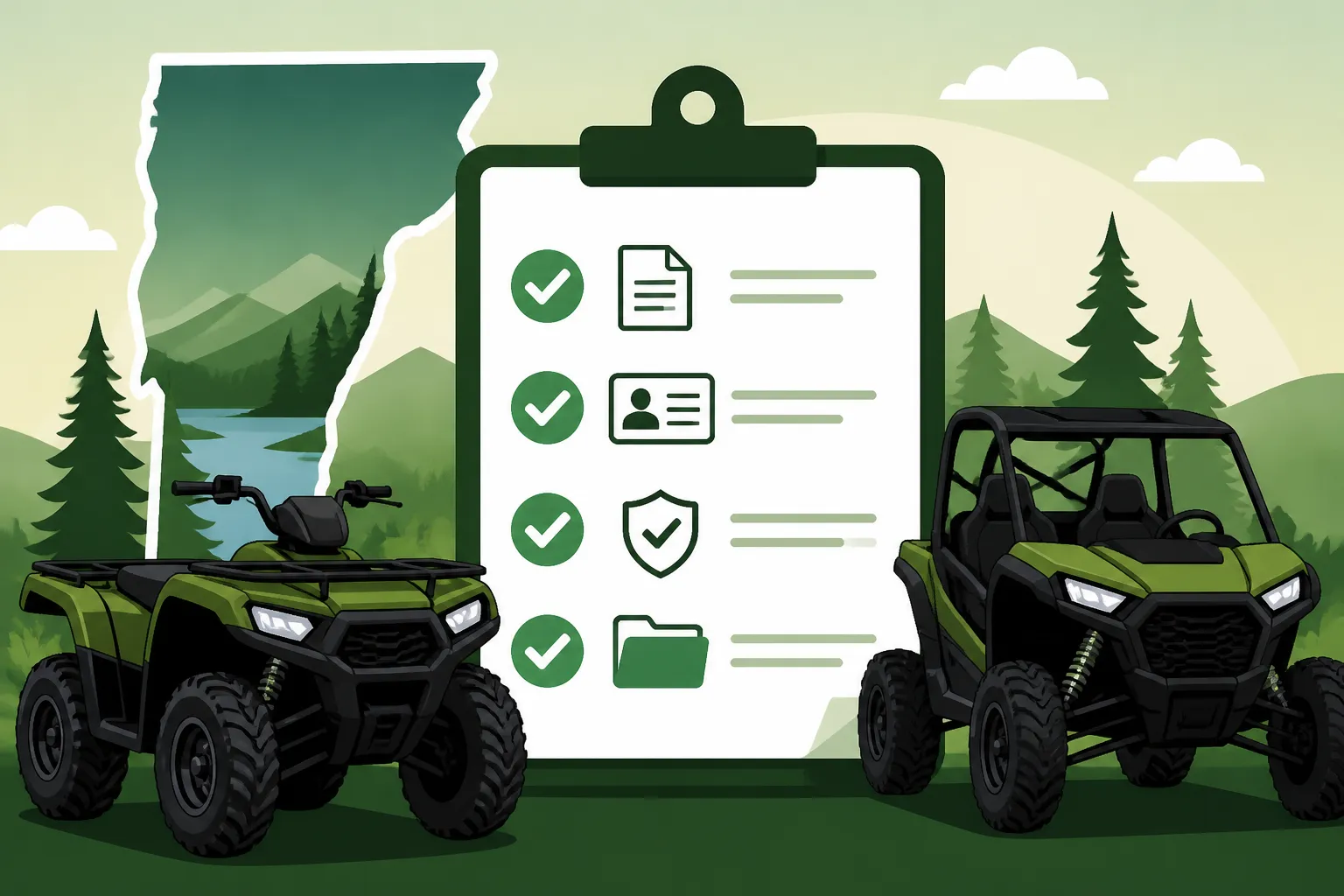
Vermont Registration Paperwork Checklist
Facing the mountain of paperwork to register your ATV or UTV in Vermont can feel like trying to find a specific leaf in a forest – daunting, confusing, and prone to making you want to just give up and go home. But don't worry, friend, you're not alone in feeling overwhelmed. This guide is going to meticulously break down every piece of documentation you could possibly need, helping you gather everything so your visit to the Vermont DMV is as smooth as a freshly groomed trail.
Understanding the Vermont DMV's Requirements for Registration
When you're looking to get your ATV or UTV registered in the Green Mountain State, the Vermont Department of Motor Vehicles (DMV) isn't just looking for your enthusiasm for off-roading. They have a very specific checklist of items they need to see to ensure everything is above board. It’s not about making things difficult; it’s about maintaining order, proving ownership, and making sure everyone pays their fair share, especially when it comes to the [Vermont Purchase and Use Tax on an ATV].
The core idea behind all these requirements is straightforward: the state wants to verify who you are, what machine you own, how you acquired it, and that any applicable taxes or fees have been handled. Think of it as building a legal story for your machine, from its origin to its new home with you. Without this clear narrative, supported by documents, the DMV can't issue you that coveted Vermont registration plate. Many people get frustrated when they arrive at the DMV counter, only to find they're missing one crucial piece. It can feel like a waste of a morning, but with a little preparation, you can avoid that disappointment entirely.
Why Proof of Ownership is Paramount
At the heart of every vehicle registration process, whether it's a car, truck, or an ATV, is the undeniable proof of ownership. The Vermont DMV needs to be absolutely certain that you are the legal and rightful owner of the all-terrain vehicle you're trying to register. This isn't just a formality; it prevents theft, disputes, and ensures that the state can accurately track who is responsible for which machine. Without solid proof that the ATV or UTV belongs to you, they simply cannot proceed.
Imagine the scenario where a machine is stolen, and someone tries to register it in their name without proper documentation. That's exactly what the DMV aims to prevent. They're safeguarding both current and future owners, ensuring a clean chain of custody for every vehicle on their records. This focus on ownership means you need to be extra diligent about safeguarding documents like your title, bill of sale, or Manufacturer’s Certificate of Origin (MCO), as these are the cornerstones of your claim.
Identifying Your Machine: VIN and Description
Beyond proving you own the machine, you also need to accurately identify the machine itself. Every ATV and UTV comes with a unique Vehicle Identification Number (VIN), much like a fingerprint for your vehicle. This VIN is critical for the DMV to cross-reference against their databases, ensuring the machine hasn't been reported stolen and accurately recording its make, model, and year. They'll also look for a basic description: make, model, year, and often the color.
It's not uncommon for folks to overlook where the VIN is located on their machine, or to write it down incorrectly. Before you head to the DMV, take a moment to carefully locate the VIN on your ATV or UTV – it's usually stamped on the frame somewhere, often near the steering column or engine. Double-check that the VIN on all your ownership documents matches the VIN on the machine itself. A single digit mismatch can send you home to sort it out, adding unnecessary delays to your registration process.
Essential Proof of Ownership Documents
Okay, let’s get down to the nitty-gritty of what you absolutely must bring to prove that shiny (or mud-splattered) machine is yours. These are the documents that tell the story of how your ATV or UTV came into your possession. Without at least one of these, you’re hitting a dead end before you even start the process of [Registering an ATV With the Vermont DMV].
The Manufacturer's Certificate of Origin (MCO/MSO)
If you've just bought a brand-new ATV or UTV from a dealership, congratulations! Your primary proof of ownership will be the Manufacturer's Certificate of Origin (MCO), sometimes called a Manufacturer's Statement of Origin (MSO). This document is essentially the birth certificate of your vehicle. It states that the vehicle was manufactured and then transferred from the manufacturer to the dealer, and then to you. It contains vital information like the VIN, make, model, year, and often the engine size.
When you buy from a dealer, they'll usually handle a lot of the initial paperwork, including preparing the MCO for you. However, it's your responsibility to make sure you walk out of that dealership with the original MCO in hand, especially if they aren't directly filing all the registration paperwork for you. Keep it safe! Losing an MCO can be a major headache, requiring you to go back to the dealer or even the manufacturer to get a duplicate, which can take time and effort you don't want to spend.
A Properly Executed Bill of Sale
For many of us, especially those in the ATV and UTV community, buying a machine privately is a common occurrence. When you purchase an ATV or UTV from another individual, a clear, comprehensive, and properly executed bill of sale becomes your most important document. This isn't just a scribble on a napkin; the Vermont DMV has specific requirements for what constitutes an acceptable bill of sale. It needs to clearly state:
- The full names and addresses of both the buyer and the seller.
- The date of the sale.
- A detailed description of the ATV/UTV, including make, model, year, and, most importantly, the full VIN.
- The purchase price of the machine.
- The signatures of both the buyer and the seller.
Many folks find it helpful to use a standardized form for this. Resources like [Writing a Bill of Sale the Vermont DMV Accepts] or online platforms like LawDepot can help you generate a professional and legally sound bill of sale, ensuring you don't miss any critical details. A well-crafted bill of sale protects both parties and makes the DMV process much smoother. Don't skip this step or settle for anything less than a clear, legible document.
A Valid Vermont Title (for Used Machines)
If you're buying a used ATV or UTV that has previously been titled in Vermont, the transfer of that existing title is key. Vermont issues titles for off-road vehicles, and this document is solid proof of ownership. The seller should sign off on the title, typically on the back, transferring ownership to you. This signed title, along with your bill of sale, forms a robust package of ownership proof.
Make sure that the seller's signature on the title matches the name printed on the title, and that the VIN on the title matches both the bill of sale and the machine itself. Any discrepancies here will raise red flags at the DMV and will require you to go back to the seller to correct them. It’s always a good idea to inspect the title for any signs of alteration or damage. For more information on what to expect, refer to [Vermont Title for an Off-Road Vehicle].
Previous Registration Certificate (if no Title)
In some cases, especially with older ATVs or UTVs, a formal title might not exist or might not have been required at the time the machine was originally sold. If the machine was previously registered in Vermont, a copy of the previous owner's valid registration certificate can sometimes serve as acceptable proof of ownership, especially when combined with a strong bill of sale. This is more common with machines that fall outside of certain titling requirements, or machines coming from states that don't title all ATVs.
However, relying solely on a previous registration certificate can be a bit trickier than a title or MCO. The DMV might ask for additional affidavits or information to bridge any gaps in the ownership chain. It's always best practice to have as much documentation as possible. If you're in this situation, it's wise to call the DMV ahead of time or check their website for specific guidance on [Proof of Ownership Vermont's DMV Will Accept] when a title isn't available.
Personal Identification and Residency Verification
Once you’ve got your machine's story straight, the DMV needs to confirm your identity and ensure you're a legitimate resident (or non-resident seeking Vermont registration). This part is generally more straightforward, but still absolutely critical to avoid any hiccups.
Valid Photo Identification
This one's a no-brainer for most official transactions, but it's worth stating clearly: you'll need a valid form of photo identification. The most common and widely accepted forms include:
- A valid Vermont Driver's License or Learner's Permit.
- A valid Vermont Non-Driver Identification Card.
- A valid out-of-state driver's license (if you're a new resident or registering as a non-resident).
- A valid U.S. Passport or Passport Card.
- A valid U.S. Military ID.
The key here is "valid" – meaning it's not expired, and the photo is clearly recognizable as you. Make sure the name on your ID matches the name you're using on all your registration paperwork. Small discrepancies can, unfortunately, lead to delays.
Proof of Vermont Residency
If you're registering as a Vermont resident, the DMV needs to verify your current Vermont address. This is important for their records, for mailing your registration materials (like your plate!), and for ensuring you qualify for resident-specific services or fees (though [Vermont Charges Residents and Visitors the Same] for ATV registrations, residency is still verified). Typically, they'll want to see at least two documents that prove your current physical address in Vermont. Accepted documents often include:
- A utility bill (electric, gas, water, internet) issued within the last 60 days.
- A bank statement or credit card statement issued within the last 60 days.
- A current lease agreement or mortgage statement.
- A postmarked piece of mail from a government agency.
- A valid Vermont vehicle registration in your name at that address.
- A valid Vermont hunting or fishing license.
Ensure the address on these documents matches the address you're putting on your registration application form. If you've just moved, updating your address with utilities and the post office before visiting the DMV can save you a lot of hassle.
Financial Considerations and Tax Documentation
Ah, the part nobody loves but everyone has to deal with: the money. Registering your ATV or UTV in Vermont isn't just about paperwork; there are fees and taxes involved that need to be accounted for. Failing to prepare for these can also send you home empty-handed.
Vermont Purchase and Use Tax Form (VD-119)
Unless you qualify for a specific exemption (like inheriting a machine, or receiving it as a gift between immediate family members), you'll need to pay the Vermont Purchase and Use Tax when you register your ATV or UTV for the first time in your name. This tax is typically calculated as a percentage of the purchase price or the machine's fair market value, whichever is higher, and it applies even if you bought the machine out-of-state. The form you'll need for this is typically integrated into the main registration application, or a separate form like VD-119 might be required specifically for declaring the tax.
It's absolutely crucial that the purchase price you state on your bill of sale matches what you declare on your tax form. Discrepancies can lead to questions and delays. If you purchased the machine out-of-state and already paid sales tax there, Vermont offers a credit against its own Purchase and Use Tax, but you'll need to provide proof of that payment. For comprehensive details, check out [Vermont Purchase and Use Tax on an ATV] and [Filling Out Vermont's Form VD-119].
Registration Fees
Beyond the Purchase and Use Tax, there's the actual fee for the registration itself. These fees vary depending on whether you choose a one-year or two-year registration period, and whether your machine qualifies as an ATV or an ASV (All-Terrain Side-by-Side Vehicle), which has a slightly different fee structure. Currently, ATVs generally have a lower annual registration fee than ASVs.
You’ll need to be prepared to pay this fee at the time of registration. Most DMV locations accept cash, checks, and major credit cards, but it’s always a good idea to confirm payment options beforehand. Knowing the exact fee in advance helps you avoid surprises. For specifics on current rates, look into topics like [Vermont ATV Registration Cost] and [Vermont ASV Registration Cost Compared].
| Document Type | Required For? | Key Information Needed | Where to Get It / Notes |
|---|---|---|---|
| Proof of Ownership | |||
| MCO/MSO | New machines from dealer | VIN, Make, Model, Year, Original Owner, Dealer Info | From the selling dealer |
| Bill of Sale | Private sales, no MCO/Title | Buyer/Seller names & addresses, Date, VIN, Make, Model, Year, Price, Signatures | Create with seller (LawDepot can help), keep original, make a copy |
| Vermont Title | Used machine previously titled | VIN, Owner Name, Lienholder (if any), Seller's signature of transfer | From seller, ensure clear title transfer |
| Previous Registration | Older used machine, no title | Previous owner's info, Machine details | From seller, often combined with bill of sale |
| Personal ID | |||
| Photo ID | All applicants | Your name, photo, date of birth, expiration date | Driver's License, State ID, Passport |
| Proof of Residency | Vermont Residents (2 documents) | Your name, Vermont address | Utility bill, lease, bank statement (current, within 60 days) |
| Financials | |||
| Purchase & Use Tax Form | First registration, most cases | Purchase price, VIN, declared value | Integrated into registration form (VD-119), or separate as needed |
| Registration Fee | All registrations | Current annual or biennial fee for ATV/ASV | Check DMV website or call for current rates, prepare payment |
Specific Scenarios and Additional Forms
Life isn't always a straightforward journey from dealer to rider, and the DMV knows that. There are several common scenarios that might require a bit of extra paperwork or a slightly different approach. Don't let these catch you off guard!
Registering a Machine Bought Out-of-State
Many Vermonters travel to neighboring states like New Hampshire or New York to purchase ATVs or UTVs, sometimes to take advantage of different pricing or availability. When you bring one of these machines home, the process is very similar to an in-state purchase, but with a few key considerations. You will still need all the core ownership documents (MCO, title from the previous state, or a robust bill of sale).
The biggest difference typically comes with the Purchase and Use Tax. As mentioned, even if you paid sales tax in the state of purchase, Vermont will still assess its own tax. However, you can often receive a credit for the tax already paid. You will need to provide proof of that original sales tax payment, usually in the form of a sales receipt from the dealer or a tax statement. Make sure to keep all original receipts and paperwork from your out-of-state purchase safe and organized for when you head to the Vermont DMV. For more on this, see [Vermont Registration for a Machine Bought Out of State].
Inherited ATVs or UTVs
Dealing with the estate of a loved one is already emotionally challenging, and adding vehicle registration to the mix can feel overwhelming. If you've inherited an ATV or UTV, the Vermont DMV has a process for transferring ownership without a traditional sale. You'll still need documentation to prove the machine belonged to the deceased and that you are the legal heir.
This usually involves a copy of the death certificate, the previous owner's title or registration, and documents proving your legal right to inherit the vehicle (such as a will, probate court order, or an Affidavit of Heirship). In these situations, the Purchase and Use Tax is typically exempt. It's often best to call the DMV directly or consult their website for specific instructions on [Vermont Registration for an Inherited ATV], as the exact requirements can vary based on the complexity of the estate.
Registering After a Private Sale Without a Title
Sometimes, you might find a fantastic deal on an older ATV or UTV through a private sale, only to discover the seller doesn't have a title, or perhaps never even registered it. This can happen, especially with machines that predate titling requirements or were used exclusively on private land. While not impossible, registering such a machine in Vermont will require extra due diligence on your part.
Your most critical document here will be an exceptionally thorough and legally sound bill of sale. Again, using a template from a service like LawDepot can ensure all the necessary legal language and details are included. In addition, the DMV may require you to complete an Ownership Affidavit (often form VD-119i or similar) where you swear under oath to the circumstances of the purchase and affirm your legal ownership. They might also ask for a VIN verification by a law enforcement officer or DMV official. It’s always best to have done your homework on the machine’s history before buying in this situation, and be prepared for a few extra steps. This process is detailed further in [Vermont ATV Registration Without a Bill of Sale].
When the VIN Is Missing or Obscured
This is a rare but potentially significant hurdle. The VIN is paramount for identification. If your ATV or UTV has a VIN that is missing, severely damaged, or obscured to the point of being unreadable, the DMV will not be able to process your registration until this is resolved. This could happen on very old machines, or if the machine has been extensively modified or repaired.
In such cases, you will likely need to undergo a process to verify the machine's identity, which could involve a physical inspection by the Vermont State Police or a DMV inspector. They will attempt to locate any hidden VINs or verify the machine's origin. In extreme cases, they might even issue a new VIN. This is not a quick process, so if you're buying a machine with a compromised VIN, be prepared for a potentially lengthy delay and significant effort.
The Final Checklist and Submission Tips
You've gathered all your documents, triple-checked the VIN, and prepared your payment. Now it's time for the home stretch! A little organization and knowing what to expect can make your trip to the DMV as quick and painless as possible.
Assembling Your Packet
Before you head out, take a moment to organize your paperwork. I always recommend making photocopies of everything – every bill of sale, every title, every ID. Keep the originals safely tucked away in a folder, and bring the copies along with your originals to the DMV. This way, if they need to keep a copy, you have one readily available without having to scramble.
Arrange your documents logically: your application form on top, followed by your proof of ownership, then identification, and finally any supplementary forms. This makes it easier for the DMV clerk to review everything efficiently and helps you feel more prepared. Think of it like packing for a long ride; you want everything accessible and in its right place.
The Application Form (VD-119)
At the heart of your registration packet will be the main application form for Vermont. This form, often referred to as VD-119, is where you'll officially provide all your personal information, details about your ATV or UTV, and declare the purchase price for tax purposes. You can often download and fill out this form online before your visit, which saves time at the DMV office.
Filling out the form accurately is crucial. Double-check all spellings, addresses, and especially the VIN. Any errors here can lead to the form being rejected and you having to start over. If you have any questions while filling it out, it's better to leave a section blank and ask a DMV clerk than to guess incorrectly. The VD-119i form, sometimes found with the VD-119, is usually an instructional sheet that explains how to fill out the application, which can be super helpful.
In-Person vs. Mail Submission
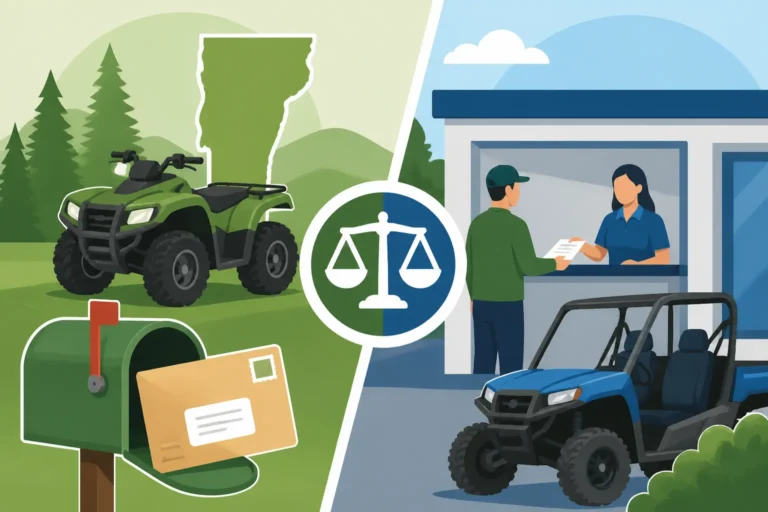
While you can often handle registration renewals by mail, initial registrations, especially those involving title transfers or Purchase and Use Tax, usually require an in-person visit to a Vermont DMV office. This allows clerks to verify original documents, witness signatures if necessary, and handle payment efficiently.
Making an appointment, if your local DMV offers them, can significantly reduce your wait time. Always check the specific hours and requirements of your chosen DMV location before you go. Remember, these folks deal with a lot of people every day, and a prepared, polite customer often has a much smoother experience! For tips on how to handle the process, check out [Registering by Mail Versus in Person].
What Happens After Submission
Once you've submitted all your paperwork and paid the necessary fees and taxes, the DMV will process your application. You'll typically receive a temporary registration document on the spot, along with your new Vermont ATV registration plate. Your official registration certificate will usually be mailed to you within a few weeks.
This plate and temporary document are your proof that you're legal to hit the trails (where allowed, of course!). Make sure you understand [Vermont ATV Plates and Where They Go] so you can properly mount your new plate. The feeling of finally having that plate in hand, ready for your next adventure, makes all the paperwork worth it!
Disclaimer
This article is for general informational purposes only and does not constitute professional advice. Laws, prices and regulations vary by location and change over time. Consult a qualified professional for guidance on your specific situation.