Vermont Requires ATV Liability Insurance
One of the biggest concerns for ATV and UTV riders hitting the beautiful trails and designated town roads of Vermont is making sure they’re covered if something goes wrong. It’s easy to think that if you’re just riding off-road, insurance isn't a big deal, but Vermont has some very specific requirements that can catch riders off guard. This guide will walk you through exactly what kind of liability insurance you need to legally and safely enjoy your off-road adventures here in the Green Mountain State.
Why Vermont Takes ATV Insurance Seriously
Riding an ATV or UTV in Vermont is an incredible experience, offering access to breathtaking scenery and a tight-knit community of enthusiasts. But with that freedom comes responsibility, and the state of Vermont takes that responsibility seriously, especially when it comes to operating these machines. It’s not just about protecting yourself; it’s about safeguarding everyone who shares the trails and the potential legal and financial fallout if an accident occurs. Vermont isn't unique in this regard, but understanding why these rules exist helps us appreciate their importance.
Protecting Yourself and Others on Vermont's Trails and Roads
Imagine you're out on a scenic trail in the Northeast Kingdom, enjoying the crisp air and the rumble of your machine. Suddenly, a deer darts out, and you swerve, losing control. You might hit a tree, or worse, another rider, or even stray onto private property and damage a fence. In any of these scenarios, someone could be injured, or property could be damaged. Without proper liability insurance, you, as the operator, are solely responsible for all those costs. This isn't just about covering your own machine – that's a different kind of coverage – but rather about protecting others from harm or financial loss due to your actions while riding. Vermont's diverse landscape, with its mix of designated town roads, private land trails, and varied terrain, means there's always a chance for unforeseen circumstances, and the state wants to ensure everyone is protected.
The Role of Insurance in Vermont's Riding Culture
Vermont's riding culture is heavily reliant on access to private land. The vast network of trails maintained by clubs under the Vermont ATV Sportsman's Association (VASA) largely exists thanks to the generosity of private landowners. These landowners grant permission for trails to cross their property, and a significant part of their trust comes from knowing that riders are adequately insured. If an incident occurs on their land, they want assurance that damages or injuries will be covered, not fall back on them. Mandating liability insurance helps maintain this crucial relationship. It shows respect for the land and for the community, ensuring that riding remains sustainable and enjoyable for everyone. It's a foundational element that underpins the entire system, allowing us all to experience the beauty of Vermont from the seat of our ATVs and UTVs. This commitment to responsible riding extends to public roads, too, which some towns designate for ATV use. In these instances, the expectation is that riders will operate with the same care and coverage as any other vehicle on the road.
Understanding Vermont's Minimum Liability Requirements
When it comes to ATV and UTV insurance in Vermont, you can't just slap any old policy on your machine and call it good. The state has specific minimums that you absolutely must meet if you plan to operate your vehicle anywhere beyond your own private property. These aren't just suggestions; they are legal requirements designed to ensure that if you're involved in an incident, there's a basic level of financial protection for those affected. Knowing these numbers is the first step toward getting the right coverage.
The Specific Numbers: Bodily Injury and Property Damage
Vermont's Department of Motor Vehicles (DMV) outlines the minimum liability coverage for ATVs and UTVs. These requirements are quite specific and mirror what you'd typically see for other motorized vehicles on the road. First, you'll need coverage for bodily injury. This is broken down into two parts: a minimum of [Vermont's $25,000 Bodily Injury Minimum] for injury or death to one person in any single accident, and a minimum of [Vermont's $50,000 Two-Person Minimum] for injury or death to two or more people in any single accident. Think of it this way: if you accidentally hit another rider and they're injured, the first number covers their medical bills, lost wages, and pain and suffering up to that amount. If you hit two riders, the second number applies to the total payout for both, up to that amount.
Beyond bodily injury, you also need property damage coverage. Vermont requires a minimum of [Vermont's $10,000 Property Damage Minimum] for damage to the property of others in any single accident. This would cover things like if you accidentally take out a fence post on someone's land, damage another rider's machine, or even clip a mailbox when riding on a designated town road. It's important to remember that these minimums are exactly that – minimums. They represent the bare legal threshold.
Why These Minimums Are Just a Starting Point
While meeting Vermont's minimum liability requirements will make you legal, many experienced riders and insurance professionals will tell you that these numbers are often just a starting point, especially in today's world of rising medical costs and expensive property repairs. Imagine an accident where someone sustains a serious injury requiring extensive medical care, rehabilitation, or a long period out of work. It's not hard for those costs to quickly exceed $25,000, or even $50,000. If your liability coverage runs out, you, the ATV operator, are personally on the hook for the remaining balance. This could mean your savings, your future earnings, or even your assets could be at risk. The same goes for property damage; a newer, custom-built side-by-side or significant damage to private property could easily exceed the $10,000 property damage limit. Many riders choose to carry higher limits, perhaps $100,000/$300,000 for bodily injury and $50,000 or even $100,000 for property damage, to ensure a greater cushion of protection. For those with substantial assets, or who frequently ride with passengers or in areas with potential for higher-value property damage, opting for more robust coverage is a wise decision, even if it adds a little to your [Vermont ATV Insurance Cost]. Some riders even explore [Vermont Self-Insurance at $115,000] for a different route to meeting the financial responsibility requirement, though this is a less common path for most recreational riders.
What Your ATV Liability Insurance Policy Needs to Cover
Getting an insurance policy isn't just about meeting the numbers; it's about making sure the policy actually covers you and your machine under the specific circumstances of ATV and UTV riding in Vermont. Not all policies are created equal, and some might have clauses or exclusions that could leave you exposed when you least expect it. It's crucial to read the fine print and understand what you're actually paying for.
Naming Your Machine and Its Operation
Your ATV liability insurance policy absolutely must clearly identify the specific all-terrain vehicle or utility terrain vehicle it covers. This usually means providing the make, model, year, and crucially, the Vehicle Identification Number (VIN) of your machine. Insurers want to know exactly what they are covering. If you own multiple machines, each one will generally need its own coverage. When you register your ATV in Vermont, the DMV expects the insurance to be tied directly to that machine. The policy should also explicitly state that it covers the operation of the ATV for recreational use, including riding on designated trails and approved town roads. Some general auto policies might not extend coverage to off-road vehicles, or they might have very limited scope, so it's vital to get a policy specifically designed for ATVs and UTVs. If you’ve added aftermarket parts, perhaps from a brand like SuperATV, to customize your machine, those modifications generally fall under different types of coverage (like comprehensive or collision), but the core liability needs to cover the vehicle itself.
Key Exclusions to Watch Out For
Even with a dedicated ATV insurance policy, you need to be aware of potential exclusions. For instance, some policies might exclude coverage if you're using your ATV for commercial purposes, like guiding tours or doing professional landscaping, unless you specifically add a rider for such use. Racing or competitive events are almost always excluded from standard recreational policies. Furthermore, many policies will have exclusions related to reckless behavior, driving under the influence (which ties into [Vermont DUI Law and ATVs]), or operating the machine in areas not permitted by law, such as unmarked private land where you lack [Vermont Landowner Permission Rules]. It's also common for policies to have age restrictions or require that operators possess a valid driver's license (even though Vermont doesn't require a driver's license just to ride an ATV, some insurance policies might have this stipulation for coverage). Understanding these exclusions upfront can prevent a very unpleasant surprise if you ever need to file a claim. If you're planning any unconventional use for your ATV, always check with your insurance provider to ensure you're still covered.
Proof of Insurance: What Wardens and Police Look For
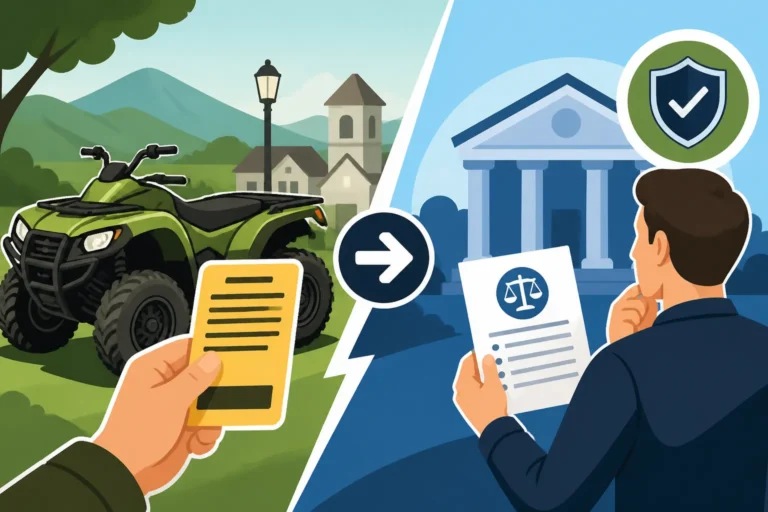
Having the right ATV liability insurance is one thing, but being able to prove it when asked is entirely another. In Vermont, if you're riding on public lands, designated town roads, or VASA trails, you can bet that at some point, a game warden, state trooper, or local police officer might ask to see your documentation. Being prepared with your proof of insurance is just as important as having your registration and your [Vermont TAD: The Trail Access Decal Explained].
Carrying Your Proof of Coverage
When you're out riding, Vermont law generally requires you to carry proof of insurance with you. This isn't just a suggestion; it's a legal expectation. Think of it like carrying your driver's license in your car. This proof typically comes in the form of an insurance card or a copy of your policy's declaration page, provided by your insurance company. This document should clearly state the policy number, the effective dates of coverage, the name of the insured, and the specific ATV or UTV covered by VIN. It's a good practice to keep this document in a waterproof bag or container, perhaps tucked into a secure compartment on your machine or in your riding pack. You don't want a soggy, unreadable document when a warden asks for it. Some riders even laminate a copy for extra durability. Remember, officers and wardens need to be able to quickly verify that your machine is legally insured, so making it easy for them to read and confirm is always a good idea. They want to ensure that all riders are following the rules and contributing to the safe and responsible use of Vermont's trail system.
Digital vs. Physical Documents
In our increasingly digital world, many states now accept digital proof of insurance for automobiles. While Vermont has embraced this for cars, it's always a good idea to confirm the current acceptance for ATVs specifically, as regulations can sometimes differ or evolve at different paces for various vehicle types. Even if digital proof is accepted, consider the practicalities of relying solely on your phone on the trail. Cell service can be spotty in many of Vermont's prime riding areas, especially in the more remote parts of the Northeast Kingdom. A dead phone battery, a cracked screen, or a lost signal could leave you unable to produce your proof of insurance, potentially leading to a ticket or other penalties. This is why a physical copy, even if it's just a printout, is often the safest and most reliable option for ATV riders. It’s a simple backup that can save you a lot of hassle. Whether you prefer a physical card or a digital display, ensure that the information is clear, current, and readily accessible when asked by an official, as detailed in situations like [What a Warden Can Ask to See].
Navigating the Insurance Landscape: Providers and Options
Finding the right insurance for your ATV or UTV in Vermont can sometimes feel like navigating a maze, especially if you're new to the sport or new to the state. While many major insurance carriers offer ATV policies, not all are equally familiar with Vermont's specific nuances, such as its trail system operated by VASA clubs or the distinction between an ATV and an ASV. Taking the time to research and compare is crucial to getting adequate coverage without overpaying.
Finding an Insurance Provider That Understands Vermont Riding
Your first step should be to look for insurance providers who are experienced with off-road vehicles and, ideally, familiar with the regulations and riding conditions specific to Vermont. Many national carriers, such as Progressive, State Farm, GEICO, and Allstate, offer ATV and UTV insurance. However, some smaller, regional insurers or specialized powersports insurance companies might offer more tailored policies or a deeper understanding of local riding needs. When you speak with an agent, be sure to mention that you'll be riding in Vermont, on VASA trails, and potentially on designated town roads. Ask specific questions about how their policy handles these scenarios. For instance, confirm that liability coverage extends to riding on private landowner trails facilitated by VASA. You might find that a company that understands the passion for Vermont riding can better advise you on appropriate coverage levels, not just the minimums. They can also often bundle policies, potentially offering discounts if you insure your car, home, or other recreational vehicles with them.
Comparing Policies Beyond the Minimum
While meeting Vermont's liability minimums is non-negotiable, a smart rider will look beyond just these numbers when choosing a policy. Consider what other types of coverage might be beneficial for your specific needs. Do you want comprehensive and collision coverage to protect your own machine from damage or theft? What about uninsured/underinsured motorist coverage, which can protect you if you're hit by another rider who doesn't have adequate insurance? If you've invested in significant aftermarket upgrades, perhaps from SuperATV, like a lift kit, new tires, or a winch, ensure your policy can cover those modifications. Some policies automatically include a small amount of coverage for accessories, while others require you to specifically list them and pay an additional premium.
When comparing policies, look at:
| Feature | Vermont Minimum Liability | Recommended Additional Coverage |
|---|---|---|
| Bodily Injury (per person) | $25,000 | $100,000 – $250,000 |
| Bodily Injury (per accident) | $50,000 | $300,000 – $500,000 |
| Property Damage | $10,000 | $50,000 – $100,000 |
| Comprehensive | Not Required | Protects your machine (theft, fire, vandalism, natural disaster) |
| Collision | Not Required | Protects your machine (damage from an accident with another vehicle or object) |
| Uninsured/Underinsured Motorist | Not Required | Covers your injuries/damages if hit by an uninsured or underinsured rider |
| Medical Payments | Not Required | Covers medical expenses for you/passengers, regardless of fault |
| Accessory Coverage | Not Required | Covers aftermarket parts and customizations (e.g., SuperATV accessories) |
Also, compare deductibles, which is the amount you pay out of pocket before your insurance kicks in, and premium costs. A higher deductible usually means a lower premium, but ensure it's an amount you're comfortable paying if you have to file a claim. Don't be afraid to get quotes from several different companies, asking for both the basic liability and a more comprehensive package to see how the costs compare. Remember, the cheapest policy isn't always the best value if it leaves significant gaps in your protection.
The Consequences of Riding Uninsured in Vermont
Riding an ATV or UTV in Vermont without the legally required liability insurance isn't just risky; it's against the law and can lead to a host of unpleasant consequences. While the freedom of the trail might make some riders think they can cut corners, the potential penalties and financial exposure are simply not worth it. The state is serious about ensuring all operators are responsible, and they have systems in place to enforce these rules.
Fines, Penalties, and Legal Ramifications
If you're caught riding your ATV or UTV in Vermont without the required liability insurance, you could face significant fines. The exact amount can vary, but it's often more than the cost of a year's insurance premium, making it a poor financial gamble. Beyond the monetary penalties, you could also face other legal ramifications, such as the suspension of your ATV registration. If your registration is suspended, you won't be able to legally ride your machine anywhere except private property until you reinstate it and prove you have adequate insurance. This means no VASA trails, no designated town roads, and definitely no riding on state land if it were ever opened to ATVs. Repeated offenses could lead to even harsher penalties, and these violations can become part of your motor vehicle record, even though an ATV isn't a traditional "motor vehicle" in all contexts. Remember that having a valid registration is also tied to insurance, and riding unregistered machines has its own set of [Penalties for Riding Unregistered].
What Happens After an Accident Without Coverage
The fines and penalties are just the beginning. The most severe consequences of riding uninsured come to light if you're involved in an accident. If you cause an accident that results in injury to another person or damage to their property, and you don't have liability insurance, you are personally and solely responsible for all those costs. This means you could be sued directly. A lawsuit could lead to a judgment against you, forcing you to pay for medical bills, lost wages, property repairs, and potentially pain and suffering. These costs can quickly run into tens or even hundreds of thousands of dollars, far exceeding the typical [Vermont ATV Registration Cost].
Imagine hitting another rider and causing them to break a leg, or damaging a farmer's expensive irrigation system while crossing their land. Without insurance, your personal assets – your savings, your home, your future earnings – could be at risk. The legal fees alone to defend yourself, even if you weren't entirely at fault, can be exorbitant. Vermont's commitment to protecting landowners and ensuring responsible recreation means they expect riders to carry this essential coverage. It's a critical safety net, not just for others, but ultimately for your own financial well-being.
Beyond Liability: Considering Additional ATV Insurance Coverage
While liability insurance is the non-negotiable baseline for riding an ATV or UTV in Vermont, a truly savvy rider knows that "minimum" doesn't always equate to "adequate." There are several other types of coverage available that can offer a much broader safety net, protecting not just others, but also your own valuable machine and your financial peace of mind. Thinking beyond basic liability can save you a lot of heartache and expense down the road.
Protecting Your Investment with Comprehensive and Collision
Your ATV or UTV represents a significant investment, often thousands of dollars, especially if you've added customizations like those heavy-duty parts from SuperATV. Basic liability insurance does not cover damage to your own machine. That's where comprehensive and collision coverage come in.
- Collision Coverage: This pays for damages to your ATV if it's involved in a collision with another vehicle (like another ATV on the trail) or an object (like a tree, a rock, or a fence post). If you misjudge a turn on a Class 4 road and hit an embankment, collision coverage would help pay to repair or replace your machine.
- Comprehensive Coverage: This protects your ATV from non-collision-related incidents. Think about theft, vandalism, fire, natural disasters (like floods or hail), or even hitting a deer. If your machine is stolen from your garage or catches fire due to an electrical issue, comprehensive coverage would step in.
Given the rough and tumble nature of off-road riding, the chances of your machine sustaining damage are higher than with a passenger car. Investing in comprehensive and collision coverage can protect your wallet from unexpected repair or replacement costs, ensuring your riding season isn't cut short by an unfortunate incident.
Uninsured/Underinsured Motorist Coverage for Peace of Mind
Even though Vermont requires all ATVs operating on trails and roads to have liability insurance, not everyone follows the rules. Or, someone might meet the minimum requirements, but those minimums might not be enough to cover the full extent of your damages or injuries if they cause a serious accident. This is where Uninsured/Underinsured Motorist (UM/UIM) coverage becomes invaluable.
- Uninsured Motorist Coverage: This protects you if you're involved in an accident with another ATV operator who doesn't have any insurance. It can cover your medical expenses and potentially damage to your own machine (depending on the policy) if the at-fault party can't pay.
- Underinsured Motorist Coverage: This kicks in if the at-fault rider has insurance, but their policy limits aren't high enough to cover all your damages and injuries. It essentially makes up the difference, preventing you from having to pay out of pocket for the remainder.
Considering the diverse range of riders on Vermont's trails and designated roads, having UM/UIM coverage is a smart defensive move. It adds an extra layer of protection, ensuring that even if another rider is irresponsible or simply underinsured, your financial well-being won't be jeopardized. It's about protecting yourself from others' lack of coverage, giving you greater peace of mind every time you head out for a ride.
Special Considerations for Different Riders and Machines
The world of ATVs and UTVs is incredibly diverse, with machines ranging from small youth models to large, multi-passenger side-by-sides, and riders spanning all ages and experience levels. Vermont's insurance requirements are designed to be broad, but there are specific scenarios and machine types that warrant a closer look to ensure you have appropriate coverage. It's not a one-size-fits-all situation, and understanding these nuances can prevent gaps in your protection.
Insurance for Youth Riders and Borrowed ATVs
Riding is often a family activity in Vermont, and many young riders enjoy the thrill of smaller, youth-specific ATVs. While [Vermont ATV Safety Course Required Under 18] is a key safety measure, insurance needs are also critical. If a youth rider (typically under 18) is operating an ATV, they generally need to be covered under an adult's policy. The policyholder, usually a parent or guardian, would be the primary insured, and the youth rider would be listed as an operator. It's crucial to confirm with your insurance provider that youth operators are explicitly covered, and understand any specific conditions, such as required supervision, which is particularly relevant for a [Vermont Rules for a 14-Year-Old].
The situation also gets interesting when you borrow an ATV or lend yours to a friend. If you borrow an ATV, your personal insurance policy might offer some limited "non-owner" coverage, but it's best to confirm this with your insurer. More often, the owner's policy is primary. If you lend your ATV to a friend, your insurance policy is usually still primary, meaning any liability arising from their operation of your machine would fall back on your policy. Before lending out your pride and joy, always ensure your friend is a responsible and experienced rider and that your policy adequately covers others operating your machine with your permission. This is especially true if your friend installs their own accessories, like a new set of tires or a light bar on your machine, which could change the liability profile.
How Side-by-Sides and Modified Machines Impact Coverage
Side-by-sides (UTVs) have exploded in popularity, offering multi-passenger seating and often more power and capability than traditional ATVs. In Vermont, UTVs generally fall under the same "ATV" definition for registration and insurance purposes, as outlined in statutes like [Vermont's 72-Inch, 2,500-Pound ATV Definition]. However, because they are larger, heavier, and often carry more passengers, the potential for higher liability claims in an accident can be greater. It's a good idea to discuss the specific type of side-by-side you own with your insurer to ensure your liability limits are truly adequate for the risk profile of such a machine.
Furthermore, modifications can significantly impact your insurance. Many riders love to customize their machines with aftermarket parts – lift kits, larger tires, winches, upgraded suspension, or even unique body armor from companies like SuperATV. While these enhance performance and aesthetics, they also increase the value of your machine. If you've invested heavily in modifications, your standard comprehensive and collision coverage might not fully account for their added value. You may need to specifically declare these modifications to your insurer and potentially pay an additional premium to ensure they are fully covered for repair or replacement. Otherwise, in the event of a total loss, you might only receive compensation for the stock value of your machine, leaving you out of pocket for all those expensive upgrades. Being transparent with your insurance provider about your machine's type and any modifications is key to ensuring complete and accurate coverage.
Disclaimer
This article is for general informational purposes only and does not constitute professional advice. Laws, prices and regulations vary by location and change over time. Consult a qualified professional for guidance on your specific situation.