Riding Home From the Trailhead
You've just wrapped up an incredible day of tearing up the VASA trails, the sun is starting to dip, and your machine is humming with the satisfying afterglow of a good ride. But now comes the question that often brings a moment of confusion: how do you get your muddy, trail-hungry ATV or side-by-side from the trailhead back to your camp, rental cabin, or even your own driveway without running afoul of Vermont's ever-evolving rules? It’s a common frustration, especially for those new to riding in the Green Mountain State, where the rules for road access can feel a bit like a patchwork quilt. This guide is here to untangle that knot, walking you through the practicalities and legalities of riding your machine home from a Vermont trailhead on designated roads.
Understanding Vermont's Road Rules for ATVs and UTVs
One of the biggest hurdles for ATV and UTV riders in Vermont is understanding where you can and cannot legally operate your machine on public roads. Unlike some states where ATVs might have broader road privileges, Vermont has a very specific approach that often surprises newcomers. It’s not simply a free-for-all on every dirt road; there's a method to the madness, and knowing it is crucial for a smooth ride home.
The "Designated Route" Reality
In Vermont, you can't just hop onto any road, even a quiet, unpaved one, and expect it to be legal for your ATV or UTV. The core of Vermont's road access policy for these machines revolves around "designated routes." This means that only specific roads, or portions of roads, that have been explicitly opened by local town selectboards are permissible for ATV and UTV travel. Think of it like a carefully marked maze: you can only follow the paths that have been clearly painted. These designated routes often serve as connectors between segments of the VASA trail system, allowing riders to link up different sections or get to services. Without a clear sign or official town ordinance stating a road is open, you should assume it's closed to your machine. [Can You Ride an ATV on the Road in Vermont?] covers this in more detail.
This "designated route" approach means that a fantastic trail might spit you out onto a town road, but that road might only be legal to ride for a short distance before you must load your machine onto a trailer. It's a system designed to balance recreational access with local community concerns like noise, dust, and safety. Always, and I mean always, check the local trail maps and town ordinances before you plan your ride home. Relying on guesswork can quickly lead to a frustrating encounter with law enforcement or a trail warden.
Town Ordinances: The Local Gatekeepers
The real power to open or close roads to ATVs and UTVs rests with Vermont's town selectboards. Each town has the autonomy to decide which of its roads, if any, will be designated for ATV use. This leads to a diverse set of rules across the state. What's legal in Brighton might be strictly prohibited just a few towns over in Maidstone. This hyper-local control is why relying on general state information isn't enough; you need to dig into the specifics of the towns you'll be riding through. [Vermont ATV Road Rules by Town] is an excellent resource for this.
These town ordinances usually specify things like permissible roads, hours of operation (curfews), speed limits, and even seasonal restrictions. For example, some towns might open roads only during the official VASA riding season, while others might keep certain routes open year-round for local access. It's not uncommon for towns to conduct annual reviews of these designations, which means a road that was open last year might not be open this year. Before setting out, especially if you're exploring a new area, make sure you have the most current information regarding the specific towns you plan to traverse on your way home. Many local VASA clubs will have this information readily available on their websites or at trailheads.
Knowing Your Exit Strategy: Planning Ahead
The best way to ensure a legal and stress-free ride home from the trailhead is to plan your exit strategy before you even hit the trails. This isn't just about knowing which roads are open, but also how you'll access them and for what duration. Many riders make the mistake of assuming that because a trail ends near a paved road, they can simply cruise on home. Unfortunately, that's rarely the case.
Start by consulting official VASA trail maps, which often highlight designated road connections. Cross-reference this with local town ordinances, if available, or speak with the local ATV club that maintains the trails in that area. They are often the best source of real-time, accurate information. If your lodging or staging area is beyond the reach of designated routes, then plan for a trailer pick-up. Sometimes, a short ride on a designated road can get you to a safe, accessible spot for your truck and trailer. It's much better to have a clear plan for your return than to be caught off guard after a long day of riding.
Essential Gear and Machine Readiness for Road Sections
Transitioning from a rugged trail to a public road, even a gravel one, requires a shift in mindset and some specific preparations for your machine. Your ATV or UTV might be a beast on the dirt, but on public roads, it needs to play by a different set of rules regarding safety and visibility. Ignoring these can lead to fines, accidents, or even having your machine impounded.
Visibility is Key: Lights, Reflectors, and Flags
When you’re sharing the road with cars, trucks, and even bicycles, being seen is paramount. Vermont law, like most states, has clear requirements for vehicles operating on public roadways. Your ATV or UTV must have functioning headlights, tail lights, and brake lights. These aren't just for riding after dark; they're crucial for visibility in all conditions, especially on dusty roads or in changing weather. Many stock ATVs and UTVs come equipped with these, but always double-check their functionality before heading out.
Beyond the basics, consider adding extra visibility aids. Reflectors on the front, sides, and rear of your machine can significantly improve your profile to other drivers, particularly in low light. Some riders also opt for whip flags, especially if riding in an area with rolling terrain or blind corners, to make their presence known over crests. Companies like SuperATV offer a range of aftermarket lighting and visibility accessories, from brighter LED light bars to supplemental brake lights, which can be invaluable when you're making your way home on a public road. Making sure your machine is clearly visible isn't just about avoiding a ticket; it's about staying safe and ensuring you make it home in one piece.
Tires and Suspension: Pavement Pounding
Your knobby, aggressive off-road tires that chew through mud and climb over rocks like a champion might not be ideal for extended road use. While you're likely only on designated road sections for short distances to connect trails or reach your staging area, even these brief stretches can put different stresses on your machine. Off-road tires can wear down much faster on pavement, and their aggressive tread can sometimes feel less stable at higher speeds or in turns on a hard surface.
Similarly, your suspension, tuned for absorbing bumps and impacts on the trail, might feel stiff or bouncy on smoother road surfaces. While you're not going to re-tune your suspension for a short ride home, be aware of how your machine handles the change in terrain. Avoid sudden maneuvers and be mindful of braking distances, as off-road tires might have less grip on pavement compared to street-specific tires. If you frequently find yourself needing to ride designated road sections, you might consider a more all-terrain style tire that offers a better compromise between trail performance and road manners. SuperATV also carries a variety of tire options that could fit this bill, designed for versatility across different conditions.
Mufflers and Noise: Keeping the Peace
One of the most common complaints about ATVs and UTVs, especially when they're operating near residential areas, is noise. Vermont, like many states, has regulations concerning vehicle noise levels. Most stock machines come with mufflers designed to meet legal noise limits. However, if you've installed an aftermarket exhaust system that increases sound output, you could run into trouble on designated road sections.
Riding home, especially through a quiet village or past houses, calls for extra mindfulness regarding noise. Keep your RPMs down, avoid aggressive acceleration, and try to be as quiet and respectful as possible. Excessive noise isn't just a nuisance; it can lead to town residents petitioning to close designated routes, which ultimately hurts everyone's riding access. Make sure your muffler is in good condition, free of leaks, and not modified in a way that makes it excessively loud. It's a small act of courtesy that goes a long way in preserving riding opportunities for the entire community. [Vermont Muffler and Noise Rules] outlines these regulations.
Navigating Designated Town Roads Safely
Once you understand that you can ride on certain roads, the next step is knowing how to do it safely and legally. Riding an ATV or UTV on a public road, even a designated one, means you're operating within a different environment than a secluded trail. Other vehicles will be present, and the rules of the road apply just as they would to a car or truck.
Speed Limits and Yielding to Traffic
When you transition from the trail to a designated town road, you immediately become subject to the posted speed limits. These are often significantly lower than what you might be accustomed to on an open trail, especially in villages or residential areas. For example, [Brighton's 25 mph Cap in Vermont] is a common limit in many village settings. It’s crucial to slow down, respect these limits, and be aware of your surroundings. Remember, you're sharing the road, and you're typically not the fastest vehicle on it.
Always yield to other traffic, including cars, trucks, bicycles, and even pedestrians. Think of yourself as a low-speed vehicle sharing the space. Be predictable in your movements, use hand signals if your machine doesn't have turn signals (though many modern UTVs do), and maintain a safe following distance. Blind corners, driveways, and unexpected obstacles are all more common on roads than on purpose-built trails. Stay alert, slow down, and share the road respectfully.
Crossing State Highways: The Stop-and-Go Dance
While towns can open their local roads to ATVs, state highways are generally off-limits. However, you might encounter situations where a designated town road crosses a state highway, or a trail requires you to briefly cross a state highway to connect to another section. Vermont law has specific provisions for these crossings. Typically, you must come to a complete stop, look both ways, and yield to all traffic before crossing directly and safely at a right angle to the highway. You cannot ride along the state highway.
These crossings require extreme caution. State highways often have higher speed limits and heavier traffic. Pick a moment when there's a clear, wide gap in traffic, and cross quickly and efficiently. Don't linger or try to turn onto the highway. The goal is to get from one side to the other as safely and directly as possible. Always be on high alert during these maneuvers. [Vermont ATV Crossing a State Highway] provides more details on this important safety rule.
Helmet and Passenger Rules: No Exceptions
Vermont's ATV and UTV safety regulations regarding helmets and passengers are non-negotiable, whether you're on a trail or a designated road. Every rider, regardless of age, must wear a helmet that meets either FMVSS or ASTM safety standards. This isn't just a suggestion; it's the law, and wardens and police will enforce it strictly. Make sure your helmet fits properly and is securely fastened before you even think about starting your engine for the ride home. [Vermont ATV Helmet Law for Every Rider] is a must-read.
Passenger rules are also crucial. You can only carry a passenger if your machine is specifically designed by the manufacturer for multiple riders, with designated seating positions and handholds. You cannot carry a passenger on a single-rider ATV, and you definitely cannot stack multiple people onto a machine only designed for two. Children also have specific rules, and often require direct adult supervision. These rules are in place for everyone's safety, and ignoring them significantly increases the risk of injury in an accident. Always prioritize safety over convenience, especially when operating on public roads.
Permits, Plates, and Proof: What Wardens Look For
Successfully navigating a designated road section on your ATV or UTV isn't just about driving safely; it's also about having all your ducks in a row when it comes to documentation. If a law enforcement officer or trail warden stops you, they'll be looking for specific paperwork to ensure you're legally entitled to be on that road. Missing any of these key items can quickly turn a pleasant ride home into a costly and frustrating experience.
Registration and TAD: Your Tickets to Ride
First and foremost, your ATV or UTV must be registered with the Vermont Department of Motor Vehicles (DMV). This is a fundamental requirement for any off-road vehicle operating on public lands or designated roads in Vermont. Your registration sticker and plate must be clearly displayed. Beyond registration, if you're using VASA trails or connecting routes on your way home, you also need a Vermont Trail Access Decal (TAD). The TAD signifies that you've paid your dues to support the trail system and are a member of a VASA club. [Vermont ATV Registration Cost] and [Vermont TAD Cost in 2026] are two fees you need to factor in.
Both the registration and the TAD are non-negotiable for riding on designated roads and VASA trails. A warden checking your machine will look for both. The TAD is usually a sticker applied to your machine, while the registration comes with a physical plate. Make sure both are current and correctly displayed. Riding without either can result in significant fines.
Insurance: A Must-Have for Road Use
Just like any other motor vehicle operating on public roads, your ATV or UTV must carry liability insurance when you're riding on designated public road sections. Vermont law mandates minimum coverage levels for bodily injury and property damage. This insurance protects you and others in the event of an accident. It's not optional; it's a legal requirement.
It’s crucial to carry proof of insurance with you while you ride, either as a physical card or a digital copy on your phone. Wardens and police officers routinely ask for this during roadside stops. Make sure your policy specifically covers ATV/UTV use, especially for operations on public roads. Some general auto policies might not extend to off-road vehicles. If you're unsure, contact your insurance provider to confirm your coverage. [Vermont ATV Insurance Requirements] outlines the specifics of what's needed.
Proof of Ownership: Keep it Handy
While not always a primary item requested during a routine stop, it's always a good idea to carry some form of proof of ownership for your ATV or UTV. This could be your vehicle's title, a bill of sale, or even your registration document. This helps establish that the machine you're operating is legally yours and not stolen. It also helps if there's any confusion about the VIN or other identification details.
Imagine this scenario: you're riding home, your machine breaks down, and you need to leave it roadside for a few hours while you arrange pickup. If local law enforcement happens upon it, proof of ownership can quickly resolve any suspicions. While you might not need to show it every ride, having it readily accessible, perhaps laminated and stored in a waterproof bag, can prevent unnecessary hassle. If you're riding a machine that's still financed, your registration usually indicates a lienholder, which also serves as a form of ownership verification. [Proof of Ownership Vermont's DMV Will Accept] details what forms are valid.
Common Pitfalls and How to Avoid Them
Even with the best intentions, riders sometimes fall into common traps when trying to get home from a Vermont trailhead. Understanding these pitfalls ahead of time can help you avoid fines, frustration, and potentially putting your riding privileges at risk. It’s all about being informed and making smart choices.
Assuming All Dirt Roads Are Open
This is perhaps the biggest and most frequent mistake riders make. In many parts of Vermont, especially in rural areas, there are miles of beautiful, unpaved dirt roads. It’s easy to look at one of these quiet, scenic routes and assume it’s fair game for your ATV or UTV. However, as we discussed, this is a dangerous assumption. Unless a town has specifically designated a road as open for ATV/UTV use, it is closed to your machine, regardless of how remote or inviting it looks.
Riding on undesignated roads can lead to trespassing charges, fines for illegal operation, and community backlash that could threaten future trail access. Always consult official maps provided by VASA or the local clubs, and look for clear signage indicating designated routes. If there's no sign, don't ride there. When in doubt, turn around or find an alternative route. It’s far better to be safe and legal than to risk a penalty or sour local landowner relations. [Vermont Trespass Law for Riders] is important to remember here.
Ignoring Local Curfews or Season Dates
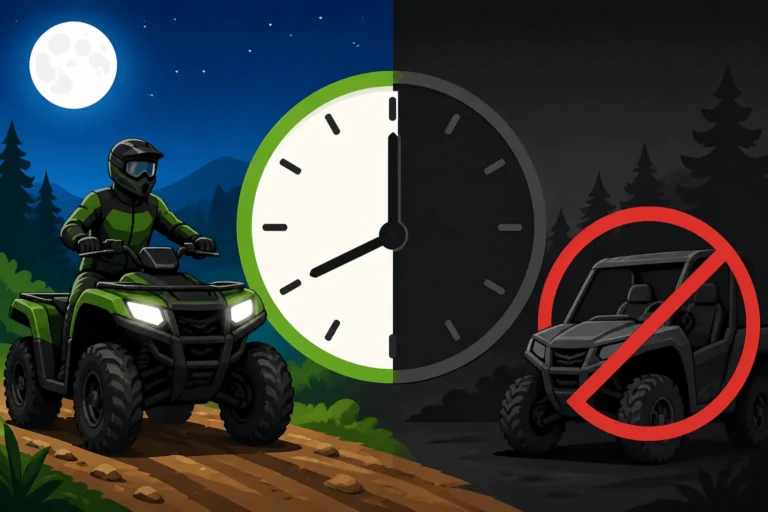
Another common oversight is neglecting the specific curfews and seasonal dates set by individual towns. Just because a road is designated for ATV use doesn't mean it's open 24/7, year-round. Many towns implement curfews, meaning ATVs are not allowed on their designated roads after a certain hour (e.g., 9 PM or 10 PM), or before a certain time in the morning. These curfews are often put in place to address noise concerns from residents. [Newport City's Curfew Hours in Vermont] illustrates how these vary.
Similarly, some towns might have specific season dates for road access that align with or differ from the general VASA trail season. Mud season in spring, for example, often leads to road closures to prevent damage, or routes might close earlier in the fall. Always check the local town ordinances or club information for the specific times and dates allowed. Getting caught riding outside these hours or seasons can result in a fine, even if you’re on an otherwise designated route.
The Temptation to "Just Go a Little Way"
We've all been there: you're tired, the sun is setting, and your staging area or lodging is "just a little way" down a road that you suspect isn't designated. The temptation to "just go a little way" to save time or avoid loading up the trailer can be incredibly strong. This is precisely the kind of situation where riders get into trouble. Wardens and local law enforcement are well aware of these common shortcuts, and they often patrol these areas.
A "little way" can quickly become a big problem if you're caught. The penalties for riding an unregistered machine or operating on a closed road can be steep, often including fines, towing costs, and the inconvenience of dealing with legal procedures. It's simply not worth the risk. If your planned route home isn't fully designated, or if you're unsure, make the responsible choice: find a legal way to transport your machine, even if it means a bit more effort. Your peace of mind, and your wallet, will thank you.
| Aspect | Trail Riding | Designated Town Road Riding |
|---|---|---|
| Speed | Varies, often higher, dictated by terrain. | Posted speed limits, often 25-35 mph, strictly enforced. |
| Traffic | Other ATVs/UTVs, occasional hikers/bikers. | Cars, trucks, bicycles, pedestrians; yield to all. |
| Visibility | Good lights for night, not always critical for day. | Headlights, tail lights, brake lights, reflectors crucial at all times. |
| Noise | Generally less of a concern, but still mindful. | Very important, avoid excessive noise, respect residential areas. |
| Documentation | Registration, TAD, safety cert (if applicable). | Registration, TAD, proof of insurance, safety cert (if applicable). |
| Helmets/Passengers | Required for all riders. | Required for all riders. |
| Surface | Varied off-road terrain, dirt, mud, rocks. | Paved or gravel, harder on off-road tires. |
| Rules Enforced By | VASA Wardens, State Police, Game Wardens. | Local Police, Sheriff, State Police, Game Wardens. |
Disclaimer
This article is for general informational purposes only and does not constitute professional advice. Laws, prices and regulations vary by location and change over time. Consult a qualified professional for guidance on your specific situation.