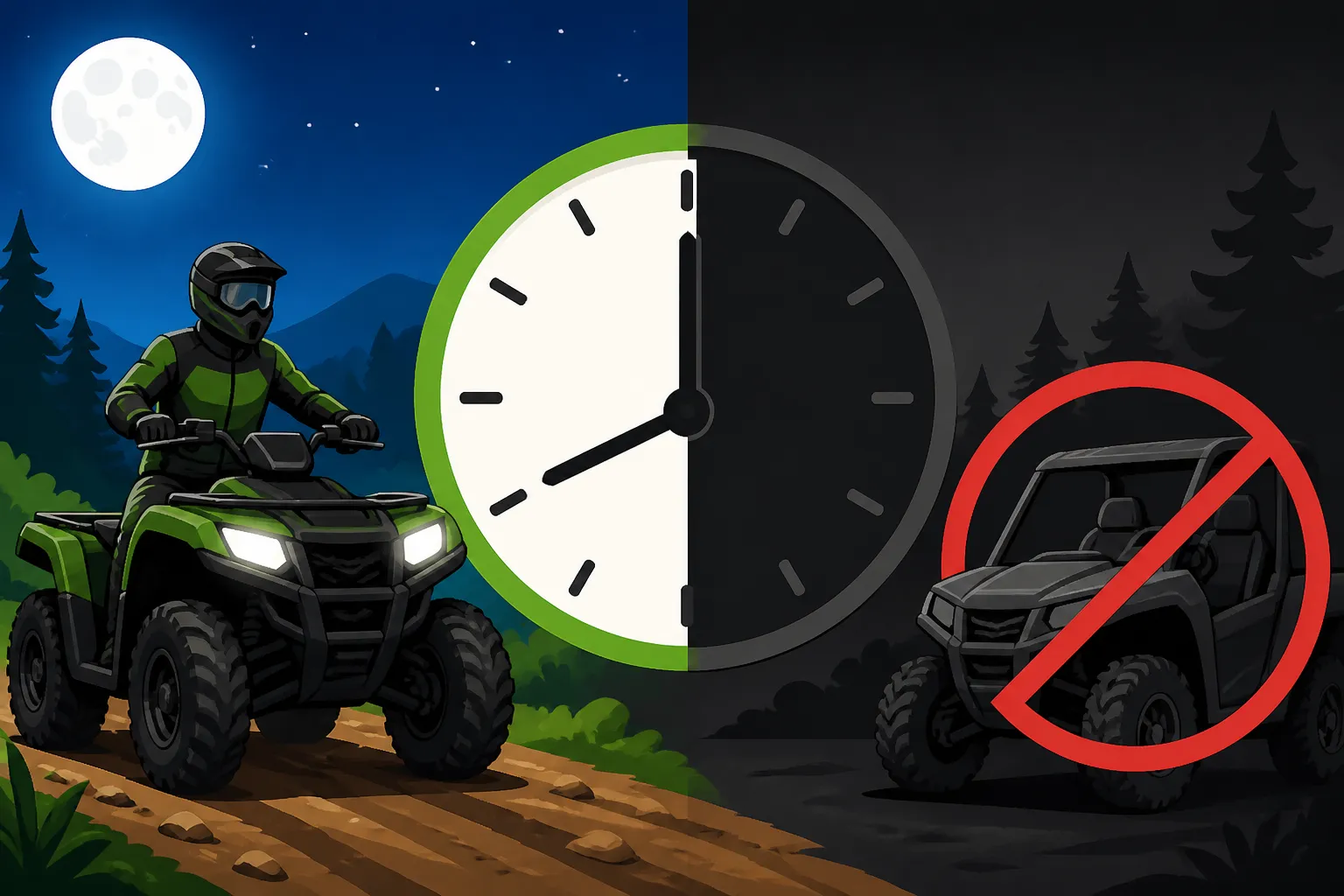
What a 9 p.m. ATV Curfew Means for Riders
Riding an ATV in Vermont can feel incredibly liberating, a chance to explore stunning landscapes and vast trail networks. However, that freedom often comes with local rules, and few create more confusion and frustration than a town-specific curfew. This guide will dive deep into what a 9 p.m. ATV curfew truly means for riders, from practical implications to enforcement, and how to stay on the right side of local ordinances to keep enjoying those beautiful Green Mountain trails without a hitch.
Understanding Vermont's ATV Curfew Ordinances
You've planned your ride, packed your gear, and are ready for a day on the trails, only to discover that the town you're passing through, or even staying in, has an ATV curfew. It's a common scenario, and it can definitely put a damper on your plans if you're not prepared.
Why Towns Implement Curfews
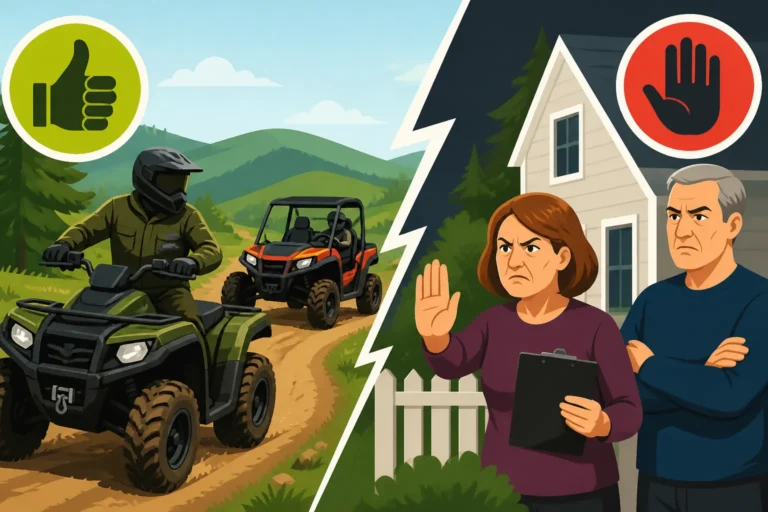
First, let's talk about why these curfews exist. It's not usually to deliberately spoil your fun. Vermont's towns are often small, close-knit communities where residents cherish their peace and quiet, especially after dark. ATV and UTV engines, even well-maintained ones, produce noise. After 9 p.m., that noise can become particularly disruptive, disturbing sleep, startling wildlife, and generally impacting the quality of life for folks who live near designated ATV routes.
Towns also consider safety. Riding an ATV after dark, even with proper lights, adds an extra layer of risk. Visibility decreases, obstacles become harder to spot, and the chances of an unforeseen incident can increase. Curfews are essentially a tool for local selectboards to balance the economic benefits and recreational opportunities that ATV tourism brings against the legitimate concerns of their residents regarding noise, safety, and property values. They're trying to find a middle ground, even if it sometimes feels restrictive to riders.
How Local Ordinances Come into Being
These curfews don't just appear out of thin air. They are the result of a very local, very democratic process. Typically, a town's selectboard, which is its governing body, will propose an ordinance after receiving feedback from residents, local law enforcement, or sometimes even ATV clubs themselves. There might be public hearings where people can voice their support or opposition. Residents might even petition the selectboard or vote at a [Vermont Town Meeting Votes on ATV Roads] to establish or adjust these rules.
For example, a town might experience a significant increase in noise complaints along a newly opened ATV route. The selectboard, acting on behalf of the community, would then draft an ordinance to address this, perhaps including a curfew. It's a testament to the hyper-local nature of ATV access in Vermont; what's permitted in one town might be strictly regulated just a few miles down the road. This is why understanding [Vermont ATV Road Rules: Towns Decide] is so crucial. Each municipality has the power to set its own specific guidelines, including when ATVs can and cannot be on public roads within its jurisdiction.
Common Curfew Times and Their Meaning
While the exact hours can vary, a 9 p.m. ATV curfew is one of the most common you'll encounter in Vermont. What does it mean? Simply put, by 9 o'clock in the evening, your ATV or UTV should no longer be operating on any designated town road or public route within that municipality. The curfew typically extends through the night, often until 6 a.m. or 7 a.m. the following morning. So, if you’re planning a ride, you need to be off the routes and back at your lodging, camp, or residence before the clock strikes nine.
Some towns might have slightly different hours, like [Newport City's 10 p.m. to 7 a.m. ATV Curfew], which gives you an extra hour. Others might align their curfews with specific seasons or events. It’s not just about stopping your engine; it's about not being on those public corridors at all. This applies whether you're just cruising through, heading back to your cabin, or looking to grab a late dinner in town. The moment the curfew hits, you need to be off the road.
Practical Implications of a 9 p.m. Curfew for Riders
Okay, so you know what a 9 p.m. curfew is, but what does it really mean for your actual riding experience? It’s not just an arbitrary time; it fundamentally shapes how you plan your day, manage your journey, and even what kind of riding you can realistically enjoy.
Planning Your Rides: Day Trips Versus Evening Excursions
A 9 p.m. curfew makes careful planning absolutely essential. Spontaneous evening rides become far riskier, and long sunset cruises are generally off the table. Instead, you'll need to think of your rides as "day trips" with a hard stop time. If you're staying in a town like Brighton, which has its own [Brighton's ATV Ordinance Explained in Vermont] including a curfew, you need to account for the travel time to and from your starting point.
Imagine you're deep on the [Vermont ATV Trails: The VASA System] in the Northeast Kingdom. If your lodging is in a town with a 9 p.m. curfew, and you're 45 minutes from your base, you'll need to start heading back by 8:15 p.m. at the latest, possibly earlier if you encounter unexpected trail conditions or slow-moving groups. This means your full riding day might effectively end an hour or two before the actual curfew, just to give you a comfortable buffer. You'll miss out on those serene twilight rides, where the forest takes on a different character, and the evening air offers a cool reprieve from the day's heat.
Getting Home Before the Deadline: Time Management and Navigation
This is where good time management and reliable navigation become your best friends. It’s easy to get lost in the moment on Vermont’s beautiful trails, especially during the vibrant fall foliage season or on a perfect summer day. But with a curfew looming, you can't afford to lose track of time. Many riders find that a robust GPS system, often mounted securely to their handlebars, is indispensable. Some even set alarms or waypoints to remind them to start heading back.
Think about it: you're exploring a new loop, maybe pushing a bit further than planned, and suddenly you realize it's 7:30 p.m. You've got a decent distance to cover, perhaps some challenging terrain, and you know that at 9 p.m., your allowed travel window closes. This pressure can lead to rushing, which in turn can increase the risk of an accident. It also means you might have to cut short a scenic stop or skip that last vista point, which is incredibly frustrating when you're trying to make the most of your adventure. Ensuring your machine is equipped with reliable [Vermont Lights Required After Dark] is also paramount, even if you plan to be back before the curfew, as unforeseen delays can always happen.
Impact on Social Riding and Events
Curfews can significantly impact group rides and organized events. Many ATV clubs organize poker runs, charity rides, or social gatherings that often extend into the early evening, especially during the longer days of summer. A town's curfew means these events either need to conclude earlier, or they have to be carefully routed to avoid curfew-enforced areas during restricted hours.
This can be particularly frustrating for riders who travel a distance to participate in these events. You might be looking forward to that post-ride BBQ or campfire with your fellow enthusiasts, only to realize that you need to pack up and head out before the sun even fully sets. It can feel like these ordinances are designed to limit the camaraderie and community spirit that are such a big part of the ATV lifestyle. For event organizers, it adds another layer of logistical complexity: coordinating routes, timing, and communications to ensure all participants are aware of and comply with local restrictions, potentially altering the very nature of the event itself.
What Happens If You're Caught Out Late?
Being caught riding past a town's ATV curfew can range from a polite warning to a significant fine, depending on the enforcement officer and your history. It’s certainly not something you want to experience. An officer or game warden might pull you over, ask for your registration and other documents, and then explain the local ordinance. Even if you're just a minute or two past the deadline, the rule is the rule.
The immediate consequence is usually a ticket. Fines vary by town, but they can be substantial, especially for repeat offenders. It's not just the money; it's the hassle of dealing with a citation, potentially having to appear in court, and the feeling of having your recreational activity interrupted by a legal matter. This is why researching specific [Vermont Town Ordinances That Set Curfews] before you ride is so important – ignorance of the law is rarely an acceptable defense.
Navigating Curfew Zones and Staying Compliant
The key to a stress-free ATV experience in Vermont, especially in areas with curfews, is preparation and respect for local regulations. It's not about avoiding these towns entirely, but understanding how to ride within their established parameters.
Researching Local Ordinances Before You Ride
Before you even load your machine onto the trailer, make it a habit to check the local ordinances of the towns you plan to ride through or stay in. The [Vermont ATV Road Rules by Town] can differ dramatically. Many towns post their ordinances on their official websites. ATV clubs, particularly the local VASA (Vermont ATV Sportsman's Association) chapters, are also excellent resources. They often have the most up-to-date information on trail access, closures, and local rules, including curfews.
A quick phone call to the town clerk's office or a visit to the VASA website can save you a lot of grief. Imagine planning an elaborate multi-day trip only to find out on arrival that your chosen base camp town has a strict 8 p.m. curfew, effectively cutting short your riding day by an hour compared to your expectations. A little homework upfront ensures your trip remains focused on fun, not on worrying about the clock.
Reading Posted Signs and Maps
Even after you've done your research, always pay attention to physical signs and maps when you're on the trails or riding through a town. Many towns with ATV routes will have clear signage indicating the specific hours of operation. These signs might be at trailheads, town borders, or along designated routes. It's not uncommon to see signs that explicitly state "ATV ACCESS 7 AM – 9 PM" or similar.
Local VASA clubs often publish detailed trail maps, either online or in print, that highlight designated routes and any associated restrictions. Always take the time to study these maps, not just for navigation but for regulatory information. [Reading Your Town's Posted Route Map] can literally keep you out of trouble. The reality is that signs can get damaged, or maps might be slightly outdated, so combining your prior research with on-the-ground observation is the best approach.
Using Accessories to Help You Track Time or Navigate
Modern technology can be a huge asset in navigating curfew zones. As mentioned, a reliable GPS unit for your ATV is almost a necessity. Many riders use dedicated GPS devices or ruggedized tablets with mapping apps like Polaris Ride Command or Gaia GPS, which allow you to track your real-time location and estimate travel times. Setting alarms on these devices can be a game-changer, giving you a crucial reminder when it's time to turn back towards your lodging.
For better night visibility, even if you plan to be off the trails by curfew, having high-quality lighting can provide a safety net. Aftermarket light bars and auxiliary lights, like those from a brand like SuperATV, can significantly improve your ability to see and be seen if you find yourself cutting it close to the deadline. While the intent isn't to encourage night riding where it's restricted, having superior illumination can make those last few minutes of daylight riding safer and more efficient. Just be mindful of local noise ordinances and ensure any modifications comply with regulations.
What to Do If You're Accidentally Caught?
Despite your best efforts, sometimes things happen. A trail might be unexpectedly slow, you might get turned around, or a mechanical issue could delay you. If you find yourself operating an ATV in a curfew zone past the permitted hours, and you encounter law enforcement, the best approach is to be polite, cooperative, and honest.
Pull over safely as soon as you can. Have your registration, insurance, and any required safety certificates ready. Explain your situation calmly and respectfully. While an officer is within their rights to issue a citation, a respectful demeanor can sometimes lead to a warning, especially if it's your first offense and you genuinely made an effort to comply. Arguing or being confrontational will almost certainly make the situation worse. Remember, the officer is just doing their job, enforcing local rules that were put in place for specific community reasons.
Importance of Being a Good Neighbor
Ultimately, complying with curfews and other local ordinances boils down to being a good neighbor. The future of ATV access in Vermont relies heavily on positive relationships between riders, landowners, and the communities that host trails. When riders consistently disregard local rules, it fuels negative perceptions and can lead to towns closing routes or implementing even stricter regulations.
By adhering to curfews, managing your speed on town roads, and respecting private property, you contribute to a positive image of ATV riders. This makes towns more inclined to maintain and even expand ATV access. It's a small effort that pays huge dividends for the entire riding community. Each responsible rider is an ambassador for the sport, helping to ensure that Vermont remains a welcoming place for ATV enthusiasts for years to come.
Enforcement and Penalties for Curfew Violations
It’s one thing to know there’s a curfew, and another to understand the real-world consequences of not adhering to it. In Vermont, local ordinances, including ATV curfews, are not merely suggestions; they are enforceable laws with defined penalties.
Who Enforces These Rules?
When you're out riding on designated town roads, you might encounter several different types of law enforcement officers. In many Vermont towns, local police departments or town constables are primarily responsible for enforcing municipal ordinances. These are the folks who know their town's specific rules inside and out, including those about ATV curfews. You might also encounter Vermont State Police, especially on main roads or if a situation escalates.
Additionally, Vermont Fish and Wildlife wardens play a significant role in enforcing recreational vehicle laws, particularly when you're on trails that might cross state land or lead into remote areas. While their primary focus might be on hunting, fishing, and boating regulations, they are fully empowered to enforce ATV laws, including those pertaining to registration, safety, and local ordinances like curfews. So, whether it's a local officer or a game warden, the person pulling you over will be authorized to issue a citation for a curfew violation.
The Tiered Fine System: First, Second, Third Violation
Vermont municipalities often employ a tiered fine system for ordinance violations, including ATV curfews. This means the penalty increases with each subsequent offense. It’s designed to deter repeat infractions and encourage compliance.
- First Offense: For a first-time curfew violation, you might receive a ticket with a set fine. The exact amount can vary by town, but it’s usually designed to be a clear deterrent without being overly punitive. This is often the "wake-up call" for riders who might not have been aware of the specific local rule. [What Happens After a First ATV Ordinance Ticket] typically details this initial financial penalty and the process for resolving it.
- Second Offense: If you're caught violating the same curfew a second time, the fine will almost certainly be higher. Towns take repeat offenses more seriously, as it suggests a disregard for community rules. [A Second ATV Ordinance Ticket Costs $75] or more, sending a stronger message about the importance of compliance.
- Third and Subsequent Offenses: By the third violation, you're looking at a significantly increased fine. This is where towns really start to crack down. [A Third ATV Ordinance Violation Runs $100] or even higher, and could potentially lead to additional consequences, such as impoundment of the machine or even a temporary suspension of riding privileges within that municipality.
It’s crucial to understand that these violations are tracked, and merely paying a fine doesn’t erase the record of the offense. Each subsequent ticket adds to your history, leading to stiffer penalties.
Waiver Fees Versus Full Fines
Many towns offer the option of paying a "waiver fee" rather than the full fine, provided you meet certain conditions. A waiver fee is often a slightly reduced amount that you can pay by mail or online, essentially admitting guilt and closing the case without having to appear in court. This is convenient for riders who want to resolve the issue quickly and avoid a court appearance.
However, if you believe you were unfairly cited, or if there were extenuating circumstances, you have the right to contest the ticket. This would typically involve appearing in municipal or district court. If you choose this route, you would argue your case before a judge, and if found guilty, you would likely be subject to the full fine amount, which can be higher than the waiver fee. It’s a decision to weigh carefully: convenience versus the chance to argue your case, with the understanding that the outcome of a court appearance is not guaranteed.
Impact on Your Riding Privileges
While a curfew violation might not directly impact your state-level registration or driver's license in the same way a serious traffic offense might, repeated or egregious violations can lead to other issues. Towns have the authority to issue temporary bans from their designated routes for persistent offenders. Imagine being told you can no longer ride on your favorite local trails because you consistently ignored the curfew.
For out-of-state riders, this can be particularly frustrating, as a ban in one town could mean significantly altering your vacation plans. It also contributes to negative sentiment towards ATV riders in general, potentially leading to more towns implementing restrictive ordinances or even closing routes altogether. The long-term health of Vermont’s ATV trail system relies on riders respecting the rules, including the sometimes inconvenient, but locally essential, curfews.
| Violation Tier | Typical Fine Range (Example) | Common Scenario | Potential Additional Consequences |
|---|---|---|---|
| First Offense | $25 – $50 | Accidentally out 15 min past curfew | Warning, education on local rules |
| Second Offense | $75 – $150 | Repeat of initial violation, less leeway | Increased scrutiny by law enforcement |
| Third Offense | $100 – $300+ | Persistent disregard for curfew | Possible municipal ban from routes |
| Contesting | Full Fine + Court Costs | Rider disputes violation in court | May result in higher costs if found guilty |
This article is for general informational purposes only and does not constitute professional advice. Laws, prices and regulations vary by location and change over time. Consult a qualified professional for guidance on your specific situation.