Vermont ATV Rules on Posted Land
One of the biggest anxieties for ATV and UTV riders in Vermont is the constant worry of accidentally trespassing. You're out enjoying the beautiful scenery, navigating a dirt road or a winding trail, and suddenly you see a "Posted" sign staring back at you, or worse, you realize you've crossed onto private property without permission. It's a legitimate concern that can quickly turn a fun day into a stressful legal headache. This guide is here to help you understand Vermont's rules surrounding posted land, the serious implications of ignoring them, and how you can ensure your rides are always legal and respectful.
Understanding "Posted Land" in Vermont for ATV Riders
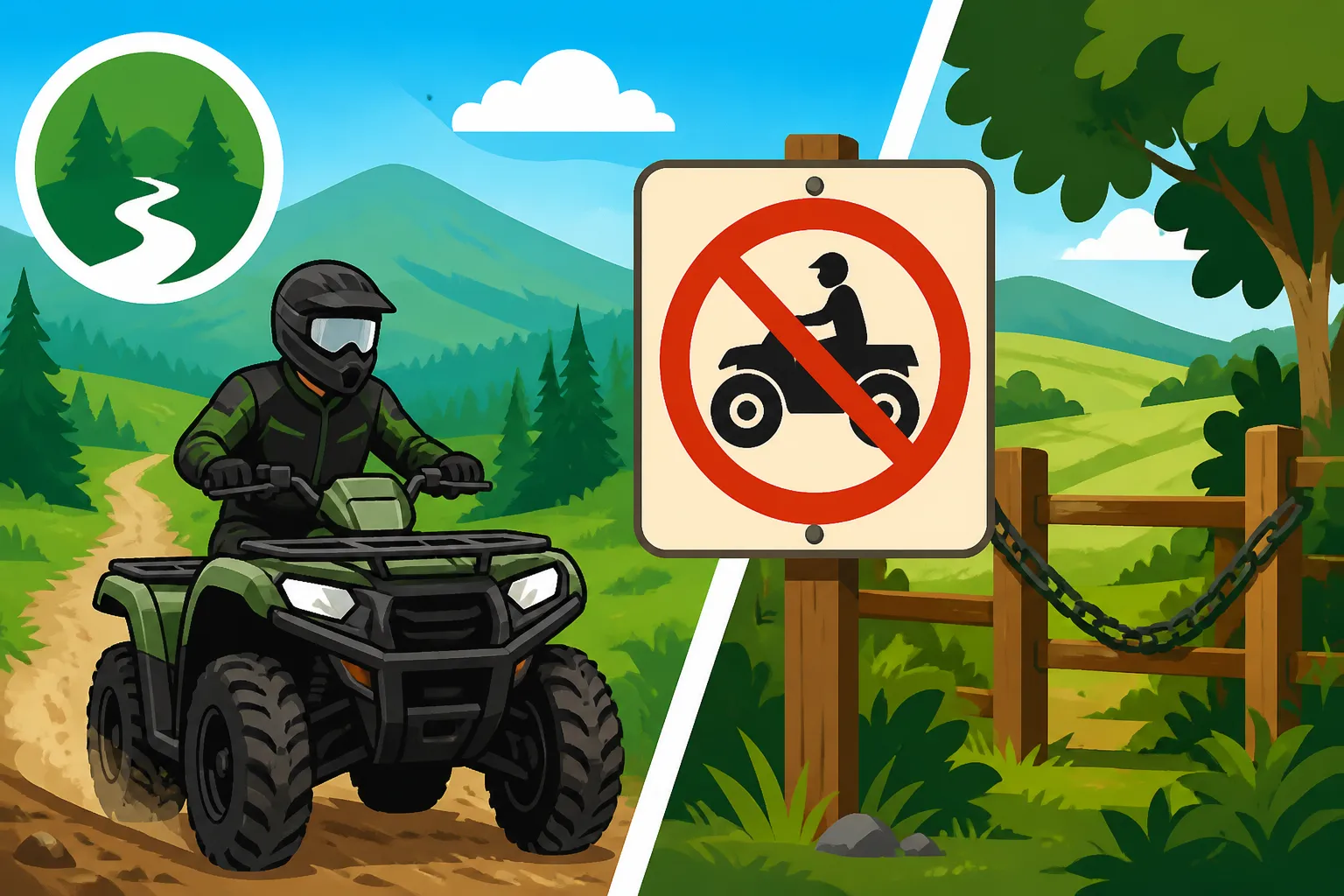
When you see a "Posted" sign in Vermont, it's not just a suggestion; it's a legal declaration from the landowner. For ATV and UTV riders, this often means that any recreational vehicle use is explicitly prohibited unless you have direct, written permission. Vermont has a strong tradition of private land ownership, and while many landowners are generous, those who choose to post their land are doing so for very specific reasons, and their wishes must be respected. It’s crucial to recognize that the responsibility falls squarely on the rider to know where they are and whose land they are on.
Navigating the vast network of trails and roads in Vermont can be tricky, especially when some sections are clearly public, others are part of the VASA trail system with landowner agreements, and then there are parcels that are strictly private and posted. You might encounter an unmarked property line that suddenly has a sign tucked behind a tree, or a well-used path that looks like a public right-of-way, only to find it's private. This ambiguity is precisely why understanding the law and taking proactive steps to avoid trespass is so vital. It’s not enough to simply say you didn't see a sign; the expectation is that you've done your due diligence.
The Legal Meaning of "Posted" Signs
In Vermont, a "Posted" sign carries specific legal weight. It's the landowner's way of officially informing the public that entry is forbidden without their express permission. This isn't just about hunting or fishing; it applies to all forms of entry, including ATV and UTV riding. The signs typically state "No Trespassing," "Private Property," or "No Hunting," "No Fishing," "No Trapping." Even if a sign doesn't specifically mention "no ATVs," if it indicates no trespassing or private property, that applies to your machine just the same.
Vermont law requires these signs to be placed in a way that provides reasonable notice. This generally means signs should be visible, placed at reasonable intervals along property lines, and at all normal points of access. However, relying solely on whether you see a sign is a risky game. It's your responsibility to understand property boundaries, and that often means consulting maps before you even hit the trail. Ignoring these signs, whether intentionally or due to negligence, can lead to serious repercussions, which we'll explore shortly. The message is clear: if it's posted, you stay off unless you have explicit, documented permission.
Common Reasons Landowners Post Their Property
Landowners choose to post their property for a variety of reasons, and understanding these can help foster a more empathetic and respectful riding community. Often, it's about protecting privacy. Many Vermonters live in rural areas specifically for peace and quiet, and unexpected vehicle traffic, noise, or dust from ATVs can disrupt that. Imagine you own a quiet plot of land, only to have machines unexpectedly roaring through your backyard; posting becomes a necessary measure to reclaim that tranquility.
Another common reason is liability. Landowners are often concerned about potential accidents or injuries occurring on their property, even if they had no involvement. By posting their land, they are attempting to reduce their legal exposure. Concerns about environmental damage, such as rutting, erosion, or littering, also frequently lead to land being posted. A landowner might have invested years in managing their forests or fields, and uncontrolled ATV use can quickly undo that work. Finally, some simply wish to maintain control over who accesses their land, perhaps for farming, timber harvesting, or simply enjoying their own private sanctuary without public intrusion. When you see a sign, remember it’s not always aimed at ATV riders specifically, but it certainly applies to us.
The Strict Reality of Vermont Trespass Laws for ATVs
Let's be blunt: riding on posted land in Vermont without permission is trespassing, plain and simple. It's not a gray area. The law doesn't care if you're "just taking a shortcut" or "didn't think anyone would mind." If the land is marked as private and you don't have the landowner's consent, you are breaking the law. This isn't just a minor infraction; it can carry fines and other penalties. Many riders assume that if they don't see a fence, or if a path looks like a trail, it must be open. That assumption can land you in deep trouble with law enforcement and create lasting animosity with local landowners, which ultimately harms the entire ATV community.
It’s crucial to grasp that the burden of proof is often on the rider to demonstrate permission, not on the landowner to prove you didn't have it. This means that if you're confronted by a landowner or law enforcement on posted property, "I didn't know" or "I didn't see the sign" won't serve as a valid defense. Instead, you could be facing citations. The best way to avoid this unpleasant scenario is to be proactive and informed about where you are riding. Always operate under the assumption that if it's not explicitly designated as an open trail or public land, it's private and requires permission.
Penalties for Riding on Posted Private Land
The consequences for riding an ATV or UTV on posted private land in Vermont without permission can range from a warning to significant fines, and potentially even impoundment of your machine in egregious cases. While specific fine amounts can vary, they are certainly not trivial. A first offense might result in a warning or a moderate fine, but repeat offenses will likely lead to escalating penalties. Beyond the financial hit, you could also face court appearances, legal fees, and a permanent mark on your record. [Vermont Trespass Law for Riders] clearly outlines these consequences, and it's something every rider needs to take seriously.
Even if you don't get a ticket, the damage to your reputation and the relationship with local landowners can be severe. Landowners who have had negative experiences with trespassers are far less likely to grant permission for future trail access or support new trail initiatives. This can lead to trails being closed permanently, impacting all responsible riders. It’s not just about you; it's about the broader riding community and its continued access to Vermont's beautiful landscapes.
When Permission Changes or Is Revoked
One common misconception is that if a trail was open last year, it's open this year. That's not always the case. [Why a Landowner Can Close a Trail Overnight] is a crucial piece of information for all riders. Landowner permission is often granted for a specific period or under certain conditions, and it can be revoked at any time. A landowner might have allowed access for years, but a single negative incident—littering, excessive noise, property damage, or even just a change in their personal circumstances—can lead them to withdraw that permission.
This is particularly relevant for trails maintained by organizations like the Vermont ATV Sportsman's Association (VASA). While VASA works diligently to secure and maintain landowner agreements, these agreements are voluntary and rely entirely on the goodwill of property owners. If an incident occurs, or if general respect for private property isn't upheld, a landowner may decide to pull their permission, leading to trail reroutes or even permanent closures. Always check current trail maps and club updates before you ride to ensure that your planned route still has valid permissions in place.
How to Legally Access Private Land for ATV Riding in Vermont
Riding legally on private land in Vermont is absolutely possible, but it requires diligence, respect, and proactive effort. It's not about finding loopholes or hoping you don't get caught; it's about building positive relationships and utilizing the established systems that allow for responsible ATV use. Vermont has a fantastic network of trails, thanks to the hard work of volunteers and the generosity of private landowners, but accessing it comes with responsibilities. Always carry proof of your trail access, like your [Vermont TAD: The Trail Access Decal Explained].
The key to unlocking these opportunities lies in understanding how permission is granted and maintained. Whether you're seeking individual permission for a specific parcel or relying on the broader VASA trail system, the principle remains the same: respect the landowner's rights and always ensure you have explicit, current authorization to be there. This approach not only keeps you on the right side of the law but also strengthens the reputation of ATV riders throughout the state.
Obtaining Explicit Landowner Permission
The most direct way to ride on posted private land is to seek and obtain explicit permission from the landowner. This might seem daunting, but a polite, respectful approach can go a long way. Start by identifying the landowner (often through town tax maps) and then make contact. A face-to-face conversation, if possible, is usually best. Clearly explain what you want to do, which type of machine you ride, and assure them you will respect their property. Discuss specific routes you plan to take and ask about any particular concerns they might have, such as livestock, crops, or quiet hours.
It’s always a good idea to get this permission in writing, even if it's just a simple signed note outlining the terms. This protects both you and the landowner. Remember, permission for one area doesn't grant access to adjacent properties. Each landowner must be approached individually. Many landowners are open to granting permission to responsible riders, especially if they see you as a trustworthy individual who will respect their land. Building these personal connections is fundamental to [Vermont Landowner Permission Rules].
The Role of ATV Clubs and VASA Trails
For most riders, the easiest and most common way to legally access private land is through organized ATV clubs and the statewide VASA trail system. [Vermont ATV Trails: The VASA System] is a testament to years of dedicated work by volunteers and the cooperation of thousands of landowners. When you purchase your [Vermont TAD Cost in 2026] and join a local club, you are supporting the very infrastructure that maintains these trails. The TAD includes your club dues, which directly fund trail maintenance, signage, and, most importantly, the relationships with landowners.
These clubs act as intermediaries, securing written permission from landowners to designate specific corridors for ATV use. This means that when you ride on a VASA-sanctioned trail, you are doing so with the landowner's collective permission, managed and maintained by the clubs. This system is truly the backbone of ATV riding in Vermont, allowing access to hundreds of miles of diverse terrain. [Vermont ATV Clubs and What They Maintain] is essential reading for understanding how this cooperative model functions. It’s a win-win: riders get legal access, and landowners have a single point of contact (the club) to manage agreements and address any concerns.
Checking Trail Maps and Designated Corridors
Before you ever load up your machine, you should be checking the most current trail maps available. VASA and individual ATV clubs regularly update their maps to reflect current trail conditions, reroutes, and especially, any changes in landowner permission or closures. Don't rely on outdated maps or verbal directions from a few years ago. [Vermont Trail Maps Still Coming] are crucial for responsible riding. Many clubs offer digital maps through apps, or paper maps at local businesses.
These maps clearly delineate designated corridors that are legally open to ATVs. If a section of land isn't marked as an official trail, you should assume it's private and off-limits unless you have direct, individual permission. Pay close attention to signage on the trails themselves; sometimes temporary closures occur due to weather, mud conditions, or landowner requests. [Staying on the Marked Corridor] is paramount to preventing accidental trespass and maintaining the trust of landowners. Investing in a good GPS unit or a phone app with up-to-date trail maps, perhaps even with robust mounting from a brand like SuperATV, can be invaluable for staying on course and avoiding posted land.
Practical Tips for Respectful Riding and Avoiding Conflicts
Being a respectful ATV rider in Vermont isn't just about following the law; it's about being a good neighbor and ambassador for the sport. Every interaction, every ride, contributes to the perception of ATV riders as a whole. Positive interactions and adherence to rules help maintain and expand trail access, while negative incidents can quickly lead to closures and increased restrictions. The goal is to ensure that ATV riding remains a cherished and accessible activity for years to come. This means taking proactive steps to minimize your impact and maximize positive relationships.
Remember that you are often a guest on someone else's property, even on designated VASA trails. This mindset shifts the focus from "what can I get away with" to "how can I show my appreciation and respect?" By consistently demonstrating thoughtful and responsible behavior, you contribute to a culture that benefits all riders and makes landowners more willing to share their beautiful Vermont landscapes.
Communication is Key: Before You Ride
Effective communication starts long before you start your engine. If you're planning to ride on a specific trail system, check the local club's social media pages or website for updates on conditions, closures, or any special events. If you're unsure about a particular section of trail or a property boundary, reach out to the local ATV club or VASA directly. They are the experts on their trails and landowner agreements. This proactive communication can save you a lot of grief and prevent accidental trespass.
For those seeking individual landowner permission, clear and open communication with the property owner is vital. Be upfront about your intentions, ask questions, and be prepared to listen to their concerns. Offer to share your contact information and assure them you'll respect any specific requests they have, whether it's avoiding certain areas, adhering to speed limits, or riding only during specific hours. A robust GPS system, perhaps mounted with a durable SuperATV bracket, can also aid in communication by allowing you to easily show a landowner your planned route on a map.
Here's a quick comparison of legal vs. illegal access scenarios:
| Scenario | Access Type | Legality | Key Action for Rider |
|---|---|---|---|
| Riding on a VASA-designated trail | Permitted by Agreement | Legal with valid TAD & club membership | Check current VASA maps, have TAD, join club. |
| Riding on clearly "Posted" private land | Prohibited | Illegal (Trespassing) | Absolutely avoid unless written permission is granted. |
| Riding on private land (not posted) | Implied (but risky) | Illegal without permission | Assume private, seek explicit permission, check town maps. |
| Riding on Class 4 town roads | Permitted by Town Ordinance | Legal if town has designated it open | Check town's specific ordinance and road designations. |
| Riding on logging roads | Often private | Illegal without specific permission | Contact landowner or logging company; assume private. |
The Importance of Knowing Your Route
Blindly following a track on a GPS or simply going wherever the trail seems to lead is a recipe for disaster in Vermont. You need to know your route in advance and be prepared to adapt if conditions or permissions change. This means having up-to-date maps, understanding property boundaries, and being aware of any town ordinances that might affect your ride, such as curfews or speed limits. [Reading Your Town's Posted Route Map] is a must if you plan to link trails via public roads.
Beyond legal implications, knowing your route is also crucial for safety. It helps you anticipate terrain, plan for fuel stops, and ensures you don't get lost in remote areas. Consider downloading offline maps to your phone or GPS device, as cell service can be spotty in parts of Vermont, especially in the Northeast Kingdom. Equipping your machine with reliable parts from a brand like SuperATV can give you peace of mind when navigating varied terrain, but knowing your route remains the ultimate preparation. A responsible rider is an informed rider, and an informed rider is one who respects property rights and helps keep trails open for everyone.
Disclaimer
This article is for general informational purposes only and does not constitute professional advice. Laws, prices and regulations vary by location and change over time. Consult a qualified professional for guidance on your specific situation.