Vermont ATV Helmet Law for Every Rider
Riding an ATV in Vermont is an incredible experience, offering unmatched access to our beautiful landscapes, from the rolling hills to the dense forests. But before you hit those trails or designated town roads, there's one piece of gear that's absolutely non-negotiable for every single rider: a helmet. It can be easy to overlook, especially if you're just planning a short jaunt, but Vermont's law is crystal clear and designed purely for your safety. This guide is here to cut through any confusion, explaining exactly what the Green Mountain State requires for ATV helmets, for everyone who hops on a machine.
Vermont's Universal Helmet Mandate for ATV Riders
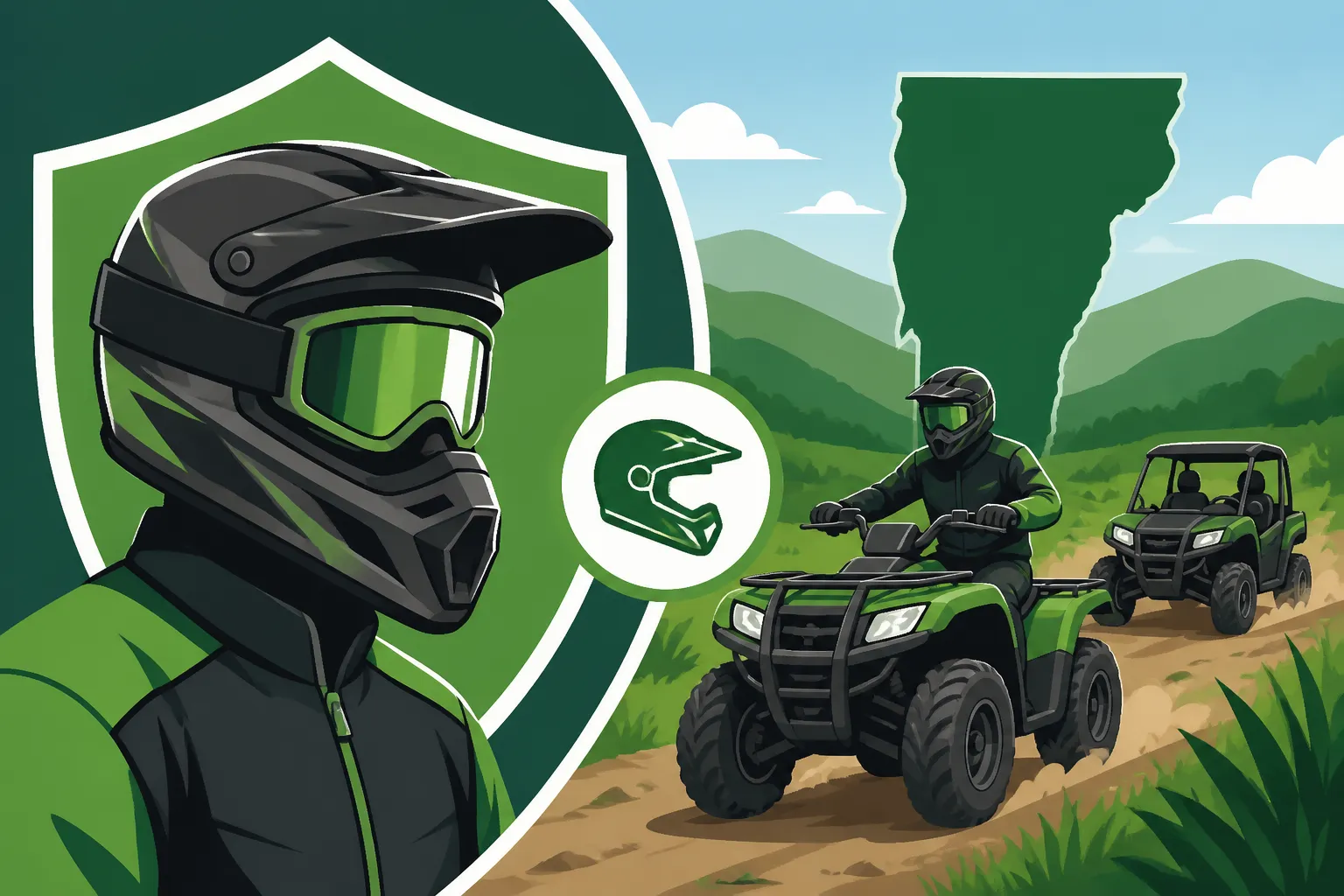
Let's start with the most important point: Vermont doesn't play around when it comes to head protection on ATVs. Unlike some other states that might have age-specific rules or exemptions for certain conditions, Vermont has a universal helmet mandate. This means that if you're operating or riding as a passenger on an All-Terrain Vehicle (ATV) within the state, you must be wearing an approved helmet. There's no getting around it, and honestly, it's for the best. We all want to come home safe after a day of tearing up the trails.
No Exceptions for Age or Experience
It's common for folks to think, "Oh, I'm an adult, I've been riding for decades, surely I don't need a helmet on my own land, or for a quick spin?" Or maybe parents wonder if their little ones, who might be just scooting around the backyard, need one. The simple truth is, Vermont's law doesn't make those distinctions. Whether you're a seasoned veteran with thousands of miles under your belt or a brand-new rider just learning the ropes, the helmet rule applies. This means your eight-year-old on a youth quad and your eighty-year-old grandfather taking a leisurely ride both need proper head protection.
Think of it this way: accidents can happen to anyone, at any speed, and on any terrain. That loose gravel on a seemingly flat section, an unexpected branch, or even just a momentary lapse in concentration can send you tumbling. A helmet provides that crucial layer of defense for your most important asset – your brain. While it might feel like an extra step or a slight inconvenience, especially on a hot day, it's a small price to pay for potentially life-saving protection. The law reflects a commitment to keeping all riders safe, and it simplifies enforcement, ensuring there's no ambiguity for wardens or local law enforcement.
The "Every Rider" Rule Explained
When we say "every rider," we mean exactly that. It encompasses the operator of the ATV, the person with their hands on the handlebars, and any passengers who might be riding along. This often comes up with side-by-sides (UTVs) where multiple people can be seated. Each and every person in that machine, regardless of their seating position, must have a helmet securely fastened. This rule underscores a fundamental principle of ATV safety: head injuries are among the most serious and preventable outcomes of off-road vehicle accidents.
Imagine you're taking your family out for a scenic ride through the Northeast Kingdom. You've got your two-seat side-by-side, and maybe your spouse is riding with you. Or perhaps it's a four-seater, and you've got two kids in the back. According to Vermont law, everyone in that machine, from the driver to the last passenger, needs to be wearing a helmet. It's not just about compliance; it's about protecting every individual. A quick stop at a local store or gas station after a ride can feel like a nuisance with a helmet, but that moment of protection on the trail is invaluable. If you're curious about other age-related rules, you might want to check out [Vermont ATV Helmet Law Age Limit], which delves into how age interacts with this universal requirement.
What Kind of Helmet Does Vermont Law Require?
It’s not enough to just wear any helmet; it has to be the right kind of helmet. Just like you wouldn't wear sandals for a hike up Camel's Hump, you shouldn't wear a bicycle helmet for ATV riding. The forces and impacts involved in an ATV incident are entirely different, demanding specialized protection. Vermont law, like most states, specifies that helmets must meet certain recognized safety standards.
Meeting Safety Standards (DOT, Snell, ECE)
For an ATV helmet to be legal in Vermont, it must meet specific safety standards established by recognized organizations. The most common certifications you'll see are:
- DOT (Department of Transportation): This is the minimum standard required for street-legal motorcycles and, by extension, often for ATVs in many states. A DOT-certified helmet means it has passed a series of tests to absorb impact energy, resist penetration, and provide peripheral vision. You'll typically find a "DOT" sticker on the back of the helmet.
- Snell: The Snell Memorial Foundation is a private, non-profit organization that performs more rigorous testing than DOT. A Snell-certified helmet offers a higher level of impact protection and is often favored by serious riders. These helmets often carry both DOT and Snell certifications.
- ECE (Economic Commission for Europe): This standard is widely accepted internationally and is known for its comprehensive testing protocols, including specific tests for chin bar impacts.
The key takeaway here is that your helmet needs to have one of these certifications. A basic bicycle helmet, a skateboarding helmet, or even a construction hard hat will not provide adequate protection for ATV riding and will not meet the legal requirements in Vermont. You need a helmet designed specifically for motorized powersports. When you’re looking for gear, companies like SuperATV offer a range of products that can help enhance your riding experience, and while they might not sell helmets directly, they certainly understand the need for proper safety gear that meets these crucial standards. Always check for that certification sticker before you purchase or ride! For more details on verifying your helmet's compliance, you can refer to [Checking a Helmet's Safety Sticker Before You Ride].
The Importance of a Proper Fit
Even a top-of-the-line, Snell-certified helmet won't do its job if it doesn't fit correctly. A helmet that's too loose can shift around during an impact, failing to absorb energy effectively and potentially obstructing your vision. One that's too tight will be incredibly uncomfortable, distracting you and making your ride miserable. A proper fit is crucial for both safety and comfort.
Here's how to check for a good fit:
- Snug but Not Painful: The helmet should feel snug all around your head, with no pressure points that cause pain. Your cheeks should feel a slight squeeze.
- No Excessive Movement: With the chin strap fastened, try to move the helmet from side to side and up and down. Your scalp should move with the helmet; it shouldn't slide independently. If it wiggles freely, it's too big.
- Peripheral Vision: Ensure the helmet doesn't obstruct your peripheral vision. You need to be able to see the trail and your surroundings clearly.
- Chin Strap: The chin strap should be securely fastened so that only one or two fingers can fit snugly under it. It should not be so loose that the helmet can be pulled off your head with a firm tug. The strap itself should rest just under your chin, not on your throat. Proper fastening is so important that Vermont even has specific guidance on it, which you can learn more about in [Fastening a Helmet the Way Vermont Law Requires].
It's always best to try on several helmets before buying. Different brands and styles have different internal shapes, so what feels good in one might not in another. Take your time, shake your head, and ensure it feels like an extension of your body, ready to protect you should the unexpected happen.
Helmet Use for Passengers and Youth Riders
We've touched on the "every rider" rule, but it's worth diving deeper into how this applies to passengers and, specifically, to our younger adventurers. There's a common misconception that passengers, especially those just along for the ride, might not need the same level of protection as the operator. In Vermont, this couldn't be further from the truth.
Passenger Helmet Requirements
Just like the operator, every passenger on an ATV in Vermont is required to wear an approved helmet. This is a critical safety measure, as passengers are just as vulnerable to head injuries in the event of a rollover, collision, or unexpected stop. In fact, sometimes passengers might experience different kinds of impacts or be thrown in different ways than the operator, making their head protection equally vital.
Consider a scenario where you're on a two-up machine, perhaps exploring some of the amazing trails in Rutland County. Your friend or family member is riding behind you. Even though you're the one controlling the machine, if you hit a bump hard or have to brake suddenly, your passenger could be jostled violently. If the machine were to tip, they could easily strike their head. This is why the law is so clear: [Vermont Passengers Must Wear Helmets]. It's about ensuring everyone on board has the maximum possible protection. Always make sure you have enough properly fitted, certified helmets for your entire riding party before you even start the engine.
Specifics for Riders Under 18
While the universal helmet law applies to all ages, the state also has additional regulations concerning youth riders that underscore the importance of safety gear. For anyone under the age of 18, the helmet requirement is often part of a broader safety framework that includes things like required training and supervision. While the helmet law itself doesn't have a specific age limit for wearing a helmet (because it's required for all ages), the enforcement around youth riding reinforces its absolute necessity.
For example, a young person operating an ATV needs to have successfully completed an approved safety course. This course teaches not only operational skills but also emphasizes the importance of safety gear, with helmets being at the top of the list. Imagine a 14-year-old on a designated trail. If a warden encounters them, they'll check for proper registration, the [Vermont ATV Safety Course Required Under 18] certificate, and, of course, a properly worn and certified helmet. Parents and guardians bear the responsibility for ensuring their young riders are not only equipped with the right helmet but also understand why it's so important. It's about instilling good safety habits from a young age that will serve them well throughout their riding lives.
When and Where the Helmet Law Applies
Understanding that you need a helmet is one thing, but knowing when and where that requirement kicks in is just as important. Vermont's approach to ATV regulations, particularly concerning where you can ride, can be a bit nuanced due to local town ordinances and the nature of the VASA trail system. However, the helmet law remains a constant across almost all scenarios.
Public Trails, Roads, and Private Land Access
The helmet law in Vermont applies broadly across various riding environments.
- Designated Public Trails: If you're riding on any of Vermont's extensive VASA (Vermont All-Terrain Vehicle Sportsmen's Association) trail system, which often crisscrosses both private and public lands, a helmet is absolutely mandatory. These trails are generally well-maintained but still present varied terrain where accidents can occur. The VASA system relies heavily on landowner permission, and adhering to all state laws, including helmet use, helps maintain those crucial relationships.
- Town Roads Designated for ATVs: Vermont has a unique system where individual town selectboards can vote to open certain town roads to ATV traffic. If you're riding on one of these designated routes – perhaps to connect trail sections or access services – you must wear your helmet. These are public roads, even if they're gravel or dirt, and the rules of the road, including safety equipment requirements, apply. You can find out more about these specific routes by checking out [Vermont ATV Road Rules: Towns Decide].
- Private Land with Public Access: Many VASA trails traverse private land with explicit landowner permission. While technically private property, if that land is part of the designated public trail system, the helmet law still applies.
- Strictly Private Land: What about riding solely on your own private property, with no public access or designated trails? While enforcement can be less direct, the spirit of the law, and indeed common sense, strongly recommends helmet use. Remember, the law is designed for your safety. Even in your own backyard, unexpected hazards exist.
So, whether you're ripping through a scenic trail in Orleans County, connecting two towns on a designated gravel road, or just doing chores on your own farm property (though farm-use exemptions might apply to registration, they generally do not apply to safety equipment if you're operating the machine on any publicly accessible land or designated route), your helmet needs to be on and securely fastened. It's part of the essential [Vermont Equipment Requirements] for any ATV rider. Companies like SuperATV understand that riders need durable and reliable gear no matter the terrain, so ensure your safety equipment matches that same level of quality and protection.
Riding Season and Time of Day
Another straightforward aspect of Vermont's helmet law is that it applies at all times, regardless of the calendar or the clock.
- Year-Round Requirement: The helmet law isn't tied to the official VASA riding season (typically May to October). If you're riding an ATV in Vermont in December, January, or April, you still need a helmet. Whether you're plowing snow with your ATV, accessing a hunting blind, or just performing maintenance, if you're operating the machine, the helmet law is in effect.
- Day and Night: There are no "night exemptions" for helmets. If you're riding after dark, perhaps using your ATV's headlights and tail lights, your helmet must still be on. Visibility can be reduced at night, making head protection even more critical.
This consistent application of the law eliminates guesswork. You don't have to wonder if it's required during mud season, hunting season, or if it's too late in the evening. If you're on an ATV in Vermont, your helmet is a must.
The Legal Ramifications of Non-Compliance
Ignoring Vermont's helmet law isn't just a gamble with your personal safety; it's also a gamble with legal and financial consequences. The state takes ATV safety seriously, and that includes enforcing equipment regulations. Getting caught without a helmet can lead to more than just a stern talking-to.
Penalties for Riding Without a Helmet
If you're stopped by a Vermont game warden or local law enforcement while operating or riding as a passenger without a properly worn, certified helmet, you can expect to face penalties. These typically involve fines. While specific dollar amounts can change, it's generally not a cheap ticket. The aim isn't just to punish but to deter unsafe behavior and ensure compliance with public safety regulations.
Imagine you're enjoying a beautiful fall day ride near Island Pond, taking in the vibrant foliage. You decide to take off your helmet for "just a minute" while cruising a quiet section of trail, thinking no one's around. Suddenly, you round a bend and there's a game warden checking machines. That "just a minute" could quickly turn into a fine that puts a damper on your entire weekend. It's an easily avoidable penalty. The financial hit is one thing, but the potential for serious injury if an accident occurs during that "just a minute" is far more significant. These penalties are part of the broader framework of [Vermont Fines for Road Violations] and other ATV-related infractions designed to keep everyone safe on our shared trails and roads.
Insurance Implications After an Accident
Beyond direct fines, riding without a helmet can have serious ramifications for your insurance coverage, especially if you're involved in an accident. Many insurance policies, while covering liability and damage, might have clauses related to personal injury claims if the rider was not adhering to state safety laws.
Let's say you have [Vermont ATV Insurance Requirements] in place, covering bodily injury and property damage. If you're involved in an accident where you sustain a head injury, and it's discovered that you weren't wearing a helmet at the time, your insurance company might deny or significantly reduce coverage for your medical expenses. This is because not wearing a helmet could be considered negligence or a violation of policy terms related to complying with state law. What might have been a covered incident, leading to necessary medical care, could turn into a massive out-of-pocket expense simply because a helmet wasn't worn.
This isn't just about what could happen, but what does happen. An uninsured head injury can lead to lifelong financial burdens, impacting not just you but your entire family. Always carry proof of your insurance and ensure you're compliant with all state laws, including the helmet mandate, to protect yourself financially as well as physically.
Essential Helmet Features Beyond Basic Compliance
Once you understand the legal requirement to wear a helmet, the next step is choosing the right one. While meeting DOT, Snell, or ECE standards is the legal minimum, there are features and considerations that go beyond mere compliance, enhancing your safety, comfort, and overall riding experience.
Full Face Versus Open Face Helmets
When shopping for an ATV helmet, you'll generally encounter two main types: full face and open face (sometimes called "moto-style" with a peak). Each has its pros and cons, but for ATV riding, the full face often comes out on top for overall protection.
- Full Face Helmets: These helmets offer complete coverage for your head, including a chin bar that protects your jaw and face. They typically have a visor that can be pulled down for eye protection.
- Pros: Maximum protection against impacts, flying debris (rocks, branches), dust, and weather. The chin bar is a huge advantage, as facial injuries are common in ATV accidents.
- Cons: Can feel hotter and more restrictive, especially in warm weather. Ventilation is key here. Can sometimes feel heavier.
- Best for: Aggressive trail riding, dusty conditions, colder weather, or anyone prioritizing maximum protection.
- Open Face Helmets (often paired with goggles): These helmets cover the top, back, and sides of your head, but leave your face exposed. They usually have a peak or visor to block sun.
- Pros: More airflow, lighter feeling, often better peripheral vision (though this can be offset by goggles).
- Cons: Absolutely no facial protection from impact or debris. You must wear separate eye protection.
- Best for: Very casual, low-speed riding in controlled environments, or specific events where visibility is paramount (though still not ideal for most ATV scenarios).
For the unpredictable nature of Vermont ATV trails – with their mix of dirt, mud, gravel, and potential for flying debris – a full-face helmet is almost always the recommended choice for superior protection. While SuperATV might not carry helmets, they offer accessories and parts for your machine that emphasize durability and safety, making sure you have the confidence to tackle any trail, and a full-face helmet aligns perfectly with that ethos of robust protection.
Goggles, Face Shields, and Ventilation
Beyond the core helmet type, several features contribute significantly to your comfort and safety on the trail:
- Eye Protection (Goggles or Face Shields): This is non-negotiable. Whether your full-face helmet has an integrated face shield or you're wearing separate goggles with an open-face helmet, your eyes must be protected. Dust, mud, insects, branches, and even sunlight can impair your vision, leading to dangerous situations. Look for goggles with good anti-fog properties and a wide field of view. Many ATV-specific full-face helmets are designed to accommodate goggles even with the visor up, offering versatile options.
- Ventilation: Riding an ATV is physical work, and even on cooler days, you can get hot. Good ventilation in a helmet is crucial for comfort, preventing overheating, and reducing visor fogging. Look for helmets with multiple intake and exhaust vents that can be opened and closed.
- Moisture-Wicking Liner: Sweat is inevitable. A removable, washable, moisture-wicking liner will keep your helmet fresher and more comfortable over long rides.
- Weight: Lighter helmets reduce neck fatigue, especially on longer rides. However, don't sacrifice protection for extreme lightness.
- MIPS Technology: Some newer helmets incorporate Multi-directional Impact Protection System (MIPS) technology, designed to reduce rotational forces on the brain during certain impacts. This is an advanced safety feature worth considering if your budget allows.
Choosing a helmet isn't just about meeting the law; it's about investing in your comfort and maximizing your safety on every adventure.
| Feature | Full Face Helmet | Open Face Helmet (with goggles) |
|---|---|---|
| Protection | Maximum (head, face, jaw) | Moderate (head only, face exposed) |
| Debris Shield | Excellent (integrated visor, chin bar) | Poor (requires separate goggles/glasses) |
| Ventilation | Varies, can be warm; essential to have good vents | High (more airflow to face) |
| Comfort | Can feel restrictive initially, but secure and quiet | Lighter, more open feel, but wind noise/elements an issue |
| Fogging | Visor can fog; look for anti-fog coatings | Goggles can fog; anti-fog treatment is key |
| Recommended? | Highly recommended for ATV riding in Vermont | Generally not recommended for optimal ATV safety |
Best Practices for Helmet Care and Replacement
You've invested in a great, certified helmet that fits perfectly. That's fantastic! But your helmet isn't a "set it and forget it" piece of gear. To ensure it continues to offer maximum protection and remains comfortable for years to come, proper care and knowing when to replace it are just as important as the initial purchase.
Cleaning and Storage Tips
After a fun day of tearing up the trails, especially in Vermont's diverse conditions, your helmet is likely to be caked in dust, mud, and sweat. Regular cleaning is essential for hygiene and to prolong its life.
- Exterior Cleaning: Use a mild soap and warm water with a soft cloth to clean the outer shell. Avoid harsh chemicals, as they can damage the helmet's finish or compromise its materials. For stubborn mud, let it dry and then gently brush it off before wiping.
- Interior Cleaning: Many helmets come with removable, washable liners and cheek pads. If yours does, follow the manufacturer's instructions for hand washing them with mild soap and air drying. If the liner isn't removable, you can use a helmet-specific spray cleaner or a damp cloth with a tiny bit of gentle soap to wipe down the interior. Allow it to air dry completely before using.
- Visor/Goggle Care: For integrated visors or goggles, use a designated lens cleaner and a microfiber cloth to avoid scratches. Never use paper towels, as they can be abrasive.
- Storage: Store your helmet in a cool, dry place away from direct sunlight or extreme temperatures. Helmets should be kept off the ground to prevent scuffs or accidental drops. Ideally, use a helmet bag (like those you might find at powersports retailers or from brands offering riding accessories) to protect it from dust and scratches when not in use. Avoid hanging it by the chin strap, which can cause stretching or damage over time. Proper storage ensures the integrity of the EPS foam liner, which is critical for impact absorption. For any gear you acquire, whether it's for your machine or for personal protection, treating it with care extends its lifespan and effectiveness. Even SuperATV's robust machine parts benefit from proper maintenance, and your helmet is no different.
When to Replace Your Helmet
Helmets aren't meant to last forever. Their protective capabilities can degrade over time, even without visible damage. Knowing when to replace your helmet is a crucial aspect of safety.
- After Any Significant Impact: This is the golden rule. If your helmet takes a significant hit – whether you crashed your ATV, dropped the helmet hard onto concrete, or it was involved in any impact – it needs to be replaced immediately. Even if there's no visible exterior damage, the internal EPS (Expanded Polystyrene) foam liner, which is designed to crush and absorb energy, may have compressed. Once compressed, it loses its ability to protect you in a subsequent impact. Consider your helmet a single-use item when it comes to crashes.
- Age: Most helmet manufacturers recommend replacing your helmet every five to seven years, regardless of how often it's been used or if it's been in an accident. Over time, the materials (adhesives, resins, foam, fabrics) can degrade due to exposure to UV light, sweat, oils from your skin, and general wear and tear. This degradation can reduce its effectiveness in an impact. Check the manufacturing date, often found under the comfort liner or on a sticker inside the shell.
- Visible Damage: If you notice cracks in the shell, fraying straps, deteriorated padding, or a visor mechanism that no longer works correctly, it's time for a new helmet. Any compromise to the helmet's structure or components means it can no longer guarantee the protection it was designed for.
Replacing a helmet might feel like an expense, but it's an investment in your well-being. No price can be put on protecting your head, and a compromised helmet is simply not worth the risk. Stay safe out there, Vermont riders!
Disclaimer
This article is for general informational purposes only and does not constitute professional advice. Laws, prices and regulations vary by location and change over time. Consult a qualified professional for guidance on your specific situation.