Brighton’s ATV Ordinance Explained in Vermont
Navigating the world of ATV and UTV riding in Vermont can sometimes feel like trying to solve a puzzle, especially when you encounter local town ordinances that add another layer of rules on top of state laws. It's frustrating to plan a ride, only to realize you might be overlooking a crucial detail specific to the town you're passing through. This comprehensive guide will pull back the curtain on Brighton's ATV ordinance, helping you understand its unique requirements and ensure your next ride through this beautiful Vermont town is both enjoyable and compliant.
Understanding Vermont's Local Control Over ATV Access
Vermont has a unique, and sometimes challenging, framework when it comes to ATV and UTV access on its public roads. Unlike some states that have a blanket rule, Vermont empowers its individual towns to decide where and when these machines can operate on town-maintained highways, also known as local roads. This system is designed to give local communities a voice in managing traffic, noise, and safety concerns, but it can certainly leave riders feeling a bit lost in the patchwork of regulations.
Why Towns Create Their Own Rules
Imagine living in a quiet Vermont village, accustomed to the gentle hum of rural life, when suddenly ATVs start rumbling down your street. For many residents, this can be a significant change, bringing with it concerns about noise, dust, and safety for children and pets. This is precisely why Vermont's state law, [Vermont's ATV Statute in Plain English], grants towns the authority to craft their own specific ordinances. It's an attempt to strike a balance between allowing recreational access and preserving the peace and character of local communities.
Each town's selectboard, often with input from town meetings or resident petitions, can vote to open certain roads to ATV traffic, set specific hours, or even establish unique equipment requirements. This local control means that the rules you follow in one town, say Island Pond, might be subtly different from those in an adjacent town like Brighton. It's not meant to be intentionally confusing, but rather a reflection of diverse local priorities and concerns. Riders often express frustration over this variability, and it's completely understandable. You want to enjoy the trails, not spend hours poring over municipal codes.
The General Framework of Vermont's ATV Law
While towns have significant leeway, their local ordinances don't exist in a vacuum. They must operate within the larger framework of Vermont's statewide ATV laws. Think of it like a house: the state law builds the foundation and main structure, and the town ordinance adds the specific interior design and house rules. For instance, state law dictates universal requirements like [Vermont ATV Helmet Law for Every Rider] and [Vermont ATV Insurance Requirements]. A town ordinance won't say "you don't need a helmet here"; instead, it will focus on additional local conditions, such as specific roads that are open, speed limits on those roads, or hours of operation.
The state provides the broad definitions for what constitutes an ATV or ASV (all-terrain vehicle or all-terrain side-by-side vehicle), along with mandates for registration and safe operation. Local ordinances then layer on context-specific rules for areas within that town's jurisdiction. This means that while you're riding through Brighton, you're not just following Brighton's rules; you're simultaneously adhering to all applicable statewide regulations. It's a dual system that requires riders to be informed about both the general Vermont ATV landscape and the specific nuances of the communities they plan to explore.
Brighton's Specific ATV Ordinance: What You Need to Know
Brighton, a charming town in the heart of Vermont's Northeast Kingdom, has embraced ATV riding as a part of its recreational landscape. However, like many communities that welcome riders, it has established an ordinance to manage how and when ATVs and UTVs can operate on its town roads. Understanding these specific rules is crucial for anyone planning to ride in the area, whether you're a local or visiting from out of state.
Overview of Brighton's Designated Routes
The Brighton ATV ordinance, which you can often find detailed in the town's official meeting minutes or on its municipal website, specifically outlines which town roads are open for ATV use. These aren't just any roads; they are carefully selected routes designed to connect sections of the wider VASA (Vermont All-Terrain Sportsmen's Association) trail system, provide access to local businesses like gas stations or restaurants, or allow riders to reach trailheads. You won't find every paved or dirt road in Brighton open to ATVs, and that's a common misunderstanding many riders face. The goal is to provide logical connections without infringing too much on residential areas or roads not suitable for such traffic.
These routes are typically designated annually by the selectboard, meaning they can change from year to year, or even within a season, though major changes are usually communicated in advance. It’s absolutely essential to consult the most current map provided by the town of Brighton or the local VASA club, such as the Tri-County ATV Club, which often works closely with the town. Blindly following a GPS app that doesn't distinguish between open and closed ATV roads can lead to trespassing or violations. Always look for official signage; [Brighton's Posted Routes and Their Signs] are there to guide you and keep you compliant. Ignoring these signs, or riding off-route, not only puts you at risk of a fine but also jeopardizes the town's willingness to keep these routes open for everyone.
Operating Hours and Season Dates in Brighton
One of the most common aspects of local ATV ordinances, and certainly true for Brighton, relates to the specific times of day and dates of the year that riding is permitted on town roads. For instance, [Brighton's Season Dates in Vermont] typically run from late spring, often around May 1st, through early fall, usually around October 1st. This aligns with many other towns and the general VASA trail season, allowing roads to recover from winter frost heaves and protecting them during the spring mud season. Riding outside these dates can damage roads and lead to fines.
Beyond the seasonal window, Brighton also imposes daily operating hours, commonly referred to as a curfew. [Brighton's Night Curfew in Vermont] means that ATVs and UTVs are usually not permitted on town roads after a certain hour, such as 9 p.m. or 10 p.m., and often not before 7 a.m. or 8 a.m. This is a direct response to noise concerns from residents. Imagine living next to a designated route; constant engine noise late at night or early in the morning can be a real nuisance. These curfews are put in place to ensure that riders can enjoy the trails during reasonable hours while still allowing residents to enjoy quiet evenings and mornings. It's a give-and-take, and respecting these hours is a simple way to foster good relationships between riders and the community, helping to preserve the riding access we all value.
Equipment and Rider Requirements in Brighton
While Vermont state law lays out many fundamental requirements for ATVs and their operators, local ordinances like Brighton's often include additional specifications. These aren't meant to make your life harder, but rather to address specific safety and visibility concerns on town roads where ATVs share space with cars, bicycles, and pedestrians. Staying informed about these local nuances can save you from an unexpected ticket and ensure a smoother riding experience.
Plate Visibility and Front Plate Request
Vermont state law mandates that all registered ATVs and UTVs display a valid license plate, typically mounted on the rear of the machine. The plate must be clearly visible and kept clean. However, Brighton adds a specific request that can catch some riders off guard: while not strictly a legal mandate, the town's ordinance strongly "requests" or "encourages" that ATVs also display a plate on the front when operating on town roads. This isn't common statewide, as [Vermont ATV Plates and Where They Go] usually specifies only a rear plate.
So, why the request for a front plate in Brighton? It often comes down to visibility and identification, especially when vehicles are approaching head-on or parked in areas where the rear plate might be obscured. For riders keen on being fully compliant and showing respect for local regulations, adding a front plate is a thoughtful gesture. You can find various aftermarket solutions for mounting plates, from simple bolt-on brackets to more robust systems. Companies like SuperATV offer a range of universal license plate mounts that can be adapted for front installation, making it easier to meet such requests without permanent modifications to your machine. It’s a small detail, but one that goes a long way in showing good faith and contributing to a positive image for ATV riders in the community. As [Why Brighton Asks for a Front Plate Too] explains, it's about clarity for local enforcement and residents alike.
Speed Limits and Safe Operation on Brighton Roads
Sharing town roads with other traffic means adhering to posted speed limits, and often, specific limits set for ATVs. [Brighton's 25 mph Cap in Vermont] is a prime example. While the general speed limit on many Vermont town roads might be higher for cars, Brighton's ordinance typically specifies a maximum speed of 25 miles per hour for ATVs and UTVs. This lower speed limit is critical for several reasons: it reduces noise, decreases dust, and significantly improves safety. ATVs, with their different handling characteristics compared to cars, require more caution on paved or graded gravel roads, especially when encountering blind corners, driveways, or other vehicles.
Operating your machine safely in Brighton means more than just watching your speedometer. It involves defensive riding, being acutely aware of your surroundings, and showing courtesy to other road users. Always yield to pedestrians, bicycles, and horse-drawn carriages. Slow down significantly when passing homes, businesses, or other trail users. Remember, your actions reflect on the entire ATV community. Reckless riding or excessive speed is a quick way to generate complaints, leading to potential restrictions or even the closure of routes. Understanding and respecting [Vermont ATV Speed Limits on Town Roads] in general, and Brighton's specific limit, is not just about avoiding a ticket; it's about being a responsible ambassador for the sport and ensuring these routes remain open for everyone to enjoy.
Common Violations and Penalties in Brighton
Riding an ATV or UTV in Brighton is a privilege that comes with the responsibility of adhering to the town's specific ordinance. While most riders are conscientious, violations do occur, and it's important to understand the potential consequences. Local enforcement takes these rules seriously, not just for safety but also to maintain community harmony.
Understanding Brighton's Fine Schedule
Like most municipalities, Brighton has a structured fine schedule for violations of its ATV ordinance. These penalties are designed to deter non-compliance and often escalate for repeat offenses. For instance, a first offense might result in a warning or a relatively modest fine, but a second or third infraction within a specific timeframe could lead to significantly higher penalties. [Brighton's Fine Schedule in Vermont] typically details these escalating costs. It's not uncommon for a first ticket to be around the waiver fee of the original violation, but subsequent tickets can double or triple that amount.
Consider a scenario where a rider is caught operating an ATV on a closed road after the designated season dates. A local police officer or game warden could issue a ticket. If that same rider is later found exceeding the 25 mph speed limit or riding past the established curfew, the fine could be substantially higher. These financial penalties can quickly add up, turning what was supposed to be a fun day on the trails into a costly mistake. The purpose isn't to punish riders unnecessarily but to ensure everyone respects the local agreements that allow ATV access in the first place. Avoiding these penalties is as simple as knowing the rules and sticking to them.
Enforcement and Reporting Violations
The enforcement of Brighton's ATV ordinance falls primarily to local law enforcement, such as the town's police department or county sheriff's office, and Vermont State Game Wardens. These officers have the authority to pull over ATVs, verify registration and insurance, and issue citations for violations of both state law and local ordinances. So, if you're riding in Brighton, understand that you are subject to the same oversight as any other vehicle operator on those roads. [Who Enforces ATV Rules: Warden or Town Officer?] highlights this shared responsibility.
Residents also play a role in enforcement, often by reporting concerns to local authorities. Complaints about excessive noise, speeding, or riding on undesignated routes can prompt increased patrols and stricter enforcement. Imagine a homeowner whose property borders an ATV route: if riders are consistently ignoring the speed limit or riding late into the night, that homeowner is likely to contact the authorities. Such complaints, if frequent, can lead to selectboards reconsidering or even closing ATV routes. Therefore, responsible riding isn't just about avoiding a personal fine; it's about protecting the future of ATV access for everyone. Maintaining a good relationship with the community by respecting their rules is paramount.
Navigating Brighton's ATV Network and Staying Informed
Successfully and responsibly riding your ATV or UTV in Brighton requires more than just understanding the rules; it demands active engagement with local resources to ensure you're always on the right path. Town ordinances, designated routes, and operational hours can change, so staying current is key to avoiding frustration and fines.
Accessing and Interpreting Local Maps
The absolute best tool for navigating Brighton's ATV network is an official, up-to-date map of the designated routes. These maps are typically made available by the town office, either in physical form or as a digital download on the municipal website. You might also find them at local businesses that cater to riders or through the local VASA club, such as the Tri-County ATV Club. These maps clearly mark which town roads are open to ATVs, often highlighting connections to the broader VASA trail system. Without a current map, you're essentially riding blind.
When you get your hands on a map, take the time to study it. Look for the legend, which will explain symbols for open roads, closed roads, points of interest, and services. Pay close attention to route numbers or names. Don't just glance at it; plan your entire ride using the map, noting fuel stops, potential rest areas, and bailout points. Assume that any road not explicitly marked as open for ATV use is, in fact, closed. Trying to guess or follow faint tracks can easily lead you onto private property or restricted roads, resulting in fines or landowner confrontations. As mentioned in [Reading Your Town's Posted Route Map], this isn't just about finding your way; it's about ensuring legal and respectful passage through the community.
Resources for Staying Up-to-Date
The dynamic nature of local ordinances means that "set it and forget it" isn't an option for responsible riders. Town selectboards review and often renew their ATV ordinances annually. [Annual Designation and What Lapses] reminds us that these decisions are not permanent and require yearly affirmation. This means what was open last year might be closed this year, or new routes might be added. The best ways to stay informed include:
- Brighton Town Website: Regularly check the town's official website for updates, selectboard meeting minutes, and the latest version of the ATV ordinance and maps.
- Brighton Town Clerk's Office: A quick call or email to the town clerk can clarify any questions you have about current rules or route statuses. They are often the most knowledgeable resource.
- Local VASA Clubs: Joining or following local ATV clubs like the Tri-County ATV Club is invaluable. These clubs work directly with towns, maintain trails, and are usually the first to know about any changes or upcoming discussions regarding access. They often share updates on their social media pages or through newsletters.
- Public Hearings: Keep an eye out for notices about public hearings regarding ATV access. [Vermont Town Meeting Votes on ATV Roads] often stem from these discussions. Attending these (or reviewing the minutes) provides insight into community concerns and upcoming changes.
By actively utilizing these resources, you become a more informed, responsible rider, contributing positively to the perception of ATVs in Brighton and helping to ensure continued access for years to come.
General Vermont ATV Rules That Still Apply in Brighton
While Brighton's specific ordinance adds local flavor to your riding experience, it's crucial to remember that it operates in addition to, not instead of, statewide Vermont ATV laws. These foundational rules cover everything from who can ride to how your machine must be equipped, and they apply universally across any public land or designated route in Vermont, including those within Brighton. Ignoring these state-level requirements can lead to penalties regardless of local compliance.
Registration, Insurance, and Safety Certificates
First and foremost, every ATV or UTV operating on designated trails or town roads in Vermont, including Brighton, must be properly registered with the Vermont Department of Motor Vehicles (DMV). This isn't optional; it's a legal requirement. [Vermont ATV Registration Cost] is a small price to pay for legal access. Furthermore, carrying proof of liability insurance is mandatory. Vermont law sets minimum coverage limits, such as [Vermont's $25,000 Bodily Injury Minimum], and you must be able to produce this proof if requested by law enforcement. Riding unregistered or uninsured is a serious offense that can result in significant fines and even impoundment of your machine.
For younger riders, Vermont has specific requirements regarding safety certificates. Anyone under the age of 18 must complete an approved ATV safety course to operate an ATV on public lands or designated routes. This isn't just a suggestion; [Vermont ATV Safety Course Required Under 18] is a strict requirement designed to educate young riders on safe operating practices and rules of the road. Even if an adult is supervising, the youth still needs the certificate. These certificates are crucial for ensuring that all riders, especially those still learning, have a foundational understanding of safety. Always carry proof of registration, insurance, and if applicable, your safety certificate when you ride.
Helmet Laws and Passenger Rules
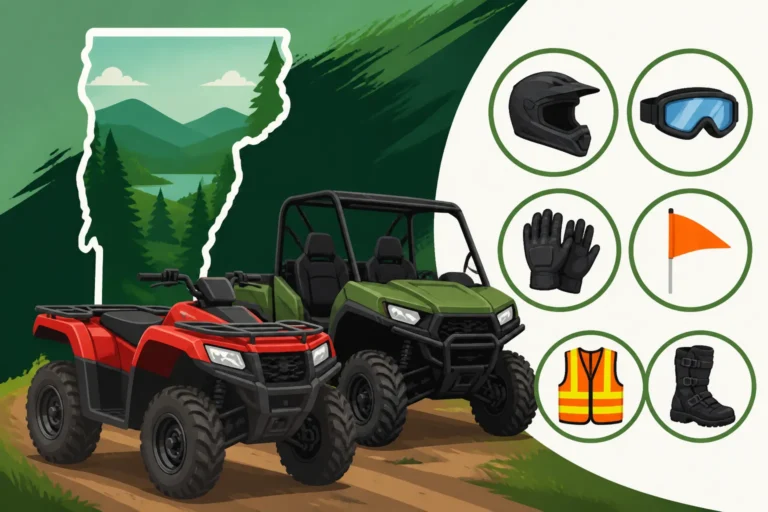
Vermont is very clear on its helmet law for ATV and UTV riders: everyone, regardless of age, must wear a helmet that meets either the federal motor vehicle safety standard (FMVSS) or an ASTM standard. There are no exceptions for adults or passengers; [Vermont ATV Helmet Law for Every Rider] means exactly that. This rule is in place for your safety and the safety of your passengers, as helmets are proven to significantly reduce the risk of serious head injuries in the event of an accident. It's a non-negotiable aspect of riding in Vermont.
Additionally, carrying passengers on your ATV or UTV is subject to specific rules. Primarily, your machine must be designed by the manufacturer to carry multiple occupants, and each occupant must have their own designated seat. Riding two-up on a single-seat ATV is illegal and extremely dangerous. [Vermont Passengers Must Wear Helmets] also applies here, ensuring that every person on the machine is protected. Overloading your machine or carrying passengers improperly not only risks a fine but, more importantly, can compromise the stability and handling of your ATV, leading to accidents. Always check your machine's manufacturer guidelines for passenger capacity and always ensure everyone has a properly fitting, certified helmet strapped on.
Enhancing Your Ride in Brighton (and Beyond)
Riding your ATV or UTV in Brighton, or anywhere in Vermont, is about more than just following the rules; it's about making your experience as safe, enjoyable, and sustainable as possible. This means not only being mindful of regulations but also properly preparing your machine and adopting a respectful riding ethos.
Preparing Your Machine for Road Use
When you're riding on town roads, even designated ATV routes, your machine needs to be in tip-top shape and equipped for the task. This often means going beyond basic trail-riding preparation. For instance, [Vermont Headlight and Tail Light Rules] are critical, especially if you find yourself riding near dawn or dusk, or in adverse weather. All lights must be fully functional, clean, and visible. Your brakes are another non-negotiable: [Working Brakes at Inspection] isn't just a catchphrase; it's a safety imperative. Ensure your brakes are responsive and well-maintained before every ride.
Beyond the essentials, consider adding accessories that enhance safety and compliance. Mirrors, for example, dramatically improve your situational awareness when sharing roads with cars, allowing you to see traffic approaching from behind without twisting around. Turn signals, while not always strictly mandated for ATVs in every road situation, greatly improve communication with other drivers. Companies like SuperATV offer a wide array of road-legal kits and accessories, from turn signal kits to horn setups and even DOT-approved windshields, that can make your machine more visible and safer for road sections. Investing in these upgrades not only keeps you compliant with local requests, like Brighton's front plate suggestion, but also significantly reduces your risk of accidents when interacting with other traffic.
Respecting Landowners and the Community
The very existence of the VASA trail system and designated town road access, like in Brighton, hinges on the goodwill and cooperation of private landowners and the local community. The vast majority of Vermont's trails traverse private property, made accessible through landowner permission. This makes [Vermont Landowner Permission Rules] not just a legal concept, but the lifeblood of our riding opportunities. Every time you respect private property, stay on marked trails, and ride courteously, you are reinforcing that goodwill.
Think about the impact of your ride on those who live along the routes. Excessive noise, dust, litter, or riding off-route can quickly erode local support for ATV access. Slow down when passing homes, keep noise to a minimum, and always pack out everything you pack in. Even picking up a piece of litter you didn't drop can make a difference. Showing respect also extends to maintaining the trails themselves; avoid rutting wet areas, and leave gates as you found them. When you are a responsible and respectful rider, you become an advocate for the sport, helping to ensure that towns like Brighton continue to welcome ATVs and that the trails we all love remain open for future generations. It’s about being a good neighbor on the trail, much like the advice in [Leaving a Trailhead Cleaner Than You Found It].
Brighton's ATV Ordinance at a Glance
To summarize the key points of Brighton's ATV ordinance and how it integrates with general Vermont ATV rules, here's a helpful comparison. This table outlines some of the most critical considerations for riders.
| Feature | General Vermont ATV Rules | Brighton-Specific ATV Ordinance | Importance |
|---|---|---|---|
| Registration | Mandatory for all public land/road use | Still mandatory | Legal access, funding for trails and administration |
| Insurance | Mandatory liability coverage | Still mandatory | Financial protection in case of an accident |
| Safety Certificate (U18) | Mandatory for riders under 18 | Still mandatory | Promotes safe riding habits for youth |
| Helmets | Mandatory for all riders and passengers | Still mandatory for all riders and passengers | Critical for head protection and injury prevention |
| Designated Routes | VASA trails & specific town roads (town by town decision) | Specific town roads designated by selectboard annually | Ensures legal access, avoids trespassing |
| Operating Season | Generally May to October for VASA trails (variable by club/town) | Typically May 1 to October 1 (check annually) | Road preservation, reduces residential impact |
| Daily Curfew | No statewide curfew; depends on local ordinance | Often 9 PM – 7 AM (check annually) | Noise control for residents, community peace |
| Speed Limit on Roads | Posted limits, generally 25-35 MPH on dirt roads | 25 MPH maximum on designated town roads | Safety for shared road use, noise/dust reduction |
| License Plate Placement | Rear-mounted, visible | Rear-mounted; front plate strongly requested | Identification for enforcement and public visibility |
| Enforcement | State Game Wardens, State Police, local law enforcement | Local Police, State Game Wardens, Sheriff's Dept. | Ensures compliance, maintains safety and order |
This article is for general informational purposes only and does not constitute professional advice. Laws, prices and regulations vary by location and change over time. Consult a qualified professional for guidance on your specific situation.