Roads Open to Snowmobiles but Closed to Quads
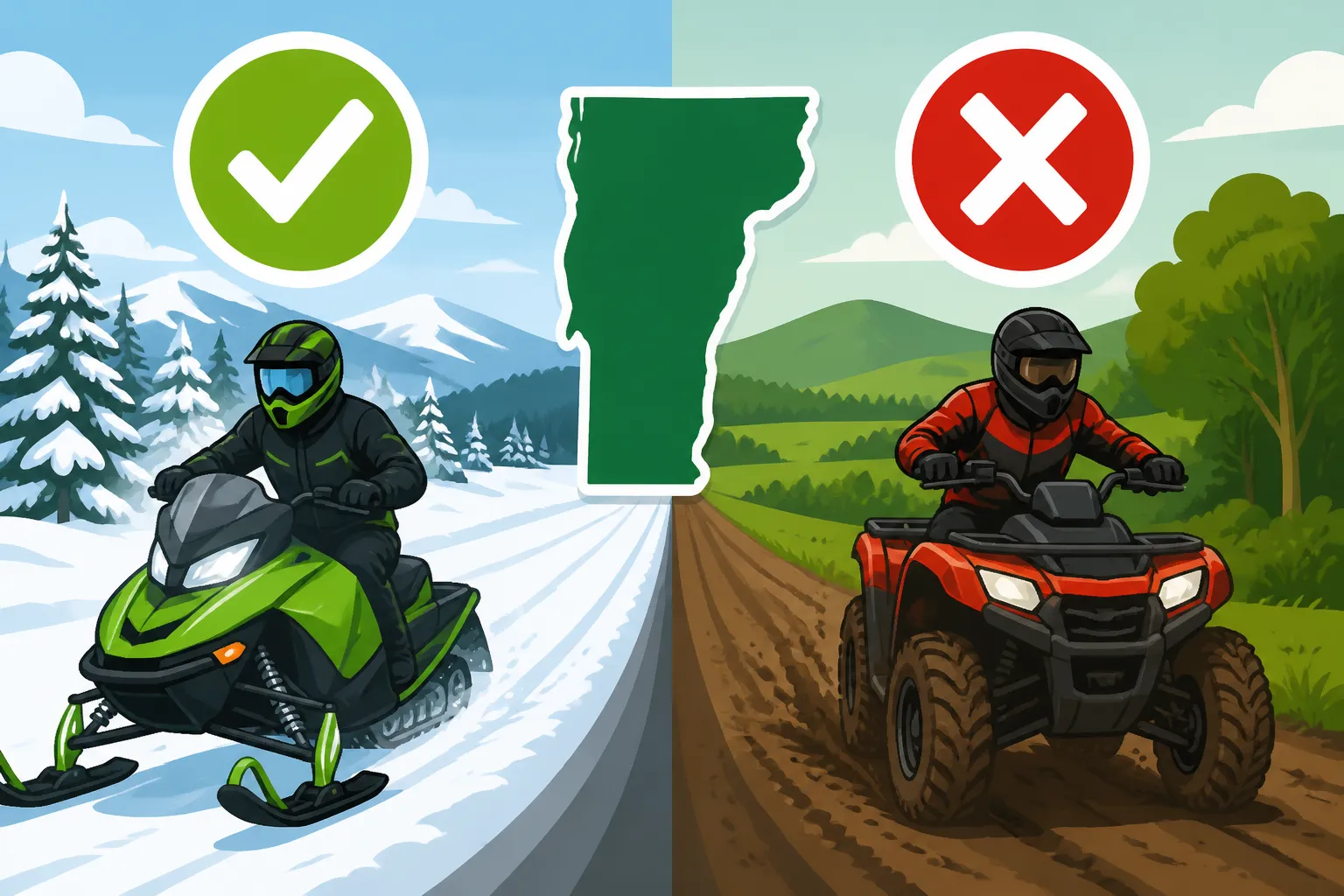
It can be incredibly frustrating to see a perfectly good dirt road, one you know is open for snowmobiles in winter, completely off-limits to your ATV or UTV when the snow melts. You might find yourself scratching your head, wondering why two machines designed for off-pavement adventure are treated so differently. This guide is here to shed light on Vermont's unique approach to road access, helping you understand why some routes welcome sleds but keep quads at bay.
Understanding Vermont's Distinct Vehicle Classifications
Vermont's relationship with various motorized recreational vehicles has evolved over time, and with that evolution comes distinct rules. It’s not simply a matter of "four wheels good, two skis bad" or vice-versa; there are historical, environmental, and community factors at play that shape which roads are open to which machines. Understanding these foundational differences is key to navigating the state's diverse regulations.
Snowmobiles: A Different Set of Rules
Snowmobiles have a long and storied history in Vermont. For decades, they've crisscrossed the state on a vast network of trails and, importantly, designated town roads. This isn't just a recent phenomenon; it's a deeply ingrained part of winter recreation culture here. The Vermont Association of Snow Travelers (VAST) has spent years, with countless volunteer hours and significant investment, building relationships with landowners and towns to create an extensive, interconnected trail system.
Because snowmobiles operate exclusively on snow-covered ground, many of the concerns associated with ATVs and UTVs on unpaved roads – like dust, erosion, and rutting – are naturally mitigated. The snow acts as a buffer, protecting the road surface and minimizing impact. This historical precedent and the nature of their operation have afforded snowmobiles a more widespread acceptance and a relatively consistent set of access rules across the state, often allowing them to utilize sections of roads as connecting corridors.
ATVs and UTVs: A Newer Road Journey
ATVs and UTVs, while offering a similar spirit of adventure, have a much more recent history of gaining legal road access in Vermont. For many years, ATV riding was primarily confined to private land or dedicated trail systems. The idea of integrating these machines onto town roads, especially unpaved ones, is a newer concept that has required significant legislative changes and ongoing dialogue at the local level.
Unlike snowmobiles, which largely operate under a statewide system for trail and road access coordinated by VAST, ATV and UTV road access is far more granular. It's often left to individual towns and their selectboards to decide which, if any, of their roads will be designated for ATV use. This leads to a patchwork of regulations where a road open in one town might be strictly closed in the next, even if it looks identical. This localized control, while democratic, creates complexity for riders seeking to connect trails or access services. The journey for ATVs and UTVs to achieve broader road access is still very much in progress, marked by careful consideration of community impact, environmental factors, and public safety.
Why Some Roads Welcome Snowmobiles But Not Quads
The disparity in road access isn't arbitrary; it stems from a confluence of factors, primarily local control, environmental considerations, and community perception. What works for a snow-covered landscape often doesn't translate directly to bare ground, and towns grapple with different sets of challenges when considering each type of machine.
Local Control and Town Ordinances
Perhaps the single biggest reason for the difference in access lies in the hands of local town selectboards. Vermont's statutes give individual towns significant authority to regulate ATV and UTV use on their local roads. While the state provides a framework, it's ultimately up to the town to pass an ordinance opening specific roads for these machines. This means that [Vermont Selectboards Open Roads Each Year], but only if they choose to do so and actively designate routes.
For snowmobiles, the statewide VAST trail network often includes specific road sections as part of its approved corridors, which have been established over decades with broad community understanding. For ATVs and UTVs, however, a town has to explicitly opt-in. Many towns, wary of potential issues, have simply chosen not to open their roads to ATVs, or have done so only on a very limited basis. Concerns frequently raised include increased noise pollution, particularly in residential areas, significant dust generation on gravel roads during dry spells, and potential damage to road surfaces, especially during mud season or other vulnerable times. These are issues that snowmobiles, by their very nature of operating on snow, largely bypass. You might find that [Vermont Town Ordinances That Set Curfews] for ATVs, but these types of restrictions are less common or different for snowmobiles due to their winter-only operation.
Infrastructure and Environmental Concerns
The ground itself plays a crucial role in why some roads remain closed to quads. When a road is blanketed in several feet of snow, the surface underneath is protected. Snowmobiles glide over this insulating layer, causing minimal impact to the underlying dirt, gravel, or pavement. When that snow melts, those same roads, particularly unpaved ones, become susceptible to damage.
ATVs and UTVs, with their knobby tires and higher ground pressure compared to a snowmobile's wide track, can contribute to rutting, erosion, and the breakdown of road integrity, especially on soft, wet dirt roads. This can lead to costly repairs for towns, which many municipalities are hesitant to shoulder. There are also environmental concerns; dust stirred up by vehicles can affect air quality and nearby vegetation, and erosion can lead to sediment runoff into streams and rivers. While responsible riding and advanced aftermarket components can mitigate some impacts, these general concerns often factor heavily into a town's decision to keep roads closed to ATVs. For example, some riders enhance their machines with durable skid plates or advanced suspension components, often found at places like SuperATV, to handle demanding terrains. However, even the most robust machine must still adhere to local road closure regulations.
The Role of Community Acceptance and Historical Precedent
Community acceptance is a powerful force in Vermont. Snowmobiling has been a part of the winter landscape for generations, fostering a sense of tradition and often, deep community support. Many landowners have long-standing agreements with VAST, allowing trails to cross their property, which in turn benefits local businesses and winter tourism. This historical precedent has built a strong foundation of trust and understanding.
ATVs and UTVs, as a more recent arrival to the road access discussion, sometimes face a different reception. Without the same depth of historical integration and widespread network already in place, new proposals for road access can encounter resistance from residents concerned about quality of life, property values, and the perceived change to their rural environment. The challenge for ATV and UTV riders and advocacy groups is to build similar levels of trust and demonstrate responsible stewardship, gradually shifting perceptions and expanding access. This is an ongoing process that requires consistent effort and good neighbor policies.
| Factor | Snowmobiles (Winter) | ATVs/UTVs (Non-Winter) |
|---|---|---|
| Road Surface Impact | Minimal; snow protects underlying surface. | Potential for rutting, erosion, dust on bare roads. |
| Noise Perception | Often integrated into winter soundscape; seasonal. | Year-round potential, can be more disruptive. |
| Environmental Concerns | Less direct erosion/dust due to snow cover. | Dust, sediment runoff, habitat disturbance potential. |
| Local Authority | Statewide VAST network largely recognized. | Each town must explicitly opt-in to open roads. |
| Historical Precedent | Decades of established use, strong community ties. | Newer to road access; building acceptance. |
| Connecting Corridors | Many roads are part of long-standing VAST network. | Patchwork of open/closed roads, hard to connect. |
Navigating Vermont's Diverse Trail and Road Landscape
Given the varied rules from town to town, successfully navigating Vermont's ATV and UTV opportunities requires careful planning and a deep understanding of where you can and cannot ride. It's not a free-for-all, and simply assuming a road is open because it's unpaved can lead to trouble.
How to Identify Open ATV/UTV Routes
The most crucial step before you even load your machine is to know the rules for your intended riding area. You cannot rely on visual inspection alone. Just because a road looks like a perfect trail doesn't mean it's legal to ride your quad there. Here's how to figure it out:
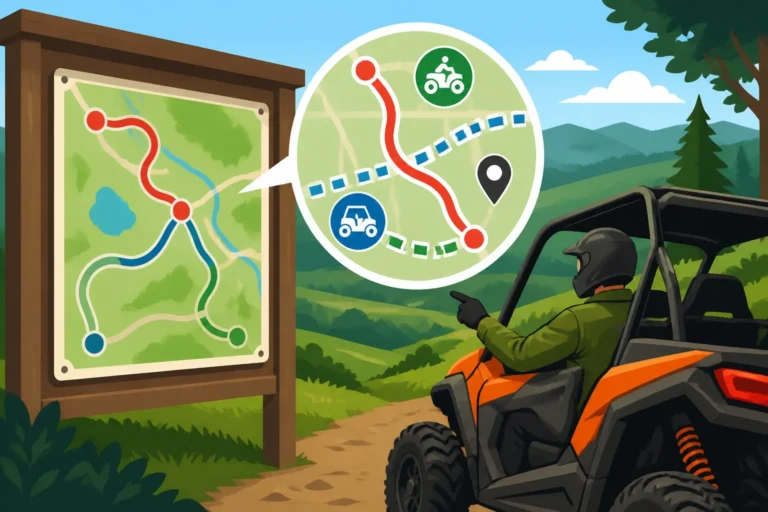
- VASA Trail Maps: The Vermont ATV Sportsman's Association (VASA) maintains the primary trail system for ATVs and UTVs in the state. Their official maps, available through their website or local clubs, are your best friend. These maps clearly show designated trails and the town roads that are legally part of the VASA corridor system. Always check the most current version. [Vermont ATV Trails: The VASA System] is the core of legal riding in the state.
- Town Clerk Offices: Since road access is determined at the local level, the town clerk's office is the official source for information on municipal ordinances. You can often find this information on town websites, or by calling or visiting in person. Look for specific ordinances that explicitly open roads to ATVs/UTVs. Remember, [Vermont Road Designations Carry Forward] only if a town continues to designate them year after year, so always check for the current year.
- Local ATV Clubs: Joining a local VASA club is invaluable. Club members are often the most knowledgeable about current trail conditions, local ordinances, and any recent changes. They can provide advice and help you avoid inadvertent trespass or violations.
- Look for Signs: While not always comprehensive, designated routes should have clear signage. However, the absence of a "No ATVs" sign does not automatically mean ATVs are permitted. Always consult official maps and ordinances first.
Remember, riding an unregistered ATV or one without the proper [Vermont TAD: The Trail Access Decal Explained] on VASA trails, or on roads where it's not permitted, can result in significant fines and penalties.
What to Do When a Road Is Closed to ATVs
Encountering a "No ATV" sign or finding that your desired connecting road is closed to quads can be disappointing, but it's vital to respect these rules.
- Do Not Ride Illegally: The absolute most important rule is to never ride on a road or trail that is not explicitly open to ATVs or UTVs. Doing so risks fines, confiscation of your machine, and perhaps most importantly, damages the reputation of all ATV riders, making it harder for advocacy groups to gain future access. It also risks alienating landowners, whose permission is critical to the trail system.
- Find Alternative Routes: Consult your VASA map to see if there's an alternative legal route that bypasses the closed section. Sometimes a slightly longer route on designated trails or open roads can keep your ride legal and enjoyable.
- Trailer Your Machine: If a key connector road is closed, plan to trailer your machine to the next open section. This might mean driving a few miles down a paved road, but it ensures you stay within the law.
- Get Involved with Advocacy: If you feel strongly about opening a particular road, consider joining a local ATV club and getting involved in the discussion. Clubs often work with town selectboards to explore new access opportunities. They can help articulate the benefits of responsible riding and address local concerns. For example, some riders might invest in high-quality parts and accessories from a company like SuperATV, ensuring their machine is always in top condition and ready for legal trail riding, while also demonstrating a commitment to the sport's longevity and reputation.
- Be Prepared: Carry your registration, insurance proof, and safety certificate with you. [Vermont Insurance Proof on the Machine] is a requirement, and for younger riders, a [Vermont Safety Course Required Under 18] is mandatory. These documents show you are a responsible rider.
The Importance of the VASA Trail System
For ATVs and UTVs, the VASA trail system truly is the backbone of legal riding in Vermont. While individual towns might open specific roads, these routes are often crucial links within the larger VASA network.
VASA, through its member clubs, maintains hundreds of miles of trails across private and public lands. These trails are designated and maintained specifically for ATV and UTV use, often bypassing the very roads that might be closed. Many club trails do incorporate town roads where permission has been granted, allowing riders to connect longer sections of trail, access fuel, food, or lodging in a village.
Without the VASA system, ATV and UTV riding in Vermont would be severely fragmented, consisting of isolated pockets with no ability to traverse the state. Riders who want to experience the best of Vermont's off-road offerings should absolutely purchase a Trail Access Decal (TAD) and support a local VASA club. This not only grants you legal access but also contributes directly to the maintenance, expansion, and advocacy efforts that keep these trails open. It’s a symbiotic relationship: the trails rely on riders' support, and riders rely on the trails for their adventures.
Looking Ahead: Potential Changes and Rider Responsibility
The landscape of ATV and UTV access in Vermont isn't static. It's an evolving conversation influenced by legislation, community input, and the actions of riders themselves. Being aware of potential changes and committing to responsible riding are key to shaping a positive future for the sport.
The Evolving Landscape of ATV/UTV Access
Vermont is always reviewing and updating its laws regarding recreational vehicles. Recent legislative efforts, such as [What Vermont's 2025 Act 18 Changed for Riders], have already begun to refine definitions and regulations, aiming to provide clearer guidelines for both riders and towns. These changes often come about through years of advocacy from rider groups like VASA, working to educate legislators and local communities on the benefits of responsible ATV use, including economic impact for rural areas.
There's ongoing discussion about how to create a more cohesive and understandable system for road access, potentially moving towards a model that provides more consistent guidelines while still respecting local control. Future changes might include new categories for machines, revised insurance requirements, or updated procedures for how towns can designate roads. Staying informed by following VASA and local news will be essential for riders. The goal for many in the ATV community is to see more connectivity and fewer frustrating dead ends, creating a more seamless riding experience across designated routes.
Being a Responsible Rider in Vermont
Ultimately, the future of ATV and UTV access in Vermont rests heavily on the shoulders of every rider. Being a responsible, respectful, and safe enthusiast not only enhances your own experience but also positively influences public perception and helps advocacy efforts.
Here are some key aspects of responsible riding:
- Know and Follow the Rules: This is paramount. Always check maps and local ordinances. If a road is closed to quads, respect that closure. [Can You Ride an ATV on the Road in Vermont?] – only on designated routes.
- Respect Private Property: Most of Vermont's trails rely on landowner permission. Stay on marked trails, close gates, and always practice "leave no trace" principles. Understanding [Vermont Landowner Permission Rules] is crucial.
- Control Noise and Dust: Be mindful of your speed and riding style, especially near residences. Excessive noise and dust are common complaints that lead towns to close roads. Ensure your machine has a proper muffler system.
- Maintain Your Machine: A well-maintained machine is safer and less likely to cause environmental impact. This includes having good tires for varying [Vermont Riding in Spring Mud] or rocky terrain, and making sure all lights and brakes are in working order. Products from SuperATV can help you maintain and upgrade your machine to be reliable and capable, but remember, even the best equipment doesn't override local laws.
- Carry Proper Documentation: Always have your registration, a valid [Vermont TAD: The Trail Access Decal Explained], and proof of liability insurance with you. These are the basics for legal riding.
- Wear Safety Gear: Always wear a helmet that meets federal safety standards, eye protection, and appropriate riding gear. [Vermont ATV Helmet Law for Every Rider] is strictly enforced.
- Be an Advocate: Support VASA and your local clubs. Volunteer for trail work days. Participate in community discussions. Your positive engagement is vital for the long-term health of the sport in Vermont.
By embracing these principles, riders can demonstrate that ATVs and UTVs are a valuable part of Vermont's outdoor recreation, helping to bridge the gap between where we are now and a future with more integrated and accessible riding opportunities.
Disclaimer
This article is for general informational purposes only and does not constitute professional advice. Laws, prices and regulations vary by location and change over time. Consult a qualified professional for guidance on your specific situation.