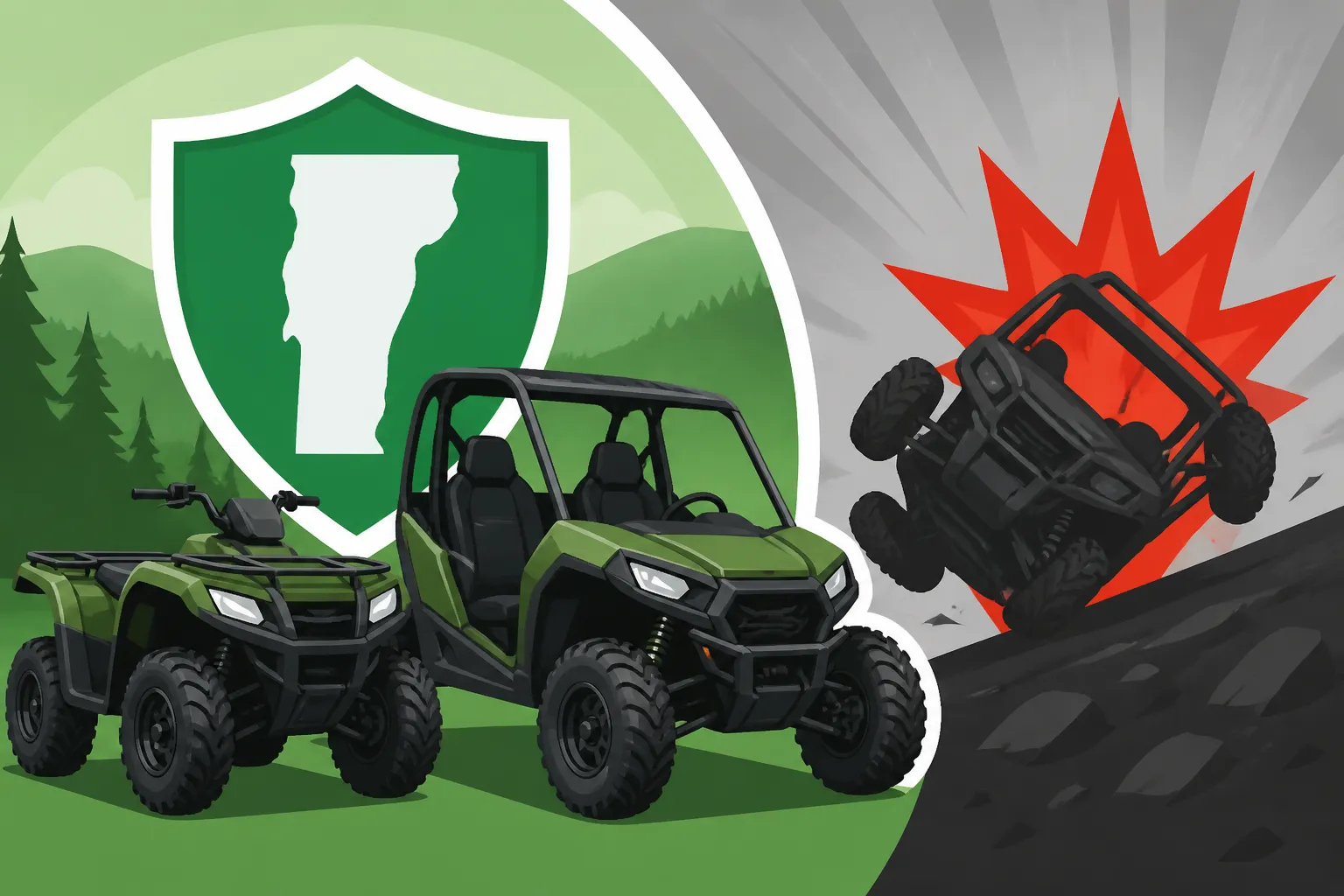
Vermont Rollover Protection Exception
Navigating the unique rules surrounding ATVs and UTVs in Vermont can feel like trying to solve a puzzle with missing pieces, especially when it comes to safety features like rollover protection. Many riders assume that any machine on public roads needs a full roll cage, but Vermont law offers some nuanced exceptions that can be confusing. This guide will thoroughly explain Vermont's rollover protection exception, detailing when it applies, what it means for your ride, and how to stay safe and compliant on the Green Mountain State's varied terrain.
Understanding Rollover Protection (ROPS) in ATVs and UTVs
Before diving into Vermont's specific exceptions, it’s crucial to understand what rollover protection is and why it's such a vital component of off-road and utility vehicles. Most riders associate it with the robust safety cages they see on modern side-by-sides, but the concept is broader than just a steel frame.
What Exactly is ROPS?
ROPS, or Roll-Over Protective Structures, are engineered systems designed to protect occupants in the event of a vehicle rollover. For UTVs, this typically manifests as an integrated steel cage that surrounds the passenger compartment. This cage is built to withstand significant impact and deformation, creating a survival space for the driver and passengers. It's not just a decorative frame; it's a carefully designed safety feature, often tested to specific industry standards to ensure it can perform its job when put to the ultimate test. Think of it as the ultimate seatbelt for your machine, designed to keep the crushing weight of the vehicle from collapsing on you. ATVs, being single-rider machines where the rider shifts their weight, generally do not have ROPS in the same way UTVs do. Instead, they rely more on the rider's active input and proper riding technique, along with a helmet, to prevent injury during a tip-over.
The General Safety Imperative
Manufacturers and safety advocates universally emphasize the importance of ROPS in UTVs. The physics of a side-by-side means that, unlike an ATV where you can often step or jump clear during a tip, you are contained within the vehicle. If that vehicle rolls, the ROPS is your primary line of defense against being crushed or ejected. This is why you'll find prominent warnings and often requirements for seatbelt use in conjunction with ROPS. Without a properly designed and intact ROPS, the risk of serious injury or fatality in a rollover incident skyrockets. It's a foundational safety element, akin to airbags in a car, intended to mitigate the most severe outcomes of an accident. When you're considering modifying your UTV, any changes to the factory ROPS should be approached with extreme caution, as they could compromise its integrity.
Beyond the Cage: Other Safety Features
While the ROPS is paramount, it's part of a larger ecosystem of safety features designed to work together. Seatbelts, for instance, are crucial; they keep you securely inside the protected zone created by the ROPS. Without a seatbelt, even a perfect roll cage can't prevent you from being thrown around inside or ejected from the vehicle, leading to severe injuries. Many UTVs also come with side nets or doors that help keep limbs inside the vehicle during a roll or a sudden impact. Some even feature advanced electronic stability control systems that can help prevent rollovers in the first place by managing power delivery and braking. [Vermont ATV Equipment Requirements] often touch on some of these additional safety components, ensuring that riders are equipped not just for compliance, but for real-world safety on trails and roads. These combined features aim to provide a comprehensive layer of protection, making riding safer for everyone.
Vermont's Specific Stance: The Exception Explained
Now that we understand the general importance of ROPS, let's turn our attention to Vermont's unique approach. While the Green Mountain State is keen on safety, it acknowledges that not all machines or uses fit a one-size-fits-all safety mold, particularly when it comes to road use.
Unpacking the Legislative Language
Vermont's laws regarding off-road vehicles on public roads are quite specific and have evolved over time. While many states impose blanket requirements for ROPS on any UTV venturing onto a public way, Vermont makes a distinction. The core of the exception often revolves around how the vehicle is classified and the specific purpose for which it is being operated on the road. For example, some utility-focused vehicles, or those used in specific agricultural or municipal capacities, might have different standards than a recreational side-by-side primarily designed for trail riding. The legislation doesn't simply say "no ROPS needed"; it carves out very particular scenarios where the requirement might be waived, usually linked to speed, distance, and the nature of the task. It's about understanding the intent behind the road use, not just the vehicle itself.
Historical Context: Why Vermont Made This Distinction
Vermont's legislative landscape for ATVs and UTVs reflects a blend of recreational interest, agricultural needs, and small-town pragmatism. Historically, many rural Vermonters used utility vehicles, often modified, for tasks like plowing driveways, moving equipment between fields, or accessing remote parts of their property. [Vermont Rules for Plowing a Driveway] touch upon some of these practical uses. These vehicles weren't always designed with full ROPS in mind, especially older models, and imposing a strict ROPS requirement for a brief trip on a town road to access a field might have seemed overly burdensome for these essential activities. The exception acknowledges this long-standing tradition of practical utility while trying to balance it with evolving safety standards. It’s a recognition that not every machine that uses a public road is doing so for high-speed recreation.
The "Which Machines Qualify" Conundrum
This is where the details really matter. Vermont's law differentiates between ATVs and ASVs (All-Terrain Side-by-Side Vehicles), and also considers factors like width, weight, and intended use. An ATV, by its very design, typically doesn't have a ROPS because the rider sits astride it and uses body English to control it. The exception for ROPS is therefore more relevant to UTVs (often falling under the ASV classification).
A common point of confusion arises with the definition of an "all-terrain vehicle" itself, which can influence how ROPS rules apply. [Vermont's 72-Inch, 2,500-Pound ATV Definition] is critical here, as vehicles exceeding these dimensions might be classified differently and thus subject to other rules. If your UTV is primarily for farm use and meets certain criteria, it might qualify for an exemption when crossing or traveling short distances on designated public roads. Similarly, if a town has explicitly opened a road for certain types of ATV or UTV traffic, the ordinance might specify safety requirements, sometimes implicitly or explicitly referencing the ROPS. It's a complex interaction of vehicle classification, road designation, and specific use cases that dictates whether the ROPS exception applies to your particular machine and journey.
Navigating the Exception: Practical Implications for Riders
Understanding the legislative text is one thing; putting it into practice safely and legally is another. For Vermont riders, the ROPS exception brings both opportunities for convenience and increased responsibility.
When Can You Legally Forgo ROPS?
The most common scenarios where a ROPS exception might apply to a UTV (or ASV as Vermont often defines them) generally fall into categories of utility and limited road use. For example:
- Agricultural Use: If you are a farmer using your UTV to move between fields on town roads, or transporting feed or equipment, you might be exempt from the ROPS requirement for that specific, limited travel. The key is that the vehicle is primarily used for agricultural purposes, and its road use is incidental to that function.
- Maintenance/Municipal Use: Public works departments or private contractors using UTVs for maintenance tasks on roadsides, parks, or other public property may also have exemptions, again, tied to the utilitarian nature of the work.
- Crossing Roads: Even if a full ROPS is generally required for extended road travel, an exception might exist for simply crossing a public road to access another section of private land or a designated trail. This brief, low-speed transit is often treated differently than sustained road travel.
- Older Machines: Some older UTVs might predate modern ROPS requirements, and while safety upgrades are always recommended, the law might provide leeway for their continued limited operation, especially for private, utilitarian purposes.
It's vital to remember that these exceptions are rarely carte blanche. They usually come with stipulations, such as speed limits, daylight-only operation, or requirements for other safety equipment like bright flags or lights. Always check the specific town ordinances and state statutes, as [Vermont ATV Road Rules: Towns Decide] means there can be local variations.
The Unseen Risks: Safety Without the Cage
Just because you can legally operate a UTV without ROPS in certain situations doesn't mean it's the safest choice. The absence of a roll cage significantly increases the risk of severe injury or fatality in a rollover. Imagine turning too sharply on a gravel road, hitting a hidden rut, or simply losing traction on an embankment. Without that steel frame, the vehicle's weight can crush occupants. This is why even when exempt, other safety measures become even more critical:
- Helmets are Non-Negotiable: [Vermont ATV Helmet Law for Every Rider] is clear: if you’re riding, wear a helmet. Without ROPS, a helmet is your last line of defense for head protection.
- Seatbelts are Lifesavers: Always wear your seatbelt. It keeps you inside the vehicle and prevents ejection, which is often the cause of severe injuries in rollovers.
- Drive Cautiously: Reduce your speed, especially on unfamiliar terrain or public roads. Avoid sudden maneuvers, and be acutely aware of your surroundings.
- Load Management: Overloading a UTV, or improperly securing loads, can drastically alter its center of gravity and increase rollover risk. Be mindful of manufacturer weight limits.
The exception exists to accommodate specific, low-risk operational needs, not to encourage less safe recreational riding. Always prioritize your safety, even when not legally compelled to have a full ROPS.
Out-of-State Riders: Does the Exception Apply to You?
This is a common question, and generally, the answer is complex. Vermont does offer [Vermont Reciprocity for Out-of-State Machines] for registration, but safety equipment rules can be trickier. If you're visiting Vermont with a UTV that would normally require ROPS in your home state but technically falls under one of Vermont's exceptions for specific road use, you might think you're covered. However, it's always safest to operate under the assumption that the most stringent safety requirements apply. A law enforcement officer might interpret the intent of your travel differently, or your insurance policy might have specific exclusions if your machine isn't equipped with factory-standard safety features, regardless of Vermont's exceptions. To avoid any headaches or safety compromises, if your UTV is designed with a ROPS, it’s best to keep it intact and utilize it.
Beyond the Exemption: Enhancing Safety on Vermont Roads
Even with an exception, smart riders know that safety is always paramount. There are many ways to enhance your UTV's safety, whether you have a factory ROPS or are operating under an exception.
Aftermarket Solutions and Upgrades
For many UTV owners, the stock setup is just the beginning. The aftermarket is full of products designed to enhance safety, performance, and utility. When it comes to rollover protection, if your UTV originally came with a ROPS, ensure it's in good condition and hasn't been compromised by modifications or damage. If you're upgrading or repairing, brands like SuperATV offer a wide range of components, from replacement roll cages to reinforced doors, harnesses, and even windshields that can offer additional protection.
Consider these upgrades:
- Reinforced Cages: If your existing cage shows signs of wear or you want enhanced protection, some aftermarket options provide greater strength.
- Full Doors and Window Nets: These can prevent ejection in a rollover and keep limbs safely inside the protected area of the cage.
- Four- or Five-Point Harnesses: These offer superior occupant retention compared to standard lap belts, especially important in dynamic off-road environments or if you're taking advantage of the ROPS exception on public roads.
- Skid Plates and A-Arm Guards: While not directly ROPS, these protect vital components, preventing mechanical failures that could lead to a loss of control and a rollover.
Investing in high-quality aftermarket safety gear is a proactive step that can make a huge difference, regardless of what the law strictly requires. It's about protecting yourself and your passengers.
Driver and Passenger Responsibilities
Technology and equipment can only do so much; the human element remains critical. As a driver, you hold significant responsibility for the safety of yourself and your passengers.
- Training and Experience: Taking an ATV or UTV safety course, even if not legally required for adults, can dramatically improve your riding skills and hazard perception. [Vermont Safety Course for an Adult] is a great resource.
- Sober Driving: Never operate an ATV or UTV under the influence of alcohol or drugs. Impaired judgment is a leading cause of accidents. [Vermont DUI Law and ATVs] applies to these vehicles just as it does to cars.
- Avoid Overloading: Stick to the manufacturer's recommended passenger and cargo limits. An overloaded machine handles poorly and is far more prone to rollovers.
- Proper Passenger Seating: All passengers should be seated in designated spots, with seatbelts fastened. Carrying extra passengers, especially children, in non-designated areas is extremely dangerous. [Vermont Rules for Carrying a Child on a Vermont Machine] stresses this.
These responsibilities are heightened when you're operating a machine that might be exempt from certain ROPS requirements, meaning you have an even greater personal duty to mitigate risks.
Insurance Considerations
Your insurance policy is another critical piece of the safety puzzle. [Vermont ATV Insurance Requirements] mandate liability coverage for registered machines. When considering the ROPS exception, it's crucial to understand how your policy might react in an accident where your UTV was operating without a roll cage, even if legally exempt under state law.
- Policy Language: Read your policy carefully. Some policies might have exclusions or limitations for vehicles modified from their factory configuration, or for certain types of accidents if specific safety features (like an original ROPS) were not present or were removed.
- Liability: If an accident occurs and a passenger is injured, or if you cause damage to property or another vehicle, your liability coverage will be essential. However, operating a machine in a less-safe configuration (even if legally permitted) could theoretically be argued to affect negligence in some claims.
- Collision Coverage: If you have collision coverage, confirm whether the absence of a factory-installed ROPS would impact a claim for damage to your vehicle.
It’s always a good idea to discuss Vermont's ROPS exception and your specific UTV setup with your insurance provider. Transparency ensures that you have adequate coverage and understand any potential implications.
Comparing Vermont's Rules to Neighboring States
Vermont's approach to ROPS and road legality isn't necessarily universal. Understanding how neighboring states handle these issues can provide context and is especially important for riders who might cross state lines.
New Hampshire's Approach to ROPS and Road Use
Just next door, New Hampshire has a generally more permissive stance on ATV and UTV use on public roads, but often with stringent safety requirements. While some areas allow for greater road access, the expectation for UTVs typically includes functioning ROPS and seatbelts. New Hampshire often emphasizes the "street-legal" conversion aspect more explicitly for extended road travel, which frequently means ensuring all standard safety features are in place and potentially even adding turn signals, horns, and other road-specific equipment. Their focus is often on making the vehicle as close to a regular automobile as possible for road use, which inherently includes rollover protection for multi-passenger vehicles. For a UTV, rolling without a cage in New Hampshire is generally not considered permissible on public ways, even if only for a short distance, unless specifically exempted for farm or municipal use similar to Vermont.
Maine's Regulations on UTVs and Public Ways
Maine, like Vermont, has a strong tradition of recreational and utility vehicle use, but its laws can differ. For UTVs (often termed Side-by-Side ATVs or SxS in Maine), road use is typically restricted to specific designated routes or for very limited, specific purposes, such as crossing a road or for agricultural tasks. When UTVs are permitted on public ways, Maine generally expects the vehicle to meet manufacturer safety standards, which for modern UTVs includes a ROPS and seatbelts. Maine places a high value on public safety, and while they might allow certain low-speed, utility-driven exemptions, the overall trend is towards ensuring that vehicles operating on public roads, even temporarily, have adequate safety features. They might also have distinct definitions for ATVs versus SxS vehicles, which can affect the applicability of ROPS requirements.
The Bigger Picture: Federal Standards and State Variations
Ultimately, while states like Vermont, New Hampshire, and Maine have their own nuances, they all operate within a broader framework of federal safety guidelines and industry best practices. Most UTV manufacturers design their vehicles with ROPS that meet or exceed voluntary industry standards (like those set by ANSI/ROHVA). These standards inform state-level legislation.
However, each state then tailors these guidelines to its unique landscape, population density, and historical uses of off-road vehicles. Vermont’s exception is a prime example of a state balancing traditional utility needs with modern safety expectations. The key takeaway for any rider, regardless of where they are, is that a ROPS for a UTV is a critical safety feature. While exceptions exist, relying on them should be done with a full understanding of the risks and an unwavering commitment to personal safety measures like helmets, seatbelts, and responsible driving.
| Feature / Consideration | General UTV Expectation (Most States) | Vermont's ROPS Exception Scenarios |
|---|---|---|
| Rollover Protection | Required for all UTVs on public roads | May be exempt for specific utility, agricultural, or limited road crossing uses. |
| Primary Purpose | Recreational or general utility | Primarily agricultural, municipal, or incidental road crossing. |
| Vehicle Type | Side-by-Side (UTV/ASV) | Side-by-Side (UTV/ASV) that meets specific use/size criteria. |
| Speed/Distance | No specific limit (within posted speed) | Often implied to be for low-speed, short-distance travel. |
| Helmet Requirement | Yes, in most cases (especially for U18) | Yes, always, for all riders. [Vermont ATV Helmet Law for Every Rider] |
| Seatbelt Use | Required if equipped | Always required if equipped, even more critical if no ROPS. |
| Driver Responsibility | High | Even higher due to increased risk without ROPS. |
| Out-of-State Riders | Generally expected to meet home state & local rules | Assume most stringent rules apply; check local ordinances. |
Disclaimer
This article is for general informational purposes only and does not constitute professional advice. Laws, prices and regulations vary by location and change over time. Consult a qualified professional for guidance on your specific situation.