Vermont TAD at $60 for a Second Machine
A second machine can make a family ride or a spare ATV more convenient, but Vermont’s trail-access decal is a separate requirement from registration. The reduced second-machine rate can help with the cost, provided you understand when it applies and which machine each decal covers. Here’s how to plan the purchase, avoid confusing the decal with registration, and check the current requirements before you ride.
What the $60 Second-Machine TAD Covers
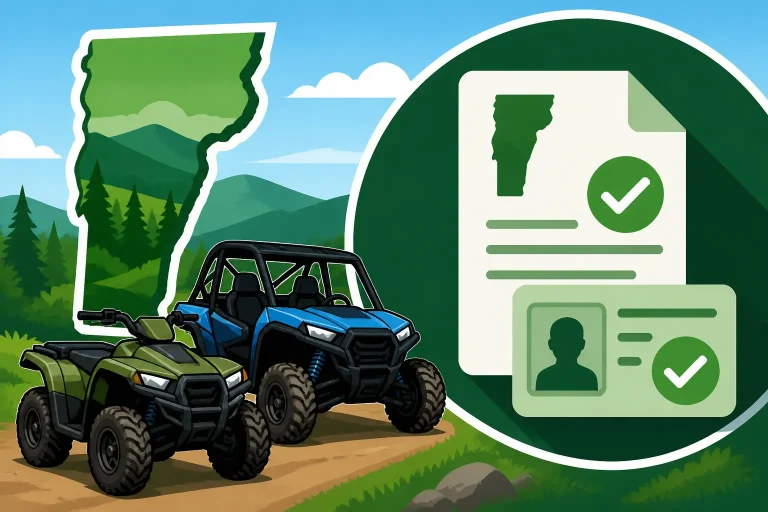
A Vermont Trail Access Decal, or TAD, is required for access to the VASA trail system. It is not the same thing as an ATV or UTV registration, and having one does not replace the other. For a Vermont-registered machine using the trails, plan on needing both a valid registration and a TAD.
The listed second-machine TAD rate is $60. It is a reduced rate for an additional machine, rather than a separate type of registration or a general-purpose pass. A TAD is associated with the individual machine it is issued for, so buying one for a second ATV does not give you permission to ride either machine interchangeably under the same decal.
The standard and second-machine prices listed for Vermont-registered machines are $80 and $60, respectively. Those figures are useful for planning, but fees and ordering rules can change. Confirm the current rate and eligibility with VASA or an authorized club before paying.
| Situation | What to budget for | What to verify |
|---|---|---|
| One Vermont-registered machine | Standard TAD rate | Current price and ordering options |
| A second machine bought with the first decal | Listed second-machine rate of $60 | Whether both decals are being ordered in the qualifying transaction |
| A visitor’s out-of-state machine | Visitor TAD rate may apply | Current visitor price and reciprocity rules |
| A replacement for a lost or damaged decal | Replacement process may apply | Whether a replacement is treated differently from an additional machine |
| A newly purchased ATV or UTV | Registration and TAD may both be needed | Whether the machine’s registration and decal are ready before trail use |
The practical benefit is straightforward: if you have two eligible machines and order decals together under the applicable rules, the second decal costs less than the first. But don’t treat the reduced price as a transferable credit. A second machine needs its own decal, and a decal already issued for one vehicle should not be moved to another unless the current program rules specifically allow it.
For a fuller overview of the decal itself, see Vermont TAD: The Trail Access Decal Explained. If you are still working out whether your vehicle needs state registration as well, Vermont Requires Registration Plus a TAD explains how the two requirements fit together.
Who Qualifies for the Reduced Rate
The $60 rate is for an additional machine in a TAD purchase, not simply for anyone who happens to own more than one ATV or UTV. The key detail is how the decals are purchased and how the current program defines a second machine. Before placing an order, confirm that the reduced rate applies to your exact situation.
If you are buying decals for two machines at once, have the information for both vehicles ready. That helps the club or ordering system assign each decal correctly and determine whether the additional-machine rate applies. Don’t assume that buying one decal now and another much later will automatically qualify for the same combined price. Ask whether the second-machine rate requires a single order or whether the program has a process for adding a machine after an earlier purchase.
The reduced rate is also different from a replacement decal. If one decal is lost, damaged, or no longer usable, you are trying to replace access identification for the same machine—not add a second vehicle. Check [Vermont TAD Replacement If Lost] for the replacement question, and avoid ordering a second-machine decal as a workaround unless the seller confirms that is the correct category.
A useful way to think about the possibilities:
- Two machines in one purchase: Ask whether the second-machine rate applies and what information is needed for both.
- A second machine added later: Ask whether you can still receive the reduced rate and how to place the order.
- A lost decal: Follow the replacement process rather than treating it as a new machine.
- A machine sold or replaced: Verify whether any existing decal can be transferred. Don’t peel it off and apply it elsewhere without approval.
- A visitor’s machine: Check the visitor decal rules separately; the resident second-machine rate may not apply.
The rate also should not be confused with a multi-machine order limit. A program may allow an owner to buy several decals in one transaction, but that does not mean every decal after the first automatically receives the same price or that the discount applies to machines belonging to different people. Ask the club or official ordering channel how the current rate is calculated for multiple machines.
If a household has ATVs registered under different owners, explain that when you ask. The person placing the order, the registered owner, and the person who will ride may not be the same. A club can tell you what information is needed and whether the second-machine rate applies to the household’s setup. For ownership and registration questions, Vermont Registration With Two Owners and Vermont Registration for a Second Machine may help you identify what to sort out before ordering.
A TAD Is Not Registration or a General Trail Pass
The TAD gives access to the VASA trail system under the program’s rules. It does not make an otherwise unregistered machine legal for every kind of use, and it does not automatically cover road access, public-land access, or permission to ride on land outside the trail network.
Keep these requirements distinct:
- Registration: State vehicle registration, where required, identifies the machine for legal operation under Vermont’s registration rules.
- TAD: The trail-access decal is required for riding the VASA system.
- Permission and route access: A valid decal does not grant access to private land, closed corridors, or routes that are not open to your machine.
- Other riding rules: Equipment, safety, insurance, age, and supervision rules may still apply.
This is why the $60 second-machine rate should be treated as one part of the trip budget, not the full cost of preparing a machine to ride. If the ATV or UTV is not registered, review How to Register an ATV in Vermont. If you are bringing a machine from another state, see Vermont ATV Registration for Nonresidents and Vermont Reciprocity for Out-of-State Machines. Reciprocity and TAD requirements are related to riding across state lines, but one does not necessarily erase the other.
The TAD is also not a day pass. A rider who wants to use the VASA system should check the current decal requirements rather than assuming that a short visit, a single outing, or a weekend trip makes a decal unnecessary. Vermont Trails Closed Without a TAD covers the basic access issue, while Which Trails a Visitor Decal Opens for You is useful if your machine is registered outside Vermont.
Make sure every machine in your group is covered individually. Two riders arriving with two machines should not assume one decal can cover both. Before you load the trailer, check that each machine has the correct registration and trail-access decal, and that the decal is attached as instructed.
That machine-by-machine approach is especially important when one vehicle is a spare. A spare ATV parked at the trailhead does not need the same access arrangements as one that is actually ridden onto the corridor, but if you swap machines during the day, the replacement machine must be properly covered before it goes onto the trail. Plan the swap in advance instead of trying to solve it at a gate.
How to Order and Apply a Second-Machine Decal
Ordering both decals together is usually the simplest way to ask for the reduced second-machine rate. Use an official VASA or participating-club channel, and confirm the current instructions before submitting payment. Do not rely on a social-media post, an old receipt, or a previous season’s process if the current ordering page or club gives different information.
A practical order checklist:
- Confirm the machines are eligible. Check that both vehicles meet the program’s requirements and that the reduced rate is intended for your situation.
- Gather identifying details. Have the owner information and the machine details requested by the ordering channel available for each ATV or UTV.
- Ask how the rate applies. If the machines belong to different people, or if one decal is being purchased later, verify the pricing before completing the order.
- Use an authorized source. Buy through VASA or a participating club, not from an unofficial seller.
- Check the order before submitting it. Make sure each machine is represented correctly and that the order reflects the applicable first- and second-machine rates.
- Keep the receipt and confirmation. Save proof of purchase and any instructions about decal placement, replacement, or access dates.
- Apply each decal to its assigned machine. Follow the placement instructions that come with the decal and do not swap decals between vehicles.
Don’t assume a decal is valid simply because it has been paid for. Check when it becomes effective, what period it covers, and whether it needs to be visibly attached before trail use. TADs expire on a set schedule, so timing matters if you buy one near the end of a season. Why Every Vermont TAD Expires on December 31 and [Vermont TAD Expiration Date] can help with questions about the access period.
When you receive the decals, read the placement instructions before cleaning or sticking anything to the machine. Surfaces vary: textured plastic, dusty panels, curved bodywork, and areas exposed to mud or pressure washing can all affect how well a decal stays attached. Choose the required location, clean it as instructed, and let it dry before applying the decal. Press it down evenly, especially around the edges, without stretching it.
If you need basic cleaning supplies, a lint-free cloth and a cleaner suitable for the machine’s plastic can make the job easier. Some riders look on Amazon for general detailing supplies, but the seller and product must be appropriate for the surface; a harsh solvent can damage plastics or interfere with adhesion. Amazon is not an official source for a Vermont TAD, so buy the decal only through an authorized channel.
A small plastic-safe application tool can help smooth a decal without scratching the bodywork. If you’re comparing options on Amazon, check the tool’s material and avoid sharp edges. There is no need to buy a specialized kit if you already have a clean cloth and a suitable non-scratching squeegee.
After application, take a clear photo of each decal in place and keep the purchase confirmation with your machine records. A photo is not a substitute for the physical decal, but it can help you remember which decal belongs to which machine and document what was issued. You might use Amazon for a simple document sleeve or storage pouch for receipts and machine paperwork; keep the actual decal on the vehicle as directed, not tucked away with the records.
Common Mistakes to Avoid Before Riding
The most common error is treating a second-machine TAD as a discount that follows the owner, rather than a decal that must be assigned to the additional machine. If you move a decal to a different ATV or UTV, or assume that one decal covers whichever machine you choose to ride, you may find that the machine you brought is not properly covered.
Other avoidable problems include:
- Ordering the wrong type of decal. A Vermont-registered machine and an out-of-state machine may fall under different TAD categories.
- Assuming registration includes trail access. State registration and a TAD are separate requirements.
- Buying from an unofficial source. A used or unverified decal may not be valid for your machine.
- Applying the decal before reading the instructions. A poorly chosen spot can make it hard to see or cause it to peel.
- Waiting until you reach the trailhead. There may be no practical way to get the right decal or paperwork at the gate.
- Ignoring expiration timing. A recently purchased decal may still end on the program’s normal expiration date.
- Skipping permission checks. A TAD does not open every private road, trail, or state parcel.
If a seller tells you that a decal can be transferred after a machine is sold, or that a second-machine rate can be added retroactively, ask the official program channel to confirm before relying on that advice. The relevant rules can be specific, and the cost of checking is small compared with hauling a machine to a trail it cannot legally access.
For owners buying a second ATV or UTV specifically for trail use, make the TAD part of the pre-purchase checklist. Ask whether the machine already has a valid registration, whether its ownership paperwork is in order, and whether you will need to handle registration before applying for trail access. A used machine’s previous decal does not automatically answer those questions. Vermont Registration After a Private Sale and Proof of Ownership Vermont’s DMV Will Accept can help with the paperwork side.
Before departure, do a final check for each vehicle:
- Registration is current and matches the machine.
- Each machine has its own applicable TAD.
- Decals are attached in the instructed location and remain readable.
- The route is open to the type of machine you are bringing.
- Riders meet the applicable age, training, supervision, and equipment rules.
- You have the required proof and know where it is stored.
If your question is specifically about the reduced second-machine price, the short version is: the listed rate is $60, but confirm the current fee and ordering conditions with VASA or an authorized club. Order the decal for the correct machine, keep it attached as instructed, and remember that a TAD is only one piece of being ready to ride.
Disclaimer
This article is for general informational purposes only and does not constitute professional advice. Laws, prices and regulations vary by location and change over time. Consult a qualified professional for guidance on your specific situation.