Vermont TAD: The Trail Access Decal Explained
A Vermont ride can be perfectly planned and still end at a trail gate if your machine has a valid registration but no Trail Access Decal. The TAD is separate from registration, and visitors may need one too. This guide explains who needs it, where it applies, how reciprocity works, when it expires, and what to check before hauling your ATV or UTV to a trailhead.
What the Vermont Trail Access Decal does
A TAD is trail access, not vehicle registration
The Vermont Trail Access Decal, commonly called a TAD, is the access credential for participating trails in Vermont’s VASA trail system. Registration and a TAD do different jobs: registration identifies the machine for legal operation, while the TAD grants access to the trail network covered by the program. Having one does not automatically replace the other.
That distinction is easy to miss when you are preparing for a trip. A rider may see a current registration plate on the machine and assume it is ready for any Vermont trail. At a VASA trail entrance, though, the access decal may also be required. Think of the registration as the machine’s operating paperwork and the TAD as the network’s permission to use participating corridors.
For the broader registration process, see Vermont Requires Registration Plus a TAD. If you are sorting out the basics before your first ride, Vermont TAD: The Trail Access Decal Explained is the subject of this guide, while Vermont Registration Before Your First Ride covers the separate registration side of the preparation.
A TAD does not open every Vermont road or parcel
A TAD is not a universal permission slip for every road, trail, forest, or piece of private land in Vermont. It applies to the network and access arrangements covered by the program. A town road may have its own ATV designation and local rules. A private trail may require landowner permission, club membership, or a separate access arrangement. State land may have restrictions that a TAD does not override.
This matters when planning a route that connects different kinds of corridors. A trail map can show a route passing near a town, farm, timber property, or state-managed land, but the map alone does not mean every adjacent area is open. Stay on the signed and authorized route, follow any access instructions, and do not assume that a trail decal gives permission to cut across a closed section or detour onto a nearby road.
If your trip includes town-road riding, check the local designation separately. Vermont towns make decisions about which roads, if any, are open to ATVs, and local conditions can change. Vermont ATV Road Rules by Town is a useful companion for understanding why trail access and road access should be checked as separate questions.
Who should think of the TAD as necessary
If your planned ride uses a VASA trail, treat the TAD as a required part of trip preparation unless the trail operator or current program instructions say otherwise. That applies even if you are only using a short segment to connect to a larger route. A rider who arrives at a gate without the required access credential may need to turn around, even when the machine is registered and the rest of the group is prepared.
There are separate details for people riding a machine they do not own, including rentals and borrowed machines. Before setting out, confirm which machine the decal is associated with and whether it is valid for the planned trail access. Do not assume that a decal on one ATV automatically covers another machine in a family or riding group.
The simple planning test is: identify the exact trails you intend to ride, confirm that they are open, and check the access requirements for those trails. For a wider explanation of who the rule applies to, see Who Has to Buy a Trail Access Decal. If your trip is limited to private land where you have explicit permission, that is a different access situation from riding a participating trail corridor.
Registration, reciprocity, and visitors
Out-of-state registration does not automatically replace a TAD
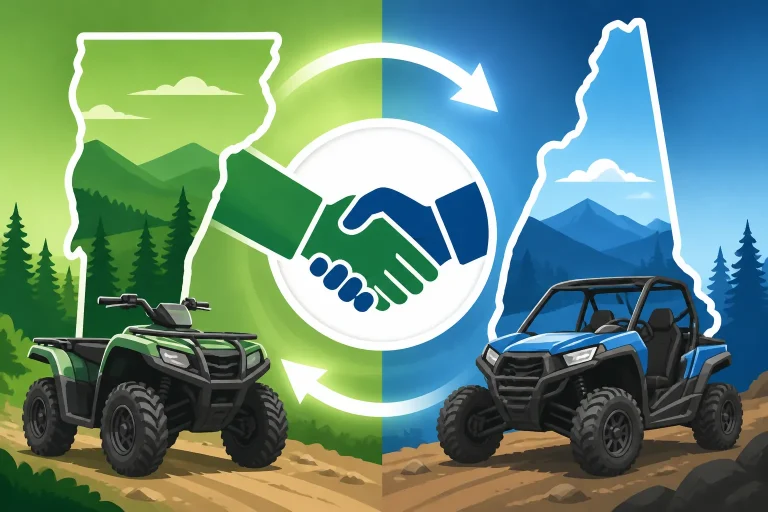
Visitors often arrive with a valid registration from their home state or province and reasonably wonder whether that is enough. It may help satisfy the machine-registration side of the requirements, depending on the applicable reciprocity rules, but it does not automatically grant access to VASA trails. The TAD is a separate access requirement.
This is where the word “reciprocity” can cause confusion. Reciprocity concerns whether Vermont recognizes a registration issued elsewhere for a machine being operated in Vermont. It does not mean that a visitor is exempt from trail-system requirements. A visiting rider may need both a recognized home registration and a Vermont TAD for the planned trails.
Before leaving home, confirm that the machine’s registration is current, that Vermont recognizes it for the intended use, and that you have acquired the appropriate trail access. The details for visitors are covered in Vermont Reciprocity for Out-of-State Machines and Vermont TAD for a Visitor’s Machine. Check the rules for your particular home jurisdiction rather than assuming that a neighboring state’s process applies to everyone.
Registration, decals, and trail access are separate checks
A useful way to avoid last-minute surprises is to divide the paperwork into separate questions. First: is the machine properly registered for the intended Vermont use? Second: does the planned corridor require a TAD? Third: are there additional requirements for the rider, such as safety training or supervision based on age? Treating these as separate checks makes it less likely that one valid document will be mistaken for another.
| What you are checking | What it addresses | What it does not automatically provide |
|---|---|---|
| Machine registration | The machine’s registration status and operating paperwork | Access to every trail or private property |
| TAD | Access to participating VASA trail corridors | Vehicle registration or town-road permission |
| Town designation | Whether a particular town road is open to ATV use | Access to nearby private trails |
| Landowner permission | Permission for the land or route covered by that permission | General access to the wider trail network |
| Safety certificate or supervision | Rider requirements that may apply by age | Registration or trail access |
Keep the required items together, but do not treat a tidy paperwork folder as proof that all riding permissions are covered. For a visitor, the most common planning mistake is checking the home registration and forgetting that a separate Vermont trail credential may still be needed. For a Vermont resident, the reverse mistake is assuming that buying a TAD makes an unregistered machine ready for trail use.
Visitors should check the machine, rider, and route
A visitor’s preparation should begin well before the drive north. Check that the machine’s registration documents match the machine you are bringing, that the plate is properly mounted and readable, and that you understand the TAD process for an out-of-state machine. Then confirm that the trails you want to ride are open to your machine and group on the planned dates.
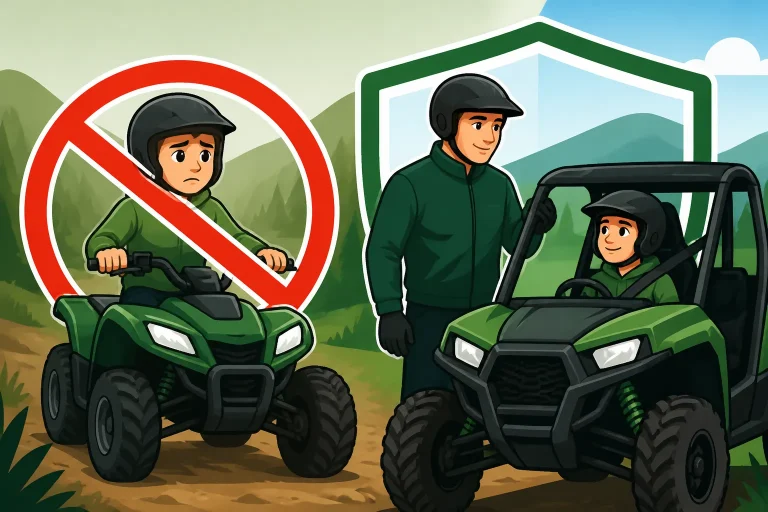
Rider rules deserve their own check. Vermont has safety-course and supervision requirements for younger riders, and a valid TAD does not waive them. A family that has handled the trail decal but overlooked a child’s training or supervision requirement can still find itself unable to ride as planned. See Vermont ATV Safety Course Required Under 18 for the training question, and review the applicable age and supervision requirements for the specific riders in your group.
A practical example: a family from New Hampshire brings two registered machines, one adult rider, and a young teenager. They should verify the recognition of each machine’s registration, obtain the appropriate TAD access for the machines, and confirm the teenager’s training and supervision requirements. Each item solves a different problem; none should be assumed from the presence of another.
Buying and managing a TAD
Use an authorized way to obtain the decal
A TAD should be obtained through the program’s recognized purchasing channels, such as the appropriate club or other authorized process. A decal bought from an unofficial seller may not be valid, and a generic sticker or proof of payment from an unrelated source is not a substitute. If you are unsure which purchasing route applies to your situation, use the current program instructions or contact the relevant club before traveling.
Some riders prefer to arrange access through a local club because the club can help explain local trail conditions and the process for its area. That can be especially useful for someone visiting the Northeast Kingdom or another region for the first time, where a map alone may not explain a recent closure or a corridor-specific instruction. Buying a Vermont Trail Access Decal Through a Club covers that route.
Buy or arrange the decal with enough time to resolve questions about the machine, visitor status, or the way it must be displayed. A last-minute purchase may leave little room to correct a mismatch or replace a decal that was damaged in transit. Keep confirmation of the transaction until the physical decal is applied and you have verified that it is readable and associated with the right machine.
Check the current cost and what it includes
TAD costs and purchasing details can vary by machine and rider circumstances, and program terms may change. Do not rely on an old receipt, a forum post, or a friend’s recollection as the final word on the amount due. Check the current program information before purchase, especially if you are buying for multiple machines, adding a second machine, or visiting from outside Vermont.
It is also worth checking what the purchase includes. Trail access programs may connect the decal purchase with club dues or other program components. Understanding that structure helps explain why the amount may differ by machine or visitor category, and it prevents the assumption that every dollar is simply a charge for a physical sticker.
If you are comparing options, compare the full access package rather than only the initial amount. Confirm the covered machine, the expiration date, whether club participation is included, and whether the decal can be transferred. Relevant details are discussed in Vermont Club Dues Bundled With a TAD and [Vermont TAD for a Second Machine]. Always verify the current terms before paying.
Make sure the purchase matches the machine
A decal is not a group pass for every ATV or UTV in a convoy. Before ordering, identify each machine that will be used and follow the instructions for the correct number and type of decals. If two household members are bringing two machines, do not assume that one machine’s decal covers both simply because they share an owner or trailer.
This is particularly important when a machine has changed hands, when a family is switching to a replacement vehicle, or when a visitor is using a rental. Ask what applies to the exact machine you will ride, and do not move a decal from one vehicle to another unless the program rules expressly allow it. A decal that is valid for one machine may not become valid for a different one just because both are used by the same rider.
For rentals, ask the rental provider who handles the trail access credential and whether it is already in place for the specific machine. The answer should be clear before you sign paperwork or leave the pickup point. A customer who is paying for a machine and assuming the decal is included can otherwise discover the gap only after reaching the trailhead.
Expiration, replacement, and transfers
Check the expiration date before every season
A TAD has an expiration date, so last season’s decal should not be assumed valid for a new riding season. In particular, plan around the program’s annual expiration cycle rather than the date you purchased the sticker. Buying late in the year does not necessarily mean that the decal remains valid for a full twelve months.
This can catch riders who make a fall trip and think the access credential will carry through the following summer. The safest habit is to check the date printed on the decal and the current program rules before each season. If you are planning a ride near a renewal period, confirm the applicable date before hauling the machine.
For the specific date issue, see [Vermont TAD Expiration Date]. Keep a reminder with your registration renewal or other annual riding tasks, but remember that the TAD and registration may follow different processes and schedules. Renewing one does not automatically renew the other.
Lost or damaged decals need prompt attention
A missing, torn, peeled, or unreadable decal can become a problem even if you paid for it. If yours is damaged, contact the program or the club that handled the original purchase and ask about the correct replacement procedure. Keep any purchase confirmation or related records available; they may help identify the transaction and the machine.
Avoid trying to recreate the decal with a printer, laminate, or a homemade sticker. A copy may not satisfy the access requirement, and placing an unapproved substitute on the machine can create confusion at a gate or during a trail check. Similarly, do not assume that a photograph of the decal on your phone is equivalent to the properly displayed physical decal unless the program expressly says so.
A spare piece of clear film or adhesive should not cover the decal in a way that makes it hard to read or conflicts with placement instructions. If you are considering any protective material, check the program’s display rules first. The right fix for a damaged decal is an approved replacement, not a workaround that makes the identifier less visible.
Do not transfer a decal without checking the rules
A rider who sells a machine, buys a replacement, or borrows a family member’s ATV may be tempted to move the decal. That can seem practical, especially when the same person is still riding, but decal validity may depend on the machine or the transaction. Confirm the transfer rules before moving it.
The same principle applies to a decal that is still physically attached after the machine has been sold. A new owner should not assume that the decal continues to grant access simply because it remains on the vehicle. The seller and buyer should clarify the status and follow the required process rather than relying on appearance.
If you replace a machine during the season, contact the appropriate program representative or club before the first ride on the new vehicle. Ask whether the access credential can be transferred, whether a new one is needed, and what documentation to keep. The relevant topic is Transferring a Decal to a New Machine. Resolve that question before the group is waiting at the trail entrance.
Applying and carrying the decal correctly
Follow the official placement instructions
Apply the decal exactly where the current instructions require it. A location that seems convenient may be hidden by a rack, mud flap, accessory, body panel, or a rider’s gear. The goal is for the decal to be visible and associated with the machine without being placed where it will quickly peel or be covered.
Before sticking it down, clean and dry the surface, then check the placement guidance. If the surface is dusty or oily, the adhesive may not hold well. If you apply it in a hurry at the trailhead, you may discover that the panel is too wet, too dirty, or too curved to keep the decal flat. A few minutes of preparation at home is usually easier than trying to fix it beside a crowded parking area.
Do not choose a placement based only on what looks neat. Use the official instructions and confirm that the decal remains visible when the machine is loaded, muddy, or fitted with accessories. See Vermont TAD Placement on the Machine for the placement-specific topic, and Applying a Decal So It Stays On for practical application considerations.
Keep the decal readable through mud and weather
Vermont trail conditions can mean dust, rain, wet leaves, and mud on the same ride. A decal that begins the day clearly visible may be obscured by the time you reach a gate or trail junction. Make a quick visual check during breaks, especially after a muddy section or a water crossing, and clean around the decal gently if it is obscured.
Use a soft cloth and avoid scraping at the decal with a tool that could tear or lift its edges. If the decal is so muddy that its information cannot be read, remove the mud carefully rather than aggressively rubbing the surface. The goal is not to polish the vehicle; it is to keep the access credential legible and in place.
Some riders keep a small cleaning cloth in a storage compartment for the machine and another with their trail gear. If you are putting together a basic kit, a microfiber cloth or a compact weather-resistant pouch may be easy to find through retailers such as Amazon. These are convenience items, not substitutes for the official decal or its placement rules.
Carry records without mistaking them for the decal
It is sensible to keep purchase confirmation and other riding paperwork accessible, but those records are backup documentation, not a reason to leave the required decal at home. Store any documents in a way that protects them from rain and mud. A small waterproof document pouch purchased through a retailer such as Amazon can help keep papers together, provided it does not interfere with the decal’s required display.
A phone photo can also be useful for personal records, especially if you want to remember where the decal was placed or keep a copy of your purchase confirmation. It should not be treated as a replacement for the physical decal unless the program specifically recognizes a digital alternative. If your phone battery dies or the device gets wet, you do not want your only record to disappear.
The same preparation approach helps with other ride essentials. A compact cloth, charging bank, and protected document storage can make a long day less stressful; you might source some of those basics through Amazon or a local outdoor shop. Keep the distinction clear: accessory purchases help you stay organized, while only the required official decal provides the program’s trail access credential.
Planning a ride with a TAD
Confirm that the trail is open, not just that you have access
Having a valid TAD does not guarantee that every participating trail will be open on the day you arrive. Landowner requests, weather damage, seasonal conditions, maintenance, or other local factors can affect access. Check the relevant club or trail information close to the trip, especially after heavy rain or during periods when trails are commonly closed to prevent damage.
This is more than a courtesy. A wet corridor can rut quickly under heavy machines, and a detour onto an unapproved track can create problems for landowners and clubs. If a trail is closed, treat the closure as part of the access rules rather than an inconvenience to work around. Turning back may save the route for future rides and preserve the relationships that make the network possible.
Before travel, review the map and identify a backup plan that stays on authorized corridors. If the planned trail is closed, do not assume that the next visible road is an acceptable substitute. Use club updates and posted signs, and follow the route as marked. For practical trail-use guidance, see Vermont Trail Etiquette on Private Land and Why a Landowner Can Close a Trail Overnight.
Put the access check into your pre-trip routine
A repeatable checklist makes it easier to avoid the classic trailhead scramble: searching through a truck, discovering a decal is still in the garage, or realizing that the planned route crosses a closed corridor. Build the TAD check into the same routine you use for registration, insurance, helmets, fuel, and machine inspection.
- Identify the trails and corridors you plan to ride.
- Confirm that the routes are open and that the group has permission to use them.
- Check that each machine has the required registration.
- Confirm the correct TAD for each machine and verify its expiration.
- Make sure the decal is applied in the required visible location.
- Check rider training, supervision, and equipment requirements.
- Carry relevant records and contact details in a protected place.
- Review a backup route in case of a closure or weather-related change.
For a visitor, add a separate check that Vermont recognizes the machine’s home registration for the intended use. For a local rider, add a check that the town-road segment is actually designated for ATV use if your route depends on it. This checklist is deliberately repetitive: the TAD, registration, and route status solve different problems.
Make the gate check simple for the whole group
Before unloading, tell each rider what needs to be visible and what paperwork they should have available. A group leader can confirm that every machine has its own required access credential rather than checking only the lead vehicle. This matters when friends arrive in separate trucks or a family brings several machines.
Settle questions before the ride begins. If one decal is missing or a machine’s status is uncertain, pause and contact the relevant club or program representative rather than assuming the group can proceed. A quick check at the parking area is far less frustrating than being turned around after driving to a remote trailhead.
The same approach is useful when riding with visitors. Explain that a home-state registration, a Vermont TAD, and any rider training requirements are separate pieces of the puzzle. If everyone understands that before the trip, the group can spend less time sorting paperwork and more time following the signed route responsibly.
Common TAD misunderstandings
“My machine is registered, so I can ride the trail”
Registration alone does not necessarily provide access to a VASA trail. It addresses the machine’s registration status; the TAD addresses access to participating trails. If both are required for the ride you have planned, you need to satisfy both.
This misconception often comes from using “registered” as shorthand for “ready to ride.” In everyday conversation, that can sound reasonable, but the requirements are not interchangeable. A machine can have valid registration and still lack the trail access credential. It can also have a TAD while missing registration or other requirements.
Before a trip, ask two independent questions: “Is this machine properly registered?” and “Does this trail require a TAD that this machine has?” If the answer to either is uncertain, resolve it before departure. That small pause can prevent a long drive ending at a closed gate.
“I only need one decal for the group”
A TAD should not be treated as a group ticket. If multiple machines are riding, confirm the access requirement for each one. Sharing a trailer, household, club membership, or trip plan does not automatically mean that one machine’s decal covers the rest.
This can be confusing for families who buy access at the same time or for friends who make one person responsible for organizing the trip. Make a machine-by-machine list and verify each vehicle. If one ATV is replaced or a visitor joins at the last minute with a different machine, check whether the existing arrangements cover that specific vehicle.
A rental machine needs its own clear answer as well. Ask the rental provider whether the decal is included, where it is displayed, and whether the particular machine is covered for the intended route. If the answer is vague, get it clarified before riding.
“The TAD lets me use any road or trail”
The TAD’s scope is limited to the access program it covers. It does not replace town authorization, landowner permission, seasonal openings, or other access rules. A route that appears connected on a map may pass through several different access regimes, each with its own requirements.
This is particularly important in Vermont, where trail access depends on cooperation among clubs, landowners, and communities. Riding off the marked corridor or ignoring a closure can undermine that cooperation. A TAD is permission to use the applicable network under its rules, not permission to create a new route.
When uncertain, stop and check the signage, map, and local trail information. Do not assume that a nearby logging road, town road, or field entrance is an approved connector. Respecting the specific route is part of keeping access available.
Disclaimer
This article is for general informational purposes only and does not constitute professional advice. Laws, prices and regulations vary by location and change over time. Consult a qualified professional for guidance on your specific situation.