Vermont Permit Questions Clubs Hear Most
Vermont ATV and UTV riders often ask whether registration alone is enough to use club trails, whether visitors need a separate pass, and what proof to carry. The key distinction is that vehicle registration and trail access are different requirements. Knowing which applies to your machine and trip can prevent a frustrating turn-around at a trail entrance.
What a Vermont trail permit does and does not cover
When riders ask clubs about a “permit,” they may mean registration, permission to ride a particular trail, or the Vermont Trail Access Decal, often called a TAD. Those are not interchangeable.
Registration identifies a machine for legal use under the applicable rules. A TAD provides access to participating Vermont ATV trail corridors, subject to trail conditions, club rules, and any other requirements. A registered machine does not automatically have permission to ride every trail, and a decal does not replace registration.
The distinction matters for both Vermont residents and visitors. Before setting out, confirm that your machine is registered as required and that it has the trail access authorization needed for the route you plan to ride. Vermont Requires Registration Plus a TAD explains the basic difference.
| Question | What it usually concerns | What to check |
|---|---|---|
| Is my machine registered? | Legal vehicle registration | Registration documents and plate requirements |
| Can I ride this trail? | Permission and corridor access | A valid TAD, local club rules, and current trail status |
| Is my machine an ATV or ASV? | Vehicle classification | The machine’s specifications and Vermont’s definitions |
| Am I covered as a visitor? | Reciprocity and trail access | Home-state registration acceptance and Vermont TAD requirements |
| Can a young rider use the machine? | Training and supervision | Age-related safety rules and any applicable exception |
A TAD is not a general pass for all land. Vermont’s trail network depends on permission for specific corridors, many of which cross private property. A landowner or club can close a segment, and a trail may be unavailable because of conditions or maintenance. Check the local club’s information before traveling rather than treating an old map, decal, or past ride as proof that a route is open.
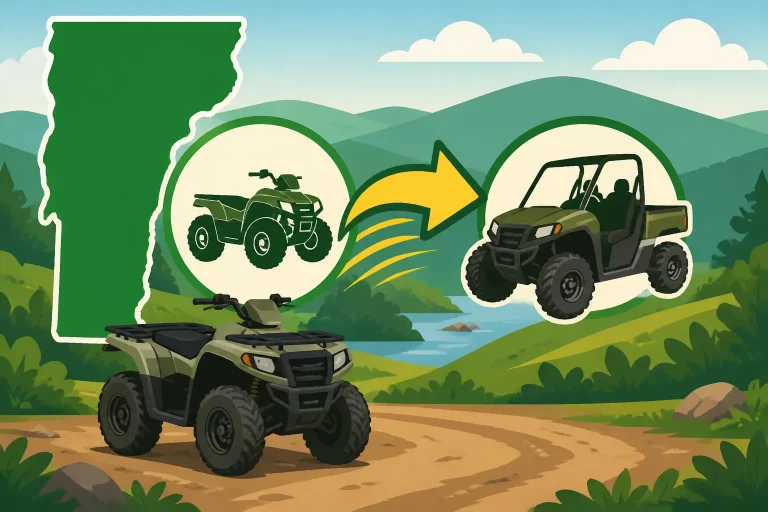
Vehicle classification can also affect what riders need to do. Some machines called UTVs or side-by-sides may fall into different Vermont classes depending on their features and specifications. If you are unsure whether your machine qualifies for the trail system or which registration category applies, start with Vermont ATV Versus ASV Classes and Vermont’s 72-Inch, 2,500-Pound ATV Definition. Confirm uncertain cases with the relevant state agency or club before buying a decal.
Common questions clubs hear from riders
Does registration by itself let me ride VASA trails?
Usually, no. Registration and trail access address different things. A registration may satisfy a vehicle requirement, but riders using participating club corridors generally need the appropriate TAD as well. Trails also have local conditions, closures, and access limits.
A practical way to avoid confusion is to check three things before riding: the machine’s registration status, the decal requirement for that machine, and the current status of the specific corridor. Vermont Trails Closed Without a TAD covers the access issue, while Vermont Trail Conditions Before You Tow is useful when planning around closures or changing conditions.
Is a TAD the same as a club membership?
Not necessarily in the way riders often mean it. The decal program is connected to the club trail system, and club dues may be included in the purchase process, but a decal should not be mistaken for unlimited membership benefits or permission to ride outside the network’s rules. Check the purchase details and the club’s instructions for what your decal covers.
If you want to support trail work, attend events, volunteer, or get local route advice, ask the club what membership adds beyond access. The details can vary by club and by the way you purchase the decal. Vermont Club Dues Bundled With a TAD explains why riders may see club dues included.
Do I need a separate decal for every machine?
Do not assume one decal covers every machine you own. The requirement and available purchase options can depend on how many machines you are registering for trail access and whether they are resident or visitor machines. Check the current ordering instructions before placing an order, especially if you are bringing more than one vehicle.
It is also worth confirming which machine a decal is assigned to and where it must be displayed. A decal attached to the wrong vehicle may not solve an access problem at a gate. See Vermont TAD for a Second Machine and Vermont TAD Placement on the Machine for those details.
Can I ride a trail if my decal is in the mail?
A receipt or order confirmation may not be a substitute for the decal or other proof required on the trail. Ask the club or the decal provider what riders must display and carry while waiting for an order. If the required decal has not arrived, the conservative choice is to delay the ride or confirm an accepted alternative before leaving home.
Keep your registration documents and other required proof available as well. A trail access decal does not necessarily answer every question a warden or other official may ask. What a Trail Warden Checks provides a broader overview of what may be checked during a ride.
Does a club decide whether my out-of-state registration counts?
A club can explain its corridor and access practices, but do not rely on a club volunteer to settle every question about state registration recognition. Visitors should check Vermont’s current reciprocity rules and the trail-access requirement separately. Recognition of a registration from another jurisdiction does not automatically remove the need for a Vermont TAD.
For a useful starting point, see Vermont Reciprocity for Out-of-State Machines. Riders from neighboring jurisdictions can also review the relevant information for Vermont Reciprocity With Quebec or Vermont Reciprocity With New Hampshire. Confirm the rules that apply to your home registration before traveling.
Visitors, young riders, and machine-specific questions
Visitors often assume that bringing a properly registered machine from home is enough. Reciprocity can address whether Vermont recognizes another jurisdiction’s registration, but trail access remains a separate question. A visitor may still need a Vermont TAD to use participating club corridors. Check both requirements before loading the machine.
If you are riding with a machine registered outside Vermont, keep its registration proof with you and check whether the machine’s class is eligible for the route. A vehicle that is allowed on a road or trail in its home jurisdiction is not automatically allowed on every Vermont corridor. Local route restrictions, width limits, landowner permissions, and posted closures still matter.
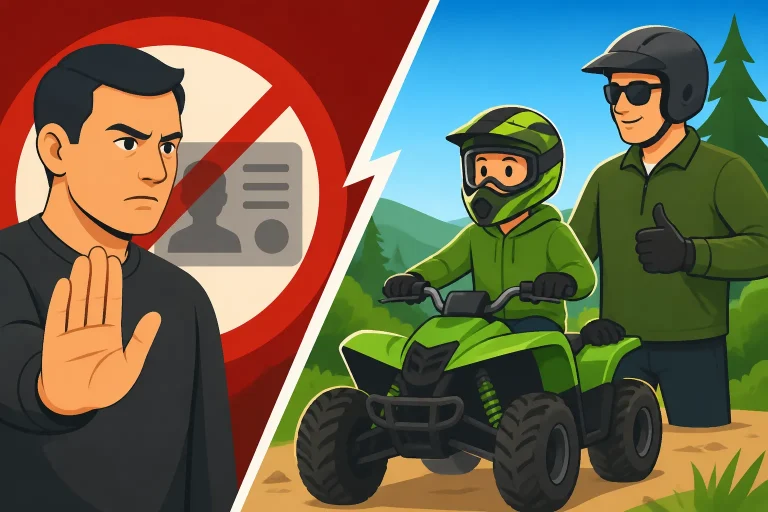
Young riders bring another set of questions. Vermont has safety-training and supervision requirements that can depend on the rider’s age and circumstances. Do not assume that a child’s age, a parent’s presence, or a certificate from another state automatically settles the issue. Check the current Vermont requirements and carry proof of training when applicable. The related topics Vermont ATV Safety Course Required Under 18 and Vermont Supervision Rules Under 16 explain the age-related questions riders commonly raise.
Families should also check the machine itself. A child may be trained and supervised but still be an unsafe passenger on a machine that is not designed for passengers or does not have an appropriate seat. A trail decal does not make a machine suitable for carrying another rider. Follow the manufacturer’s seating instructions and Vermont’s applicable passenger rules.
For a side-by-side or other larger machine, ask about classification before you buy a decal. The everyday name used by a dealer or owner may not match the category used in Vermont’s registration and access rules. Measurements, weight, and other specifications may matter. If a machine is close to a category threshold, use its documentation and confirm the classification rather than relying on a visual estimate.
How to get a clear answer before you ride
Clubs hear permit questions most often when riders are already at a trailhead. A short check before departure is usually easier than trying to solve a paperwork issue beside a closed gate.
- Identify the machine. Gather its make, model, year, vehicle identification number, and specifications. Note whether it is registered as an ATV, ASV, or another category.
- Confirm registration. Check that the registration is current and that the machine meets the requirements that apply to its class. If you are uncertain about the paperwork, use Vermont Registration Paperwork Checklist as a starting point.
- Confirm trail access. Determine whether the ride uses a corridor requiring a TAD and whether the decal you have is valid for that machine. Do not treat a registration document as trail authorization.
- Check the route. Look for current club notices, access conditions, and closures. A corridor that appeared on a map earlier may have changed or closed.
- Check rider requirements. Review training, supervision, passenger, and equipment rules for everyone in the group.
- Carry proof. Bring the documents and display the decal as instructed. Keep a way to contact your club or the relevant authority if a question comes up.
- Ask a specific question. When contacting a club, provide the machine class, registration jurisdiction, rider ages, and the trail or area you plan to use. “Can I ride here?” is harder to answer than a question with those details.
If you receive different answers from informal sources, separate the issue into parts: state registration, Vermont trail access, machine eligibility, and the local corridor’s status. A club can often give the most useful answer about its own trails, while official sources are the safer place to confirm legal requirements or registration recognition.
Be wary of advice based only on another rider’s setup. A friend may have a different machine class, home registration, decal type, or route. Rules and access arrangements can also change. Verify the details for your own vehicle and planned ride, then check the trail again shortly before departure.
The simplest rule of thumb is: registration establishes the machine’s status, a TAD addresses access to participating trail corridors, and neither one overrides a closure or local restriction. Confirm all three before you ride, and carry the proof you may be asked to show.
Disclaimer
This article is for general informational purposes only and does not constitute professional advice. Laws, prices and regulations vary by location and change over time. Consult a qualified professional for guidance on your specific situation.