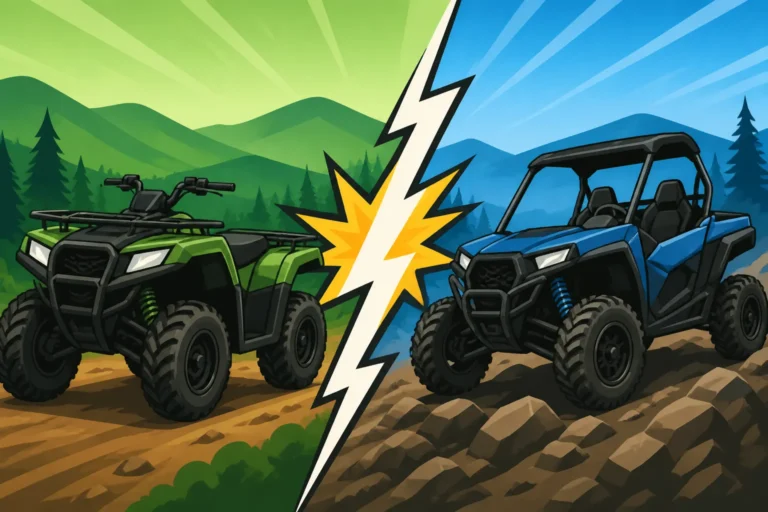
Vermont’s 72-Inch, 2,500-Pound ATV Definition
It can be incredibly frustrating to hit the trails in Vermont only to discover your beloved off-highway vehicle (OHV) might not fit the state’s exact definition of an all-terrain vehicle (ATV). This confusion often stems from crucial details like width and weight, which can make all the difference in how your machine is classified and, more importantly, how you can legally register and ride it. This comprehensive guide will demystify Vermont’s specific ATV definition, with a particular focus on the often-misunderstood 72-inch width and 2,500-pound weight limits, ensuring you understand exactly where your machine stands.
Understanding Vermont's ATV Definition: The Basics
Navigating the nuances of vehicle definitions can feel like trying to solve a puzzle with missing pieces, especially when state laws are involved. In Vermont, what might seem like a simple question – "Is my side-by-side an ATV?" – quickly becomes complex due to specific legal parameters. These definitions aren't just bureaucratic hurdles; they directly impact everything from your registration fees to the trails you're permitted to access. It's about ensuring safety and maintaining the integrity of our beautiful Vermont landscapes.
What is an All-Terrain Vehicle ATV in Vermont's Eyes?
At its core, Vermont defines an ATV as a motorized vehicle that's designed to travel on four or more low-pressure tires. It's meant for off-highway use, typically has a seat designed to be straddled by the operator, and handlebars for steering. Think of your traditional quad – that's the classic ATV image. However, the legal definition extends beyond just those machines. It also encompasses certain side-by-sides (SxSs) and utility terrain vehicles (UTVs), which is where the crucial distinctions of width and weight come into play. Without these specific parameters, it would be difficult to differentiate between machines that are suitable for various trails and those that might cause undue wear or simply be too large for existing infrastructure. Understanding this baseline is the first step in ensuring your ride is compliant.
The Critical Role of Dimensions: Width and Weight
Now, let's talk about the big two: width and weight. These aren't just arbitrary numbers; they are foundational to Vermont's classification system. For a vehicle to be considered a standard ATV in Vermont, it generally needs to be no more than 72 inches wide and weigh no more than 2,500 pounds dry weight. These limits are designed to regulate the size and impact of vehicles on our trails and town roads. A machine that is too wide might not fit safely on existing trail corridors or might damage trail edges. A machine that is too heavy can contribute to excessive rutting, erosion, and greater wear on bridges and culverts. It's about maintaining a balance between recreational access and environmental protection. For many riders, especially those with newer, larger side-by-sides, these numbers are the primary gatekeepers to how their vehicle is registered and used in the state. Vermont's 72-Inch, 2,500-Pound ATV Definition is a key resource for understanding these limits.
How These Definitions Impact Registration and Riding
The implications of these definitions are far-reaching. If your machine falls within the specified width and weight limits, it's typically registered as an "ATV." This means it qualifies for the standard ATV registration fees and is subject to the rules governing ATVs on designated trails and approved town roads. However, if your machine exceeds these limits, particularly the 72-inch width or 2,500-pound dry weight, it might be classified differently, often as an "ASV Class A." This distinction isn't just a label; it comes with different registration costs, and potentially different regulations regarding where and how you can ride. You might find that some trails are simply not equipped to handle wider or heavier machines, leading to restrictions. It's vital to know your machine's stats before you even think about buying a registration, because a misclassification could lead to frustration or, worse, fines.
The 72-Inch Width Limit: What It Means for Your Machine
The 72-inch width limit is one of the most talked-about specifications among Vermont riders, particularly those who own modern side-by-sides. It's a clear line in the sand, determining whether your machine fits the standard ATV mold or ventures into a different classification with its own set of rules and fees. Many manufacturers are pushing the boundaries of vehicle size, offering more spacious and stable platforms, which sometimes means they bump up against or even exceed this critical measurement.
Measuring Your ATV's Width Accurately
Getting an accurate measurement of your ATV's width is crucial. You can't just eyeball it or rely solely on a manufacturer's brochure, as sometimes accessories can add to the overall width. The measurement should be taken from the widest point of the vehicle, which typically includes the outside edge of the tires. If you have fender flares, wheel spacers, or other aftermarket additions, these must be included in your measurement. It’s always best to use a reliable tape measure and take the measurement yourself, especially if you suspect your machine might be close to the 72-inch mark. Do this on a flat, level surface to ensure precision. A small difference of an inch or two can change your vehicle's classification entirely.
Machines That Typically Fall Under or Exceed 72 Inches
Historically, most traditional sport and utility quads easily fit under the 72-inch width limit, often being in the 48-inch to 50-inch range. Many older utility side-by-sides also stayed within this boundary. However, the market has evolved, and newer, high-performance recreational side-by-sides are often designed for wider stances for stability and comfort. Many sport-oriented UTVs today, especially popular models from manufacturers known for their power and suspension, frequently exceed 72 inches, sometimes reaching 64, 68, or even 77 inches wide. These wider machines are incredible on open trails, offering stability and passenger comfort, but they present a classification challenge in Vermont. Knowing your specific model’s true width is the first step toward compliance. It's important to remember that [Vermont Machines Wider Than 72 Inches] will have different registration requirements.
Consequences of Exceeding the 72-Inch Width
If your machine measures over 72 inches wide, it automatically shifts from the standard "ATV" classification to "ASV Class A" in Vermont. This reclassification carries several significant consequences. Firstly, the registration fee for an ASV Class A is higher than for a standard ATV. Secondly, while many trails are open to ASV Class A machines, some narrower, more technical trails might not be suitable or explicitly permitted for wider vehicles. Club rules and specific ordinances in towns that open their roads to OHVs may also have additional restrictions based on width. Exceeding the width limit without proper registration means you're operating an unregistered vehicle, which can lead to fines and legal headaches if you're stopped by a game warden or law enforcement officer. It’s not a situation you want to find yourself in when you’re out enjoying a ride. You should also consult [Vermont ASV Class A Registration Explained] for more details on this classification.
The 2,500-Pound Weight Threshold: Dry vs. Curb Weight
Just like width, the weight of your machine plays a pivotal role in its classification in Vermont. The 2,500-pound threshold is another critical factor that helps differentiate smaller, more nimble ATVs from larger, heavier utility or multi-passenger machines. Understanding how to interpret this weight limit—specifically the difference between dry weight and curb weight—is essential for accurate classification and registration.
Deciphering Dry Weight, Curb Weight, and Gross Vehicle Weight
When manufacturers list vehicle weights, they often use terms like "dry weight," "curb weight," and "gross vehicle weight rating (GVWR)," and it's easy for these terms to get mixed up. In Vermont's definition for ATVs, the focus is generally on "dry weight," which refers to the weight of the vehicle without any fluids (like fuel, oil, coolant) or accessories, passengers, or cargo. It’s the machine as it rolls off the assembly line, stripped down. "Curb weight," on the other hand, includes all necessary operating fluids (full tank of gas, oil, coolant) but still no passengers or cargo. GVWR is the maximum permissible total weight of your fully loaded vehicle, including the vehicle itself, all fluids, passengers, and cargo. For Vermont’s classification, the 2,500-pound limit is typically based on the dry weight. This is a crucial distinction, as adding fluids and accessories can easily push a machine over 2,500 pounds, even if its dry weight is just under.
Why the 2,500-Pound Limit is Important for Classification
The 2,500-pound dry weight limit serves a similar purpose to the 72-inch width rule: to categorize vehicles based on their potential impact and handling characteristics. Heavier machines generally have a larger footprint and can exert more force on trails, leading to increased wear and tear, especially in sensitive areas or during certain seasons. This limit helps ensure that machines classified as standard ATVs are generally lighter and less impactful, suitable for a wider range of trail conditions and existing infrastructure, such as smaller bridges and culverts. [Vermont Machines Over 2,500 Pounds] also fall into a different classification, similar to those that are wider. It’s a pragmatic approach to land management and safety, ensuring that our trail systems can sustain recreational use for years to come.
Heavy-Duty Machines and the Weight Conundrum
Many modern utility side-by-sides and multi-passenger UTVs are designed for heavy-duty work or carrying multiple people comfortably, often exceeding the 2,500-pound dry weight limit. These machines offer incredible versatility and capability, from hauling firewood to transporting a family of six. However, their robust construction and larger engines mean they almost invariably fall into the ASV Class A category for registration in Vermont. While this doesn't mean they can't be registered or ridden, it does mean a different fee structure and potentially different operating rules apply. It's not uncommon for a fully equipped, four-seat UTV to have a dry weight well over 2,000 pounds, and once you add passengers and gear, the difference becomes even more pronounced. Being aware of this is especially important when considering a purchase, as the weight factor directly influences your ongoing registration costs and where you can legally ride.
Beyond the Basics: Other Defining Characteristics
While width and weight are often the headline numbers, Vermont’s definition of an ATV and its cousin, the ASV, also considers other important characteristics. These additional criteria help further distinguish between different types of off-highway vehicles and ensure they are appropriately regulated for safe and sustainable use on Vermont’s trails and roads. It’s a holistic approach to classification that looks beyond just raw dimensions.
Low-Pressure Tires and Their Significance
One fundamental aspect of Vermont’s ATV definition is the requirement for "low-pressure tires." This isn't just a casual suggestion; it's a specific design feature that sets ATVs apart from other vehicles. Low-pressure tires are designed to spread the vehicle's weight over a larger surface area, minimizing ground pressure and reducing damage to sensitive terrain. They also provide superior traction on uneven, soft, or loose surfaces, which are common on trails. Standard street vehicle tires, with their higher inflation pressures, would cause significantly more damage to trails and offer less grip in off-road conditions. This requirement is central to the very concept of an all-terrain vehicle and its environmental compatibility. For more details, see [Vermont Low-Pressure Tire Requirement].
Steering Wheel vs. Handlebars: The ASV Distinction
Another key differentiator, particularly when distinguishing between a traditional ATV and an ASV, is the steering mechanism. A classic ATV is defined as having handlebars for steering, much like a motorcycle or bicycle. This straddle-style seating and handlebar steering contribute to the dynamic riding experience associated with quads. However, many side-by-sides, which also fall under the broader OHV umbrella, feature a steering wheel and bucket or bench seating. These machines are often classified as ASVs (All-Terrain Side-by-Side Vehicles) in Vermont, even if their width and weight might technically fall within the standard ATV limits. The presence of a steering wheel is a strong indicator of an ASV classification, carrying different implications for registration and sometimes for operation. This distinction is further elaborated in [Vermont ATV Versus ASV Classes].
Engine Size and Occupancy Considerations
While Vermont's ATV definition doesn't typically set strict engine size limits in cubic centimeters (cc) for adult machines, the engine is, of course, a motorized component essential to the definition. What’s more relevant for classification in practice is how engine power contributes to the overall weight and performance capabilities that align with width and weight limits. Separately, occupancy is another factor. Most traditional ATVs are designed for a single rider, with some models offering a "two-up" option that is essentially an extended seat. Side-by-sides, by their very design, often accommodate two, four, or even six passengers, seated side-by-side. While not a primary classification factor like width or weight for all ATVs, the number of seats is a strong characteristic of ASVs, influencing how a vehicle is perceived and used, especially regarding passenger safety and trail impact.
The 2025 Definition Changes and What They Imply
Vermont is not static; laws and regulations, especially concerning recreational vehicles, often evolve to keep pace with technology, environmental concerns, and rider demands. The year 2025 marks a significant point for ATV and ASV definitions in the state, bringing changes that all riders, current and prospective, need to be aware of. Staying informed about these shifts isn't just about avoiding penalties; it's about understanding the state's vision for OHV recreation.
What Vermont's 2025 Act 18 Changed for Riders
Act 18, passed by the Vermont Legislature, introduced notable revisions to the state's definitions of ATVs and ASVs, taking effect in 2025. The core intent behind these changes was to clarify classifications, especially for the larger, more powerful machines that have become increasingly popular. Historically, some larger side-by-sides might have squeezed through certain loopholes, but the updated definitions aim for greater consistency and easier enforcement. While the exact details can be complex, the changes often reinforce the importance of the width and weight limitations, formalizing what was previously sometimes ambiguous. For a deeper dive into these specific legislative updates, you'll want to review [What Vermont's 2025 Act 18 Changed for Riders]. These changes mean that what was acceptable or how a machine was classified before 2025 might not be the same afterward, necessitating a review of your vehicle's status.
Preparing for Future Classification Adjustments
The 2025 changes serve as a clear reminder that state regulations are not set in stone. As OHV technology continues to advance, with electric models gaining traction and designs constantly pushing boundaries, it’s reasonable to expect further adjustments in the future. For riders, this means cultivating a proactive approach to understanding regulations. Don't assume that if your machine was compliant five years ago, it still is today. Regularly checking the Vermont Department of Motor Vehicles (DMV) website or consulting with a local ATV club can help you stay current. When considering purchasing a new machine, especially one that is on the larger end of the spectrum, it's always wise to anticipate potential future classification shifts and how they might affect your ability to ride in Vermont.
Grandfathering Clauses and Existing Machines
A common concern when new regulations come into effect is whether existing machines will be "grandfathered in" under the old rules. In some cases, states implement provisions that allow vehicles registered before a certain date to continue operating under their previous classification, even if they no longer meet the new criteria. However, this isn't always the case, and specific details can vary depending on the nature of the legislative changes. For Act 18 and the 2025 Vermont definition updates, riders with currently registered machines should specifically investigate whether their vehicles' existing classifications will be honored or if they will need to re-register under the new ASV Class A guidelines if their machines now exceed the standard ATV limits. Ignoring these details could lead to issues with your registration and trail access. Always verify the status of your existing vehicle under any new legislation.
Practical Implications for Riders and Buyers
Understanding Vermont's ATV definition isn't just an academic exercise; it has very real, practical consequences for anyone who owns or plans to purchase an off-highway vehicle in the Green Mountain State. From the moment you start shopping to every time you hit the trails, these definitions dictate a significant part of your riding experience and responsibilities.
Buying an ATV: What to Look For in Vermont
When you’re in the market for a new ATV or UTV in Vermont, knowing these definitions is paramount. Don’t just fall in love with a machine; ensure it fits your intended use and regulatory environment. If your heart is set on a larger side-by-side, be prepared for it likely to be classified as an ASV Class A due to its width, weight, or steering wheel. This means higher registration fees from the outset. Always check the manufacturer’s specifications for dry weight and measure the actual width, especially if buying used or if the machine has aftermarket modifications. Ask dealers how a specific model is typically registered in Vermont. Getting these details upfront can save you considerable hassle and unexpected costs down the road. It’s also wise to consider that some of the documentation, like a bill of sale, might be something you create using a service like LawDepot to ensure it meets legal standards.
Ensuring Your Existing Machine Complies
For current OHV owners in Vermont, the ongoing task is to ensure your existing machine remains compliant with the latest definitions. If you bought your side-by-side a few years ago when definitions might have been looser, or if you've added accessories like wider tires or fender flares, it’s worth re-checking your vehicle’s width and verifying its dry weight against the current 72-inch and 2,500-pound thresholds. If you discover your machine now falls into the ASV Class A category due to a change in definition or an accessory you added, you'll need to update your registration accordingly. This might involve changing your registration class at the DMV and paying the difference in fees. Proactive compliance is far better than facing a citation for an improperly registered vehicle.
Vermont ATV Registration Costs and Terms
The definition of your machine directly correlates to its registration costs and the terms that apply. A standard ATV, fitting within the 72-inch and 2,500-pound limits, will have one set of registration fees, often lower than other classifications. An ASV Class A, which includes wider, heavier, or steering-wheel-equipped machines, will have a different, generally higher, fee structure. Registration terms also vary, with options for one-year or two-year periods. Knowing your machine's classification helps you budget accurately and understand what you're paying for. For a detailed breakdown of the various fees and options, refer to [Vermont ATV Registration Costs and Terms]. It's a key resource for any rider planning to hit the trails legally in Vermont.
Navigating Registration with Specific Measurements
Registering your off-highway vehicle in Vermont requires more than just filling out a form and writing a check. It demands a clear understanding of your machine's specifications, particularly its width and weight. The DMV relies on these details to properly classify your vehicle, ensuring it's registered correctly according to state law. This process can sometimes feel daunting, especially if your machine falls into a grey area or if you’re unsure about its exact measurements.
Vermont ATV Versus ASV Classes
The distinction between "ATV" and "ASV Class A" is central to Vermont’s registration system, and your machine's width and weight are primary determinants. An ATV typically refers to a four-wheeled vehicle designed for off-highway use, steered by handlebars, and meeting the 72-inch width and 2,500-pound dry weight limits. An ASV Class A, on the other hand, encompasses side-by-side vehicles, often with steering wheels and bucket seats, and frequently exceeding those width and weight limits. The implications are significant: ASV Class A vehicles, due to their size and design, generally incur higher registration fees. It’s crucial to know which class your vehicle falls into before approaching the DMV. This table might help clarify:
| Feature | Standard ATV (Vermont Definition) | ASV Class A (Vermont Definition) |
|---|---|---|
| Max Width | 72 inches (approx. 183 cm) | Often exceeds 72 inches (but some may be under if other factors apply) |
| Max Dry Weight | 2,500 pounds (approx. 1,134 kg) | Often exceeds 2,500 pounds |
| Steering Mechanism | Handlebars | Steering wheel |
| Seating Arrangement | Straddle seat, often single-rider or two-up | Bucket or bench seats, side-by-side, 2+ passengers |
| Primary Use | Recreational off-road, utility | Recreational off-road, utility, multi-passenger |
| Registration Fee | Standard ATV fee | Higher ASV Class A fee |
| Trail Access | Widely accessible on designated ATV trails/roads | Generally accessible, but some narrower trails may have restrictions |
Understanding [How the ATV and ASV Classes Change Your Fee] is critical for budgeting your riding season.
Paperwork and Proof of Machine Specifications
When you register your ATV or ASV at the Vermont DMV, you'll need to provide documentation that proves ownership and, implicitly, the machine's specifications. For new machines, the Manufacturer’s Certificate of Origin (MCO) will contain critical details like the vehicle’s dry weight and often its dimensions. For used machines, a clear bill of sale and previous registration or title (if applicable) are essential. While you typically won’t be asked to physically measure your vehicle at the DMV counter, providing accurate information is your responsibility. Lying about your machine's specifications to get a lower registration fee is a serious offense. If you're creating a bill of sale for a private sale, consider using a reliable template from a service like LawDepot to ensure all necessary details, including accurate descriptions of the vehicle's make, model, VIN, and even its known dimensions, are included. [Vermont Registration Paperwork Checklist] provides a comprehensive list of what you'll need.
What Happens If Your Machine Is Too Big or Heavy?
If your machine exceeds the 72-inch width or 2,500-pound dry weight limit, it will be registered as an ASV Class A, not a standard ATV. This means you will pay the ASV Class A registration fee, which is higher. If you mistakenly try to register it as a standard ATV, the DMV clerk will likely catch the discrepancy based on the manufacturer’s information or if it's a commonly known larger model. Trying to ride an ASV Class A machine with a standard ATV registration (or no registration at all) is a violation that can result in fines, particularly if you are stopped by a game warden on a trail or a law enforcement officer on a town road. It's always best to be transparent and register your machine correctly from the start. Taking the time to ensure proper classification avoids potential legal issues and allows you to enjoy Vermont's trails with peace of mind.
Common Questions and Misconceptions
The world of ATV and ASV definitions can be ripe with misunderstandings, leading to confusion among riders. Many assumptions are made about exemptions, modifications, and where to get definitive answers. Let's clear up some of these common points of confusion so you can ride with confidence and compliance in Vermont.
Debunking Myths About Farm Use Exemptions
One persistent myth revolves around farm use. Many assume that if an ATV or UTV is primarily used for agricultural purposes on private land, it doesn't need to be registered or might be exempt from certain size restrictions. While Vermont does have provisions for farm vehicles in specific contexts (like highway travel for farming purposes), these generally do not extend to off-highway vehicle registration for recreational trail use. If you plan to ride your farm ATV on any VASA trails or town roads designated for OHVs, it must be properly registered according to its class (ATV or ASV Class A), regardless of its primary agricultural use. The same width and weight definitions apply. Relying on anecdotal "farm use" exemptions could put you at risk of fines if you venture beyond private farm property.
The Role of Aftermarket Modifications
Aftermarket modifications are a popular way for riders to customize their machines for performance, aesthetics, or specific tasks. However, these modifications can inadvertently change your vehicle’s classification. Adding wider offset wheels, large tire and wheel combinations, or fender flares can push a machine over the 72-inch width limit that it originally met. Similarly, heavy-duty accessories like winches, full skid plates, or extensive cargo racks can increase the dry weight. It’s critical to re-measure and re-evaluate your machine's dimensions and weight after any significant modifications. If these changes push your ATV into the ASV Class A category, you are responsible for updating your registration with the DMV. Ignoring this can lead to an improperly registered vehicle, even if you started out compliant.
Seeking Clarification from the DMV or a LawDepot Document
When in doubt, the best course of action is always to seek official clarification. The Vermont Department of Motor Vehicles (DMV) is the ultimate authority on vehicle registration and classification. You can call them, visit a local office, or check their official website for the most up-to-date regulations and forms. Additionally, for any documentation related to buying, selling, or owning an ATV, such as a bill of sale or an affidavit of ownership, it’s wise to use legally sound templates. Services like LawDepot offer templates for various legal documents that can help ensure your paperwork is in order and meets general legal requirements, minimizing misunderstandings when you deal with the DMV or a private sale. Don't rely on hearsay or forum discussions alone when it comes to legal compliance. When providing [Proof of Ownership Vermont's DMV Will Accept], accurate documentation is key.
Disclaimer
This article is for general informational purposes only and does not constitute professional advice. Laws, prices and regulations vary by location and change over time. Consult a qualified professional for guidance on your specific situation.