Vermont Registration Compared to Quebec
It can be incredibly confusing when you love riding your ATV or UTV and live close to a border like Vermont and Quebec. One minute you're thinking about exploring the beautiful trails in the Northeast Kingdom, and the next you're wondering if your Quebec registration is even valid here, or if you need something entirely new. This guide is designed to cut through that cross-border registration confusion, comparing Vermont's requirements with Quebec's so you can ride legally and confidently, no matter which side of the line you're on.
Understanding Vermont's ATV Registration Landscape for Visitors
Vermont prides itself on its scenic trails and welcoming attitude for riders, but like any state, it has specific rules when it comes to registering your all-terrain vehicle (ATV) or side-by-side (UTV). It’s not just about having a plate; it’s about ensuring you meet all the state's legal criteria, especially if you're coming from across the border. Many riders assume that if their machine is registered somewhere else, they're good to go, but that's not always the case in the Green Mountain State.
What Vermont Requires for Out-of-State Machines
When you bring an ATV or UTV into Vermont from another jurisdiction, including Quebec, the primary concern for the state is whether your home registration is recognized. Vermont does have reciprocity agreements with some neighboring states and even certain Canadian provinces for ATV registrations, meaning your home registration might be sufficient for the machine itself. However, this reciprocity often comes with conditions. For example, your home registration needs to be current and valid, and you must carry proof of it with you while riding. Vermont also specifically defines what an ATV is, and if your machine doesn't fit that definition, you might run into issues. For instance, Vermont has different categories like ATVs and ASVs (All-Terrain Self-Propelled Vehicles), and the registration class can impact fees and requirements. You can learn more about these distinctions in [Vermont ATV Versus ASV Classes].
Beyond the base registration, Vermont also has a separate requirement for trail access. This isn't part of your vehicle's registration but is mandatory for riding on designated VASA (Vermont ATV Sportsman's Association) trails. This is where many out-of-state riders, including those from Quebec, often get tripped up. Even with a valid home registration, you must purchase a [Vermont TAD: The Trail Access Decal Explained]. This decal is crucial because it includes your VASA membership and contributes to the maintenance of the very trails you want to ride. It's a key part of the Vermont riding experience and ensures the trails remain open and safe for everyone.
Additional Vermont Requirements for All Riders
Regardless of where your machine is registered, Vermont imposes several other rules that all riders must follow. For starters, liability insurance is not just a good idea; it's a legal requirement. You need to carry proof of at least the minimum required coverage while riding, just as you would for a car. This is a crucial detail that often catches out-of-state visitors. Vermont also has strict helmet laws, requiring all riders to wear an approved helmet, regardless of age. If you're riding with passengers, they need to be in a manufacturer-designed seat, and everyone, including children, must wear a helmet. Furthermore, if you plan to ride on specific town roads designated for ATV use, there might be additional local ordinances regarding curfews, speed limits, and even front plate requirements in some communities, like Brighton. Always check local rules when planning your route. You'll find more details on [Vermont ATV Insurance Requirements] and [Vermont ATV Helmet Law for Every Rider].
Decoding Quebec's ATV Registration System for Visitors
Just as Vermont has its own set of rules, Quebec, with its vast wilderness and extensive trail networks, also has a distinct system for ATV registration and trail access. If you're a Vermont rider planning to venture north, understanding these nuances is vital to avoid fines and ensure a smooth riding experience. Quebec's system often integrates registration with trail access in a way that can be different from what you might be used to at home.
What Quebec Requires for Out-of-Province Machines
In Quebec, all off-road vehicles (VHRs, or Véhicules Hors Route) must be registered with the Société de l'assurance automobile du Québec (SAAQ). This is similar to registering a car. For visitors bringing an ATV or UTV from Vermont or any other province/state, Quebec generally recognizes valid out-of-province registrations. This is part of a reciprocal agreement between many jurisdictions. So, if your machine is properly registered in Vermont and you have your current registration documents with you, the SAAQ will likely accept that for the machine itself. However, it's always prudent to confirm the latest reciprocity agreements before you travel, as these can be subject to change. Always carry your physical [Vermont Registration Paperwork Checklist] with you.
Trail Access: The Quebec Federation of ATV Clubs (FQCQ)
While your Vermont registration might cover the machine's legality, riding on Quebec's extensive trail network requires a separate permit, similar to Vermont's TAD. The vast majority of Quebec's managed ATV trails are maintained by clubs affiliated with the Fédération des clubs de VTT du Québec (FQCQ). To access these trails, you must purchase an FQCQ trail permit. This permit serves as your access pass and contributes to the maintenance and insurance of the trails. These permits can be purchased for a full season or for shorter durations like a day or a week, making them flexible for visitors. Without this permit, riding on FQCQ trails is prohibited, even if your machine is legally registered in Vermont. It’s imperative to have both your Vermont registration and a valid FQCQ trail permit if you plan to hit the trails in Quebec.
Additional Quebec Requirements for All Riders
Quebec also has specific rules that apply to all ATV riders, regardless of their origin. Helmets are mandatory for all riders and passengers, and they must meet specific safety standards. The province also has age restrictions for operating ATVs, particularly for younger riders, and specific rules about carrying passengers. Depending on the type of terrain and whether you're riding on private land or designated trails, there might be varying regulations regarding equipment like headlights, tail lights, and mirrors. Similar to Vermont, insurance is typically a requirement, and you should carry proof of it. Knowing these rules beforehand will save you from potential fines and ensure a safer ride. You can often find a comprehensive list of Quebec's off-road vehicle laws on the SAAQ website or through the FQCQ.
Key Differences and Reciprocity Between Vermont and Quebec
Navigating the rules for ATV and UTV riding when crossing the Vermont-Quebec border can feel like a riddle. While both jurisdictions aim to keep riders safe and trails maintained, their approaches to registration and trail access have distinct differences that are crucial to understand. This isn't just about different forms; it's about fundamentally different systems that sometimes overlap and sometimes require completely separate actions.
Registration Reciprocity: A Mixed Bag
One of the most common questions riders have is about reciprocity: "Does my Vermont registration work in Quebec?" or "Can I ride in Vermont with my Quebec plate?" The good news is that generally, yes, both Vermont and Quebec recognize the vehicle registration from the other. This means your machine itself, with its home plate and valid registration papers, is usually considered legally registered for operation on roads and trails where permitted. This is a huge relief for many cross-border enthusiasts, as it means you don't typically need to re-register your machine with the SAAQ or the Vermont DMV just to visit. However, it's important to differentiate between the machine's registration and trail access permits. For detailed information on Vermont's stance, check out [Vermont Reciprocity for Out-of-State Machines] and specifically [Vermont Recognizes Quebec Registrations].
The challenge arises not from the base registration of the machine, but from the separate trail access requirements. As discussed, Vermont requires a VASA Trail Access Decal (TAD) for its designated trails, while Quebec requires an FQCQ trail permit for its network. These are separate fees and separate decals/permits. So, even if your Quebec ATV is perfectly legal in Vermont regarding its SAAQ registration, you still need that Vermont TAD to ride the VASA trails. The same goes for Vermont riders venturing into Quebec: your Vermont plate is fine, but you'll need an FQCQ permit. This is where many riders get confused, thinking their one-stop registration covers everything. It doesn't.
Cost Structures and Administration
The administrative bodies and fee structures also vary significantly. In Vermont, vehicle registration is handled by the Department of Motor Vehicles (DMV), and the trail access decal (TAD) is purchased through VASA or one of its member clubs. The TAD fee includes your VASA membership. For [Vermont ATV Registration Cost], residents and non-residents often pay similar fees for the base registration of the machine itself.
In Quebec, vehicle registration is handled by the SAAQ, and trail permits are managed by the FQCQ and its affiliated clubs. The FQCQ permits can be purchased for various durations. While specific numbers aren't fixed and change over time, the general structure involves a base vehicle registration fee through the government agency and a separate fee for trail access through a private association. Riders often find these separate systems a bit cumbersome, especially if they are used to a single sticker or plate covering everything.
Summary of Key Differences
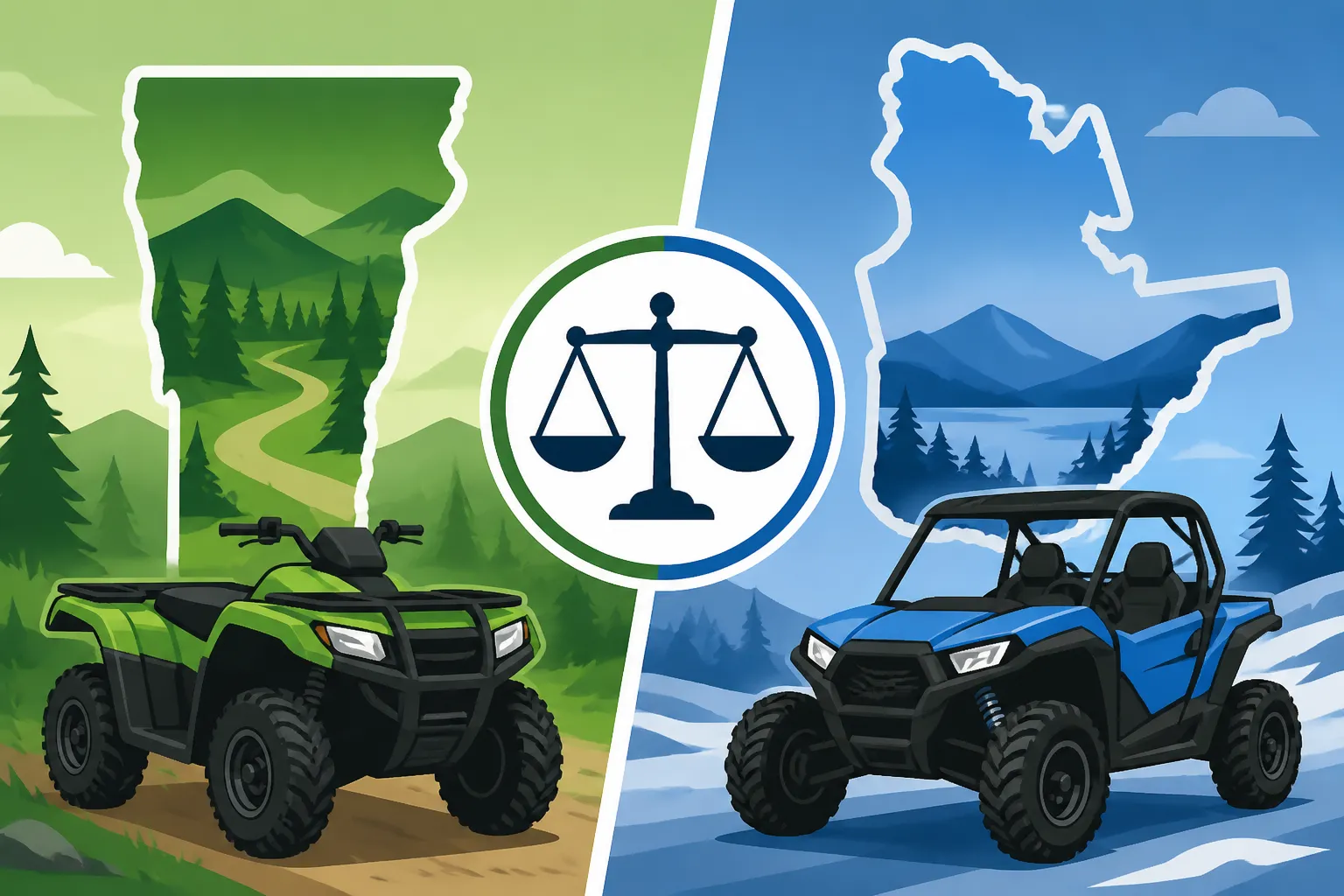
To help visualize these differences, here's a brief comparison:
| Feature | Vermont | Quebec |
|---|---|---|
| Vehicle Registration | VT DMV | SAAQ (Société de l'assurance automobile du Québec) |
| Reciprocity for Registration | Generally recognizes Quebec registration | Generally recognizes Vermont registration |
| Trail Access Permit | VASA Trail Access Decal (TAD) | FQCQ Trail Permit |
| Administrator for Permit | VASA (Vermont ATV Sportsman's Association) | FQCQ (Fédération des clubs de VTT du Québec) |
| Permit Inclusion | Includes VASA club membership | Separate permit, often through FQCQ clubs |
| Liability Insurance | Mandatory | Mandatory |
| Helmet Law | Mandatory for all riders/passengers | Mandatory for all riders/passengers, specific standards |
| Cost Structure | DMV registration + VASA TAD (separate fees) | SAAQ registration + FQCQ permit (separate fees) |
This table illustrates that while reciprocity exists for the vehicle's registration, the trail access aspect is where you'll need to double up on permits to enjoy the trails in both regions.
Practical Steps for Cross-Border Riding
So, you've understood the differences between Vermont and Quebec's ATV registration systems. Now, how do you actually make sure you're ready to ride legally and safely on either side of the border? It comes down to preparation, having the right documents, and understanding local nuances. It's not just about avoiding a ticket; it's about respecting the local laws and the effort that goes into maintaining these fantastic trail systems.
What Vermont Riders Need for Quebec Trails
If you're a Vermont rider planning a trip across the border into Quebec, your first step is to ensure your ATV or UTV is fully and currently registered with the Vermont DMV. Make sure you have your physical registration card and plate displayed correctly, as outlined in [Vermont Plate Mounted on the Rear]. Next, and this is critical, you'll need to purchase an FQCQ trail permit. These can often be bought online through the FQCQ website or from local clubs and vendors near the border. Be sure to get the appropriate duration for your trip – whether it's a day, a week, or a season. You'll need to display this permit on your machine as per FQCQ guidelines.
Additionally, always carry proof of your Vermont ATV liability insurance. While Quebec generally recognizes out-of-province insurance, it's wise to review your policy beforehand to ensure it covers riding in Quebec and meets any minimum requirements there. Remember your helmet, and be aware of Quebec's age restrictions if you're riding with younger family members. Familiarize yourself with Quebec's specific ATV laws regarding things like headlights, tail lights, and noise, as these can differ slightly from Vermont's. Using a service like LawDepot could be helpful if you need to create any specific legal documents like an ownership affidavit for border crossings, though generally your standard registration papers are sufficient.
What Quebec Riders Need for Vermont Trails
For our Quebec neighbors wanting to experience Vermont's VASA trail system, the process also starts with ensuring your machine is properly registered with the SAAQ and that you have your current registration documents and plate displayed. Vermont generally accepts Quebec registrations for the machine itself, which is great! However, to actually ride on VASA trails, you absolutely must purchase a [Vermont TAD for a Visitor's Machine]. These decals are available online through the VASA website or at various VASA-affiliated dealers and clubs across Vermont. The TAD expires on December 31st each year, regardless of when you buy it, so keep that in mind when planning your purchase.
Proof of insurance is another non-negotiable item. Vermont requires all ATV riders to carry liability insurance. Ensure your Quebec insurance policy meets Vermont's minimum requirements and that you have physical proof with you. Vermont also has a mandatory helmet law for all riders and passengers. If you're under 18, Vermont also has a safety course requirement, though [Vermont Reciprocity With Quebec] means Quebec-issued safety certificates are generally recognized. Be prepared to show these documents if requested by law enforcement or trail wardens. It’s also a good idea to research specific town ordinances along your planned route, as some towns have unique rules about curfews, speeds, and even specific roads where ATVs are allowed.
Document Checklist for Cross-Border Travel
To make sure you're fully prepared, consider this handy checklist:
- Machine Registration: Valid, current registration from your home jurisdiction (VT DMV for Vermont, SAAQ for Quebec).
- Proof of Ownership: Keep a copy of your bill of sale or title. Services like LawDepot can help you draft a clear bill of sale if you're acquiring a machine and need proper documentation.
- Trail Permit/Decal:
- For Vermont Riders in Quebec: Valid FQCQ trail permit.
- For Quebec Riders in Vermont: Valid VASA Trail Access Decal (TAD).
- Insurance: Proof of liability insurance that meets the minimum requirements of the state/province you are visiting.
- Safety Course Certificate: If applicable (e.g., under 18 in Vermont), carry proof of completion.
- Driver's License/ID: Carry a valid form of identification.
- Helmet: Always wear an approved helmet.
By taking these proactive steps, you can enjoy the fantastic riding opportunities that both Vermont and Quebec have to offer, free from the worry of unforeseen legal hurdles. Safe trails!
Disclaimer
This article is for general informational purposes only and does not constitute professional advice. Laws, prices and regulations vary by location and change over time. Consult a qualified professional for guidance on your specific situation.