Vermont Registration Compared to Maine
Navigating the world of ATV and UTV registration can feel like a maze, especially when you're crossing state lines or considering a move. It's frustrating to think you've got everything covered, only to find out that a small difference in regulations between Vermont and a neighboring state like Maine can throw a wrench into your riding plans. This guide will walk you through the key differences and similarities in ATV and UTV registration, titling, and use between Vermont and Maine, helping you understand what you need to do to stay legal and enjoy the trails.
The Foundations: Understanding Registration Requirements
When you're ready to hit the trails, the very first hurdle is always registration. Both Vermont and Maine require your ATV or UTV to be registered, but the specifics of how and what they consider an ATV can vary enough to cause confusion. It’s not just about getting a plate; it’s about understanding the nuances of each state's legal framework.
Vermont's Approach to ATV Registration
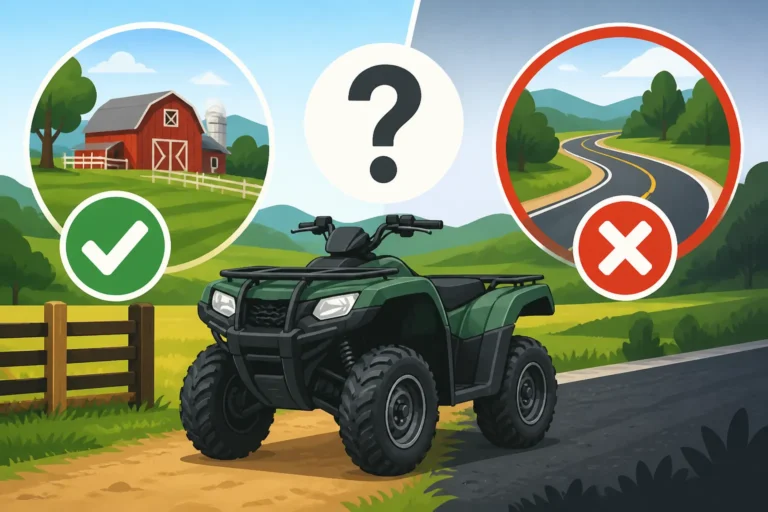
In Vermont, the Department of Motor Vehicles (DMV) oversees the registration of all-terrain vehicles. An "all-terrain vehicle" or ATV, as defined in Vermont, is a motorized vehicle designed to travel over any type of terrain, generally having four low-pressure tires. This definition helps set the stage for what machines need to be registered and titled. If your machine fits this description, even if you only plan to ride on private land, you'll need to secure a registration. This is a common point of confusion for riders who think private land means no paperwork, but Vermont's rules are quite clear. You can find a comprehensive breakdown in our guide on [How to Register an ATV in Vermont].
For Vermont residents, the process typically involves proving ownership, which can be done with a bill of sale, a Manufacturer's Certificate of Origin (MCO), or a previous title. The state charges a fee for the registration itself, and usually, there's a title fee involved for newer machines or those changing ownership. Non-residents also need to register their ATVs if they plan to ride in Vermont, and while the process is similar, there are specific considerations, which we cover in [Vermont ATV Registration for Nonresidents]. It’s important to remember that Vermont's registration is valid for either one or two years, depending on the option you choose at registration.
Maine's Requirements for ATV Registration
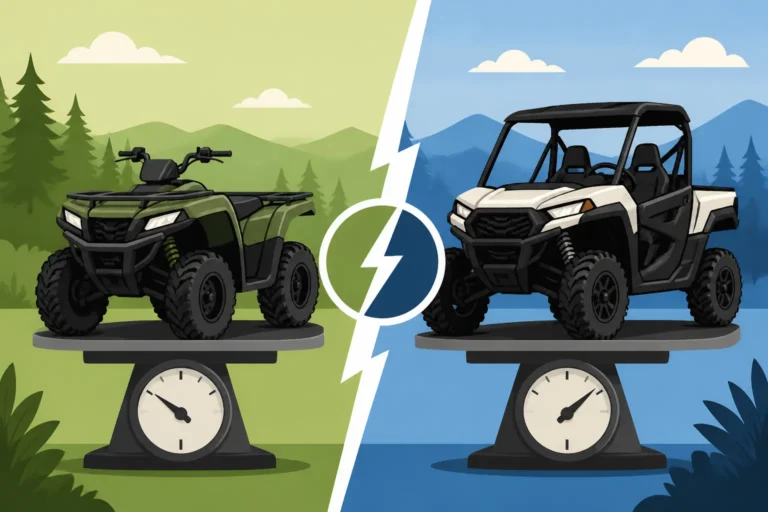
Maine's approach to ATV registration, managed by its Department of Inland Fisheries and Wildlife (IFW), shares some similarities with Vermont but also has distinct differences. In Maine, an ATV is generally defined as a motorized, off-highway, all-terrain vehicle that is 50 inches or less in width, has a dry weight of 1,000 pounds or less, travels on three or more low-pressure tires, and is designed for recreational use off highways. This definition is slightly narrower than Vermont's in some aspects, particularly regarding width and weight, which means some larger side-by-sides that qualify as ATVs in Vermont might be classified differently or have specific rules in Maine.
Residents of Maine can register their ATVs directly through the IFW or authorized agents. Similar to Vermont, proof of ownership is essential, usually a bill of sale or previous registration. Non-residents are also required to register their ATVs to ride in Maine's extensive trail system. Maine has a strong emphasis on its recreational trail system, and registration fees directly support its maintenance and expansion. Maine's registrations typically run for a full year from July 1st to June 30th, regardless of when you register, which is a different renewal cycle compared to Vermont's rolling one or two-year options.
The Paper Trail: Documents, Titles, and Proof of Ownership
Getting your machine registered isn't just about filling out a form; it's about providing the right documentation to prove who you are and that you legally own the ATV or UTV. Each state has its specific requirements for titles and ownership proof, and understanding these can save you a lot of headaches at the DMV counter.
Documents You'll Need in Vermont
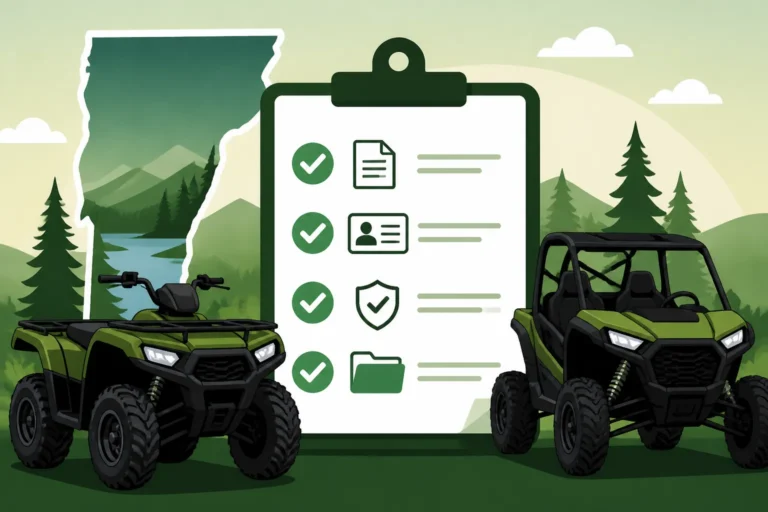
When you show up at the Vermont DMV, they're going to want to see a few key pieces of paper. For a brand-new ATV, you'll need the Manufacturer's Certificate of Origin (MCO), which essentially proves the machine's birth and original ownership. For a used machine, especially one bought from a private seller, a properly executed bill of sale is crucial. This document needs to clearly identify the buyer, seller, machine (make, model, VIN), sale date, and price. Many riders find it helpful to use a template from a service like LawDepot to ensure all the necessary information is included. Our article on [Proof of Ownership Vermont's DMV Will Accept] delves into this in more detail.
Beyond ownership proof, you'll need to fill out a Vermont registration application form. If your ATV is new enough to require a title (Vermont generally titles ATVs model year 1999 and newer), you'll also submit a title application. [Vermont ATV Titles and What They Cost] gives you the full scoop on title requirements. Don't forget your identification and proof of Vermont residency if you're registering as a resident. For non-residents, different identification might be accepted. Having all your ducks in a row can make the process significantly smoother, avoiding multiple trips or delays.
Maine's Specifics for Ownership Proof
Maine's IFW also requires robust proof of ownership. For new ATVs purchased from a dealer, a proper bill of sale from the dealership is usually sufficient. When purchasing a used ATV from a private individual, a bill of sale is critical here as well. Maine values a clear chain of ownership, so a well-drafted bill of sale detailing the transaction is necessary. Again, resources like LawDepot can be invaluable for creating these documents, ensuring they meet legal standards and contain all pertinent details.
Unlike Vermont, Maine does not require a title for ATVs. This is a significant difference that often surprises riders moving between the two states. While it might seem simpler without a title, it places a greater emphasis on the bill of sale and previous registration documents to prove ownership. This means if you're buying a used ATV in Maine, ensuring you get a comprehensive bill of sale and the previous owner's registration is even more critical. Keep in mind that while Maine doesn't title ATVs, if you bring an ATV into Maine that was previously titled in another state (like Vermont), you'll still need to provide that title as part of your ownership proof when registering.
How LawDepot Can Assist with Bills of Sale
Creating a legally sound bill of sale is often overlooked, but it's one of the most important documents, especially for private sales. Whether you're selling an ATV in Vermont or buying one in Maine, having a clear, comprehensive bill of sale protects both parties. Services like LawDepot offer customizable bill of sale templates that can be tailored to include all the specific details required by state DMVs and IFW offices. This includes space for the vehicle identification number (VIN), make, model, year, sale price, and signatures of both the buyer and seller.
Using a pre-made template from a reputable source like LawDepot can prevent common mistakes, such as omitting crucial information or using vague language, which can lead to complications later during registration or if there's a dispute. This is especially true for items like ATV sales, where the value can be significant, and clear documentation is paramount. Even if you're just writing out a simple agreement, ensuring it mirrors the structure of a professional template can save you time and hassle. A well-written bill of sale is your primary proof of ownership, particularly in Maine where titles aren't required, and it's essential for figuring out [Writing a Bill of Sale the Vermont DMV Accepts].
The Cost of Riding: Fees, Taxes, and Other Financial Considerations
Nobody likes unexpected costs, and state fees and taxes can certainly add up. Understanding the financial implications of registering your ATV or UTV in Vermont versus Maine is crucial for budgeting your recreational adventures.
Vermont's Registration and Title Fees
In Vermont, the cost of registering an ATV includes the registration fee itself, and often a title fee. As of current regulations, a one-year ATV registration in Vermont costs $45, while a two-year registration runs $90. If your machine is classified as an All-Terrain Vehicle (ASV) Class A – which typically applies to side-by-sides with specific dimensions – the fees are slightly higher at $108 for one year and $211 for two years. Additionally, there's a $27 fee for a new title application for machines that require one. When you transfer a registration from one owner to another or from one machine to another, there's often a $10 transfer fee involved. These fees directly support the administration and trail systems.
Beyond registration and title fees, Vermont also imposes a Purchase and Use Tax on ATVs. This tax is typically collected at the time of first registration, and it's calculated based on the purchase price of the machine. The state's tax rate applies here, so you'll want to factor that into your total cost, especially if you've purchased a new or expensive machine. There are some exemptions, for instance, for gifts between immediate family members, but generally, you should anticipate paying this tax. You can learn more about this in [Vermont Purchase and Use Tax on an ATV].
Maine's Financial Outlay for Riders
Maine's registration fees for ATVs are typically paid annually to the IFW. For residents, the fee is generally lower than for non-residents, a common practice designed to benefit state taxpayers who also contribute to trail funding through other means. Non-resident fees are usually higher and are a significant contributor to the maintenance of Maine's extensive trail network. Similar to Vermont, these fees go towards trail development, enforcement, and administrative costs. While specific numbers are best checked directly with Maine's IFW for the most current rates, expect an annual fee for both residents and non-residents.
A key difference in Maine is the absence of a title fee, as the state does not title ATVs. This eliminates one cost component that riders face in Vermont. However, Maine does have a sales tax that applies to the purchase of ATVs, just like other goods. This tax is typically paid at the point of sale if you buy from a dealer. If you purchase from a private party, you may be responsible for declaring and paying sales tax separately, though this often varies by how the transaction is recorded. Always verify the current sales tax rate with the Maine Revenue Services or your ATV dealer.
Navigating Visitor Rules, Reciprocity, and Safety
Traveling with your ATV or UTV, or simply moving between states, means encountering different rules regarding visitor registration, safety training, and even where your plate goes. It's not enough to be legal in your home state; you need to understand the rules of the road – or rather, the trail – wherever you choose to ride.
Riding Out-of-State in Vermont vs. Maine
When you're a non-resident wanting to ride in Vermont, you'll need to register your machine with the Vermont DMV. Vermont does not have direct reciprocity agreements for ATV registration with Maine, meaning your Maine registration alone isn't sufficient for riding in Vermont. You'll need to go through the Vermont non-resident registration process. This ensures that all machines on Vermont's trails are contributing to the state's trail fund and are properly accounted for. The process for [Vermont ATV Registration for Nonresidents] is fairly straightforward, requiring proof of ownership and the applicable fee.
Conversely, if you're a Vermont resident planning a trip to Maine with your ATV, you'll need to register your machine with the Maine Department of Inland Fisheries and Wildlife (IFW) as a non-resident. Just like Vermont, Maine does not typically recognize out-of-state ATV registrations from places like Vermont for trail access. You'll be required to pay the non-resident registration fee to gain legal access to Maine's vast trail network. This is similar to how [Vermont Registration Compared to New Hampshire] also requires separate registration. It's a system designed to ensure all users contribute to the local trail infrastructure they utilize.
Safety Courses and Age Restrictions
Both Vermont and Maine place a high priority on safety, especially for younger riders. In Vermont, anyone under the age of 18 is generally required to complete an approved ATV safety course to legally operate an ATV on VASA trails or public lands. This requirement aims to equip young riders with the knowledge and skills to operate their machines safely and responsibly. The certificate from this course is proof of completion and should be carried when riding. You can find more details in [Vermont ATV Safety Course Required Under 18]. Adults are encouraged but not legally required to take a safety course, though it's always a good idea.
Maine also has age-based safety course requirements. Generally, riders under a certain age (often 16) must complete an approved ATV safety course. Maine's laws may also have stipulations regarding direct adult supervision for young riders, even after completing a course. It's always best to check the latest regulations from the Maine IFW for the most accurate age cutoffs and supervision requirements, as these can change. These safety initiatives are crucial for reducing accidents and fostering a safe riding environment for everyone.
Plates, Decals, and Where They Go
Once you've registered your ATV or UTV, both states will issue you something to display on your machine to prove it. In Vermont, you'll receive a physical license plate. This plate must be mounted conspicuously on the rear of your machine, where it is visible and readable. The specific requirements for this are outlined in [Vermont ATV Plate Mounted on the Rear]. Proper plate placement is not just a suggestion; it's a legal requirement, and wardens and law enforcement will be checking for it. An illegible or improperly mounted plate can lead to a stop and potential fines.
Maine, on the other hand, typically issues a registration decal rather than a traditional license plate for ATVs. This decal must be affixed to the machine in a specific location, usually on the front or rear, depending on IFW instructions, and it must be clearly visible. The decal contains your registration number and expiration date. This difference in physical proof of registration is important; don't assume a Vermont plate is sufficient in Maine, or vice versa. Always ensure your machine displays the correct, current, and properly placed registration identifier for the state you're riding in.
Comparative Overview: Vermont vs. Maine ATV Registration
To help visualize the key differences, here's a comparative look at some of the main aspects of ATV registration in Vermont and Maine.
| Feature | Vermont | Maine |
|---|---|---|
| Administering Body | Department of Motor Vehicles (DMV) | Department of Inland Fisheries and Wildlife (IFW) |
| ATV Definition | Broad; includes many UTVs/side-by-sides (e.g., [Vermont's 72-Inch, 2,500-Pound ATV Definition]) | Narrower; typically 50 inches wide, 1,000 lbs dry weight, 3+ low-pressure tires |
| Title Required? | Yes, for model year 1999 and newer ATVs/ASVs (costs $27) | No, titles are not required for ATVs |
| Proof of Ownership | MCO, Bill of Sale, previous title | Bill of Sale, previous registration |
| Registration Term | 1-year or 2-year options (e.g., $45 for 1-year ATV) | Annual (July 1st to June 30th) |
| Non-Resident Reg? | Yes, required for riding on Vermont trails | Yes, required for riding on Maine trails |
| Purchase & Use Tax | Yes, collected at first registration | Sales tax applies at point of sale |
| Safety Course | Required for riders under 18 | Required for riders under a specific age (e.g., 16) |
| Registration Display | License plate mounted on the rear | Registration decal, usually on front or rear |
| Reciprocity | No direct reciprocity with Maine for ATV registration | No direct reciprocity with Vermont for ATV registration |
This table provides a snapshot, but as you can see, the details matter significantly. Each state has designed its system to meet its own needs, fund its own trail systems, and ensure the safety of its riders. Always check the official state websites for the most up-to-date information before you hit the trail, especially concerning costs and ever-evolving regulations.
Disclaimer
This article is for general informational purposes only and does not constitute professional advice. Laws, prices and regulations vary by location and change over time. Consult a qualified professional for guidance on your specific situation.