Vermont Registration and the VASA Decal
Getting your ATV or UTV ready for the trails in Vermont can feel like navigating a maze. Many riders, especially those new to the state or just getting into the sport, get confused about what's actually required to legally hit the dirt. It's not just a matter of buying a machine; you often need two distinct things: official state registration and a special VASA Trail Access Decal. This guide will help you understand both, why they're different, and how they work together so you can ride with confidence and stay out of trouble.
Understanding Vermont ATV and UTV Registration
When you bring a new ATV or UTV into your life in Vermont, whether it's for recreation, utility on your property, or hitting the state's amazing trail system, one of the first things you'll need to sort out is state registration. It's a fundamental requirement, akin to registering your car, but specifically tailored for off-road vehicles. This isn't just a bureaucratic hurdle; it's a way for the state to identify vehicles, ensure public safety, and, crucially, fund the maintenance and enforcement of the systems that support ATV and UTV riding.
Why Vermont Requires ATV and UTV Registration
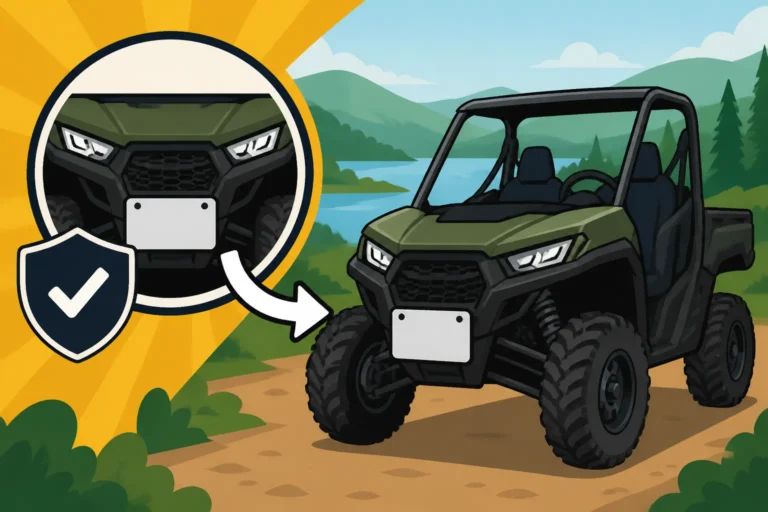
Vermont law mandates registration for nearly all ATVs and UTVs operated on public lands, designated trails, or even crossing town roads. Think of it as your machine's official ID card. Without it, your vehicle is essentially invisible to the authorities, and riding it can lead to fines and headaches. The primary reasons behind this requirement are multi-faceted. Firstly, it ensures accountability. If there's an incident or an emergency, having a registered vehicle makes it possible to trace ownership and contact information. Secondly, the fees collected from registration go directly into maintaining and expanding the very trail infrastructure that makes riding in Vermont so enjoyable. It helps support enforcement by wardens and local police, ensuring everyone adheres to the rules designed to protect both riders and the environment. It also plays a role in tracking vehicle populations, which helps with planning and resource allocation for recreation. It's a core part of being a responsible rider in the Green Mountain State. If you're wondering if your machine needs it, the answer is almost certainly yes, as detailed in [Do You Need to Register an ATV in Vermont?].
The Registration Process and What You'll Need
Getting your ATV or UTV registered in Vermont typically involves a visit to your local Department of Motor Vehicles (DMV) office, though some parts of the process can be handled by mail. The key is having all your ducks in a row with the paperwork. You'll need proof of ownership, which for a new machine usually means a Manufacturer's Certificate of Origin (MCO). If you bought your machine used, you'll need a properly executed bill of sale and possibly a previous title. Sometimes, if the ownership history is a little murky, you might need to file an ownership affidavit. Websites like LawDepot can be a real lifesaver here, offering templates for a [Writing a Bill of Sale the Vermont DMV Accepts] or other affidavits that meet legal requirements, helping you avoid common pitfalls that can delay your registration. Having these documents prepared makes the process much smoother. The DMV also needs proof of your Vermont residency, often through a driver's license or utility bills. Don't forget, there are specific forms to fill out, so it's wise to review the [Vermont Registration Paperwork Checklist] before you head out. This preparation will save you significant time and frustration at the counter.
Costs and Renewal for Vermont ATV Registration
Registering your ATV or UTV in Vermont comes with a fee, and understanding these costs helps you budget for your riding season. For a standard ATV, the cost is typically a set amount for a one-year registration, such as [The $45 One-Year Fee], or you can opt for a two-year period at a higher, but often more convenient, rate like [The $90 Two-Year Fee]. All-Terrain Vehicles (ASVs), which include many side-by-sides, often fall under a different fee structure, which is usually a bit higher due to their size and classification. These fees contribute directly to the state's off-road vehicle programs.
Once you've got your machine registered, you'll need to keep track of its expiration date. Vermont ATV registrations are not perpetual; they expire annually or biennially depending on the option you chose. You'll receive a renewal notice, but it's ultimately your responsibility to ensure your registration stays current. Renewing your Vermont ATV registration is generally a straightforward process, often doable online or by mail, preventing any lapse in your legal riding status. Neglecting to renew can lead to penalties if you're caught riding with an expired registration, so mark your calendar! You can find more specific details on [Vermont ATV Registration Cost] and [Vermont ATV Registration Renewal].
Deciphering the VASA Trail Access Decal (TAD)
Beyond the state registration, if you plan to enjoy Vermont's extensive network of interconnected ATV and UTV trails, you'll encounter another crucial requirement: the VASA Trail Access Decal, often referred to simply as a TAD. This decal is entirely separate from your state registration and serves a distinct, yet equally vital, purpose for trail riding.
What is a VASA Trail Access Decal and Why You Need It
The VASA Trail Access Decal (TAD) is your ticket to ride on the vast majority of organized, maintained ATV and UTV trails across Vermont. VASA, the Vermont ATV Sportsman's Association, is a volunteer-driven organization that works tirelessly with landowners and local clubs to develop and maintain these trails. The decal fee goes directly to supporting VASA's efforts, including liability insurance for landowners, trail maintenance, signage, and administrative costs. Essentially, when you buy a TAD, you're contributing to the sustainability of the trail system you want to ride. Without this decal affixed to your machine, you are generally not permitted on VASA-designated trails, even if your machine is fully registered with the state DMV. Many trails are located on private land, and the TAD system provides landowners with assurances and funding that make opening their property to riders possible. Simply put, no TAD means [Vermont Trails Closed Without a TAD] for you.
Acquiring Your VASA Decal and Its Cost
Obtaining your VASA Trail Access Decal is a fairly simple process. You can purchase it online directly through the VASA website, or often through one of the many local ATV clubs affiliated with VASA across the state. The cost of a TAD varies depending on whether you're a Vermont resident with a state-registered machine, or a non-resident, and also if it's for a second machine. For a Vermont resident with a state-registered machine, the [Vermont TAD at $80 for a Registered Machine] is a common price point. If you're visiting from out of state, the cost is typically higher, such as [Vermont TAD Prices for Visitors], reflecting that your home state's registration fees aren't contributing to Vermont's trail system. This fee usually includes your membership to a VASA member club, which is great because these clubs are the boots on the ground doing the actual trail work. It's smart to plan ahead and buy your TAD before your riding trip, especially if you're visiting during peak season. You can learn more about [How to Buy a Vermont TAD] through VASA or a local club.
Understanding VASA Decal Expiration and Placement
One of the most important things to remember about the VASA Trail Access Decal is its expiration date. Unlike some state registrations that might run for a year from your purchase date, all VASA TADs expire on December 31st of the year they are purchased, regardless of when you bought it. So, a decal purchased in October will expire on the same date as one purchased in January. This fixed expiration date helps VASA manage its annual budgeting and landowner agreements. This means if you buy your TAD late in the riding season, you'll still need to purchase a new one for the following year. This is a common point of confusion for riders, so it's worth noting the [Vermont TADs Expire December 31].
As for placement, once you receive your decal, it needs to be clearly affixed to your ATV or UTV. VASA guidelines typically recommend placing it prominently on the rear of the machine, or another easily visible spot. The goal is for trail wardens or club volunteers to be able to quickly see that your machine is properly permitted to be on the trail. Proper [Vermont TAD Placement on the Machine] ensures that you won't be stopped or questioned unnecessarily while enjoying your ride.
The Critical Relationship Between Registration and the VASA Decal
Understanding that both state registration and the VASA Trail Access Decal exist is one thing; comprehending how they interact and why you might need both is where many riders get stumped. It’s not an either/or situation if you plan to truly explore Vermont's riding opportunities.
Why Both Are Often Necessary for Legal Riding in Vermont
This is the crux of the matter: for most recreational ATV and UTV riding in Vermont, you'll need both a current state registration and a valid VASA Trail Access Decal. The state registration, as we've discussed, is a legal requirement for operating your machine anywhere outside of private land where you have exclusive permission. This includes crossing town roads, riding on designated public easements, or using any state-sanctioned routes. The VASA decal, on the other hand, is specifically for accessing the network of multi-use trails managed by VASA and its member clubs, which primarily run over private land with landowner permission.
Think of it this way: your state registration allows your machine to legally exist and operate within Vermont's motor vehicle laws. Your VASA decal grants you explicit permission to use the private property trails that form the backbone of the [Vermont ATV Trails: The VASA System]. Many VASA trails utilize town roads to connect segments, making the state registration essential even when primarily riding trails. You can't ride the trails without the TAD, and you can't legally ride on many connecting public ways without state registration. Hence, [Vermont Requires Registration Plus a TAD] for comprehensive access.
Common Scenarios and Avoiding Penalties
Let's look at a few scenarios to clarify this.
- Riding on your own private land: If your ATV or UTV never leaves your own property, and you're not using it on shared access roads or crossing public ways, you likely don't need state registration or a VASA decal. However, this is a very limited use case for most riders.
- Riding with state registration but no VASA Decal: You could legally operate your machine on public lands or designated town roads that have been opened for ATV use (provided you follow all local ordinances), but you would be breaking the rules if you entered a VASA trail. This could lead to a penalty for riding without a TAD.
- Riding with a VASA Decal but no state registration: This is generally not advisable. While your decal permits trail access, the moment you transition onto a public road or land requiring registration (which many trails do for connections), you're operating an unregistered vehicle. This can result in significant fines and consequences for [Vermont Penalties for Riding Unregistered].
- Riding with both: This is the safest and most common scenario for those looking to fully utilize Vermont's riding opportunities. With both, you're covered for both the trail system and any necessary road crossings or permitted public land use.
The penalties for non-compliance with either registration or decal requirements can range from monetary fines to having your machine impounded. It’s simply not worth the risk when the solution is so straightforward.
| Feature | Vermont ATV/UTV Registration | VASA Trail Access Decal (TAD) |
|---|---|---|
| Purpose | Legal operation of machine on public land/roads | Permission to ride on VASA-managed trail network (private/public) |
| Issuer | Vermont Department of Motor Vehicles (DMV) | Vermont ATV Sportsman's Association (VASA) |
| Cost Basis | Machine type (ATV vs. ASV), duration (1-yr vs. 2-yr) | Residency (VT vs. Non-Resident), number of machines |
| Expiration | Varies (1 or 2 years from purchase/renewal) | Fixed date (December 31st of purchase year) |
| Primary Benefit | Legal identification, state funding for enforcement/roads | Trail access, landowner liability coverage, trail maintenance fund |
| Where Required | Public roads, designated public trails, state lands | All VASA-designated trails |
| Penalty | Fines for [Vermont Penalties for Riding Unregistered] | Fines for [Vermont Penalties for Riding Without a TAD] |
Practical Tips for ATV/UTV Owners
Navigating the rules for ATV and UTV riding in Vermont means being prepared. My biggest piece of advice is to always carry proof of both your state registration and your VASA Trail Access Decal when you ride. Keep these documents in a waterproof bag on your machine, or even a picture on your phone (though physical copies are always best in case of dead batteries or no signal).
Before you even think about hitting a trail, double-check your registration and decal expiration dates. There's nothing worse than getting ready for a ride, only to realize your paperwork is out of date. If you've recently purchased a machine through a private sale, make sure you have solid proof of ownership. This is another area where platforms like LawDepot can be invaluable for creating legally sound documents, whether it’s a bill of sale or an affidavit, ensuring you have the necessary records for registration. When you’re [Buying From a Private Seller in Vermont], clear documentation protects everyone.
Finally, remember that specific town ordinances can also come into play, especially regarding road access. Some towns have specific rules about when and where ATVs can operate on their roads, even if you're fully registered and have your TAD. Always check local regulations for the area you plan to ride in. Being informed and prepared will ensure your Vermont ATV and UTV adventures are full of fun, not fines!
Disclaimer
This article is for general informational purposes only and does not constitute professional advice. Laws, prices and regulations vary by location and change over time. Consult a qualified professional for guidance on your specific situation.