Vermont Timber Land Access
Vermont timberland can look like an inviting network of woods roads, but a gate or visible trail does not mean riders may use it. The key is to know who controls the land, whether the specific route is open to ATVs, and what registration or trail access requirements apply. This article explains how to check access, ask permission, and avoid riding where you are not authorized.
Timberland Is Not Automatically Open to ATV Riding
Vermont has extensive working forests, much of them privately owned. A woods road may be used for logging, forestry work, or access to a residence without being open to recreational ATV traffic. The same is true of a track that appears on a map or has tire marks: neither is proof that riding is allowed.
A landowner’s permission matters, but it may apply only to a particular area, route, machine, or period. A timber company, individual owner, club, or other party may manage different parts of a forest. Before riding, establish who has authority over the land and the exact route you want to use. Vermont Landowner Permission Rules
It also helps to separate three kinds of access:
| Access situation | What it means for a rider |
|---|---|
| A private route with direct permission | Ride only within the permission given, and follow any limits the owner sets |
| A marked VASA corridor on private land | Use the designated corridor and meet the applicable registration and Trail Access Decal requirements |
| State-owned land or a route crossing it | Do not assume ATV riding is allowed; check the land manager’s rules and any specific designation |
A timber road can cross multiple parcels or connect to a designated trail. Permission for one section does not necessarily cover the next. Do not treat an open gate, an unposted entrance, or a neighbor’s invitation as permission from every landowner along the way.
Private forest land may also be subject to working operations. Logging trucks, equipment, active cutting, and temporary road closures can make a route unsafe or unavailable even if recreational access had previously been allowed. A landowner or trail club may close access when conditions change. Vermont Trail Closures Landowners Request
How to Check Whether a Timber Route Is Open
Start with a current trail map or the club responsible for the area, then confirm the route’s status before unloading your machine. Timber roads and club corridors can be close together, and a map may not show every temporary closure or private spur. A route that was open on a previous visit may have changed.
The Vermont ATV Sportsman’s Association trail network uses permission from private landowners. That access is limited to designated corridors; it does not create general permission to explore the surrounding timberland. Vermont’s Trails Run on Private Land A trail crossing a working forest remains a defined route, not an invitation to turn onto nearby logging roads. Vermont Trails That Cross Timber Land
Use this check before you ride:
- Find the route on an authoritative, current map. Confirm the trail or corridor is intended for ATV use, rather than relying on a general road map, satellite image, or online track.
- Check with the local club or trail contact. Ask whether the route is open, whether there are temporary restrictions, and whether access ends at a particular gate or boundary.
- Confirm the land status where the route goes. A corridor may pass from private timberland onto state or other public land. Rules can change at that boundary. Vermont state land is not generally open to ATV riding just because an existing woods road crosses it. Vermont State Land Access Rules
- Check for signs and closures at the entrance. A closure sign or gate takes precedence over your planned route. Do not go around a barrier or assume a gate was left open for recreational use.
- Ask before using a route not shown as an authorized corridor. If you have direct permission from a landowner, clarify the route and boundaries rather than guessing in the field.
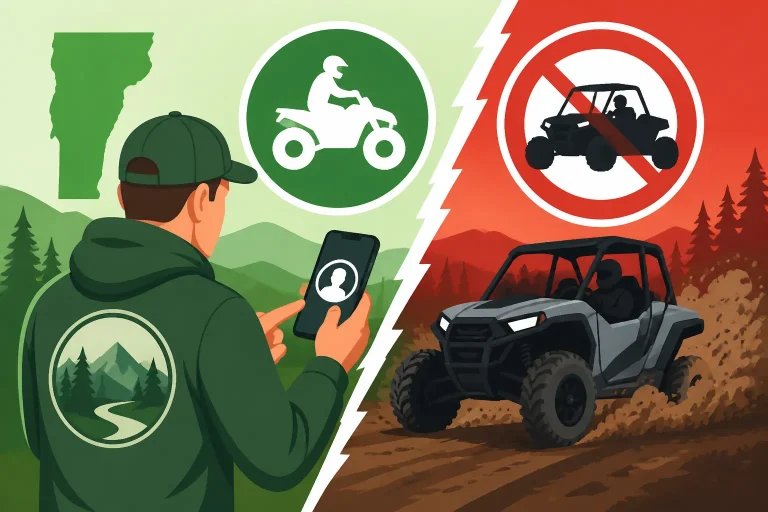
GPS can help with navigation, but it cannot verify legal access. A phone app may show a road or a rider’s recorded track without showing whether that route is currently authorized. If a route is uncertain, turn back and check rather than crossing more land in search of a way through.
Permission and a Trail Access Decal Are Different
A Trail Access Decal is associated with access to the designated VASA trail system. It does not give a rider permission to travel on any private timber road. Conversely, permission from a private owner to ride a particular route does not automatically satisfy the rules for using a VASA corridor.
For VASA trails, riders generally need the required machine registration and Trail Access Decal, as well as any other applicable safety and insurance requirements. Vermont Requires Registration Plus a TAD Visitors should check the requirements for an out-of-state machine before traveling; home-state registration does not by itself establish permission to ride every Vermont trail. Vermont TAD for a Visitor’s Machine
If you are unsure whether a timber route is part of the trail system, ask the maintaining club. Do not assume that a landowner’s permission replaces a decal requirement, or that a decal replaces the landowner’s permission for riding off the marked corridor.
Asking a Landowner for Access
When a route is not a designated trail, contact the person or organization that controls the land before riding. A clear request is more useful than a broad question such as “Can I ride in the woods?” Describe the machine, intended route, dates, number of riders, and whether you plan to return regularly.
Ask directly about:
- Which entrance and roads you may use
- Where the permitted route ends and whether it crosses other parcels
- Whether passengers or additional riders are allowed
- Any dates, times, speed limits, or seasonal restrictions
- Whether the route is closed during logging, hunting, wet conditions, or other operations
- Whether you may park or unload on the property
- Who to contact if a gate is locked or conditions change
A written message or permission form can prevent misunderstandings, though it does not grant rights beyond what the landowner actually authorizes. Keep the contact details and any conditions available while riding. If the owner gives permission only for a named road, stay on that road. Do not extend the invitation to friends or other machines unless the owner agrees.
Respect a “no” or a later change in permission. Access on private working land depends on the owner’s willingness to allow it, and that permission can be limited or withdrawn. A rider who ignores a closure can affect access for other people as well. Vermont Trail Etiquette on Private Land
Be Careful With Shared and Working Roads
Timber roads are built for work, not necessarily recreational traffic. You may encounter loaded trucks, machinery, crews, gates, soft shoulders, steep grades, or road surfaces that cannot support a machine. Stay alert, give work vehicles room, and follow instructions from workers or posted signs.
Do not move barriers, cut locks, create a new path around a wet or damaged area, or ride through a recently harvested section unless that use is specifically allowed. Avoid disturbing soil, water, crops, equipment, and wood piles. If the road is blocked or unsafe, turn around rather than searching for a bypass.
Permission should never be treated as a guarantee that a route is maintained or suitable. A landowner can allow access while expecting riders to use their own judgment about conditions. If you cannot safely proceed, stop and contact the person who granted access.
Prepare for the Ride and Leave Access in Good Shape
Before leaving home, confirm that your machine meets the requirements for the route and that you have the documents and equipment you need. Requirements can differ between an authorized trail, a private route, and a public-road segment. Check the current rules for registration, insurance, helmets, and any applicable decals. Vermont ATV Insurance Requirements
Plan to remain on the route you have permission to use. Keep the group together at junctions, avoid unnecessary noise near homes, and leave gates as you found them unless the landowner has given different instructions. If a gate is closed, do not open it simply because you believe the road continues beyond it.
A practical checklist:
- Confirm the route is open on the day of the ride.
- Carry registration and required access or insurance proof.
- Make sure everyone in the group understands the route boundaries.
- Avoid riding during active logging or on roads that are soft, damaged, or posted closed.
- Do not leave the marked route to explore a spur, field, or neighboring parcel.
- Report a blocked or damaged corridor to the responsible club or landowner rather than making a new route.
- Pack out litter and leave gates, signs, and property undisturbed.
If plans change or a route is closed, choose a verified alternative instead of improvising. Riding only where access is clear protects the land, the working operation, and the relationships that make some Vermont timber corridors available to riders.
Disclaimer
This article is for general informational purposes only and does not constitute professional advice. Laws, prices and regulations vary by location and change over time. Consult a qualified professional for guidance on your specific situation.