Vermont Supervision Rules for a 14-Year-Old
A 14-year-old may be eager to ride Vermont trails, but a parent or trip leader needs to know who must supervise, how close that supervision should be, and what other rules still apply. The key point is that being old enough to operate a machine does not mean a teen can ride independently. Here’s how to plan for supervision, training, and the rules that apply beyond it.
What Vermont’s supervision rule means at age 14
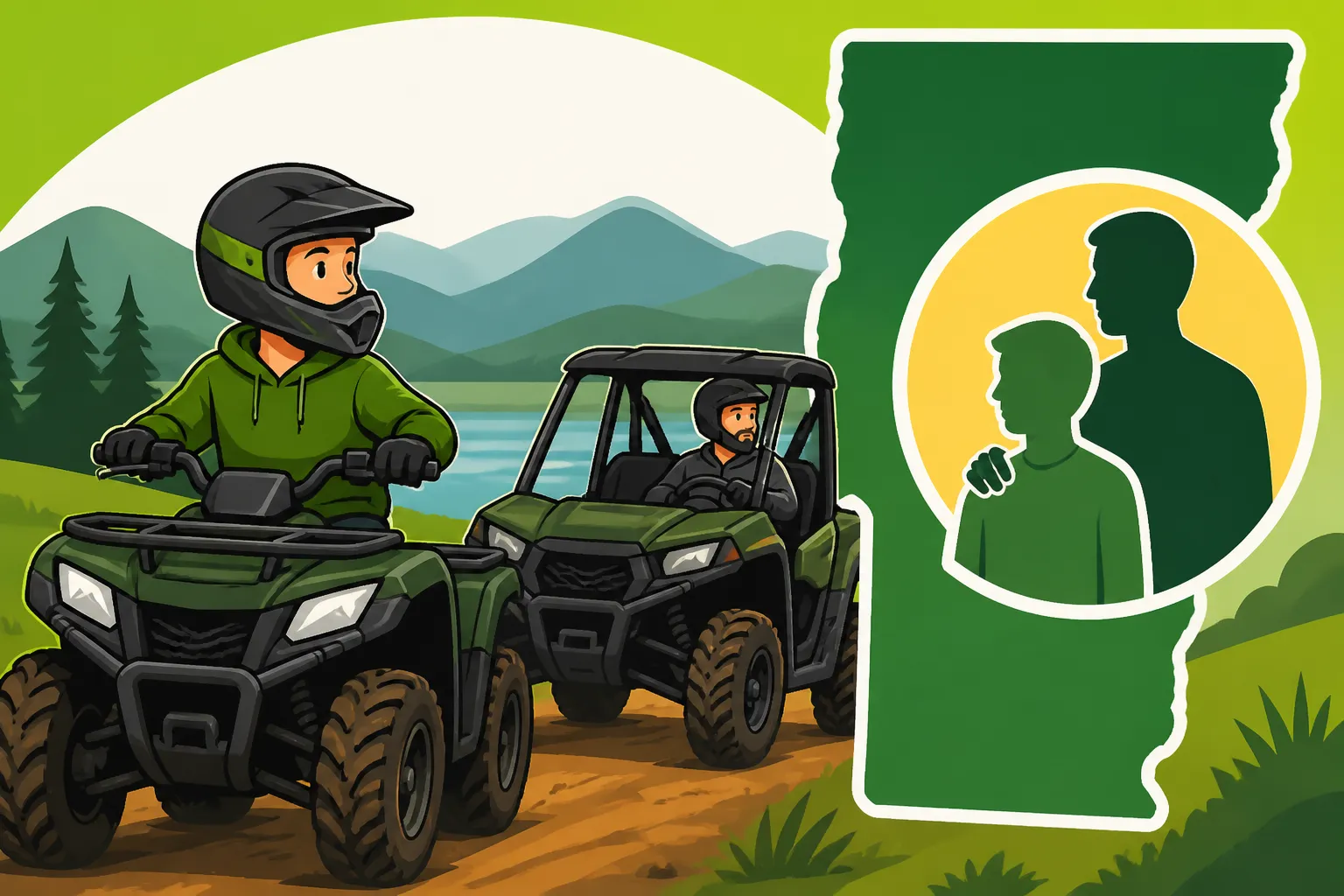
A 14-year-old is under 16, so plan on having a qualified adult supervise the ride. The adult must be at least 18 and hold a valid driver’s license. This is a separate requirement from any safety-course requirement: completing training does not, by itself, let a 14-year-old ride without adult supervision.
For practical purposes, supervision should mean that the adult is actively overseeing the ride and can respond promptly—not simply that an adult knows the teen has gone out or can be reached by phone. Keep the group together, choose terrain suitable for the rider’s experience, and avoid routes where the adult cannot see or keep track of the young rider.
The rule applies whether the teen is operating an ATV or a utility task vehicle, often called a UTV or side-by-side. The machine’s size and classification can affect other requirements, but they do not remove the need to supervise a rider under 16. If you are unsure how a particular machine is classified, see Vermont ATV Versus ASV Classes for the distinction.
| Question | Practical answer for a 14-year-old |
|---|---|
| Can the teen ride without an adult supervising? | No. Plan for active supervision by a qualified adult. |
| How old must the supervising adult be? | At least 18. |
| Does the supervisor need a driver’s license? | Yes, a valid driver’s license is part of the qualification. |
| Does taking a safety course replace supervision? | No. Training and supervision are separate requirements. |
| Does the rule change for a UTV? | Do not assume it does. Treat a 14-year-old’s UTV ride as requiring supervision too. |
| Does a trail decal or registration replace supervision? | No. Those are separate access and vehicle requirements. |
“Accompanied” should not be treated as permission for an adult to supervise from far away. The safest plan is to have the adult ride with the teen or stay close enough to provide immediate oversight. For a more detailed explanation of the term, see What Direct Supervision Means and Direct Supervision by Someone Eighteen.
A 14-year-old who has completed training still needs a supervisor. Likewise, an adult’s presence does not automatically satisfy the training, helmet, vehicle-access, or local riding rules. Check each requirement on its own rather than treating one as a substitute for another.
If the rider is approaching 16, do not assume the rules for an older teen apply early. The age limit is based on the rider’s actual age, not the season, school year, or how experienced the rider seems. Vermont Supervision Rules Under 16 provides related detail, and Vermont ATV Rules for a 15-Year-Old can help when planning for the next birthday.
Choosing a supervisor and setting safe limits
The adult is responsible for more than being present at the start. Good supervision includes checking the rider’s skill, the machine’s condition, the route, and the group’s ability to stay together. A teen who rides comfortably on a familiar private property may still need closer oversight on a narrow, unfamiliar corridor, in mud, or near other trail users.
Before setting out, agree on a simple plan:
- Choose a suitable machine. Make sure the teen can reach and operate the controls, steer, and stop safely. A large or powerful machine can be difficult for a young rider to manage, even if the seat and controls seem accessible.
- Set the route and turnaround point. Use current route information and choose a ride that suits the least experienced rider. Do not rely on a route being open just because it was open on a previous visit.
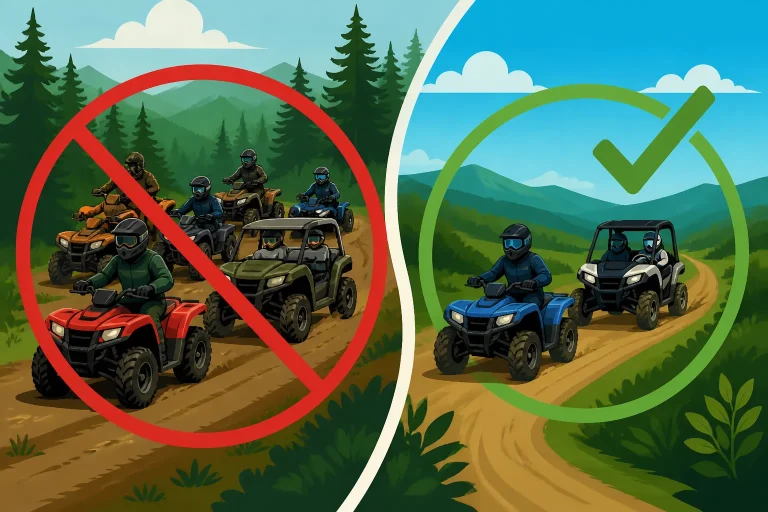
- Keep the adult close. Ride together or keep the teen within immediate sight and hearing. If terrain, dust, vegetation, or a turn separates the group, slow down or regroup.
- Agree on stop signals. Make sure the teen knows to stop for the adult, a hazard, a change in route, or a mechanical problem. Decide what to do if the group becomes separated.
- Check the machine and gear. Confirm that the brakes, lights, tires, and other required equipment are in good condition, and that the rider has a properly fitting helmet.
- Set a conservative pace. Slow down for blind corners, wet or loose surfaces, other riders, and places where the trail narrows. The adult should not pressure the teen to keep up with a faster group.
- End the ride if conditions change. A machine problem, fatigue, worsening weather, or a route that becomes difficult is a reason to turn back.
A supervisor should be prepared to change the plan rather than simply tell the teen to be more careful. A young rider may not recognize that a rut, steep section, or fast-moving group is beyond their current ability. Adults should make the call on route difficulty and pace.
Also consider who is actually supervising. A licensed adult who is responsible for several riders but cannot keep track of the 14-year-old may not provide meaningful oversight. If the group is large, assign one adult to stay with the young rider and make sure the adult has enough time and attention to do so. A parent’s permission or a note from home does not replace having a qualified supervisor present.
There is no need to turn a first ride into a long-distance trip. Short, familiar routes give a teen and supervisor a chance to test communication, control, and comfort before trying a longer outing. If the teen is new to riding, consider taking the safety course before going out. Vermont’s course information is covered in Vermont ATV Safety Course Required Under 18.
Training, helmets, and trail access are separate requirements
Supervision is only one part of a legal and responsible ride. Vermont has additional rules about training, helmets, registration, trail access, and where a machine may be operated. A teen and supervising adult should check each one before leaving home.
Training is especially important for a young rider. Review the current requirements for a 14-year-old before riding, including whether the course must be completed for the type of land or route planned. Any exception that may apply on family land should not be assumed to cover a public route, a club corridor, or a town road. The scope of an exception matters. See Vermont Course Exception on Family Land for the related issue.
A helmet is also essential. It should fit securely and meet the applicable safety standard, and the rider should wear it correctly throughout the ride. If you are replacing a helmet, check its label and fit rather than relying on a product description alone. Online listings, including those on Amazon, can make it easy to compare options, but the label and proper fit are what matter. Vermont’s requirements are discussed in Vermont ATV Helmet Law for Every Rider.
Trail access is another separate matter. A registered machine may still need the required Trail Access Decal to use the VASA trail system. A decal does not act as a substitute for registration, supervision, or training. Likewise, registration does not mean a rider has permission to use every trail or road. Start with Vermont Requires Registration Plus a TAD and confirm the rules for the route you intend to ride.
Road riding needs special care because permission varies by location. Do not assume that a road is open to ATVs or UTVs just because it is unpaved, quiet, or connects two trail sections. Towns make decisions about designated routes, and a route’s status can change. A supervising adult should check the local designation before taking a young rider onto a town road. See Vermont ATV Road Rules: Towns Decide.
These distinctions are useful when planning:
- Training helps a rider learn safe operation and may be required.
- Supervision applies because the rider is under 16 and is not replaced by training.
- Registration concerns the machine’s legal status.
- A TAD concerns access to the relevant trail system.
- Local route permission determines whether a road or corridor is open to riding.
- Helmet and equipment rules apply regardless of whether the rider is supervised.
If the teen lives outside Vermont or the machine is registered in another state, check reciprocity and access requirements before traveling. Do not assume that an out-of-state registration automatically provides every Vermont trail privilege. Vermont Reciprocity for Out-of-State Machines explains the related access question.
A practical pre-ride checklist for a 14-year-old
Use a checklist before each ride, especially when the route, machine, or group changes. Rules and access conditions can depend on the location and type of ride, so confirm current requirements with the relevant official source or trail organization when anything is unclear.
Confirm the adult supervisor. Make sure the adult is at least 18, has a valid driver’s license, and will stay actively involved for the whole ride. If the adult is riding another machine, agree on how the group will stay together and what to do if visibility is lost.
Confirm the rider’s preparation. Check the applicable safety-course requirement, review the controls and stopping procedure, and make sure the teen knows the route and signals. A certificate should be carried or available as required; do not assume a supervisor can answer every question on the rider’s behalf.
Check the machine. Verify that it is suitable for the rider and in safe operating condition. Inspect the brakes, tires, lights, controls, and visible damage. Do not carry a passenger unless the machine is designed and equipped for one and the applicable rules allow it. A passenger can affect control and weight distribution, particularly for an inexperienced operator.
Check protective gear. Fit the helmet before the ride, fasten it properly, and use suitable clothing and eye protection. Loose clothing, poor visibility, or a helmet that shifts can make a ride less safe. Bring water and clothing appropriate to the weather and length of the trip.
Check the right to ride there. Confirm that the machine has the required registration and trail access, and that the route is open to the type of machine being used. If part of the trip uses a town road, verify that the town has designated it for ATV travel. A trail map, a past visit, or another rider’s advice is not enough to establish current permission.
Match the plan to the teen. Consider the rider’s experience, the terrain, the weather, the length of the trip, and the adult’s ability to supervise. Start with a shorter route and add difficulty only when the teen is ready. Turn around if the rider is tired, anxious, or struggling to control the machine.
A few common situations show how these parts fit together:
- The teen has a safety certificate but no adult available. Do not treat the certificate as permission to ride alone. Arrange for a qualified adult to supervise or postpone the ride.
- A parent is watching from home by phone. That is not a practical substitute for close, active supervision during the ride.
- The family is riding on private property. Check whether a specific training exception applies, but do not assume private-land rules remove the under-16 supervision requirement or authorize riding on other land.
- The group is heading onto a town road. Check that the road is designated for ATV use and review local restrictions before the ride. Supervision alone does not make an undesignated road legal.
- The machine is a side-by-side. Its extra seats or larger frame do not automatically change the teen’s age-based supervision obligations. Check the machine classification and the rules that apply to its use.
When in doubt, take the more conservative option: keep the teen close, choose an easier route, and verify the rule before riding. That approach gives a 14-year-old room to build skill without confusing experience, adult permission, and legal access.
Disclaimer
This article is for general informational purposes only and does not constitute professional advice. Laws, prices and regulations vary by location and change over time. Consult a qualified professional for guidance on your specific situation.