Vermont ATV Rules on a Class 4 Road
Riding your ATV or UTV in Vermont offers some of the most breathtaking scenery and challenging terrain, but navigating the rules can feel like trying to read a muddy trail map. One area that often causes confusion for riders is the use of Class 4 roads. These aren't your typical paved or even well-maintained gravel roads, and the regulations surrounding them are a little different. This guide is here to cut through the confusion and explain exactly what you need to know to legally and safely enjoy Vermont's Class 4 roads on your machine.
Understanding Vermont's Class 4 Roads
When you look at a town's road map in Vermont, you'll often see roads categorized into different classes. These classifications aren't just for bureaucrats; they dictate everything from maintenance responsibilities to how and by whom they can be used. Class 4 roads are a unique breed, and understanding them is the first step to riding them legally.
What Exactly is a Class 4 Road?
Imagine the old logging trails, the forgotten pathways that once connected remote farmsteads, or the rugged routes that are simply too difficult and expensive for a small town to maintain regularly. That's essentially what a Class 4 road often is. By definition, a Class 4 road is a public highway that a town is not required to maintain for winter travel or with a smooth, hard surface. This means they can be anything from a barely discernible track through the woods to a deeply rutted, rocky, and often overgrown path. They might cross streams, ascend steep grades, and often blend seamlessly into private property or undeveloped land.
Unlike Class 3 roads, which towns typically maintain for year-round travel, Class 4 roads are often only passable by high-clearance, four-wheel-drive vehicles – and, of course, ATVs and UTVs. The key here is "public highway." Despite their wild appearance, they are still considered part of the public road network, which brings both opportunities and specific responsibilities for riders. However, the lack of maintenance also means they can be incredibly dangerous if you're not prepared.
The Legal Status of Class 4 Roads for ATVs
So, if a Class 4 road is a public highway, can you just ride your ATV on it? The answer, like much of Vermont's ATV law, is "it depends." On a state level, Vermont generally allows ATVs on Class 4 roads unless there's a specific town ordinance prohibiting it. This is a critical distinction. While many regular town roads require explicit permission from the selectboard to be opened to ATV traffic, Class 4 roads often start from a default position of being open, but with an important caveat: local control.
This means that while the state framework might generally permit use, any individual town has the authority to restrict or prohibit ATV access on its Class 4 roads. This makes doing your homework absolutely essential before you hit the trail. You can't assume that just because a Class 4 road exists, you're automatically allowed to ride your ATV on it. You'll need to check the local ordinances for the specific town you plan to ride in. This can feel like a chore, but it's the difference between a great day of riding and an expensive ticket for trespassing or violating a local law. For more on town authority, check out [Vermont Selectboards Open Roads Each Year].
Why Class 4 Roads Are Different from Other Town Roads
The difference between Class 4 roads and other public roads in Vermont, such as Class 2 or Class 3, boils down to maintenance and designation. Class 2 and 3 roads are actively maintained by the town, often plowed in winter, and are clearly intended for general vehicular traffic. To ride an ATV on these requires an active town ordinance specifically opening them up, usually for connecting parts of the VASA trail network. [Vermont ATV Road Rules by Town] dives deeper into how towns open these routes.
Class 4 roads, on the other hand, exist in a legal grey area of public access with minimal maintenance. While they are public rights-of-way, they are not typically signed or maintained like other roads. This means that while they might be "open" by default in some towns, they are not designated ATV trails in the same way a VASA corridor is. You won't find specific ATV trail signs or markers, and you'll often be sharing these routes with hikers, mountain bikers, hunters, and even landowners trying to access remote property. It's a different kind of shared-use environment, often requiring more caution and respect for other users.
Navigating the Rules for ATV Use on Class 4 Roads
Riding on Class 4 roads requires you to be aware of several layers of rules: statewide requirements that apply everywhere, local rules that vary by town, and the conditions under which these roads might be entirely off-limits. It's a lot to keep track of, but crucial for responsible riding.
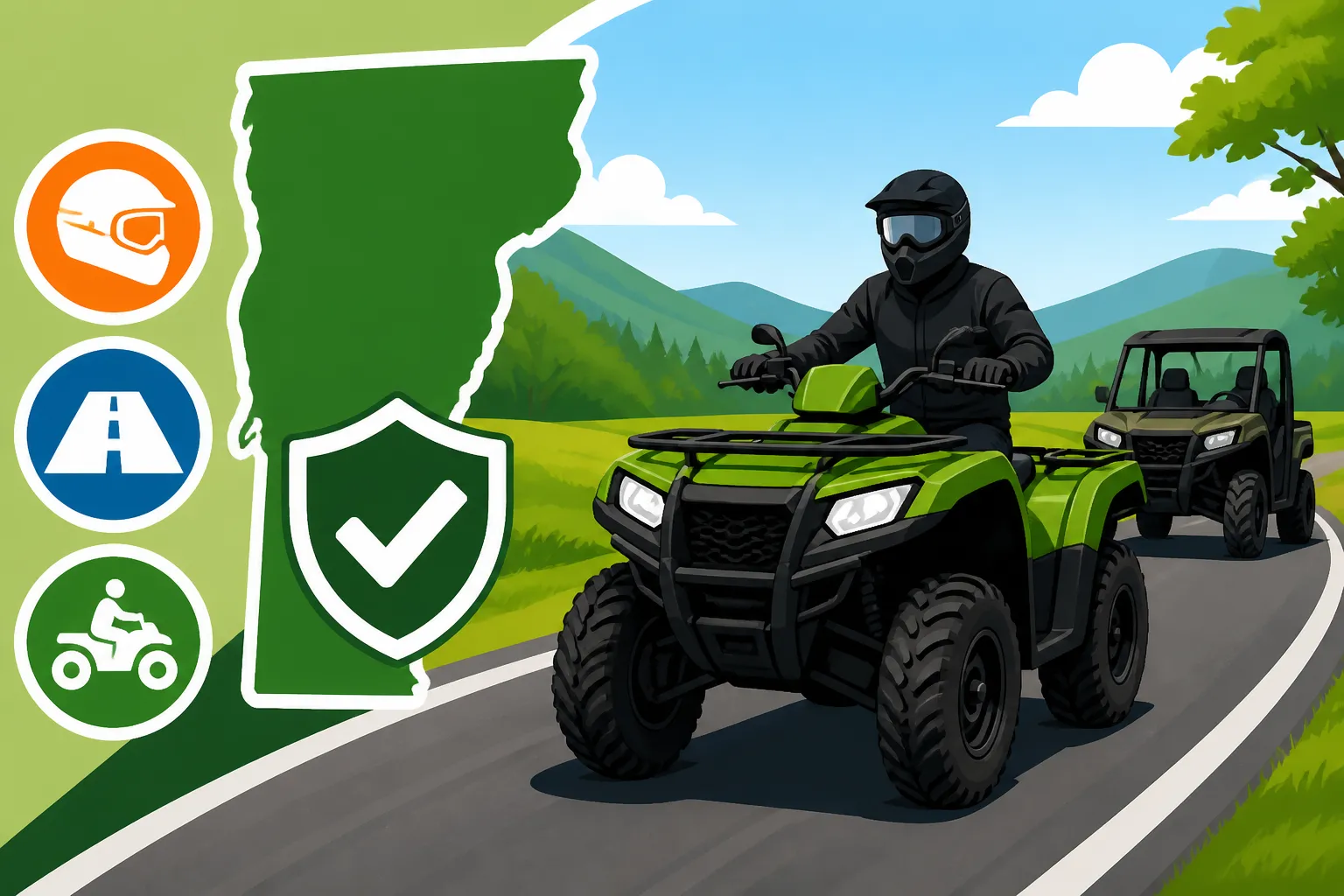
Essential State-Level Requirements for All ATV Riders
Before you even think about tackling a Class 4 road, remember that all the standard statewide ATV regulations apply. This isn't just about safety; it's about legality. Here are the non-negotiables:
- Registration: Your ATV or UTV must be registered with the Vermont DMV. This isn't optional for public land or public rights-of-way, including Class 4 roads. Make sure you have your [Vermont Registration Before Your First Ride] in hand.
- Trail Access Decal (TAD): If you plan to connect to or ride on any VASA trails that might sometimes utilize Class 4 sections, you'll need a [Vermont TAD: The Trail Access Decal Explained]. While a Class 4 road itself doesn't always require a TAD if it's not part of the VASA system, if you're using it to access or connect VASA trails, you'll need one. Many Class 4 roads are incorporated into the VASA trail system.
- Insurance: Vermont mandates liability insurance for all ATVs and UTVs operated on public lands or public rights-of-way. Don't leave home without proof of your [Vermont ATV Insurance Requirements].
- Helmet Law: Every single rider, regardless of age, must wear a helmet that meets federal safety standards. No exceptions.
- Safety Certificate (for youth): Riders under 18 generally need to complete a Vermont-approved ATV safety course. If you have a younger rider, ensure they have their [Vermont ATV Safety Course Required Under 18] certificate.
- Equipment: Your machine needs basic safety equipment like working brakes, headlights, and tail lights (especially if riding at dusk or dawn, which is common on Class 4 roads). Check out the full [Vermont ATV Equipment Requirements] to ensure your machine is up to snuff.
Even if a Class 4 road isn't a designated VASA trail, it's still a public right-of-way, and these fundamental state laws apply. A game warden or local law enforcement officer can stop you and verify compliance. [What a Warden Can Ask to See] outlines what they might check.
Local Ordinances and Their Impact on Class 4 Roads
This is where riding Class 4 roads gets tricky. While the state broadly allows it, individual towns hold significant power. A town's selectboard can vote to explicitly prohibit ATV use on any of its roads, including Class 4 roads. They can also set specific rules, such as speed limits lower than the state maximum, curfews, or seasonal closures.
It is absolutely crucial to check the town's local ordinances before you ride. Don't rely on word-of-mouth or outdated maps. The best way to do this is to contact the town clerk's office directly or visit the town's official website. Look for specific ordinances related to "all-terrain vehicles" or "off-road vehicles." Some towns may open certain Class 4 roads to ATVs as part of their connection to the statewide VASA trail system, while others may keep all their Class 4 roads closed to motor vehicle use outside of landowners.
Consider this hypothetical scenario: you're planning a ride near Brighton. You might assume all Class 4 roads are fair game. However, Brighton, like many towns, has its own unique rules. It's not enough to know it's a Class 4 road; you need to know what Brighton's selectboard has decided for that specific road. Failing to do your research could lead to fines, or worse, souring relations between riders and local communities. This local control is why [Vermont ATV Road Rules by Town] is such an important topic.
When a Class 4 Road Might Be Off-Limits
Even if a town generally allows ATV use on its Class 4 roads, there are still situations where a specific road, or even portions of it, might be off-limits.
- Temporary Closures: Towns might temporarily close Class 4 roads due to severe weather, mud season to prevent damage, or active logging operations. These closures might not be widely advertised, so always be prepared to turn around.
- Private Property Intersections: Class 4 roads often cross or abut private land, sometimes without clear demarcation. While the road itself is public, veering off it even slightly onto private land without permission constitutes trespass. This is a huge issue for riders, and understanding [Vermont Trespass Law for Riders] is vital. Many landowners will post "No Trespassing" signs if their property is regularly being encroached upon.
- Designated Wilderness or Conservation Areas: Some Class 4 roads might lead into or border state forests, wildlife management areas, or other conservation lands where motorized vehicle use is strictly prohibited. Always respect these boundaries, even if the road appears to continue.
- Landowner Withdrawal of Permission: In cases where a Class 4 road functions almost like an easement across private property (though it technically remains public), landowners can sometimes take actions that restrict public access, especially if there's been misuse. This usually involves petitioning the town selectboard, and it underscores the importance of respectful riding.
It's also worth noting that some Class 4 roads are incorporated into the VASA trail system. When this happens, they will usually be signed as part of the VASA network, and you'll definitely need your TAD. But many Class 4 roads are not official VASA trails, even if they're otherwise open to ATVs. Always look for [Vermont Posted Routes and Their Signs] to be sure.
Practical Considerations and Best Practices for Class 4 Riding
Riding Class 4 roads isn't just about knowing the rules; it's about being prepared for what you might encounter. These aren't manicured trails, and they demand a different level of respect for your machine, the land, and others.
Equipping Your ATV for Class 4 Conditions
Class 4 roads are rugged, unpredictable, and can put a serious strain on your machine. Proper equipment isn't just about comfort; it's about safety and preventing costly breakdowns.
- Tires: You'll want aggressive, durable tires with good tread for mud, rocks, and slippery conditions. Stock tires might be okay for light use, but dedicated off-road tires will give you much better traction and puncture resistance.
- Skid Plates: This is non-negotiable. Rocks, stumps, and hidden debris can easily damage critical components like your engine, transmission, and differential. A full set of robust skid plates, perhaps from a brand like SuperATV, can save you from a ride-ending catastrophe. They offer heavy-duty protection for the underside of your machine, giving you peace of mind when navigating rough terrain.
- Winch: A winch can be a lifesaver. Getting stuck in deep mud or finding a washed-out section where you need to move a fallen tree isn't uncommon on Class 4 roads. Having a reliable winch on board means you might not have to hike out for help.
- Suspension: A good, compliant suspension system with adequate ground clearance is crucial. Many SuperATV products focus on lifting and improving suspension, which can dramatically enhance your ability to absorb bumps and clear obstacles without bottoming out.
- Navigation: Cell service is often nonexistent on remote Class 4 roads. Carry a GPS device with offline maps or a detailed paper map of the area. Know where you are and where you're going.
- Safety Gear: Beyond the mandatory helmet, consider sturdy boots, gloves, and eye protection. A first-aid kit, a small toolkit, tire repair kit, and extra fuel are also wise additions.
- Lighting: Many Class 4 roads are heavily canopied, meaning they can get dark quickly, even in the middle of the day. Upgraded LED lights can greatly improve visibility, both for you and for others who might be sharing the road.
Always perform a thorough pre-ride inspection of your machine before heading out on Class 4 roads. Check fluid levels, tire pressure, and ensure all lights and brakes are working.
Respecting Landowners and Avoiding Trespass
This cannot be stressed enough: the continued access to Class 4 roads for ATV riders depends heavily on respectful behavior, especially towards landowners. Many Class 4 roads either border private property or are essentially easements through it. It’s easy to inadvertently trespass if you’re not paying attention.
- Stay on the Road: Do not deviate from the known public right-of-way. Even if it looks like an appealing shortcut or an interesting side trail, assume it's private unless clearly marked otherwise. This includes parking, turning around, or taking a break.
- Watch for Signs: While Class 4 roads aren't always signed for ATV use, watch diligently for "No Trespassing" signs, "Private Property" markers, or "Posted" land. These signs must be respected.
- Close Gates: If you encounter a gate, leave it exactly as you found it. If it was closed, close it behind you. If it was open, leave it open. This is a sign of respect for agricultural or timber operations.
- Minimize Impact: Stay out of muddy sections if possible (though often unavoidable on Class 4 roads) to avoid excessive rutting. Don't litter, and pack out everything you pack in.
- Slow Down Near Homes: If a Class 4 road passes near a residence, slow way down, be quiet, and be courteous. Noise complaints are a major reason landowners and towns push for restrictions.
Remember that [Vermont Landowner Permission Rules] are paramount. If you're ever in doubt about whether you're on public land or private, err on the side of caution and turn back. Building good relationships with landowners is vital for the future of riding in Vermont.
Safety First on Unmaintained Roads
Class 4 roads are inherently more dangerous than maintained roads or official trails. Their unmaintained nature means hidden hazards are common, and help can be a long way off.
- Ride with a Buddy: Never ride alone on Class 4 roads, especially if you're exploring unfamiliar territory. If you break down or get injured, a companion can provide assistance or go for help.
- Assess Conditions: Be aware of recent weather. Heavy rains can turn a mild Class 4 road into a raging stream crossing or a bottomless mud pit. Spring mud season often makes these roads impassable and highly prone to damage from vehicle use.
- Scout Ahead: When in doubt about an obstacle – a deep puddle, a steep incline, a rock garden – stop, dismount, and walk it. Look for the safest line. What looks manageable from your seat might be a serious trap.
- Varying Terrain: Be prepared for sudden changes in terrain: loose gravel, rocky sections, slippery roots, deep ruts, and standing water. Adjust your speed and riding technique accordingly.
- Yield to Others: You might encounter hikers, horseback riders, mountain bikers, or even logging trucks. Always yield the right-of-way, slow down, and be courteous. They may not expect a motorized vehicle.
- Inform Someone: Let someone know your planned route and estimated return time, even if you're riding with a group. This provides a safety net if something goes wrong.
Class 4 roads offer a raw, adventurous riding experience that's hard to beat in Vermont. But with that freedom comes a responsibility to be prepared, respectful, and acutely aware of the rules and hazards. Do your homework, gear up properly, and ride smart, and you'll unlock some incredible riding opportunities. You might also find yourself on [Vermont Trails That Use Class 4 Roads] which link into the wider trail network.
Disclaimer
This article is for general informational purposes only and does not constitute professional advice. Laws, prices and regulations vary by location and change over time. Consult a qualified professional for guidance on your specific situation.