Vermont’s $10,000 Property Damage Minimum
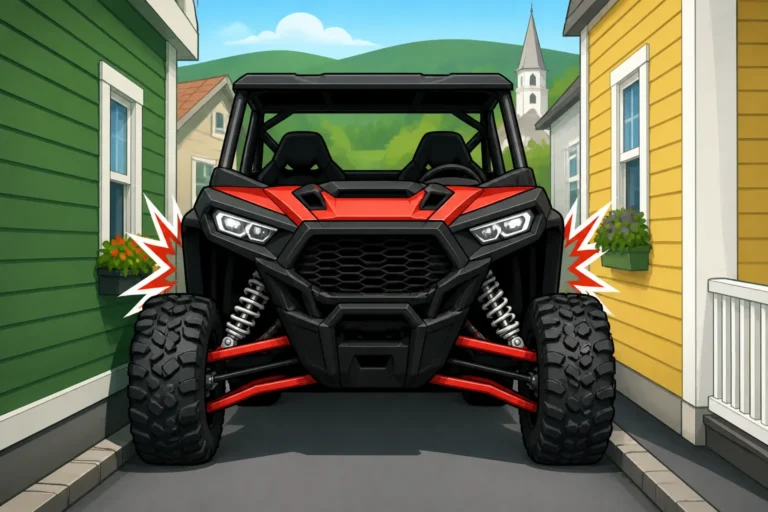
Picture this: you're out enjoying a beautiful Vermont day on your ATV or side-by-side, navigating a town road that's been opened for recreational use, when suddenly, an unexpected turn of events leads to an unfortunate mishap. Maybe you misjudged a corner and dinged a mailbox, or perhaps a rogue branch from your machine scraped the side of a parked car. In these moments, beyond the immediate shock, one of the biggest anxieties is often, "Am I covered for this?" Vermont law has clear answers for property damage involving ATVs and UTVs, specifically mandating a $10,000 minimum for property damage liability coverage. This guide is here to walk you through exactly what that means for you as a rider, why it's so important, and how to ensure you're fully protected on Vermont's trails and designated roads.
Understanding Vermont's ATV Insurance Mandate
Riding an ATV or UTV in Vermont is an incredible experience, offering access to stunning landscapes and a vibrant riding community. However, with the privilege of hitting the trails and designated town roads comes a serious responsibility: ensuring you're properly insured. Vermont doesn't just recommend insurance for your off-road vehicle; it legally requires it, especially if you plan to operate your machine anywhere beyond your own private property. This isn't just about covering your own machine; it's fundamentally about protecting others and their property from potential damage caused by your riding.
Why Insurance Is Non-Negotiable in Vermont
The Green Mountain State takes its ATV safety and responsibility seriously, and that extends to financial accountability. The state's insurance mandate is designed to ensure that if an accident occurs, the innocent party can be compensated for damages without undue financial burden or legal wrangling. Think about it: if you accidentally cause damage to someone's fence, their parked car, or even a small outbuilding while riding on a designated public way, the costs for repair can quickly add up. Without insurance, you, the operator, would be solely responsible for those costs out of pocket, which can lead to significant financial strain and potential lawsuits. This is why having at least the minimum coverage is not just a good idea, but a legal necessity for registered machines.
This mandatory coverage applies to anyone operating an ATV or UTV on lands or waters other than their own private property. This includes town roads, VASA club trails, and any other public or designated access points. The requirements are pretty straightforward, designed to ensure a basic level of protection for everyone involved in an incident. It's not just about preventing fines for non-compliance; it's about being a responsible member of the riding community. You can find more details on the general requirements in [Vermont ATV Insurance Requirements].
The Three Pillars of Vermont's ATV Liability Coverage
When we talk about ATV insurance in Vermont, we're really talking about three main components that make up the liability coverage you're required to carry. These are the foundations of protecting others from your machine's operation. Failing to meet these minimums can put you in a tough spot if something goes wrong.
The three minimums are:
- Bodily Injury Liability (Per Person): This covers medical expenses and lost wages for a single person injured in an accident where you are at fault. Vermont sets this minimum at $25,000. You can learn more about this in [Vermont's $25,000 Bodily Injury Minimum].
- Bodily Injury Liability (Per Accident): This is the total amount your insurance will pay for all injuries in a single accident where you are at fault, regardless of how many people are hurt. Vermont's minimum for this is $50,000. We delve deeper into this aspect in [Vermont's $50,000 Two-Person Minimum].
- Property Damage Liability: This is the focus of our discussion today – the $10,000 minimum that covers damage you cause to someone else's property.
Together, these minimums are often expressed as 25/50/10, referring to the thousands of dollars in coverage. It's crucial to understand each part because an incident could involve any or all of these aspects. For instance, if you swerve to avoid an obstacle and hit a parked car, you could cause damage to the car (property damage) and potentially injure a passenger inside (bodily injury). Having all three components covered at the legal minimums ensures you're ready for most common scenarios.
What "Property Damage Minimum" Actually Covers
So, let's zero in on that crucial $10,000 property damage minimum. This isn't just a number plucked from thin air; it's a carefully considered amount designed to cover a wide range of common damages that an ATV or UTV might inflict on someone else's physical property. Understanding what this specifically entails is vital, not only for compliance but also for peace of mind.
Defining "Property Damage" in the ATV Context
When your insurance policy talks about "property damage," it's referring to the physical harm done to tangible items that belong to someone else. This isn't just about other vehicles; it encompasses a broad spectrum of things you might encounter on or near trails and roads. Think about the types of property you might see when riding: fences, mailboxes, crops in a field, lawn ornaments, a small shed, signage, or even a parked snowmobile. If your ATV or UTV, through an accident or negligence, causes damage to any of these, your property damage liability coverage kicks in.
It's important to remember that this coverage is for someone else's property. Damage to your own ATV or UTV is covered by collision or comprehensive coverage, which are optional additions to your policy and not part of the state's mandatory liability requirements. For example, if you've invested in aftermarket parts from SuperATV, like heavy-duty bumpers or skid plates, you'll want to consider additional coverage for those specific components to protect your investment, but they aren't covered under the basic liability. The $10,000 minimum is strictly for protecting others.
What the $10,000 Threshold Means in Practice
The $10,000 minimum for property damage is intended to provide a reasonable safety net for typical incidents. For many minor to moderate accidents, this amount is often sufficient to cover the repair or replacement costs. Consider hitting a fence post, damaging a mailbox, or scraping a painted gate. These kinds of repairs might run from a few hundred dollars to a couple of thousand, easily falling within the $10,000 limit. However, it’s not hard to imagine scenarios where $10,000 might not be enough.
For instance, if you were to accidentally back into a newer model parked car, even a minor fender-bender could quickly rack up repair bills exceeding $10,000 due to complex sensors, paint matching, and labor costs. Or, if you somehow damaged a small outbuilding or a significant section of a farmer's crop field, the costs could escalate rapidly. In such cases, if the damages exceed your $10,000 liability limit, you would personally be responsible for paying the difference out of your own pocket. This is why many riders, especially those with significant assets to protect, choose to carry higher liability limits than the state minimum. It's a balance between cost and potential risk.
Here's a quick look at how the $10,000 property damage minimum compares to other parts of Vermont's required ATV insurance:
| Coverage Type | Vermont Minimum | What It Covers |
|---|---|---|
| Bodily Injury (per person) | $25,000 | Medical expenses, lost wages for one person you injure |
| Bodily Injury (per accident) | $50,000 | Total medical expenses, lost wages for all people you injure in one accident |
| Property Damage | $10,000 | Repair/replacement costs for property you damage that belongs to someone else |
| Self-Insurance Option | $115,000 | An alternative for those demonstrating sufficient financial resources to cover claims |
This table highlights that while $10,000 might seem like a lot, it's just one piece of the liability puzzle, and arguably the lowest of the three primary minimums, reflecting the relatively lower average cost of property damage compared to severe bodily injury. You might also want to explore [Vermont Self-Insurance at $115,000] if you are considering alternatives.
Real-World Scenarios and the $10,000 Threshold
It’s one thing to read about insurance requirements in black and white, but it’s another to visualize how they play out in real life. When you’re out on your ATV or UTV, the unexpected can happen in a split second, and knowing what your $10,000 property damage minimum covers can bring a lot of clarity and alleviate stress during an unfortunate incident. Let’s explore a few hypothetical scenarios.
Scenario 1: The Mailbox Mishap
Imagine you're riding a designated town road in a small Vermont village, perhaps heading back from a day on the [Vermont ATV Trails: The VASA System]. You momentarily lose focus, or maybe hit a patch of gravel unexpectedly, and your front tire veers just enough to clip a homeowner's mailbox, knocking it off its post and damaging the post itself. The homeowner is understandably upset.
In this situation, your $10,000 property damage liability would likely cover the costs. A new mailbox and post, plus installation, might run a few hundred dollars. Even if there's minor landscaping damage from where the post fell, the total cost would almost certainly stay well within the $10,000 limit. Your insurance company would work with the homeowner to assess the damage and process the claim, taking the financial burden off your shoulders. Without this coverage, you'd be looking at writing a check for those repairs directly, which, while perhaps not ruinous for a mailbox, is still an unplanned expense you’d rather avoid.
Scenario 2: The Parked Vehicle Predicament
Now, let's consider a slightly more expensive possibility. You're pulling into a small general store in a town like Island Pond, a common stop for riders in the Northeast Kingdom, and misjudge the turn radius of your side-by-side. You hear a sickening crunch as the rear corner of your machine scrapes along the fender and door of a brand-new pickup truck parked a little too close to the edge of the lot. The damage isn't severe, but it’s clearly visible: a deep scratch and a dent that will require bodywork and repainting.
Modern vehicle repairs, even for seemingly minor cosmetic damage, can be surprisingly costly due to sophisticated paint finishes, integrated sensors, and labor rates. A deep scratch and dent on a fender and door could easily run $2,000 to $5,000, depending on the make and model of the truck. In many cases, this would still fall within your $10,000 property damage limit. However, if the damage was more extensive, perhaps involving a headlight assembly, a more significant dent, or specialized paint, it's not inconceivable for repair costs to push closer to or even exceed that $10,000 mark. This scenario perfectly illustrates why some riders opt for higher limits – just in case that parked truck turns out to be a luxury model or the damage is more complex than it first appears.
Scenario 3: Accidental Farm Field Damage
Vermont is a rural state, and many VASA trails traverse or are adjacent to private farmlands. What if, while navigating a trail, you accidentally veer off course or your machine slides on a muddy patch, causing you to churn up a small section of a farmer's newly planted crop or damage a segment of their irrigation system?
Damaging agricultural property can be tricky. Repairing an irrigation line might be straightforward, but damaging crops involves lost yield, which can be a significant financial hit for a farmer. Assessing this kind of damage requires calculating the value of the lost harvest, potential replanting costs, and any impact on future yields. For a small, isolated incident, the costs might well fit within the $10,000 limit. However, if a larger area of a valuable crop, like corn or hay, is destroyed, or if specialized farming equipment is damaged, the costs could quickly exceed the minimum. This is where carrying additional coverage could really save you from a major financial headache and maintain good relationships with the landowners who graciously allow trail access. Always be mindful of your surroundings, especially when riding near [Vermont Trails That Cross Farmland].
Finding the Right ATV Insurance Policy in Vermont
Securing the right ATV insurance in Vermont isn't just about meeting the state's minimum $10,000 property damage requirement; it's about finding a policy that truly fits your riding habits, your machine, and your personal financial situation. While the minimums are a starting point, many riders find it prudent to go above and beyond for comprehensive protection.
Beyond the Minimum: Why More Coverage Can Be Worth It
As we've discussed, the $10,000 property damage minimum is a safety net for typical, less severe incidents. But life, and unfortunately accidents, can be unpredictable and expensive. Many insurance professionals and experienced riders recommend carrying higher liability limits, perhaps $25,000 or even $50,000 for property damage, and certainly higher for bodily injury.
Why? Because the difference between the minimum and a higher limit in terms of your monthly premium might be surprisingly small, while the protection it offers in a major incident can be enormous. If you cause $20,000 worth of damage to someone's property with only $10,000 in coverage, you're personally on the hook for that additional $10,000. That's money that comes directly from your savings, or worse, could lead to legal action against you. For those with significant assets—a home, savings, other vehicles—this risk is even greater. Opting for higher limits is often a smart financial decision, providing robust protection for what you've worked hard to build. It’s an investment in your financial security and peace of mind.
Essential Questions to Ask Your Insurance Provider
When you're shopping for ATV insurance, don't just ask for the cheapest policy that meets Vermont's minimums. Take the time to ask detailed questions to ensure you truly understand what you're getting. Here are a few key questions:
- "Does this policy meet Vermont's 25/50/10 minimums for liability coverage?" Always confirm this first.
- "What are the options for increasing my property damage liability beyond $10,000?" Get quotes for higher limits to compare the cost difference.
- "Does the policy cover modifications or aftermarket accessories on my ATV/UTV?" If you've invested in upgrades, say from SuperATV, you'll want to ensure they're covered. Some policies might require you to declare these specifically.
- "What are the deductibles for collision and comprehensive coverage if I choose to add them?" These optional coverages protect your machine.
- "Are there any specific exclusions I should be aware of, such as racing or rental use?" Make sure your intended use aligns with the policy's terms.
- "What documentation do I need to carry with me while riding as proof of insurance?" Remember, [Carrying Vermont Insurance Proof on the Machine] is a requirement.
- "Are there any discounts available, such as for taking a safety course or bundling with other policies?" Every little bit helps!
Don't hesitate to shop around and get quotes from several different providers. Not all insurance companies are created equal, and prices and coverage can vary significantly. A little research upfront can save you a lot of hassle and money down the road.
Consequences of Non-Compliance: Riding Uninsured
It might be tempting for some to bypass the insurance requirement, especially for a machine they only ride occasionally. However, riding an unregistered or uninsured ATV or UTV in Vermont, particularly on public roads or designated trails, carries significant risks and penalties that far outweigh any perceived savings. The state is serious about enforcement, and wardens and local law enforcement are vigilant.
Legal Penalties and Fines
Operating an ATV or UTV on public land or designated roads without the required liability insurance is a violation of Vermont law. If you're stopped by a warden or police officer and cannot produce proof of insurance, you could face immediate consequences. These can include:
- Fines: You'll likely receive a citation with a monetary fine. These fines can vary, but they are designed to be a deterrent, often reaching hundreds of dollars.
- Registration Suspension: Your ATV or UTV registration could be suspended, meaning you legally cannot ride it anywhere until you obtain insurance and reinstate your registration, often incurring additional fees.
- Impoundment: In some cases, your machine could even be impounded, leading to towing and storage fees on top of everything else.
- License Points: Depending on the specific circumstances and the officer's discretion, points could be added to your driver's license, potentially impacting your car insurance rates.
These are just the legal ramifications. The true cost becomes apparent if you're involved in an accident while uninsured. This is when the financial implications can become catastrophic.
The Financial Catastrophe of an Uninsured Accident
Let's revisit our earlier scenarios, but this time imagine you have no insurance at all, or only inadequate coverage.
- The Mailbox Mishap (Uninsured): That few hundred dollars for a new mailbox and post? It now comes entirely out of your pocket. No insurance company to negotiate or pay on your behalf.
- The Parked Vehicle Predicament (Uninsured): If that parked truck sustained $5,000 or $15,000 in damage, that entire sum is yours to pay. The truck owner's insurance might pay for their repairs, but they will then pursue you directly to recover their costs. This is called subrogation. You could be facing a lawsuit, wage garnishment, or even liens against your property until the debt is settled.
- Accidental Farm Field Damage (Uninsured): Damages in the thousands for crop loss or equipment repair would be entirely your responsibility. This could not only deplete your savings but also severely damage your reputation within the riding community and potentially lead to landowners revoking trail access.
Beyond property damage, if your uninsured accident causes bodily injury to another person, you would be personally responsible for all their medical bills, lost wages, pain and suffering, and any long-term care needs. These costs can easily run into the tens or hundreds of thousands of dollars, far exceeding most people's ability to pay. It’s a situation that could lead to bankruptcy and lasting financial hardship. The potential consequences simply aren't worth the risk of riding without adequate insurance.
Beyond the Minimum: Protecting Yourself Further
While meeting Vermont's $10,000 property damage minimum is crucial for legal compliance, responsible ATV and UTV ownership often involves looking beyond these basic requirements to ensure comprehensive protection. Thinking about your own machine, your health, and even your riding gear can make a big difference if something goes wrong.
Optional Coverages for Your Machine and Yourself
Your liability insurance protects others, but what about you and your pride and joy? Most insurance providers offer a suite of optional coverages that can significantly bolster your protection:
- Collision Coverage: This pays for damages to your ATV or UTV if it collides with another vehicle, an object (like a tree or a rock), or rolls over. If you take your machine on challenging terrain, or have invested in premium components like those offered by SuperATV, this coverage is highly recommended.
- Comprehensive Coverage: This protects your machine from damages not caused by a collision. Think theft, vandalism, fire, natural disasters (like floods or hail), or hitting an animal. If you trailer your machine frequently or store it in an area vulnerable to theft, comprehensive coverage is a wise addition.
- Uninsured/Underinsured Motorist Coverage: While Vermont requires other operators to have insurance, not everyone complies. This coverage protects you if you're involved in an accident with an uninsured or underinsured driver who is at fault, covering your medical bills and potentially damage to your machine.
- Medical Payments (MedPay) or Personal Injury Protection (PIP): These cover your own medical expenses, regardless of who is at fault in an accident. Given the nature of ATV riding, even a minor spill can result in injuries, and having this coverage can prevent out-of-pocket medical costs.
Considering these optional coverages means evaluating your personal risk tolerance, the value of your machine, and your financial ability to absorb repair or medical costs without insurance. It’s about building a customized safety net that reflects your specific needs as a rider.
Proactive Steps for Safer Riding
Insurance is a critical safety net, but the best protection is always prevention. Being a proactive, safe, and responsible rider can significantly reduce your chances of needing to file a claim in the first place.
- Regular Maintenance: Keep your ATV or UTV in top mechanical condition. Check brakes, tires, lights (especially if you plan on riding after dark, which requires [Vermont Headlight and Tail Light Rules]), and steering before every ride. A well-maintained machine is a safer machine.
- Wear Appropriate Gear: Always wear a DOT-approved helmet (a strict requirement under [Vermont ATV Helmet Law for Every Rider]), eye protection, gloves, sturdy boots, and long pants/sleeves. This gear can dramatically reduce the severity of injuries in an accident.
- Ride Within Your Limits: Know your skill level and the capabilities of your machine. Don't attempt trails or maneuvers that are beyond you. Conditions change rapidly, especially in Vermont, so adjust your speed and technique accordingly.
- Follow Trail Rules and Laws: Respect speed limits, stay on marked trails, and adhere to all local ordinances, such as [Brighton's ATV Ordinance Explained in Vermont]. This not only keeps you safe but also helps maintain positive relationships with landowners and communities. You can find more details on general road rules in [Can You Ride an ATV on the Road in Vermont?].
- Never Ride Impaired: Operating an ATV or UTV under the influence of alcohol or drugs is illegal and incredibly dangerous, mirroring [Vermont DUI Law and ATVs] for cars. It's a recipe for disaster and can void your insurance coverage.
- Take a Safety Course: For riders under 18, a safety course is mandatory in Vermont. Even for adults, taking an ATV safety course is an excellent way to refresh skills, learn new techniques, and understand best practices for safe operation. You can learn more about this in [Vermont ATV Safety Course Required Under 18].
By combining comprehensive insurance with a commitment to safe and responsible riding practices, you can truly enjoy all that Vermont has to offer on your ATV or UTV, knowing you're well-prepared for whatever the trail throws your way.
Disclaimer
This article is for general informational purposes only and does not constitute professional advice. Laws, prices and regulations vary by location and change over time. Consult a qualified professional for guidance on your specific situation.