Vermont’s $50,000 Two-Person Minimum
Riding your ATV or UTV in Vermont offers some of the most breathtaking experiences you can imagine, whether you're cruising a designated town road or navigating a winding club trail. But before you even think about firing up that engine and heading out, there's a crucial piece of the puzzle that often causes a lot of head-scratching: insurance. Specifically, the Vermont Department of Motor Vehicles has some very clear requirements, and understanding the nuances, like the [$50,000 Two-Person Minimum] for bodily injury liability, can feel like deciphering a cryptic code. This guide is designed to cut through that confusion, explaining exactly what these numbers mean for you, why they're in place, and how to ensure you're fully compliant, so you can focus on the ride ahead, not the legal fine print.
Understanding Vermont's ATV/UTV Insurance Landscape
When it comes to hitting the roads or designated trails in Vermont on your ATV or UTV, insurance isn't just a good idea – it's the law. The state wants to make sure that if something goes wrong, and an accident occurs, there's a safety net for those who might be injured or have their property damaged. This isn't about punishing riders, but rather protecting everyone involved, including you. It's a system designed to ensure financial responsibility on what are essentially motorized vehicles.
The Legal Mandate for Liability Coverage
Vermont law is pretty clear: if you're operating an ATV or UTV on any public land, designated trail, or opened town road, you must carry liability insurance. This isn't a suggestion; it's a hard and fast rule. This requirement is in place because these machines, while incredibly fun and useful, can cause significant damage or injury if not operated carefully or if an unforeseen accident occurs. Think about it from the perspective of a local town trying to manage shared road access; they need to know that if a rider accidentally clips a mailbox or, far worse, causes an injury, there's a mechanism for compensation. Without this mandate, victims of accidents could be left with enormous medical bills or repair costs, and that’s a burden Vermont doesn’t want its residents or visitors to bear.
The liability insurance you carry acts as a financial buffer. It means that if you're found at fault in an accident, your insurance company will step in to cover the costs up to your policy limits. This isn't for damage to your own machine or your own medical bills (though you can add coverage for those), but specifically for the harm you might cause to others or their property. It's an essential part of being a responsible rider and a good neighbor on Vermont's roads and trails. This also ties into other requirements like [Vermont ATV Insurance Requirements], which covers the full scope of what you need.
Breaking Down the "$50,000 Two-Person Minimum"
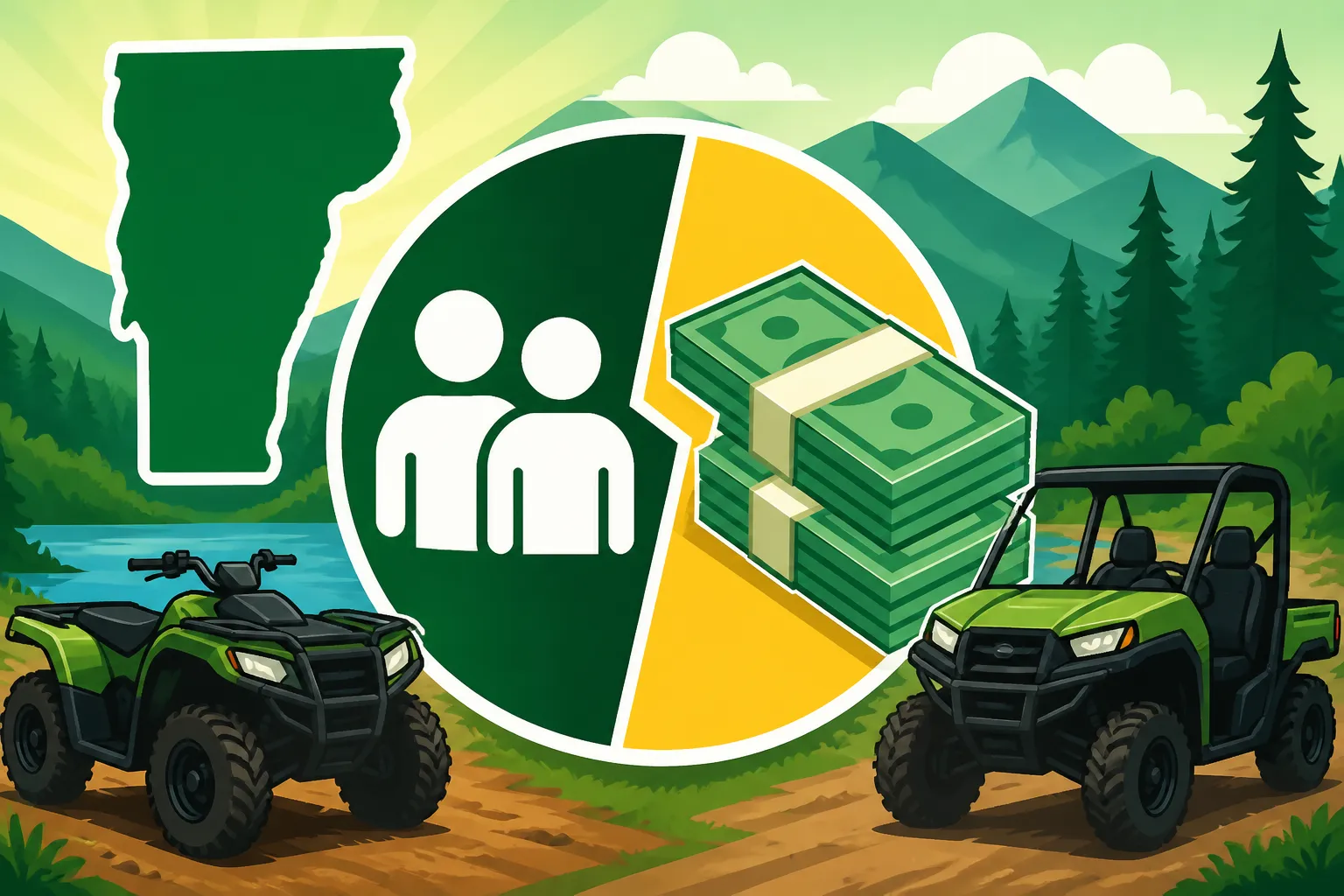
Now, let's talk about that specific number: the "$50,000 two-person minimum." This refers directly to the bodily injury liability coverage that Vermont mandates. It's often presented as part of a series of numbers, like 25/50/10. In this sequence, the "50" represents the maximum amount, in thousands of dollars, that your insurance policy will pay out for all bodily injuries sustained by two or more people in a single accident where you are at fault. So, if you were to be involved in an unfortunate incident and multiple people were injured, your insurance would cover up to $50,000 for their combined medical expenses, lost wages, and other related bodily injury costs.
This minimum is distinct from the per-person bodily injury limit. The "25" in the 25/50/10 example, for instance, means your policy would cover up to $25,000 for bodily injury to one person in an accident. The $50,000 simply caps the total payout for multiple individuals. This tiered approach is common in vehicle insurance and is designed to provide a reasonable level of protection without making insurance prohibitively expensive for every rider. It acknowledges that an accident can involve more than one injured party and aims to provide a safety net for that scenario. Without this, imagine a scenario where two passengers on another vehicle are seriously injured; a lower overall cap could leave them significantly undercompensated.
Why These Specific Numbers Matter on Vermont Roads
These specific insurance minimums aren't just arbitrary figures; they are carefully considered amounts meant to balance affordability for riders with adequate protection for potential accident victims. Vermont’s roads, especially the designated ones for ATVs and UTVs, are often shared with cars, bicycles, pedestrians, and even farm equipment. An accident can involve significant medical costs, especially if injuries are serious or require long-term care. A $50,000 minimum for multiple injured parties helps ensure that most common accident scenarios involving injuries to a few people are reasonably covered.
Consider a hypothetical situation: you're riding your UTV on a town road, perhaps enjoying a beautiful fall day on your way to a trail system. You misjudge a turn and collide with a small car carrying two occupants. Both occupants sustain moderate injuries, requiring emergency room visits, follow-up care, and some time off work. The total medical bills and lost wages for both individuals could easily exceed $25,000. This is precisely where the [$50,000 Two-Person Minimum] comes into play, ensuring that there's enough coverage to help both individuals recover without leaving them in a dire financial situation. It minimizes the risk for everyone sharing the road. This also directly impacts how much your [Vermont ATV Insurance Cost] will be.
Beyond the Minimum: What Your Policy Needs to Cover
While meeting Vermont's minimum insurance requirements is non-negotiable for riding on roads and designated trails, it's truly just the starting point. Many riders find that opting for coverage that goes beyond these basic minimums offers far greater peace of mind and financial security. After all, the cost of medical care and property repair can quickly escalate, and being underinsured can turn an unfortunate incident into a financial catastrophe for you.
The Bodily Injury Minimum: A Foundation of Protection
As we've discussed, the bodily injury liability minimums are foundational. In Vermont, this typically means a minimum of $25,000 for injury to one person and $50,000 for injury to two or more people per accident. This coverage protects you financially if you cause an accident that injures another person. It covers things like their medical expenses, rehabilitation costs, lost wages, and even pain and suffering up to the policy limits. While these minimums are legally sufficient, serious injuries can easily surpass these amounts.
For instance, a single serious injury involving a hospital stay, surgery, and physical therapy could quickly chew through a $25,000 limit. If you were found liable and the costs exceeded your coverage, you would be personally responsible for the difference. This is why many experienced riders, especially those who frequently ride on public roads or with passengers, choose to increase their bodily injury liability limits to $100,000 per person and $300,000 per accident (100/300) or even higher. It’s about being prepared for the worst-case scenario and protecting your assets, not just meeting a legal checkbox. Thinking about it this way, you're investing in your own financial future.
Property Damage: Protecting Against the Unexpected
Beyond bodily injury, your ATV/UTV insurance policy must also include property damage liability. Vermont mandates a minimum of $10,000 for property damage. This part of your policy covers the costs if you accidentally damage someone else's property with your ATV or UTV. This could be anything from a parked car, a fence, a mailbox, or even an outbuilding if you veer off a shared access road.
Let's imagine you're navigating a narrow town road that connects two trail sections. You swerve to avoid a deer, losing control momentarily, and collide with a homeowner's expensive wooden fence. Repairing or replacing that fence, along with any landscaping damage, could quickly hit the $5,000-$7,000 mark. If you also happened to scratch a parked truck in the driveway, your $10,000 property damage coverage would come into play. However, if you were to collide with a new luxury vehicle, $10,000 might barely cover a fender bender, leaving you on the hook for substantial repair costs. Again, many riders opt for higher property damage limits, such as $25,000 or $50,000, to ensure they're adequately protected against significant property losses. It's a small premium increase for a lot more protection, especially when considering the rising cost of vehicle repairs.
Self-Insurance as an Alternative: Is It Viable?
For some, the idea of "self-insurance" might come up. Vermont does offer an option for self-insurance for motor vehicles, which also extends to ATVs and UTVs. However, this isn't simply choosing not to buy a policy. To be approved for self-insurance in Vermont, you typically need to demonstrate substantial financial means, usually in the form of a bond or securities, totaling [$115,000]. This staggering amount is well beyond what most individual ATV or UTV owners possess in easily accessible, liquid assets.
This option is almost exclusively utilized by large corporations or rental fleets that operate many vehicles and have the financial stability to cover significant liabilities out of pocket. For the average rider, purchasing a traditional insurance policy from a reputable provider is the only practical and financially sensible way to meet the state's requirements. Attempting to self-insure without formal approval and the necessary financial backing would mean you are riding uninsured, which carries severe penalties and leaves you completely vulnerable in the event of an accident. It's a path almost certainly not for the everyday enthusiast.
Real-World Scenarios: When Vermont's Insurance Kicks In
Understanding the different components of your ATV/UTV insurance policy really comes to life when you think about real-world situations. Vermont's diverse terrain and the increasing popularity of ATVs and UTVs mean riders will encounter a variety of environments, from quiet dirt roads to bustling trailheads. Knowing when and how your insurance applies is key to riding confidently and responsibly.
Accidents Involving Other Vehicles on Town Roads
One of the most common scenarios where your liability insurance becomes critical is an accident with another vehicle on a designated town road. Vermont towns increasingly open up sections of roads to ATVs and UTVs, allowing riders to connect trail systems or access local services. This shared environment means there's always a risk of collision with cars, trucks, or even farm machinery.
Imagine you’re on a rural road in Brighton, which has many designated routes. You come around a blind corner and, due to a momentary lapse in judgment or an unforeseen road hazard, collide with an oncoming pickup truck. Even at low speeds, such an impact can cause significant damage to both vehicles and potential injuries to the occupants. Your property damage liability would cover the repairs to the pickup truck, up to your policy limit (the minimum $10,000, or more if you wisely chose higher limits). Crucially, your bodily injury liability, including that [$50,000 Two-Person Minimum], would kick in to cover the medical expenses for the driver and any passengers in the truck. Without adequate coverage, a simple misjudgment could lead to years of financial strain for you.
Collisions with Pedestrians or Property
It's not just other vehicles you need to worry about. Pedestrians, cyclists, and privately owned property are also vulnerable to accidental damage or injury. Designated town roads are often residential, meaning children could be playing, people might be walking their dogs, or there could be mailboxes, fences, and lawns close to the roadway.
Let's consider a day riding near Newport City, where some routes are open. You're enjoying the scenery, perhaps a bit distracted, and accidentally veer slightly off the road, hitting a resident's elaborate garden gnome collection and damaging a portion of their decorative landscaping. Your property damage liability would cover the cost of replacing the gnomes and repairing the landscaping. Or, in a more serious scenario, you might accidentally startle a pedestrian walking along the shoulder, causing them to fall and sustain an injury. Your bodily injury liability would cover their medical costs. It highlights why your insurance is so important, extending beyond just vehicle-to-vehicle accidents to cover a broader range of potential incidents. This is a primary reason for the [Vermont ATV Insurance Requirements].
Uninsured Motorist Coverage: An Important Consideration
While Vermont mandates insurance for ATVs and UTVs, not every vehicle on the road is necessarily insured, or insured adequately. This is where uninsured/underinsured motorist (UM/UIM) coverage becomes incredibly valuable, even though it's not strictly mandated for ATVs in the same way liability is. UM/UIM coverage protects you if you are involved in an accident with another party who is either uninsured or whose insurance limits are too low to cover your damages and injuries.
Picture this: you're riding your machine on a shared dirt road, and an older car, perhaps without current insurance, swerves and hits you, causing damage to your ATV and personal injury. If the other driver has no insurance, or very little, your UM/UIM coverage (if you've opted for it) would step in to cover your medical bills and repair costs for your machine, up to your policy limits. It essentially acts as a safety net for you against others' irresponsibility. Many insurance providers offer this as an add-on, and given the varied nature of vehicles on Vermont's rural roads, it's a wise investment that can prevent you from facing huge out-of-pocket expenses when you're the victim. It's a smart layer of personal protection for peace of mind.
Navigating Compliance: Proving Your Coverage to Authorities
Having the right insurance is one thing, but proving you have it when it matters most is another. Vermont law enforcement and trail wardens are serious about compliance, and for good reason. Ensuring every rider is properly insured helps maintain safety and financial responsibility across the state's trail and road network. Understanding how to present your proof of coverage and what to expect during a stop or after an accident is crucial.
Carrying Proof of Insurance on Your Machine
One of the simplest yet most overlooked aspects of insurance compliance is carrying physical or digital proof of your coverage with you whenever you ride. Just like you need your registration, you need your insurance card. Vermont law states that you must be able to provide proof of insurance upon request by a law enforcement officer or an authorized trail warden.
Most insurance companies provide a physical insurance card, which you can easily laminate and keep in a waterproof bag in your machine's storage compartment. Many also offer digital insurance cards accessible via a smartphone app. While digital proof is increasingly accepted, always make sure your phone is charged and accessible. Imagine being stopped on a remote class 4 road, perhaps near Jay Peak, and your phone battery is dead. That could lead to unnecessary delays or citations. Always have a backup plan. Keep it with your [Vermont Registration Paperwork Checklist] so you don't forget it. If your machine breaks down, you want to be able to present everything easily.
What Happens During a Roadside Stop or Accident
If a law enforcement officer or trail warden pulls you over for any reason – perhaps a routine check, a minor infraction, or even just to offer assistance – they will very likely ask for your registration, proof of any required safety certificates (especially if you're under 18, as per [Vermont ATV Safety Course Required Under 18]), and your proof of insurance. Presenting these documents promptly and politely helps the interaction go smoothly. If you cannot produce valid proof of insurance, you could face fines, a citation, or even have your machine impounded.
In the unfortunate event of an accident, your proof of insurance is even more critical. After ensuring everyone's safety and contacting emergency services if needed, you will need to exchange insurance information with the other parties involved. This includes your insurance company's name and policy number. Law enforcement will also collect this information for their accident report. Having all this readily available will streamline the process and allow your insurance company to begin handling claims quickly. It also helps prevent disputes later on, proving you were indeed compliant at the time of the incident.
Insurance After a Vermont Trail Collision
While much of the focus on insurance is often on road riding, it's important to remember that most ATV/UTV liability policies also extend to riding on designated trail systems, like those maintained by VASA clubs. An accident on a trail, while often less likely to involve another "vehicle" in the traditional sense, can still lead to significant issues if another rider or even a pedestrian is injured, or if private property (like a landowner's gate or fence) is damaged.
Consider a scenario where you're riding a VASA trail in Essex County and accidentally collide with another ATV, injuring its passenger. Your liability insurance would respond to the passenger's bodily injury claim. Or, if you accidentally clip a fence post on a farmer's land where a trail easement exists, your property damage coverage would address the repairs. It's crucial to understand your policy's specifics, as some insurers might have different rules for trail riding versus road riding, or specific exclusions. Always clarify with your insurance provider whether your policy provides comprehensive coverage for all the ways you plan to ride in Vermont. This goes hand-in-hand with understanding [Vermont ATV Trails: The VASA System] and their operational guidelines.
Factors Influencing Your Vermont ATV/UTV Insurance Cost
Let's be real: nobody wants to pay more than they have to for insurance. But understanding what drives the cost of your Vermont ATV/UTV policy can help you make informed decisions and potentially find the best rates without compromising on necessary coverage. It's not a one-size-fits-all situation; several variables come into play that can make your premium higher or lower than another rider's.
Machine Type and Value: From Sport Quads to Side-by-Sides
One of the biggest factors influencing your insurance premium is the type and value of your ATV or UTV. Newer, more powerful, or higher-value machines typically cost more to insure. For example, a brand-new, six-seat UTV like a Polaris RZR XP 4 Turbo R, especially one loaded with SuperATV accessories, will generally have a higher premium than an older, smaller 4×4 utility ATV. This is simply because the potential cost of repairs or replacement is much greater.
Sport quads, often ridden at higher speeds and in more aggressive terrains, might also see higher rates compared to more sedate utility models. Machines with modifications, such as lifted suspensions, performance engines, or specialized components, can also affect your premium. Insurers assess risk based on how likely a machine is to be involved in an accident and how expensive it would be to fix or replace. If you're considering a new machine, getting an insurance quote before you buy can give you a clear picture of the ongoing costs. For instance, [Vermont Registration for a Side-by-Side] might be different from a basic ATV, and the insurance will reflect that.
Rider History and Location: Personalizing Your Premium
Your personal rider history is another significant factor. Just like with car insurance, a clean driving record and a history of responsible riding can lead to lower premiums. Conversely, if you have a history of accidents, traffic violations, or claims related to your ATV or UTV, you can expect to pay more. Insurers use this data to predict your future risk. Young or inexperienced riders, especially those under 25, might also face higher rates initially until they build a positive riding history, despite Vermont having a [Vermont ATV Helmet Law for Every Rider] regardless of age.
Where you primarily ride and store your machine can also play a role. If you live in an area with a higher population density, more traffic, or a higher rate of theft, your premiums might be slightly higher. While Vermont is largely rural, subtle differences between, say, Chittenden County and Essex County could exist in some insurer's algorithms. Your residential address and the primary location where the ATV is housed are typically factored into the underwriting process.
Seeking Competitive Quotes and Understanding Policies
The best way to ensure you're getting a fair price for your Vermont ATV/UTV insurance is to shop around and get quotes from multiple providers. Don't just stick with the first quote you receive. Different insurance companies have different risk assessments, discounts, and pricing structures. Some companies specialize in recreational vehicles and might offer better rates or more tailored coverage options.
When comparing policies, look beyond just the premium. Understand what each policy actually covers. Make sure you're meeting Vermont's minimum requirements, including the crucial [$50,000 Two-Person Minimum], but also consider adding comprehensive, collision, and uninsured/underinsured motorist coverage for greater protection. Ask about discounts for things like multi-policy bundles (if you also insure your home or car with the same company), safety course completion (like a [Vermont ATV Safety Course Required Under 18]), or even certain safety features on your machine. A little bit of research can save you significant money and ensure you have truly adequate coverage, not just the bare minimum.
Essential Gear and Practices for Safe, Insured Riding
Beyond the legal and financial aspects of insurance, safe riding practices and proper equipment are paramount. Insurance provides a financial safety net, but it doesn't prevent accidents. Your proactive choices as a rider are the most effective way to protect yourself, your passengers, and others on Vermont's roads and trails. This holistic approach to safety is what truly defines a responsible ATV/UTV enthusiast.
Ensuring Your Machine Meets Vermont's Equipment Requirements
Before you even think about hitting a designated town road, make sure your ATV or UTV meets Vermont’s specific equipment requirements. This isn't just about passing an inspection; it's about ensuring your machine is safe for shared use. For instance, you'll need working headlights and tail lights, especially if you plan to ride during dawn, dusk, or at night, as per [Vermont Headlight and Tail Light Rules]. Your brakes must be fully functional and able to stop the machine effectively. A proper muffler system is also crucial to comply with [Vermont Muffler and Noise Rules], preventing excessive noise that can disturb residents and wildlife.
Other requirements often include a spark arrester to prevent wildfires, and if your machine is used on public roads, it might need mirrors. Some towns, like Brighton, might even have specific local ordinances that further dictate equipment or operational hours, such as [Brighton's ATV Ordinance Explained in Vermont]. Before every ride, conduct a quick pre-ride inspection: check tire pressure, fluid levels, brakes, lights, and ensure all controls are operating smoothly. This routine check dramatically reduces the risk of mechanical failure contributing to an accident.
The Importance of Responsible Riding Habits
No amount of insurance or safety gear can replace common sense and responsible riding habits. This is arguably the most critical aspect of preventing accidents and ensuring enjoyable experiences. Always ride within your skill level and never beyond what visibility or trail conditions allow. Vermont's terrain can change quickly, from dry gravel roads to muddy, rocky trails. Adjust your speed and technique accordingly.
Adhere strictly to all posted speed limits on town roads, which can be as low as 25 mph in villages like Brighton, as seen in [Brighton's 25 mph Cap in Vermont]. Never consume alcohol or drugs before or during a ride; [Vermont DUI Law and ATVs] applies just as strictly as it does to cars. Always stay on marked trails and designated roads to avoid trespassing and minimize environmental impact. Be courteous to other trail users, including hikers, cyclists, and equestrians, and yield the right-of-way when appropriate. Respecting landowners and their property, especially when riding on VASA trails that traverse private land, is vital for the continued access we all enjoy.
Enhancing Safety with Aftermarket Accessories
While the core safety requirements are set by the state, there's a huge world of aftermarket accessories that can significantly enhance your machine's safety and your overall riding experience. Companies like SuperATV offer a vast range of products designed not only for performance but also for protection and visibility. For instance, adding an upgraded windshield can protect you from debris, while a sturdy roof can offer crucial rollover protection.
Improved lighting, such as LED light bars or auxiliary spotlights from SuperATV, can dramatically increase your visibility after dark or in low-light conditions, making you more visible to other road users and helping you spot obstacles on the trail. Skid plates and A-arm guards protect critical undercarriage components from damage, preventing potential mechanical failures that could lead to an accident. Upgraded mirrors or side mirrors can provide a better view of your surroundings, which is essential when riding on shared roads. Investing in high-quality safety-enhancing accessories is not just about making your machine look good; it's about building a more secure and reliable ride.
Disclaimer
This article is for general informational purposes only and does not constitute professional advice. Laws, prices and regulations vary by location and change over time. Consult a qualified professional for guidance on your specific situation.