Vermont Rules for Plowing a Driveway
It seems simple enough, doesn't it? Winter descends upon Vermont, and you've got this trusty ATV or UTV sitting there in the garage. "Perfect," you think, "I'll just slap a plow on it and make short work of that driveway." While using your off-road machine to clear snow from your own private property is absolutely fair game, the moment your tires even think about touching a public road, whether it's crossing from your garage to your driveway or helping a neighbor across the street, you're stepping into a whole new set of rules and regulations. This guide is here to walk you through the nitty-gritty of what Vermont law says about using your ATV or UTV for driveway plowing, especially when public roads are involved, so you can clear snow without clearing out your wallet with a ticket.
The Core Question: Can You Plow a Driveway with Your ATV/UTV in Vermont?
Let's cut right to the chase because this is where a lot of confusion and frustration starts. Yes, you absolutely can plow a driveway with your ATV or UTV in Vermont. The caveat, as always, is where that driveway is and how you access it.
Plowing on Private Property: No Problem There
If your entire plowing operation takes place on your own private land – maybe you have a long, winding driveway, a large parking area, or even a network of private paths – then you're generally in the clear. The state isn't particularly concerned with what you do on your own property, as long as you're not creating a nuisance or violating any local noise ordinances. You don't need special registration, insurance specific to plowing, or a helmet to operate on your own land (though a helmet is always a good idea for safety!). This is where your machine truly shines, tackling heavy snowfalls with its nimble size and powerful engine, often outperforming a traditional pickup truck in tight spaces or over uneven terrain. Just make sure you know your property lines, because pushing snow onto your neighbor's land, even accidentally, can lead to frosty relations, no pun intended.
The Moment You Touch a Public Road: Vermont's Regulations Kick In
Here's where it gets complicated. Many Vermonters live on town roads and need to cross a paved or gravel surface to get from their garage to their driveway, or they might want to plow a neighbor's driveway that's just across the street. Even driving a few feet on a public road, or even just crossing it, with your ATV or UTV immediately subjects you to Vermont's motor vehicle laws. This is a common pitfall for riders who primarily use their machines off-road and might not realize the implications of road interaction. It’s not just about getting to the trail; it’s about any interaction with public infrastructure. Suddenly, what seemed like a quick, helpful chore becomes an act that requires your machine to be properly registered and insured, and for you to be aware of local town ordinances. Ignoring these rules, even for a quick driveway plow, can lead to fines, which is the last thing anyone wants when they're just trying to be productive after a snowstorm.
Navigating Vermont's Road Rules for Your Plowing Rig
Because you're very likely to encounter a public road, however briefly, when plowing driveways, it's crucial to understand the state's requirements. This isn't just about avoiding a ticket; it's also about being legally covered in case of an accident.
Registration and Insurance: Non-Negotiables for Road Access
If your plowing route involves even a short stretch of a public road, your ATV or UTV needs to be properly registered with the Vermont Department of Motor Vehicles (DMV). This isn't optional, and it's not something you can wave off with a "just this once" excuse. The registration process ensures your machine is recognized by the state and gives you the legal right to operate it on designated public ways. You'll need to understand the [Vermont ATV Registration Costs and Terms], which can vary based on whether you opt for a one-year or two-year period, and whether your machine falls into the ATV or ASV (All-Terrain Vehicle, also known as a UTV or side-by-side) classification. For a side-by-side, you'll want to check out information on [Vermont Registration for a Side-by-Side].
Beyond registration, liability insurance is absolutely mandatory for any ATV or UTV that operates on a public road in Vermont. This is a big one. Imagine you're plowing, and you accidentally clip a mailbox or, worse, another vehicle on the street. Without proper insurance, you'd be personally on the hook for any damages or injuries. The state has specific minimum liability limits you must meet, which are detailed in [Vermont ATV Liability Insurance]. Always carry proof of your [Vermont Registration and Insurance Proof] with you whenever you're operating on or crossing a public road. A warden or local law enforcement officer can and will ask to see it, and not having it can lead to problems. You can consult [What a Warden Can Ask to See] for more details on what officials are looking for.
Local Town Ordinances: The Wild Card of Road Use
Even if your ATV or UTV is registered and insured, that doesn't automatically mean you can drive it on any town road for plowing purposes. Vermont towns have a significant amount of autonomy when it comes to designating which roads (if any) are open to ATV and UTV traffic. This means that while one town might allow limited road crossings, another might have a blanket ban on all off-road vehicles on public ways. This variability can be incredibly frustrating for riders who just want consistent rules.
It is absolutely crucial to check with your specific town clerk's office or municipal website to understand their local ordinances regarding ATV and UTV use on roads. Don't assume anything! Some towns may have designated routes or specific times of day when ATVs are permitted, while others might have explicit prohibitions. These rules are usually decided by the town's selectboard and are often reviewed annually. For example, towns like [Brighton's ATV Ordinance Explained in Vermont] and [Newport City's ATV Routes in Vermont] have very specific rules. Plowing a driveway might not fall under the general "recreational riding" categories, so it’s important to clarify the exact nature of permitted road use. You can also refer to [Vermont ATV Road Rules by Town] for more general guidance, but always double-check with your local authority. This local variation is often the biggest hurdle and source of confusion for ATV/UTV owners in Vermont.
Essential Gear and Safety for ATV/UTV Plowing
Plowing is a demanding task, both for you and your machine. Beyond the legalities, ensuring you have the right equipment and prioritizing safety are paramount to a successful and injury-free winter.
Plowing Attachments and Accessories
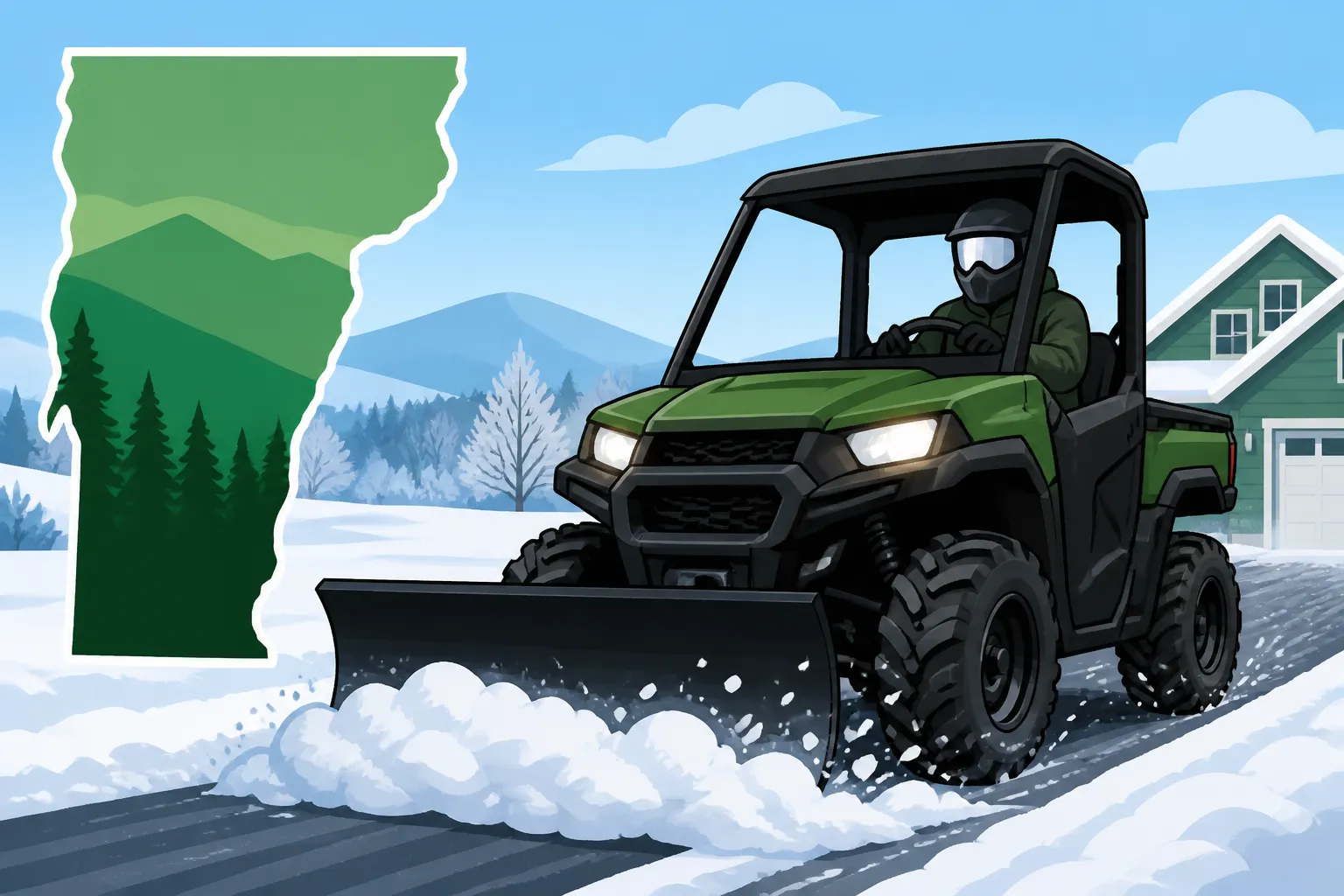
Turning your ATV or UTV into an efficient plowing machine requires the right attachments. The most obvious is the plow itself. You'll find various types, from straight blades that push snow forward or to the side, to V-plows that can cut through deeper drifts and push snow off to both sides. The choice often depends on the type of snow you typically encounter and the width of your driveway. Beyond the blade, you'll need a robust mounting system that attaches securely to your vehicle's frame and a lift system (often a winch) to raise and lower the plow.
Many riders also find it beneficial to add accessories that enhance their plowing experience and protect their machine. Heavy-duty springs or even full suspension upgrades can help compensate for the added weight of the plow and the stress of pushing snow, preventing your front end from sagging excessively. Brands like SuperATV offer a wide range of lift kits, heavy-duty springs, and plow systems designed to handle the rigors of winter work. Upgraded tires with an aggressive tread pattern can provide much-needed traction on slippery surfaces. Investing in good quality equipment not only makes the job easier but also extends the life of your ATV or UTV when used for plowing. Don't forget, [Vermont ATV Equipment Requirements] still apply if you're venturing onto public roads.
Safety First: Visibility, Lights, and Cold Weather Precautions
Safety when plowing, especially in a residential area or near a road, cannot be overstated. Visibility is key. Snowstorms often mean low light, blowing snow, and reduced visibility for everyone. Ensure your ATV or UTV's headlights and tail lights are fully functional and clear of snow. Adding auxiliary lights, like a light bar or a flashing amber beacon, can significantly increase your visibility to others, particularly if you're working near a road or in the early morning or late evening. Reflective tape on your plow blade and machine can also make a big difference.
Beyond visibility, you need to consider your personal safety and the elements. Plowing is cold work. Dress in layers, wear waterproof outer gear, and protect your hands and feet from the cold. A good helmet is always a smart choice, especially if you're operating near roads or on uneven terrain, even if the law only strictly requires it on public roads or trails, as described in [Vermont ATV Helmet Law for Every Rider]. Inform someone of your plowing plans and your intended route, especially if you'll be out for an extended period or in severe weather. Keep a charged cell phone with you, but be aware of potential dead zones in rural Vermont. Lastly, a small emergency kit with blankets, a first-aid kit, and some non-perishable snacks is never a bad idea when working in winter conditions.
Practical Plowing Considerations and Best Practices
Once you've got the legalities sorted and your machine is equipped, there are still some practical considerations to ensure your plowing is effective and considerate.
Planning Your Plowing Route
Before the first flake even falls, or certainly before you start pushing snow, take a moment to plan your plowing strategy. Walk your driveway and identify any obstacles – fire hydrants, mailboxes, decorative rocks, garden beds, or low-hanging branches. Mark them with reflective stakes so they're visible even in deep snow and low light. Decide where you're going to push the snow. You want to avoid creating large snowbanks that block sightlines, impede drainage, or infringe on a neighbor's property. Consider where the snow will melt and drain; you don't want it to refreeze into dangerous ice patches. Think about how many passes you'll need and in what direction to efficiently move the snow off your main path. For machines that primarily move snow to the side, like many ATV/UTV plows, starting in the middle and working your way out can be an effective method for wider driveways. Products from SuperATV often feature adjustable plow angles, giving you more control over your snow removal pattern.
Respecting Neighbors and Public Property
This is a big one, especially in close-knit Vermont communities. While you might be focused on clearing your own path, it's crucial to be a good neighbor. Never push snow from your driveway into the public road. This creates a hazard for other drivers, can impede snowplows trying to clear the main roads, and is often illegal. It can also lead to hefty fines from your town. Aim to stack your snow on your own property, away from traffic and drainage areas. If you're helping a neighbor, make sure you're both clear on where the snow will be deposited to avoid any misunderstandings. Being mindful of noise, especially during early morning or late-night plowing, can also go a long way in maintaining good community relations. Nobody likes to be woken up by a rumbling engine at 4 AM, even if it's for a good cause!
Maintenance and Winterizing Your Machine
Plowing puts a lot of stress on your ATV or UTV. The cold weather, heavy loads, and constant pushing can take a toll. Regular maintenance is key to keeping your machine running reliably throughout the winter. Before the season starts, give your ATV/UTV a thorough once-over: check fluid levels (engine oil, coolant, brake fluid), battery health (cold weather is tough on batteries!), tire pressure, and ensure all lights are working. Inspect your winch cable if you're using one for the plow, and check all bolts and connections on your plow system.
After each plowing session, especially if you've been working in salty or wet conditions, it's a good idea to rinse off your machine and plow blade to prevent corrosion. Pay particular attention to moving parts and electrical connections. A product like a rust inhibitor spray from a company like SuperATV could also be beneficial for protecting metal components. At the end of the winter season, take the time to properly clean, inspect, and store your plow and any other winter attachments. Lubricate pivot points, check for wear and tear, and store them in a dry place. This little bit of effort will ensure your machine and plow are ready to go when the first snow flies next year, rather than leaving you scrambling with breakdowns in the bitter cold.
Disclaimer
This article is for general informational purposes only and does not constitute professional advice. Laws, prices and regulations vary by location and change over time. Consult a qualified professional for guidance on your specific situation.