Vermont Rules for Farm Use on a Road
Oh, the life of a Vermont farmer! You're out there, day in and day out, tending to your land, your animals, and your crops. And let's be honest, your ATV or UTV isn't just a toy; it's a workhorse, a vital piece of equipment that often needs to go from one field to another, or down a short stretch of road to the next pasture. The frustrating part? Trying to figure out the maze of rules that dictate when and how you can legally use your trusty off-road vehicle on Vermont's public roads for farm purposes. This guide is here to clear up that confusion, giving you the real-world rundown on what you need to know to stay compliant and keep your farm running smoothly.
Understanding "Farm Use" for ATVs and UTVs in Vermont
When we talk about using an ATV or UTV on a public road in Vermont, the big question often revolves around why you're on that road. For farmers, this "why" is absolutely critical, as specific exemptions and considerations come into play when the vehicle is being used for legitimate agricultural operations. It’s not about joyriding; it’s about getting work done.
What Constitutes Legitimate Agricultural Operation?
So, what exactly counts as "farm use" in the eyes of Vermont law? Generally speaking, it refers to activities directly related to the production of agricultural commodities or the raising of livestock. Think about hauling feed from the barn to the back forty, moving equipment between adjacent fields, or checking on cattle in a far-flung pasture that requires a brief stint on a town road. It could involve transporting small implements, spraying equipment, or even just driving to repair a fence line that borders a public way. The intent behind your journey is key here. You're not heading to the store for groceries, nor are you going for a scenic ride; you're actively engaged in the daily grind of farming.
It's about the practical necessities of operating a farm. This could include moving a small trailer with sap buckets during sugaring season, transporting tools for repairing a remote pump, or even moving firewood cut from your own property for farm use, not commercial sale. The legal definitions for "farm machinery" or "farm tractor" in other contexts often give us clues, even if ATVs and UTVs aren't explicitly listed in every single statute. The spirit of the law recognizes that agricultural operations often require vehicles to traverse short distances on public ways to remain efficient.
The Key Differences from Recreational Riding
This is where many people get tripped up, and it's vital for farmers to understand the distinction. Recreational riding, even if it’s just exploring your own back forty for fun, falls under a completely different set of rules. When you're trail riding for leisure, your ATV or UTV is subject to all the standard [Vermont ATV Registration Costs and Terms], trail access decal requirements, and specific trail rules set by clubs like VASA. That's a fun day out.
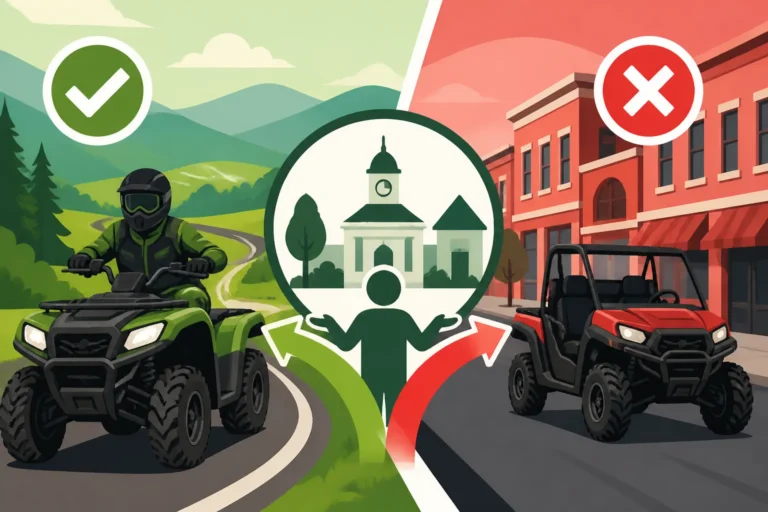
Farm use, however, is about utility. If you're using your UTV to check fences on your property and need to cross a short section of town road to get from one parcel to another, that's farm use. If you then decide to take a detour to enjoy the fall foliage, you've potentially crossed the line into recreational use, and the rules change. The primary purpose of your travel on the road dictates which set of regulations applies. This isn't just a legal nuance; it’s about the spirit of the exemption. These allowances are designed to support agricultural operations, not to create a loophole for general road use. Understanding this distinction can save you a lot of headache if you ever encounter law enforcement.
Road Access and Equipment Requirements for Farm ATVs/UTVs
Even when your ATV or UTV is being used for a legitimate farm purpose, it doesn't mean you can just drive it onto any road without thought. Vermont law still has requirements regarding how these machines operate on public ways, largely centered around safety and making sure other road users are protected.
Navigating Registration and Plates for Farm Machines
For a regular ATV or UTV used for recreational riding, Vermont law is pretty clear: it needs to be registered with the DMV. This involves submitting paperwork, paying a fee, and getting a plate. However, for vehicles primarily used for farming, there can be some specific exemptions or modified requirements. While many states offer broad exemptions for "farm vehicles" from registration if they stay within a certain radius of the farm or only operate on roads for incidental crossing, Vermont's rules can be specific to different vehicle types. For ATVs and UTVs, even for farm use, full registration may still be required if they are operating on town-designated ATV roads.
The general rule for ATVs and UTVs on public roads that have been opened for ATV use by a town selectboard is that they must be registered. This applies whether you're using it for fun or for farm work. The nuance often comes into play with vehicles like tractors or other heavy farm equipment that have broader exemptions. It's not a blanket exemption just because you're a farmer. If your farm machine is an ATV or UTV, and you're using it on roads that are open to ATVs, then it’s highly likely you'll still need to register it. You'll need to know about [Vermont ATV Plates and Where They Go] and ensure it's displayed properly. Always check with your local DMV or town clerk for the latest specifics, as interpretation can sometimes vary, and regulations do evolve.
Essential Equipment for Road-Legal Farm Use
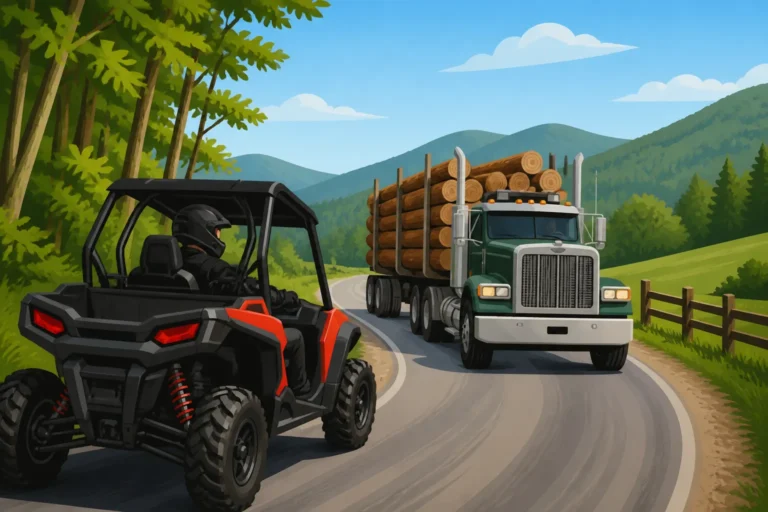
When your farm-used ATV or UTV hits the pavement, safety and visibility become paramount. Even if you're only going a short distance, you're sharing the road with cars, trucks, and perhaps even logging vehicles. Vermont law requires certain equipment for any ATV or UTV operating on a public road, regardless of its purpose. This typically includes working headlights, tail lights, and brake lights, especially if you're operating during dawn, dusk, or night. You’ll want to review [Vermont Headlight and Tail Light Rules]. Reflectors are also a good idea, as is a functional muffler to meet [Vermont Muffler and Noise Rules]. While not always explicitly stated for every class of farm vehicle, common sense and general road safety dictates that mirrors are incredibly helpful for situational awareness.
Think about what makes you visible to others. A brightly colored flag can increase your profile, and if you're hauling anything, ensure your load is secured and doesn't obstruct your lights or license plate. If you're frequently carrying heavy loads or traversing rough terrain, you might want to look into beefing up your machine. Companies like SuperATV offer heavy-duty axles and suspension upgrades that can help your UTV handle the rigors of farm work, ensuring it remains reliable and safe even with extra weight, which in turn contributes to safer road crossings. Remember, just because it’s a farm machine doesn't mean you're exempt from basic safety requirements.
Insurance and Liability Considerations for Farm Vehicles
This is a non-negotiable. Vermont law explicitly states that if you're operating an ATV or UTV on any public road, you must carry liability insurance. This isn't just a suggestion; it's a legal requirement, and it applies to farm use just as it does to recreational riding. The minimum coverage amounts are specific: bodily injury liability of at least $25,000 for one person and $50,000 for two or more people, plus $10,000 for property damage. These limits are designed to protect you and others in case of an accident. You can learn more about [Vermont ATV Insurance Requirements].
It’s crucial to speak with your insurance provider to ensure your policy specifically covers your ATV or UTV for farm use, especially when operating on public roads. Some general farm vehicle policies might not automatically extend to ATVs or UTVs, or they might have different stipulations. You don't want to find yourself in a situation where you've had an accident while moving hay across the road, only to discover your policy doesn't cover that specific scenario. Always carry proof of your insurance with you when operating your machine, as a warden or law enforcement officer may ask to see it during [Vermont Equipment Checks by Police]. It’s about protecting your assets, your livelihood, and your peace of mind.
Special Exemptions and Local Considerations for Vermont Farmers
While the general rules for ATVs and UTVs apply, Vermont law does provide some specific allowances and exemptions tailored to the unique needs of agricultural operations. These often revolve around distance and local governance, recognizing that a "one-size-fits-all" approach doesn't work for farming communities.
Distance Limitations and Permitted Roadways
One common theme in farm vehicle regulations across many states is the concept of "incidental" or "limited distance" use on public roads. While Vermont's ATV laws primarily focus on town-designated routes, it's worth understanding the spirit of farm exemptions. For true farm machinery (like tractors), there are often provisions allowing them to travel on roads for short distances between fields or to gain access to other parts of the farm, even if those roads aren't specifically "opened" for general ATV traffic. The question then becomes, how does an ATV or UTV fit into this? If your town's selectboard has not opened roads for ATV use, but you need to cross a road to access a field, you should still proceed with extreme caution and ideally seek clarification from local authorities.
Many towns, understanding the needs of their agricultural community, might have specific, albeit unwritten, understandings or local ordinances that address these incidental farm movements. It's often about common sense and ensuring minimal disruption to traffic. However, you can't assume an exemption exists. If you plan to use a particular road section frequently for farm access, checking with your town clerk or selectboard is always the safest bet. Some states have "within 25 miles" rules for farm machinery; while not explicitly universal for ATVs/UTVs in Vermont, the principle of limited, necessary travel is usually what guides enforcement. You are much less likely to run into trouble if you are clearly operating for farm purposes, moving slowly, and only traversing the shortest possible distance on the road.
Town Ordinances and Agricultural Specifics
This is a big one. In Vermont, individual towns hold significant power in determining whether ATVs and UTVs can use their roads. This is generally decided by the local [Vermont Selectboards Open Roads Each Year] and enacted through town ordinances. These ordinances often specify which roads are open, during what hours, and under what conditions. What's vital for farmers is understanding if these local rules have any specific carve-outs or considerations for agricultural use. Some towns might explicitly allow farm vehicles on certain roads even if general recreational ATV use is restricted, particularly for crossing purposes or short stretches.
Don't assume your town's general ATV ordinance covers farm use in the way you need. It's your responsibility to know the specific rules in the towns where your farm operates. A quick call to the town clerk or attending a selectboard meeting can provide clarity. You might find that your selectboard is very understanding of the need to move livestock or equipment, and they may have provisions in place or be willing to consider them. For example, a town might have an ordinance like Brighton's [Brighton's ATV Ordinance Explained in Vermont], which sets specific routes and times, but there might be an unwritten understanding or a clause that allows for direct farm access. Being proactive and informed will prevent potential issues.
Practical Tips for Safe and Legal Farm Road Operation
Operating your ATV or UTV for farm use on Vermont roads isn't just about knowing the letter of the law; it's also about practical safety and being a good neighbor. A little foresight and preparation can go a long way in ensuring your machine performs reliably and you avoid any unnecessary run-ins.
Maintaining Your Farm Machine for Road Safety
Your farm ATV or UTV works hard. It hauls, it pulls, it navigates tough terrain. When you take it on the road, even for a short trip, it needs to be road-ready. This means more than just having working lights. Regularly check your tires for proper inflation and wear – especially if you're carrying heavy loads. Make sure your brakes are in excellent working order; you want to be able to stop quickly if a car appears unexpectedly. Steering components should be tight, and any suspension issues should be addressed, particularly if you're using heavy-duty accessories or implements. A company like SuperATV offers robust suspension components that are built to withstand the demands of farming, which translates directly to safer road handling.
Don't forget about basic maintenance like oil changes and checking fluid levels. A breakdown on the side of a public road, especially with a load of feed or equipment, is not only inconvenient but can also create a hazard for other motorists. Keep your machine clean enough that your [Vermont Plate Mounted on the Rear] is always visible, and your lights aren't obscured by mud. A well-maintained machine is a safe machine, both on the field and on the road. This diligence is part of being a responsible vehicle operator, whether you’re driving a pickup truck or a farm-used UTV.
Here’s a quick checklist for road readiness:
| Component | Check Before Road Use |
|---|---|
| Lights | Headlights, tail lights, brake lights all working cleanly. |
| Brakes | Test for effective stopping power. |
| Tires | Proper inflation, no excessive wear or damage. |
| Steering | No excessive play or looseness. |
| Muffler | Intact and within noise limits. |
| Load Security | Any hauled items are safely secured. |
| Visibility | Reflectors, clean plate, maybe an orange flag. |
| Insurance | Proof of valid liability insurance onboard. |
Documenting Your Farm Activities and Staying Informed
In the rare event you're stopped by law enforcement while using your ATV or UTV on a road for farm purposes, being able to articulate and demonstrate that you are engaged in legitimate agricultural activity can be very helpful. This isn't about carrying a binder full of paperwork, but rather being able to clearly explain what you're doing and why it's necessary for your farm operation. Knowing the layout of your property, where you're coming from, and where you're going will be valuable.
Beyond that, staying informed is key. Regulations, especially local town ordinances, can change. The best way to do this is to maintain a good relationship with your town clerk and keep an eye on public notices from your selectboard. VASA (Vermont All-Terrain Vehicle Sportsman’s Association) also offers great resources, even if their primary focus is recreational riding. They often track changes in state law that could impact all ATV and UTV users, including farmers. Remember, ignorance of the law is no excuse. By proactively seeking information and documenting your farm operations, you're not only protecting yourself but also ensuring the longevity of these important farm use allowances in Vermont.
Disclaimer
This article is for general informational purposes only and does not constitute professional advice. Laws, prices and regulations vary by location and change over time. Consult a qualified professional for guidance on your specific situation.