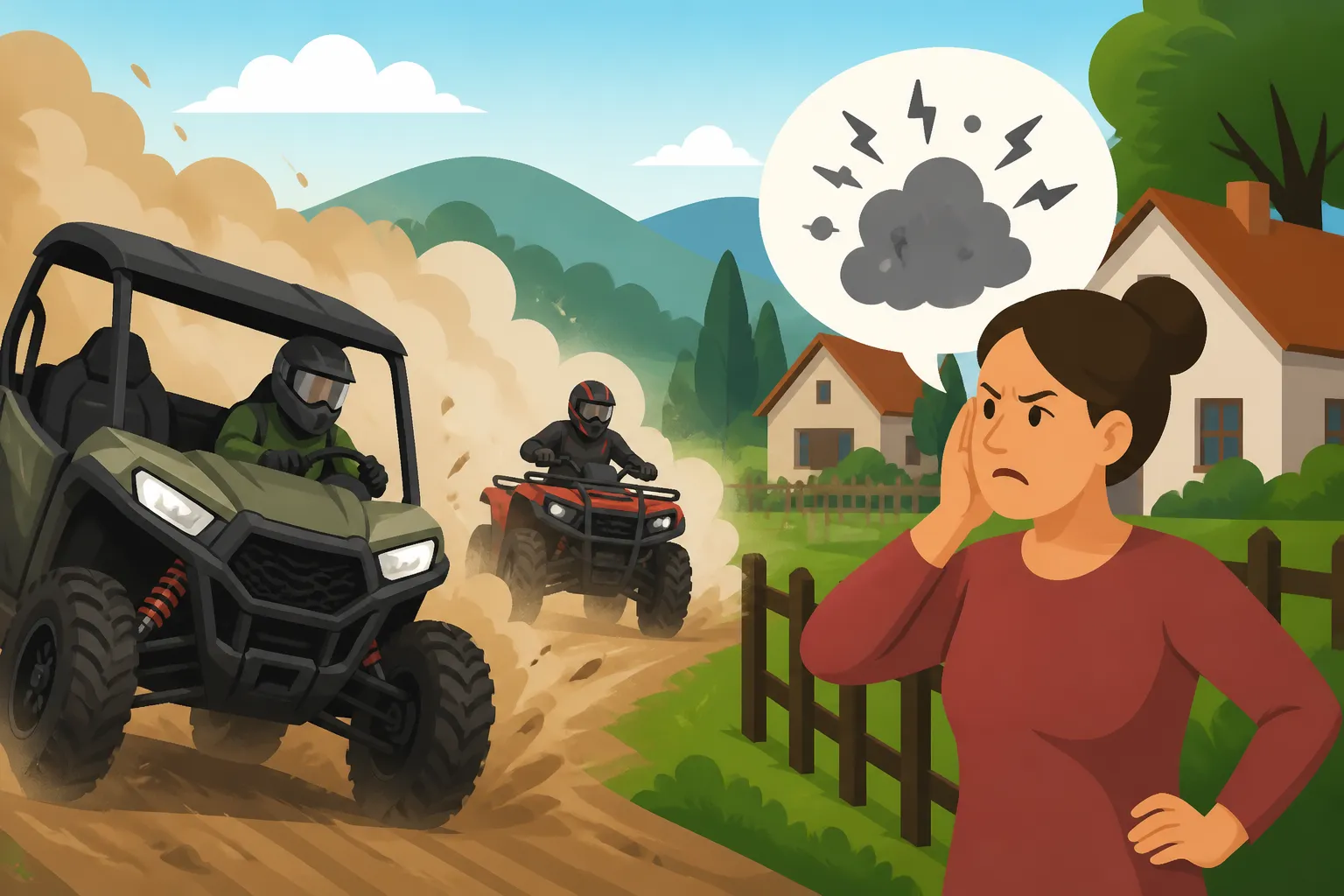
Dust and Noise Complaints in a Village
There's nothing quite like the freedom of exploring Vermont's back roads and trails on your ATV or UTV, but let's be honest, that enjoyment can sometimes rub neighbors the wrong way, especially when it comes to dust and noise. If you've ever felt the tension rise in a quiet village when your machine rumbles by, or seen the cloud of dust you've inadvertently kicked up, you know what I'm talking about. This guide will help you understand why these complaints arise and, more importantly, what practical steps you can take to minimize your impact and maintain positive relationships within our vibrant communities.
Understanding the Impact of Dust and Noise in Residential Areas
When we're out on the trails or designated town roads, it's easy to get lost in the moment. However, for residents living along these routes, the repeated passing of ATVs and UTVs can become a significant disruption. It's not always about outright malice or anti-ATV sentiment; often, it simply comes down to quality of life issues that accumulate over time.
The Reality of Dust
Picture this: a beautiful, sunny summer day in a small Vermont village. Children are playing outside, laundry is hanging on the line, and someone is enjoying a quiet moment on their porch. Then, an ATV or UTV drives by on a gravel road, kicking up a significant plume of dust. While you might be long gone down the road, that dust lingers, settling on everything – cars, windows, garden vegetables, and those clean clothes. Over time, this constant dusting can feel oppressive. It's not just an aesthetic issue; airborne dust can aggravate allergies and respiratory conditions, especially for the elderly or young children. It impacts property values, makes maintaining a clean home a daily battle, and simply makes living along those routes less pleasant. We love our dirt roads in Vermont, but the speed and frequency of some machines can exacerbate the natural dust issues.
The Challenge of Noise
Noise is another major flashpoint. The sound of an engine, especially under acceleration or with certain aftermarket exhaust systems, can carry far in the quiet Vermont countryside. Imagine trying to have a conversation on your porch, enjoy a peaceful morning coffee, or simply sleep in on a weekend, only to be constantly interrupted by the roar of passing machines. For many, it's not the occasional sound, but the cumulative effect of frequent passes, especially during early morning or late evening hours. These sounds penetrate homes, disrupt pets, and interfere with the peaceful enjoyment of one's property. The perception of noise can also be amplified when a machine is traveling at a higher speed or when riders seem to be revving their engines unnecessarily. It truly boils down to respect and understanding that what might be an exhilarating sound for a rider can be an annoyance for a homeowner.
Navigating Local Ordinances and Community Expectations
Vermont's approach to ATV and UTV access on town roads is unique, placing a lot of authority in the hands of local selectboards. This means that while some towns might welcome riders, others might be far more restrictive, and the rules can even vary from one road to the next within the same community. This localized control directly impacts how dust and noise complaints are handled and what riders need to know.
Town Ordinances and Curfews
Many Vermont towns that have opened roads to ATVs and UTVs have also implemented specific ordinances to manage potential conflicts, including those related to noise and dust. These can include [Vermont Town Ordinances That Set Curfews], which dictate specific hours when machines are allowed to operate, often with tighter restrictions in the evenings or early mornings. You might find speed limits, which are usually lower than for cars, explicitly stated in these ordinances, as seen in topics like [Vermont ATV Speed Limits on Town Roads]. Some towns might even specify requirements for mufflers or exhaust systems, falling under general [Vermont Muffler and Noise Rules].
It’s crucial for riders to understand that these rules aren't just suggestions; they are enforceable laws within that town's jurisdiction. Ignoring them can lead to warnings, fines, or even the revocation of access to those roads for all riders. Before you even think about riding in a new village, take the time to check with the town clerk's office or the local selectboard for copies of their specific ATV/UTV ordinances. Ignorance of the law is rarely an excuse.
Engaging with Your Neighbors
Beyond the written laws, there's the unwritten code of community etiquette. Even if you're technically within the letter of the law, consistently generating dust or noise can strain relationships with residents. Many communities hold regular selectboard meetings where citizens can voice concerns, and if numerous complaints about ATVs and UTVs surface, a selectboard might re-evaluate road access. [Vermont Selectboard Hearings on ATVs] are often where these discussions happen, sometimes leading to roads being closed again if issues aren't resolved.
Instead of waiting for a confrontation, consider being proactive. A friendly wave, a genuine smile, or even a quick stop to chat can go a long way. If you live in or frequently ride through a village, understanding the local rhythm can help. Perhaps avoid riding during church services on Sundays, or during the late evening when families are putting children to bed. Showing respect for the community, its residents, and their quality of life is the best way to ensure continued access. After all, the VASA trail system relies heavily on [Vermont Landowner Permission Holds the System Together], and negative public perception can threaten those vital connections.
Practical Solutions for Riders to Reduce Nuisance
The good news is that many dust and noise complaints can be mitigated with some common sense, a bit of investment, and a commitment to responsible riding. It's about being a good neighbor and recognizing that your enjoyment shouldn't come at the expense of someone else's peace.
Taming the Dust Cloud
Dust is an inevitable part of riding on unpaved roads, but there are definitely ways to reduce its impact.
- Slow Down: This is by far the most effective and simplest solution. The faster you go, the more dust you kick up. Adhering to posted speed limits, or even going a bit slower through populated areas, makes a huge difference. Think about it: a gentle roll creates far less dust than accelerating hard.
- Avoid Dry, Windy Conditions: While not always practical, if you have the option, try to avoid riding through residential areas on extremely dry, windy days when dust will be at its worst.
- Invest in Dust Management Accessories:
- Rear Windshields/Panels: For UTVs, adding a rear windshield or panel can significantly reduce the "backdraft" that sucks dust into the cab and swirls it behind your machine. Brands like SuperATV offer a wide range of these, from hard-coated poly to vented options, specifically designed to help contain dust.
- Full Cabs or Enclosures: A full cab enclosure, while an investment, can create a much cleaner and quieter environment inside your UTV and prevent dust from escaping as easily from the passenger compartment. Again, SuperATV is a known provider of these kinds of accessories.
- Dust Deflectors: Some smaller, specific deflectors can be added to certain areas of your machine to redirect airflow and minimize dust uplift.
- Maintain Your Machine: Ensure your tires aren't overly aggressive for road use, which can dig into loose gravel more readily.
Quieting Your Machine
Excessive noise often comes down to exhaust systems and riding habits.
- Stock Exhaust is Best: For street use, your machine's stock exhaust system is generally the quietest option and designed to meet manufacturer noise standards. If you've installed an aftermarket exhaust for performance, consider if it's truly necessary for village riding. If you must have an aftermarket system, look for those specifically advertised as "trail friendly" or "quiet core" options.
- Add a Silencer or Spark Arrestor: Many aftermarket exhaust systems can be fitted with an additional silencer or spark arrestor insert, which helps to reduce noise levels without completely choking the engine. These are relatively inexpensive additions that can make a big difference. Always check for compliance with [Vermont Muffler and Noise Rules].
- Sound Dampening Materials: For UTVs, you can add sound-dampening mats or liners to the floorboards, firewall, and engine compartment. While this primarily benefits the occupants, it can also slightly reduce ambient noise. Some manufacturers, including those like SuperATV, offer kits or materials for this purpose.
- Gentle Acceleration: Just like with dust, aggressive acceleration creates more noise. Ease into the throttle, especially when leaving a stop sign or passing through a residential area. High RPMs generate more sound, so try to keep your engine in a lower, more controlled range.
- Avoid Unnecessary Revving: Resist the urge to rev your engine or perform sudden maneuvers that create loud bursts of sound. This is often perceived as disrespectful and can quickly escalate a nuisance into a complaint.
- Regular Maintenance: A well-maintained engine runs smoother and often quieter than one that is struggling. Keep your exhaust system in good repair, checking for leaks or loose baffles that can increase noise.
Here's a quick comparison of common issues and solutions:
| Complaint Type | Common Causes | Rider Solutions |
|---|---|---|
| Dust | High speed on dry gravel, lack of rear panel | Slow down (most effective), add a UTV rear windshield/panel (e.g., from SuperATV), install a full cab enclosure, avoid overly aggressive tires on roads, avoid riding on extremely dry/windy days if possible. |
| Noise | Aftermarket exhaust, aggressive acceleration, | Use stock exhaust or quiet aftermarket option, install an exhaust silencer/spark arrestor, add sound-dampening materials to UTV, use gentle acceleration, avoid unnecessary revving, perform regular engine/exhaust maintenance, observe [Vermont ATV Speed Limits on Town Roads] and [Vermont Town Ordinances That Set Curfews]. |
The Bigger Picture: Maintaining Access and Reputation
Ultimately, addressing dust and noise complaints isn't just about avoiding a ticket or a grumpy look. It's about securing the future of ATV and UTV riding in Vermont. Our ability to enjoy these machines on public roads and the extensive [Vermont ATV Trails: The VASA System] is a privilege, one that can be easily jeopardized by a few inconsiderate riders.
Protecting Trail Access
The VASA trail system, and many local riding opportunities, rely heavily on permission from private landowners and the continued support of town selectboards. When a community experiences frequent issues with dust and noise, it erodes public support for ATV and UTV use. This can lead to selectboards deciding not to renew their annual road designations, as outlined in topics like [Vermont Selectboards Open Roads Each Year], or to even close existing routes. Every negative interaction, every complaint, has the potential to chip away at the access we currently enjoy. Conversely, when riders are consistently respectful and mindful of their impact, it strengthens the reputation of the entire riding community and fosters goodwill.
Being a Responsible Ambassador
Each time you ride your ATV or UTV, especially through a village or near homes, you are an ambassador for the entire sport. Your actions, whether positive or negative, reflect on all riders. By taking steps to reduce your dust and noise footprint, you're not just being polite; you're actively contributing to a positive image. This includes adhering to [Vermont Trail Etiquette on Private Land] and local road rules, ensuring your [Vermont Plate Mounted on the Rear] is visible, and being mindful of your speed and sound.
If you encounter someone who seems upset, a polite acknowledgement and an explanation that you're trying to be considerate can often diffuse tension. Remember that many [Vermont Noise Complaints About ATVs] come from a place of frustration, not necessarily animosity towards the sport itself. By working together as a community of riders and understanding the concerns of residents, we can ensure that ATV and UTV riding remains a cherished and accessible pastime in the beautiful state of Vermont for years to come.
Disclaimer
This article is for general informational purposes only and does not constitute professional advice. Laws, prices and regulations vary by location and change over time. Consult a qualified professional for guidance on your specific situation.