Machines Too Wide for a Vermont Village Street
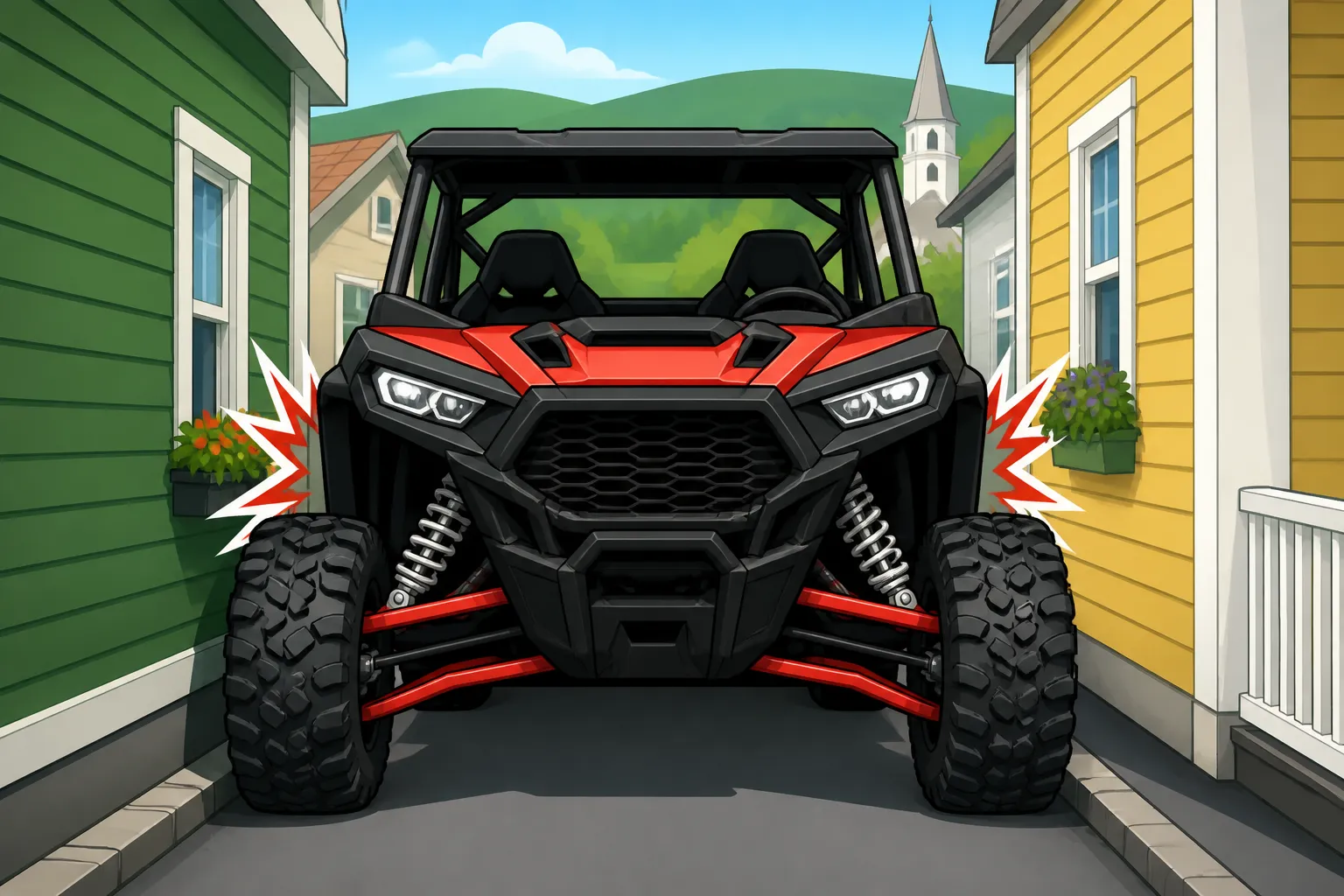
It’s a scenario many Vermont ATV and UTV riders dread: you’re planning a fun day out, mapping a route that connects beautiful trails through a quaint village, only to realize your machine might be too wide for those specific town roads. It's frustrating to invest in a powerful, stable side-by-side, only to find that its very dimensions could limit where you can legally ride. This guide is here to walk you through Vermont's regulations regarding ATV and UTV width, especially as it pertains to navigating the charming, but sometimes restrictive, village streets.
Understanding Vermont's ATV and UTV Definitions and Width Limits
Vermont's regulations for ATVs and UTVs, often referred to as All-Terrain Vehicles (ATVs) and All-Terrain Side-by-Sides (ASVs), are designed to balance rider access with public safety and road integrity. It's not just about what you call your machine; it's about its physical characteristics that determine where and how you can ride it, especially on designated town roads.
The Standard Vermont ATV Definition
Historically, Vermont has had a fairly straightforward definition for an ATV. These are generally single-rider machines, or sometimes two-up models, designed for off-road use. They typically have handlebars for steering, a straddle seat, and four low-pressure tires. The crucial element for many riders, especially those with larger, more modern machines, comes down to dimensions. While the classic ATV often falls within manageable width limits, the definition itself can change how your machine is categorized and what fees apply, especially with recent legislative updates. Understanding [What Vermont's 2025 Act 18 Changed for Riders] is key here, as definitions can shift, impacting where you can legally operate your machine.
For a long time, the critical width dimension for an ATV in Vermont was often considered to be 50 inches. This figure stemmed from older classifications and trail systems designed for narrower vehicles. However, with the evolution of the industry, many contemporary ATVs, and certainly almost all UTVs or side-by-sides, exceed this width. This disparity is precisely where the challenges for riding on village streets arise. It's not uncommon for a new ATV to push 60 inches wide straight from the factory, and after adding accessories or certain tire setups, it can be even wider.
Vermont's ASV Classification and Its Width Implications
Vermont introduced a classification for All-Terrain Side-by-Sides (ASVs), which specifically addresses those larger, multi-seat, utility-style machines that are increasingly popular. These are the machines often referred to as UTVs, side-by-sides, or sometimes "recreational off-highway vehicles" (ROVs). Unlike traditional ATVs, ASVs have a steering wheel, non-straddle seating (like bucket seats or a bench), and can carry multiple passengers side-by-side.
The ASV classification recognizes that these machines are inherently wider and heavier than traditional ATVs. While the state statute allows for ASVs to be up to 72 inches wide and 2,500 pounds dry weight, these are maximum limits for the ASV class generally. It doesn't automatically mean that every town or village road will accommodate a machine of that width. Many ASVs, especially popular models like a Polaris RZR or a Can-Am Defender, easily reach or exceed 60 inches in width. Some of the more robust models, particularly those designed for serious off-roading or with aftermarket modifications, can push that 72-inch limit, or even exceed it if not careful. The distinction between [Vermont ATV Versus ASV Classes] is more than just semantics; it directly impacts registration costs and, more importantly for this discussion, where you can legally ride.
It's important to remember that these state-level definitions primarily dictate how a machine is registered and what general equipment requirements apply (like headlights, tail lights, and brakes). They set the upper bounds for what Vermont considers a recreational off-road vehicle. However, when it comes to riding on specific town or village streets, local ordinances can introduce further, often more restrictive, limitations on width.
The Shifting Landscape: What Changed in 2025
Recent legislative changes in Vermont, particularly Act 18, have brought some notable updates to how ATVs and ASVs are defined and regulated. These changes, effective in 2025, aim to clarify classifications and potentially address the growing size of off-road vehicles. While the specifics are always best checked on the Vermont DMV website, the general thrust has been to fine-tune the definitions to ensure appropriate regulation. For instance, there's been discussion around [Vermont's 72-Inch, 2,500-Pound ATV Definition] and how machines falling outside these parameters might be treated.
This updated framework means that a machine that was previously considered an ATV might, under the new definitions, fall into the ASV category, or vice versa, based on its width and weight. It's crucial for owners of larger machines, especially those close to the 72-inch mark, to understand these new classifications. Even if your machine is registered correctly as an ASV, a village street ordinance might still impose a narrower width restriction, creating a conflict between state classification and local access. This is particularly relevant for those who’ve upgraded or modified their machines with wider tires or suspension kits, perhaps from brands like SuperATV, which might inadvertently push them over a local limit without them realizing it.
The Nuances of Village and Town Road Ordinances
While the state sets broad definitions for ATVs and ASVs, the decision to open specific roads to these machines, and under what conditions, largely rests with individual towns and villages. This local control means that riding rules can vary significantly from one community to the next, creating a patchwork of access that can be confusing for riders.
How Towns Designate Roads for ATV Use
In Vermont, towns and villages have the authority to designate their roads for ATV and ASV use. This is typically done through a formal process involving the selectboard or village trustees. They will hold public hearings, consider local input, and then pass an ordinance that explicitly states which roads, or segments of roads, are open to these vehicles. It’s not a one-time decision; these designations usually need to be renewed annually. This annual review is important because what was open last year might not be open this year, or the conditions might have changed. [How a Vermont Selectboard Opens a Road to ATVs] details this process, highlighting the local autonomy involved.
When a town or village opens a road, they often include specific stipulations in their ordinance. These can cover everything from operating hours and speed limits to age restrictions and, yes, vehicle dimensions. It's not uncommon for a town to say, "ATVs and ASVs are allowed on Smith Street, but only if they are no wider than 60 inches," or even stricter, "no wider than 50 inches." These width restrictions are often put in place for a few key reasons:
- Road Width and Infrastructure: Many older village streets, particularly in historic towns, are simply not designed for wider vehicles. They might be narrow, have tight turns, or feature limited shoulder space. Allowing very wide machines could impede traffic flow, make passing difficult, and potentially damage road infrastructure or private property adjacent to the road.
- Safety Concerns: Wider machines might pose a greater perceived risk to pedestrians, bicyclists, and other vehicles on narrow, shared roadways. Local officials often prioritize pedestrian safety, especially in bustling village centers.
- Noise and Aesthetic Impact: While width isn't directly related to noise, larger machines can sometimes be associated with more powerful engines or aftermarket exhaust systems that lead to increased noise complaints. Towns might use width restrictions as one way to manage the overall impact of recreational vehicles in their communities.
- Preservation of Character: Many Vermont villages pride themselves on their quaint, historic character. Some local leaders and residents feel that very large off-road machines detract from this aesthetic or disturb the peaceful atmosphere.
Specific Village Ordinances and Width Restrictions
It's vital for riders to understand that a statewide registration, even for a wide ASV, doesn't override local ordinances. Your [Vermont ATV Registration Cost] pays for your legal right to operate on designated trails and state-approved roads, but specific town rules dictate access on their local network. Take, for example, the town of Brighton, which has been proactive in regulating ATV use. [Brighton's ATV Ordinance Explained in Vermont] provides a good insight into how a town can implement detailed rules. While Brighton's ordinance may not explicitly state a width limit for all its open roads, it could specify it for particular village streets or sensitive areas.
Imagine you're riding a 64-inch wide side-by-side, perhaps with an aftermarket lift kit or wider tires installed from a reputable brand like SuperATV, making it even more stable and capable on trails. You've diligently registered it and purchased your [Vermont TAD: The Trail Access Decal Explained]. You're riding the VASA trail system and come to a section that uses a village street to connect to the next trail segment. If that village has an ordinance limiting machines to, say, 58 inches on that particular street, your 64-inch machine is now in violation. This isn't just a theoretical problem; it’s a very real headache that can lead to fines and turning around.
Here's a simplified look at how different scenarios might play out with local ordinances:
| Location Type | Typical State Width Limits | Local Ordinance Impact | Rider Implication |
|---|---|---|---|
| Designated VASA Trails (Private Land/State Easement) | Generally allows full ASV width (up to 72") | Minimal, as trails are typically wider | Follow trail rules, typically wide enough |
| Open Town Roads (Rural) | Generally allows full ASV width (up to 72") | May have specific local speed/time limits, less common for width restrictions due to rural nature. | Usually fine for wider machines, but always check local ordinance. |
| Village Streets (Designated as Open) | Generally allows full ASV width (up to 72") | Highly likely to have stricter width restrictions (e.g., 50", 58", 60") | Critical area for wider machines. Must check each village's ordinance. |
| Closed Roads (Any type) | N/A | No ATV/ASV access allowed at all | Do not ride here, regardless of width. |
This table illustrates why village streets are the primary concern. Even if your machine is legally an ASV at the state level, its physical dimensions can be a barrier at the local level.
The Consequences of Riding an Oversized Machine on Restricted Roads
Riding a machine that exceeds a local width restriction on a designated village street isn't just an inconvenience; it can lead to tangible penalties. Local law enforcement, including town constables and state wardens, are empowered to enforce these ordinances.
The most immediate consequence is often a citation and a fine. These fines can vary depending on the municipality and the severity of the violation, but they are never pleasant. Beyond the financial hit, there's the inconvenience and frustration of having your ride cut short, or even worse, being required to remove your machine from the area. In some cases, repeated violations could lead to more significant penalties or even impoundment, although this is less common for a simple width violation compared to reckless operation.
Moreover, riding an oversized machine on a narrow village street can create a public nuisance. It could lead to complaints from residents about congestion, safety concerns, or damage to shoulders and verges. These complaints, in turn, can prompt selectboards to revisit their ordinances, potentially leading to the closure of previously open roads or the imposition of even stricter rules. As riders, it’s in our best interest to respect local regulations to ensure continued access to the trail system. Ignoring these rules jeopardizes the entire network that clubs and landowners work so hard to maintain.
Navigating Roads When Your Machine Exceeds Width Limits
So, what do you do if your beloved side-by-side, maybe a Polaris General or a Kawasaki Teryx, measures 65 inches wide and you know a connecting village street has a 60-inch limit? It's a common dilemma, but there are practical ways to manage it and still enjoy Vermont's incredible riding opportunities.
Planning Your Route with Width in Mind
The absolute best defense against width-related road closures is proactive route planning. Before you even load your machine onto the trailer, get out those maps!
- Consult VASA Maps and Club Resources: The Vermont ATV Sportsman's Association (VASA) and its member clubs are your best friends here. They maintain and publish trail maps, often indicating which town roads are part of the designated network. Many clubs will also provide specific information about local ordinances or known restrictions. For instance, the Tri-County ATV Club around Island Pond, or the Border Line Ridge Riders near Newport, often have detailed local knowledge. Look for maps that clearly mark road segments and any associated restrictions.
- Check Local Town Websites: While VASA and club maps are excellent, for the most up-to-date information on specific village street ordinances, you might need to check the individual town's website. Look for "Selectboard Minutes," "Ordinances," or "ATV/UTV Rules." This can be a bit more legwork but is crucial for complete peace of mind. Some towns even post their specific [Vermont ATV Road Rules by Town].
- Identify Alternate Routes: If you discover a critical village street on your planned loop is too narrow for your machine, look for alternatives. Can you bypass that section using another designated road? Is there a legal trail that runs parallel, avoiding the village center entirely? Sometimes, a slightly longer route means a legal and stress-free ride.
- Consider a Staging Area Change: If a particular village is simply impassable for your wider machine, you might need to consider staging your ride from a different trailhead that avoids that specific village street altogether. This might mean driving a few extra miles, but it can save a lot of frustration.
What to Do If You Encounter a Restricted Road
Even with the best planning, sometimes you find yourself face-to-face with a "No ATVs Over 60 Inches Wide" sign on a road you thought was open. It happens, especially with the dynamic nature of local ordinances and signage.
- Turn Around: The simplest and safest solution is to turn around and find an alternate route. Trying to "just sneak through" is never a good idea. You risk a fine, public backlash, and jeopardizing future access for all riders.
- Consult Your Map/GPS: Take a moment to review your map or GPS device. Are there any nearby roads that are open and don't have the same width restrictions? Perhaps a Class 4 road (which can sometimes be opened to ATVs) runs alongside the village. [Vermont ATV Rules on a Class 4 Road] might provide an alternative.
- Contact Local Authorities (If Safe and Practical): In a pinch, if you're truly lost and unsure, you might try to call the local police department (non-emergency number) or a VASA club contact, if you have one. However, this is generally a last resort and often not practical while on a ride. It's better to have planned ahead.
Remember, respecting the rules, even when they're inconvenient, is paramount. The relationship between riders, landowners, and local communities in Vermont is a delicate one, built on trust and mutual respect.
Considerations for Modifying Your Machine
Many riders enjoy customizing their ATVs and ASVs, often to enhance performance or comfort. However, modifications can directly impact your machine's width, which is especially important when considering Vermont's road rules.
- Tires and Wheels: Upgrading to wider tires or wheels with a different offset can easily add several inches to your machine's overall width. While these might improve traction or stability on rugged trails, they could push you over a village street limit. If you've got some aggressive beadlock wheels and tires from SuperATV, for instance, measure your total width carefully!
- Suspension Lifts and A-Arms: Some aftermarket suspension components, especially long-travel kits or wider A-arms, are designed to increase the track width of your machine. This enhances stability, particularly for high-speed cornering or tackling challenging terrain. However, just like wider tires, these modifications will make your machine wider.
- Fender Flares: While designed to keep mud off, some larger fender flares can also add a small amount of width. Every inch counts when you're close to a local limit.
Before making any modifications that affect your machine's width, consider where you primarily ride. If a significant portion of your riding involves connecting trails via village streets in Vermont, it might be wise to prioritize modifications that keep your width in check. Or, if you absolutely need a wider stance for your type of riding, then plan your routes meticulously to avoid those restrictive village roads entirely. It's a balance between performance, aesthetics, and legal access.
Practical Advice for Wide Machine Owners in Vermont
Owning a wider ATV or UTV in Vermont doesn't mean you're limited to only a handful of trails. It simply means you need to be a more informed and strategic rider. With a little extra effort, you can enjoy all the Green Mountain State has to offer.
Double-Check Your Machine's Actual Width
Don't just rely on manufacturer specifications, especially if you've made any modifications. Grab a tape measure and physically measure your machine from the widest point (usually the outside edge of your tires or fender flares) when it's sitting on level ground.
- Manufacturer Specs vs. Reality: A manufacturer might state a machine is 60 inches wide, but that might be without accessories, specific tire setups, or even just a slight manufacturing variance. Your [Vermont Machines Wider Than 72 Inches] discussion is relevant here, but also for machines within the ASV limits, knowing the precise measurement is critical.
- Account for Accessories: A simple set of mud flaps or even certain cargo racks can add an inch or two that might make all the difference. Always measure the total width as it would be presented on the road.
This simple step ensures you have accurate information when cross-referencing against local ordinances. You don't want to guess and end up with a ticket.
Utilize Online Resources and Community Forums
The ATV and UTV riding community in Vermont is passionate and often very helpful. Leverage these resources:
- VASA Website and Social Media: VASA's official website is a treasure trove of information. They often post updates on trail conditions, closures, and even changes to local road access rules. Follow their social media channels for real-time alerts.
- Local Club Groups: Many individual ATV clubs in Vermont have their own websites or active social media groups (e.g., Facebook groups). These are fantastic places to ask specific questions about local width restrictions, trail conditions, or recommended routes for wider machines. Members often share firsthand experiences.
- Online Forums: General Vermont ATV/UTV forums or online discussion boards can also be a good source of information, though always verify advice from official sources when it comes to legalities.
By staying connected with the riding community, you can often get ahead of potential issues and find solutions or workarounds that you might not discover on your own.
Advocating for Wider Access (Where Appropriate)
While respecting existing rules is crucial, being an engaged member of the riding community also means participating in discussions about future access. If you believe a particular village street could safely accommodate wider machines, and you have data or arguments to support it, consider engaging with your local selectboard or village trustees.
- Attend Public Hearings: When towns are discussing ATV/ASV access, attend their public hearings. This is your opportunity to voice your opinion respectfully and provide constructive feedback.
- Join a Local Club: Becoming a member of a local ATV club is one of the most effective ways to have your voice heard. Clubs often work directly with towns, landowners, and VASA to expand and maintain the trail system. They are often the best advocates for rider access.
- Offer Solutions: Instead of just complaining about restrictions, propose solutions. Could certain streets be opened only during off-peak hours? Could a clear bypass route be established? Could better signage clarify routes for wider machines?
It's a slow process, and there are no guarantees, but active and respectful participation can sometimes lead to positive changes for wider machine access in the long run. The goals of most riders are to enjoy the outdoors responsibly, and by working with communities, we can ensure that future generations can also experience the beauty of Vermont's trails.
Disclaimer
This article is for general informational purposes only and does not constitute professional advice. Laws, prices and regulations vary by location and change over time. Consult a qualified professional for guidance on your specific situation.