Waiver Fee or Full Fine for a Vermont Violation
There's nothing quite like the freedom of exploring Vermont's beautiful landscapes on your ATV or UTV, but that sense of adventure can quickly turn to anxiety when you see a law enforcement officer waving you over. One of the biggest worries for any rider is getting a ticket, and understanding whether you're facing a simple waiver fee or a full-blown fine that could land you in court is absolutely crucial. This guide is here to walk you through Vermont's system, helping you understand the differences, what to do if you receive a citation, and most importantly, how to avoid those unwelcome surprises in the first place.
Understanding Vermont's ATV Enforcement Landscape
When you're out riding in Vermont, whether it's on a designated VASA trail or a town road opened to ATVs, you're operating within a set of rules designed to keep everyone safe and preserve access for future generations. Knowing who enforces these rules and what common violations they look for can help you stay out of trouble. It’s not just about knowing the big laws; it's about understanding the practical realities on the ground.
Who's Enforcing the Rules on Vermont Trails and Roads?
In Vermont, ATV and UTV enforcement isn't just handled by one type of officer. It's a team effort, and depending on where you're riding, you might encounter different authorities. This can sometimes lead to slight variations in how things are handled, though the core laws remain the same.
First and foremost, Vermont State Police and Fish & Wildlife Wardens are the primary enforcers of statewide ATV laws. These are the officers you'll most likely see on remote trails or patrolling larger areas. Wardens, in particular, are deeply familiar with the nuances of trail riding regulations, environmental protection, and off-road vehicle laws. They're often focused on things like registration, proof of a Trail Access Decal (TAD), safety equipment, and ensuring riders are staying on designated trails and not trespassing. They might ask to see your registration and proof of insurance, and confirm you have your [Vermont ATV Helmet Law for Every Rider] compliance in order.
Beyond state-level enforcement, many towns that open their roads to ATVs also have local police departments or town constables who enforce municipal ordinances. These local officers are often more focused on specific town rules, such as speed limits on town roads, curfews, noise restrictions, or specific routes that are open or closed within their jurisdiction. For example, a town constable might be more likely to issue a ticket for riding past a posted curfew than a Fish & Wildlife Warden might be in a remote state forest area. Understanding these layers of enforcement is key to navigating Vermont's diverse riding landscape.
Common Violations That Lead to a Ticket
Nobody wants to get a ticket, especially when you're just trying to enjoy a ride. But knowing the most common reasons riders are pulled over can help you proactively avoid issues. Many of these boil down to basic compliance and common sense.
One of the most frequent violations is riding an unregistered machine or failing to display a valid [Vermont ATV Plates and Where They Go]. Every ATV and UTV operated in Vermont, even by non-residents, needs to be registered with the DMV, unless it's strictly on private property and not accessing public trails or roads. Closely related is the absence of a current [Vermont Trail Access Decal Explained] (TAD) if you're riding on VASA trails. This decal shows you've paid your club dues and are authorized to use the trail network. Many riders often confuse registration with the TAD, but you need both to legally access the VASA system.
Other common infractions include riding on roads or trails not designated for ATVs, especially in towns that have not adopted specific ordinances to open their roads. Always check local maps and signage. Helmet law violations are also a big one; Vermont has strict helmet requirements for all riders, regardless of age. Noise violations, particularly with aftermarket exhaust systems that exceed legal decibel limits, can also draw unwanted attention from both law enforcement and irritated residents. Finally, operating an ATV in a reckless manner, speeding on town roads, or riding under the influence are serious offenses that almost always result in a full fine and court appearance, not just a waiver.
The Vermont Waiver Fee System: Your First Chance
So, you've been pulled over, and the officer is writing you a ticket. It's a moment no one enjoys. But understanding if you have the option of a "waiver fee" can make a big difference in how you proceed. This system is designed to streamline minor infractions and offer riders a chance to resolve the issue quickly and with less hassle.
What Exactly Is a Waiver Fee?
Imagine you've been stopped for a minor infraction, maybe a forgotten registration decal or a plate that's become obscured by mud—a common occurrence when you’re really enjoying the Vermont trails. In many cases, for these types of less severe violations, the officer might issue a ticket with a waiver option. A waiver fee is essentially an offer from the state (or municipality) to allow you to admit guilt for a specific, minor offense and pay a pre-determined, usually reduced, penalty without having to go to court.
Think of it as a plea bargain for small-scale infractions. By paying the waiver fee, you're agreeing that you committed the violation, and in return, the state agrees not to pursue further legal action, such as requiring you to appear before a judge. This process saves both the rider and the court system time and resources. It's often printed directly on the citation, clearly stating the amount and the deadline for payment. It also typically has instructions on how to pay, whether by mail or online. The critical thing to remember is that by paying the waiver, you are admitting guilt to the violation listed.
When Is a Waiver Fee Offered?
Waiver fees are generally reserved for less serious offenses, often those that are administrative in nature or involve minor safety infractions that don't pose an immediate and significant danger to others. For example, if you're cited for not having your [Vermont ATV Registration Cost] decal properly affixed, or if your headlights weren't working due to a recent trail mishap, these might fall under the waiver system. An officer might also offer a waiver for a first-time violation of a local noise ordinance or for riding on a restricted town road segment if it was clearly an honest mistake and you were cooperative.
The decision to offer a waiver fee often comes down to the discretion of the issuing officer and the specific nature of the violation. If you were polite, cooperative, and the infraction wasn't egregious, an officer is more likely to give you the option. However, if the violation involves reckless behavior, significant damage, or is a repeat offense, a waiver fee is highly unlikely. It's also important to note that certain serious violations, like operating under the influence or extreme speeding, will never come with a waiver option; those will always require a court appearance.
How to Pay a Vermont Waiver Fee
If you receive a ticket with a waiver option and decide it's the best route for you, the process is usually straightforward. First, carefully read the citation. It will clearly indicate if a waiver option is available and what the amount is. You'll typically find instructions on the back or bottom of the ticket explaining how to submit your payment.
Most often, you'll have a specific timeframe, usually 20 to 30 days, to pay the waiver fee. You can usually pay by mailing a check or money order, or increasingly, through an online payment portal linked to the Vermont Judiciary's website or the specific town's municipal court. Make sure to include the citation number and any other identifying information requested. It's crucial to pay within the specified deadline. If you miss the deadline, the waiver option usually expires, and your case might automatically be scheduled for a court hearing, requiring you to appear and potentially face a higher fine or additional court costs. Always keep a copy of your citation and proof of payment for your records. This ensures you have documentation that the matter has been resolved.
Why You Might Face a Full Fine and Court Appearance
While waiver fees offer a convenient way to handle minor infractions, there are many situations where a ticket will come with a mandatory court appearance and the potential for a full fine. These scenarios typically involve more serious violations that Vermont takes very seriously, reflecting a greater risk to safety or public order.
Serious Violations and Their Consequences
When you're cited for a serious ATV or UTV violation in Vermont, the waiver option is off the table. These are offenses that law enforcement and the courts deem significant enough to warrant a formal legal process. Think about infractions like reckless endangerment, which might involve riding at excessive speeds through a populated area or performing dangerous stunts near others. Operating under the influence (OUI) of alcohol or drugs on an ATV is another grave offense. Just like with a car, [Vermont DUI Law and ATVs] are strict, and an OUI conviction can lead to significant fines, loss of driving privileges, and even jail time.
Another serious category includes significant property damage or environmental violations, such as riding in prohibited wetlands or tearing up private property. Trespassing repeatedly or after being warned can also escalate quickly. If your machine is involved in an accident with injuries, or if you refuse to comply with an officer's lawful orders, these situations will almost certainly result in a summons to court. These violations aren't just about paying a fee; they can have lasting consequences, impacting your record, insurance rates, and potentially your freedom to ride in Vermont.
Declining the Waiver: What Happens Next?
Even for minor infractions where a waiver fee is offered, you always have the right to decline it. This means you are choosing to contest the ticket, essentially saying "I am not guilty" or "I believe there's a valid defense for my actions." While it's your right, it's also a decision with implications.
If you decline the waiver, your case will be scheduled for a court hearing. The citation will usually provide information on the court location and the date by which you must notify the court of your intention to contest. At the hearing, you'll have the opportunity to present your side of the story, offer evidence, and potentially question the issuing officer. This is where you might bring witnesses or photographic evidence to support your claims. However, be prepared: if the judge finds you guilty, the fine imposed might be higher than the original waiver fee. You could also incur additional court costs and fees. It's a gamble, and it's a decision that should be weighed carefully, ideally after consulting with someone knowledgeable about Vermont traffic or ATV laws.
Additional Costs Beyond the Fine
When you're dealing with a full fine and a court appearance, the financial impact often extends far beyond the initial penalty amount. These additional costs can quickly add up, turning a simple ticket into a much more expensive ordeal.
First, there are court fees. Every time you step into a courtroom, there are administrative costs associated with processing your case, filing documents, and the court's time. These fees are usually added on top of any fine if you are found guilty. Then there are potential legal fees. If you decide to hire an attorney to represent you, which is highly recommended for serious violations, their fees can range from hundreds to thousands of dollars, depending on the complexity of the case and the attorney's experience. This is a significant expense that isn't present when you simply pay a waiver fee.
Beyond immediate legal costs, a conviction can have long-term financial repercussions. Your ATV or UTV insurance premiums could increase significantly, especially for moving violations or those indicating reckless behavior. Some serious offenses might even lead to your insurance company dropping your coverage altogether, making it difficult and expensive to find new insurance. Lastly, there's the cost of your time—taking time off work to attend court hearings, consulting with lawyers, and dealing with the stress of the legal process. When considering declining a waiver or facing a serious charge, always factor in these hidden, but very real, costs.
Preventing Violations and Protecting Your Ride
The best way to avoid the headache of waiver fees, full fines, or court appearances is, of course, to prevent violations from happening in the first place. A little preparation and knowledge can go a long way in ensuring your Vermont ATV adventures are memorable for all the right reasons.
Your Essential Pre-Ride Checklist
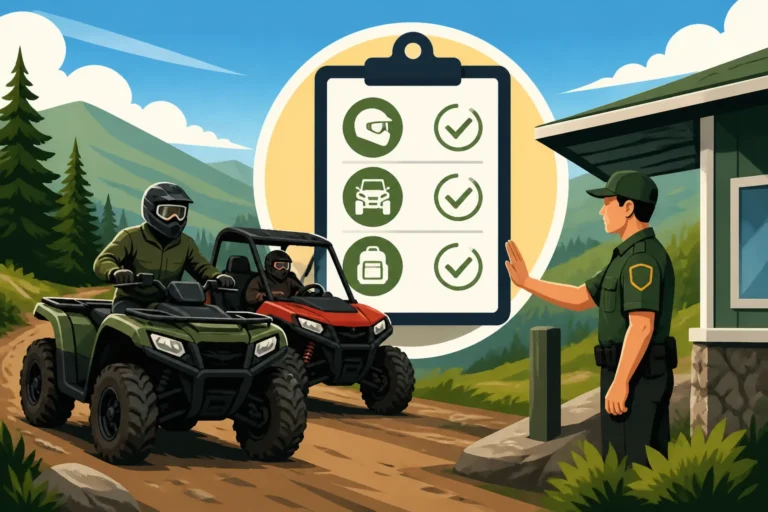
Before you even start your engine, a thorough pre-ride checklist is your best friend. This isn't just about making sure your machine runs well; it's about ensuring legal compliance and safety. First and foremost, check your registration and [Vermont Trail Access Decal Explained]. Are they current? Are they properly affixed and clearly visible? An obscured or missing decal is an easy way to get stopped.
Next, verify your insurance. Do you have proof of [Vermont ATV Insurance Requirements] on hand? Vermont requires liability insurance for ATVs operated on public lands or designated roads. Check your safety gear: Is your helmet DOT-approved and in good condition? Do you have eye protection? Ensure your machine itself is compliant: Are your headlights, taillights, and brake lights working? Is your muffler free of leaks and within legal noise limits? Companies like SuperATV offer a range of aftermarket parts, including quiet exhaust systems and durable lighting kits, that can help you meet these requirements while enhancing your ride. Finally, make sure you have a map of your intended route and know which trails and roads are legally open to ATVs. Taking these few minutes before each ride can save you hours of trouble later.
Knowing Your Local Ordinances: Vermont ATV Road Rules Vary
This is where riding in Vermont can get tricky, and where a lot of riders inadvertently get into trouble. Unlike a blanket statewide rule for all roads, [Vermont ATV Road Rules by Town] can vary dramatically from one municipality to the next. What's perfectly legal in one town might get you a ticket just a few miles down the road in another.
Many towns, especially in the Northeast Kingdom, have opened certain class 3 and 4 roads (dirt and gravel roads) to ATV traffic, often with specific speed limits, curfews, and designated routes. However, other towns might have no open roads at all, or might only permit ATVs for specific purposes like farm use. It is YOUR responsibility as a rider to know the local ordinances of every town you plan to ride through. The VASA website often has updated maps, and many town clerks' offices can provide information on their local rules. Don't assume that because one dirt road is open, all dirt roads are. Pay attention to signage—posted signs indicating "ATV Trail" or "No ATVs" are your ultimate guide. Also, be aware of machine specifications; some towns might have specific width or weight limits for vehicles on their roads. Reputable suppliers such as SuperATV often provide details on compliance for their products that help you understand if your machine's modifications might push it outside a town's specific ordinance.
The Importance of VASA Membership and Trail Etiquette
Beyond legal requirements, being a responsible rider deeply connected to the Vermont ATV community can be your best defense against violations. Joining a VASA (Vermont ATV Sportsman's Association) club is about more than just getting your Trail Access Decal. It connects you to the network of volunteers who maintain the trails, liaise with landowners, and advocate for continued riding access. These clubs are a wealth of local knowledge, often sharing updates on trail conditions, closures, and specific town rules.
Practicing excellent trail etiquette is also paramount. This means staying on marked trails, respecting private property boundaries, riding at appropriate speeds, and being courteous to other trail users (hikers, bikers, horseback riders) and landowners. Keep your noise down, especially near homes, and pack out everything you pack in. Leaving gates as you found them and avoiding excessive rutting, particularly in wet conditions, helps maintain positive relationships with landowners, which is the backbone of Vermont's trail system. When riders demonstrate respect and responsibility, it fosters a positive image for the entire ATV community, making enforcement less punitive and more educational.
Navigating the Aftermath: What to Do If You Get a Ticket
So, despite your best efforts, you've received a citation. It's an upsetting moment, but how you handle it immediately afterward can significantly impact the outcome. Remaining calm, understanding the situation, and making informed decisions are key.
Staying Calm and Cooperative During a Stop
If a law enforcement officer pulls you over, the absolute best course of action is to remain calm, respectful, and cooperative. This is perhaps the most crucial advice for any interaction with law enforcement, whether on an ATV or in a car. Pull over safely and turn off your engine. Keep your hands visible.
When the officer approaches, listen attentively to what they say. Provide your identification, registration, and proof of [Vermont ATV Insurance Requirements] when asked. Avoid arguing or becoming defensive, even if you believe you haven't done anything wrong. Your primary goal in this moment is to ensure a safe and smooth interaction. Explain yourself clearly and concisely if asked, but don't volunteer unnecessary information. An officer's impression of your demeanor can sometimes influence whether they issue a warning, a waiver fee option, or a full fine. Remember, anything you say or do at the scene can be used later if the case goes to court.
Documenting the Incident: Your Records Matter
After the officer leaves, take a few moments to document everything you can remember about the incident. This information can be incredibly valuable if you decide to contest the ticket or if there's any confusion later on.
Start by carefully reviewing the citation itself. Note the specific violation(s) you're being charged with, the date, time, and location of the incident, and the officer's name or badge number. If possible and safe to do so, take photos of the area where you were stopped. Did the signage match what you understood? Was the road condition relevant to the charge? Document anything that might support your version of events. For example, if you were cited for an equipment violation, and you believe your equipment was functional, photograph it. If you have witnesses, get their contact information. Write down a detailed account of your interaction with the officer while it's fresh in your mind. This could include what was said, the sequence of events, and anything unusual or noteworthy. This documentation serves as your personal record and can be invaluable if you end up in court.
Seeking Clarification: Understanding Your Charge
Sometimes, the language on a citation can be a bit confusing, or you might not fully understand the specific statute you're accused of violating. If you're unsure about the charge, your options, or the next steps, don't hesitate to seek clarification.
You can often call the phone number listed on the citation for the court clerk's office. They can explain the process, deadlines, and whether a waiver option is available. They cannot, however, give you legal advice or tell you whether you should pay the waiver or go to court. For more detailed questions about the legal implications of the charge, or if you believe you have a strong defense, it's wise to consult with a legal professional who specializes in Vermont traffic or ATV law. They can interpret the statutes, assess the strength of your case, and advise you on the best course of action. Understanding exactly what you're up against is the first step in deciding how to respond effectively.
Deciding Whether to Waive or Fight: A Critical Choice
This is often the most difficult decision after receiving a ticket. Should you just pay the waiver fee and put it behind you, or should you fight it in court? There's no one-size-fits-all answer, as it depends on several factors.
Consider the Severity of the Offense: For minor infractions with a small waiver fee, especially if you know you were in the wrong (e.g., forgotten paperwork), paying the waiver is often the simplest and least expensive option. It avoids court appearances, potential legal fees, and the risk of a higher fine.
Evaluate the Evidence: Do you have a strong, factual defense? Do you have witnesses or documented proof that contradicts the charge? If you genuinely believe you are not guilty and have compelling evidence, fighting the ticket might be worthwhile. However, remember that proving your case in court requires time and effort.
Assess the Potential Consequences: What are the long-term impacts of a conviction? Will it affect your insurance rates significantly? Will it add points to your driver's license (if applicable to the ATV violation)? For serious charges like OUI, fighting it with legal counsel is almost always advisable due to the severe penalties.
Here's a quick comparison to help you weigh your options:
| Feature | Waiver Fee Option | Full Fine / Court Appearance (Declining Waiver) |
|---|---|---|
| Admission of Guilt | Yes | No (Contesting the charge) |
| Cost | Fixed, often reduced amount listed on ticket | Can be higher than waiver, plus court costs, legal fees |
| Time Investment | Minimal (mailing/online payment) | Significant (court dates, consultations) |
| Complexity | Simple | Complex (legal process, presenting evidence) |
| Record Impact | Violation recorded, usually minor impact | Depends on outcome; potential for serious penalties |
| Stress Level | Low to moderate | High |
| Decision | Best for minor, undisputed infractions | Best for serious charges or strong, defensible cases |
Ultimately, if you're facing a significant fine or a charge that could have long-term repercussions, consulting with a Vermont attorney specializing in these matters is highly recommended. They can provide personalized advice based on your specific circumstances.
Disclaimer
This article is for general informational purposes only and does not constitute professional advice. Laws, prices and regulations vary by location and change over time. Consult a qualified professional for guidance on your specific situation.