Carrying a Child on a Vermont Machine
Riding an ATV in Vermont can be an incredible family experience, but when it comes to bringing children along, many parents find themselves scratching their heads over confusing regulations and genuine safety concerns. It's a common frustration to want to share the joy of the trails with your little ones, only to be met with a maze of rules about who can ride, where, and how. This comprehensive guide is here to untangle the complexities of carrying a child on a Vermont ATV, focusing on safety, legal compliance, and practical considerations so you can enjoy your adventures with peace of mind.
Understanding Vermont's Rules for Child Passengers on ATVs
Navigating the rules for carrying children on ATVs in Vermont can feel like trying to read a map printed in a foreign language. You want to do what's right, what's safe, and what's legal, but the information isn't always laid out clearly. Let's break down the core considerations for young passengers.
The Core Question: Can a Child Ride as a Passenger?
This is perhaps the most immediate question on any parent's mind, and the answer, thankfully, is generally "yes," with significant caveats. Vermont law focuses heavily on safety and appropriate equipment for all riders, especially children. The primary concern is ensuring that the ATV is designed to carry a passenger and that the child is properly secured and protected. It's not just about getting them on the machine; it's about ensuring their well-being throughout the ride.
Many ATVs are designed strictly for a single operator. Trying to squeeze a child onto a machine not built for two is not only incredibly dangerous but also against the spirit of Vermont's safety regulations. Always check your ATV's manufacturer specifications and the labels on the machine itself. If it explicitly states "one rider only," that's your definitive answer for that particular machine. The law aligns with these manufacturer recommendations because they've engineered the vehicle for specific weight distribution and seating ergonomics.
Manufacturer Guidelines Versus State Law
While Vermont law sets the overarching framework for ATV use, manufacturer guidelines play a crucial role in determining whether a machine is suitable for a passenger, child or adult. Most ATVs are initially designed as single-rider vehicles. For these machines, carrying any passenger, regardless of age, fundamentally alters the balance and control, making them unpredictable and significantly increasing the risk of an accident. It's a frustration many discover too late: that shiny new quad might not be the family hauler they envisioned.
However, many newer side-by-sides (classified as ASVs in Vermont, but commonly referred to as UTVs) and some specialized ATVs are designed with multiple seats from the factory. These machines are built with the capacity for passengers, including children, in mind. They often have dedicated passenger handholds, footwells, and seatbelts, making them a much safer option. When considering a machine, always look for these factory-installed features. Trying to modify a single-seat ATV with an aftermarket passenger seat might seem like a solution, but it rarely matches the safety engineering of a purpose-built two-up machine or a side-by-side. Vermont's rules for [Vermont ATV Rules for Passengers] emphasize that if a machine is designed for a passenger, that passenger must adhere to all safety requirements.
Age and Weight Considerations Beyond the Law
Beyond the legal minimums, parents must also consider the child's individual maturity, physical size, and ability to hold on securely. Even if the law allows it and the machine is designed for a passenger, a very young or small child might not have the strength or coordination to be a safe passenger, especially on varied terrain. You know your child best. Can they maintain their balance and hold onto the designated handholds through bumps and turns? Can they keep their feet securely planted in the footwells?
It's not just about being physically present on the machine; it's about being an active, albeit passive, participant in the ride's safety. A child who is too small or easily distracted could shift their weight unexpectedly, impacting the operator's control. Consider how long your child can realistically sit still and remain attentive. Long rides can be tiring for adults, let alone a small child. Breaking up rides, choosing smoother trails, and keeping speeds moderate are all practical considerations for a positive and safe experience. Some parents might find that certain aftermarket products, like specialized child seats, can help ensure a more secure fit, but these should always be used in conjunction with manufacturer guidelines and never to override a "one rider only" designation.
Essential Safety Gear and Supervision for Young Riders
When a child is on board, safety isn't just a recommendation; it's an absolute necessity. Vermont takes rider safety very seriously, particularly for its youngest enthusiasts. Parents often feel the weight of this responsibility, and rightly so. Understanding and implementing the proper safety measures is key to preventing accidents and ensuring a fun experience.
Non-Negotiable: The Helmet Requirement
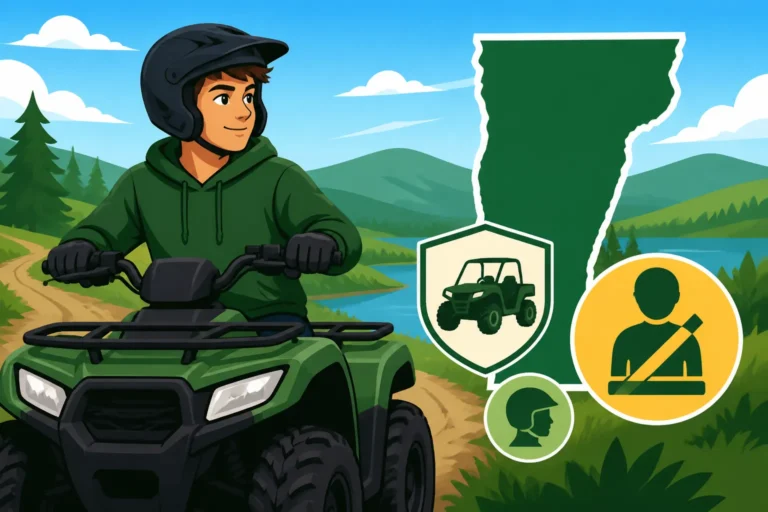
Let's be absolutely clear on this point: [Vermont ATV Helmet Law for Every Rider] is strict, and it applies to everyone, including passengers of all ages. There's no age limit or exemption. A child riding as a passenger, whether on a multi-seat ATV or a side-by-side, must wear a U.S. DOT-compliant helmet. This isn't just a suggestion; it's a legal mandate designed to protect the most vulnerable part of a rider's body. The helmet must fit snugly, be securely fastened, and be free from any damage that could compromise its integrity.
Finding a helmet that fits a child properly can sometimes be a challenge, but it's a non-negotiable step. An ill-fitting helmet offers little protection. Look for helmets specifically designed for youth, often available in smaller sizes and lighter weights. Many reputable gear manufacturers, perhaps even brands carried by retailers like SuperATV, offer a range of youth helmets. Remember, the helmet should not wobble or shift when the child moves their head. It should cover their forehead and fit comfortably without obstructing vision or breathing. Without a proper helmet, you're not just risking a ticket; you're risking a serious injury to your child.
The Importance of Proper Footwear and Clothing
While less explicitly legislated than helmets, appropriate clothing and footwear are critical for a child's safety and comfort on an ATV. Think of it as a defensive layer against the elements and potential hazards of the trail. Open-toed shoes, sandals, or flimsy sneakers simply don't cut it. A child's feet need protection from branches, flying debris, and accidental contact with hot engine parts. Sturdy, over-the-ankle boots are highly recommended, offering support and protection.
Long pants and long-sleeved shirts, even in warmer weather, provide a barrier against scratches, bug bites, and sunburn. Denim or other durable fabrics are ideal. Avoid loose clothing that could snag on branches or parts of the machine. Eye protection, such as goggles or a face shield on their helmet, is also crucial to shield their eyes from dust, insects, and low-hanging branches. Gloves can help prevent blisters and improve grip, making it easier for them to hold on. These items collectively form a personal protective equipment (PPE) system that minimizes risks on the trail.
Adult Supervision for Riders Under 16
Vermont law has specific stipulations regarding [Vermont Supervision Rules Under 16]. While this primarily pertains to operators under 16, the spirit of responsible adult oversight extends to carrying young passengers. An adult, usually the operator, bears the ultimate responsibility for the safety of any child on their machine. This means not only ensuring they are properly equipped but also supervising their conduct during the ride.
This supervision isn't just about making sure they're holding on; it's about actively monitoring their comfort level, fatigue, and potential distractions. If a child becomes restless, scared, or starts to fidget excessively, it's time for a break. The adult operator needs to set a safe pace, choose appropriate trails, and be constantly aware of the child's well-being. This also includes ensuring that any young rider has completed a [Vermont ATV Safety Course Required Under 18] if they are of age to operate their own machine. While not directly applicable to passengers, the principles taught in such courses regarding safe operation and awareness are invaluable knowledge for any family riding together.
Equipping Your Machine for Safe Child Transport
Making sure your ATV or side-by-side is properly equipped for carrying a child isn't just about compliance; it's about creating the safest possible environment for your youngest passengers. This can sometimes feel daunting, especially when trying to discern what's genuinely effective versus just a gimmick.
Designated Passenger Seats and Manufacturer Standards
The most crucial factor in safely carrying a child is whether your machine has a designated passenger seat. For single-rider ATVs, adding an aftermarket seat intended for a second person (adult or child) can fundamentally compromise the machine's handling. These vehicles are designed for a specific weight distribution and center of gravity with a single operator. Adding a passenger, especially one positioned higher or further back, can make the ATV unstable, prone to tipping, and much harder to control, particularly in turns or over uneven terrain.
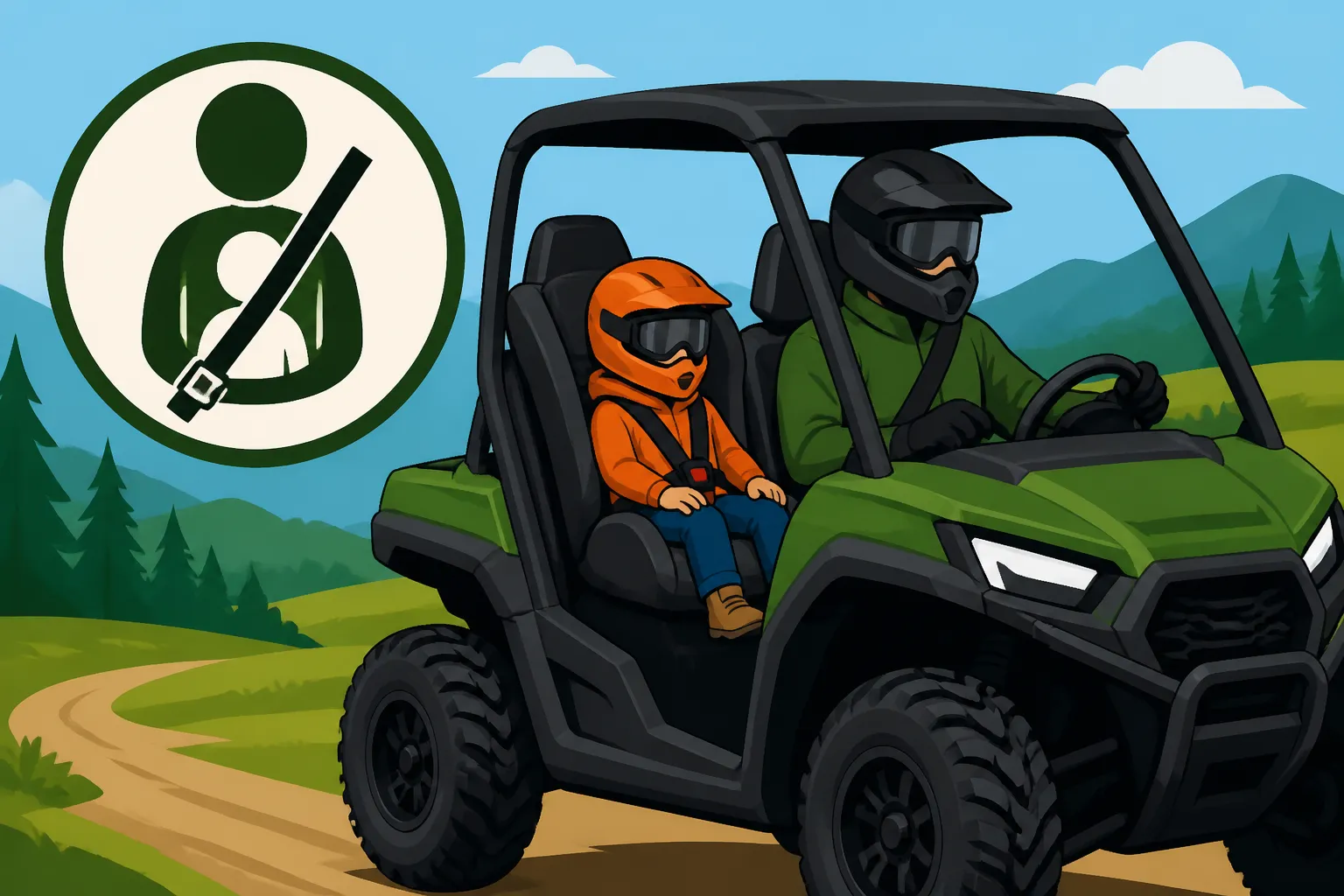
For side-by-sides or "two-up" ATVs specifically designed by the manufacturer to carry a passenger, these machines come with integrated safety features. This includes a proper seat, footrests, and often handholds or a grab bar for the passenger to hold onto. Always defer to these manufacturer-engineered solutions. They have been rigorously tested to ensure stability and safety with the intended passenger load. Trying to force a single-seat machine to do the job of a multi-passenger vehicle is a risk not worth taking. Checking the owner's manual for specific passenger guidelines is always the first step.
Aftermarket Accessories for Enhanced Safety
While modifying a single-rider ATV for passengers is generally discouraged, there are legitimate aftermarket accessories that can enhance the safety of children on already multi-passenger approved machines, especially side-by-sides. For instance, many side-by-sides come with basic lap belts. For younger children, a five-point harness system can provide significantly better security, preventing them from being jostled around or sliding out of the seat during aggressive maneuvers or bumps. Brands like SuperATV, for example, offer a wide range of accessories including harness systems, often designed to integrate seamlessly into existing seat mounts.
Beyond harnesses, consider things like sturdy mesh nets or doors to further enclose the passenger compartment of a side-by-side, preventing limbs from inadvertently extending outside the vehicle. Additional grab handles or footrests, if not adequately provided by the factory, can also be beneficial, allowing a child to maintain a more secure and comfortable position. However, always ensure any accessory you add is reputable, properly installed, and does not interfere with the machine's operation or existing safety features. The goal is to supplement, not replace, the manufacturer's foundational safety design. For general [Vermont Equipment Requirements], ensure your machine is in top working order before hitting the trails.
Pre-Ride Checks When Carrying Young Passengers
Before every ride with a child on board, a thorough pre-ride check becomes even more critical. This isn't just a casual glance; it's a systematic review of all safety-critical components. Start with the tires: are they properly inflated? Under-inflated tires can affect handling and stability, especially with added weight. Check the brakes: are they functioning optimally? You'll need reliable stopping power, particularly when carrying precious cargo. Inspect the lights, especially if you anticipate riding near dusk or in low visibility conditions. [Vermont Headlight and Tail Light Rules] are in place for a reason.
Next, ensure all seatbelts and harnesses are in perfect working order and are properly adjusted for the child. Check that footrests are secure and that the child's feet can reach them comfortably. Look for any loose components, sharp edges, or potential hazards that could injure a child. Finally, review your planned route. Are the trails suitable for carrying a child? Are there any sections that might be too rough or challenging? The VASA trail system in Vermont offers a wide range of trails, and some are certainly more family-friendly than others. Choosing appropriate terrain, like smoother sections of [Vermont ATV Trails: The VASA System] or a gentle [Vermont ATV Rules on a Dirt Road], is a huge part of ensuring a safe and enjoyable experience for everyone.
Remember, the responsibility for a child's safety rests squarely on the shoulders of the adult operator. Taking these extra steps isn't just about following rules; it's about ensuring that your family's ATV adventures are filled with joy, not regret.
Here's a quick overview of key considerations for child passengers:
| Feature/Requirement | Applies to Single-Seat ATV | Applies to Multi-Seat ATV / UTV | Notes |
|---|---|---|---|
| Designated Seat | No | Yes | Must be factory-designed for passenger. |
| Helmet | Yes | Yes | U.S. DOT compliant, fits snugly, securely fastened. |
| Footwear | N/A | Sturdy, over-the-ankle boots | Protects from debris and engine parts. |
| Clothing | N/A | Long pants, long sleeves | Protection from scratches, bugs, sun. Eye protection (goggles) essential. |
| Adult Supervision | Yes (if child operates) | Yes (operator's responsibility) | Monitor child's comfort, fatigue, and behavior. |
| Harness/Seatbelt | N/A | Yes (factory or aftermarket) | Must be appropriate for child's size and securely fastened. |
| Manufacturer Age/Weight Limits | Yes | Yes | Always adhere to specific vehicle limitations. |
Disclaimer
This article is for general informational purposes only and does not constitute professional advice. Laws, prices and regulations vary by location and change over time. Consult a qualified professional for guidance on your specific situation.