Vermont Rules for Carrying a Firearm
Navigating Vermont's stunning backroads and expansive trail systems on your ATV or UTV often means venturing into remote areas where self-reliance is key. For many riders, this includes the desire to carry a firearm, whether for personal protection, dispatching an injured animal, or en route to a hunting spot. However, the intersection of firearm laws with off-road vehicle regulations can feel like a labyrinth, leaving many honest Vermonters and visitors scratching their heads about what's actually legal. This guide is designed to cut through that confusion, offering clear, actionable information so you can enjoy Vermont's wilderness responsibly and within the bounds of the law.
Understanding Vermont's General Firearm Laws While Riding
Before we dive into the specifics of ATVs and UTVs, it's crucial to grasp Vermont's general firearm laws, as these are the foundation upon which all other regulations are built. Vermont is often known for its relatively permissive gun laws, particularly regarding open carry and constitutional carry for residents. However, "permissive" doesn't mean "unregulated," especially when you add a motorized vehicle into the mix.
Open Carry and Constitutional Carry in Vermont
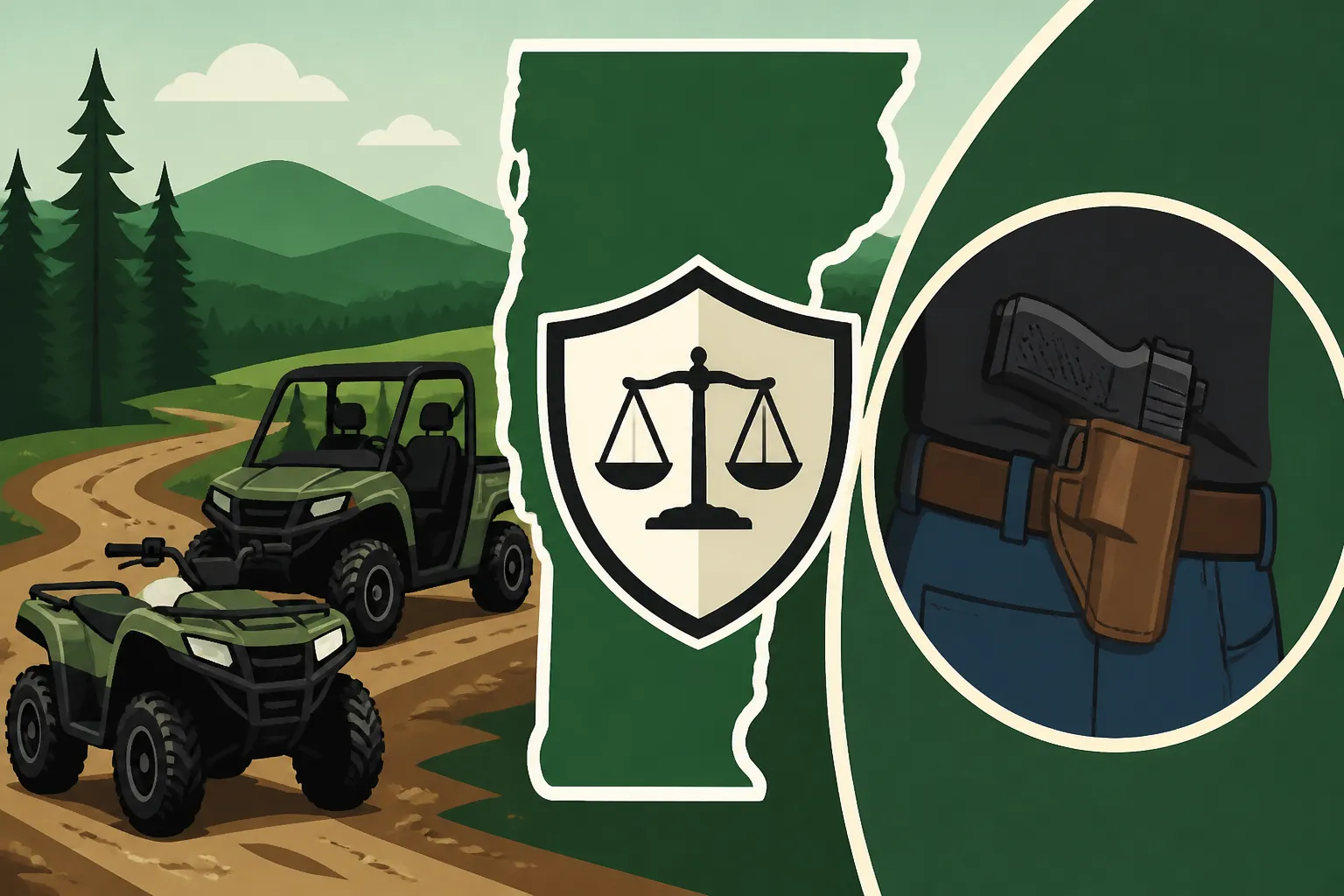
Vermont stands out as one of the few states that historically didn't require a permit to carry a concealed firearm, a principle often referred to as "constitutional carry" or "permitless carry." This means that generally, if you are legally allowed to possess a firearm, you can carry it openly or concealed on your person without a state-issued permit. This applies to both residents and non-residents, though non-residents should always confirm their home state's laws regarding firearm possession and transport across state lines. When you're out on your ATV or UTV, openly carrying a handgun in a holster on your hip is typically permissible, just as it would be if you were walking down a street. The key is that the firearm must be legally owned and the individual must not be prohibited from possessing firearms under state or federal law. It's a fundamental aspect of Vermont's approach to firearm rights, setting the stage for how these rules apply when you're exploring the Green Mountains on four wheels.
Prohibited Places and Activities
Even with Vermont's generally open approach to firearms, there are still places and situations where carrying a weapon is restricted or outright forbidden. For instance, firearms are typically prohibited in courthouses, schools, and certain government buildings. While these locations might seem irrelevant to an ATV rider, understanding the principle behind these prohibitions is important. Furthermore, carrying a firearm while intoxicated is strictly illegal, and this absolutely extends to operating an ATV or UTV. Vermont's [Vermont DUI Law and ATVs] specifically covers operating an off-road vehicle under the influence, and adding a firearm to that scenario significantly escalates the potential legal consequences. Always remember that responsible firearm ownership is paramount, and intoxication severely compromises that responsibility, whether you're on a public highway or a remote trail. Just because you're out in the woods doesn't mean the law doesn't apply; wardens and law enforcement can and do patrol trail systems and can enforce these laws.
Specific Rules for Carrying on Your ATV or UTV
Now, let's get down to the brass tacks of how firearms and off-road vehicles intersect. Unlike carrying a firearm on your person while walking, special considerations arise when the firearm is physically on the ATV or UTV itself. These rules are primarily designed for safety and to prevent misuse, especially when traversing areas where other riders, hikers, or landowners might be present.
Loaded vs. Unloaded: The Crucial Distinction
This is perhaps the most critical distinction for ATV and UTV riders. While Vermont generally allows loaded firearms to be carried on one's person, the rules often change dramatically when the firearm is on the vehicle. For most general transport purposes on an ATV or UTV, especially on designated trails, public lands, or town roads open to ATVs, a firearm must be unloaded and encased. "Unloaded" typically means no ammunition in the chamber, magazine, or cylinder. "Encased" means it's in a protective container like a gun case or boot.
Imagine you're heading out for a day of trail riding and decide to bring your rifle. You might strap it into a gun boot attached to your UTV's bed. If you're on a VASA trail or a town road, that rifle must be unloaded. Failing to unload and properly encase a firearm on your vehicle can lead to significant fines and penalties, not to mention creating an unsafe situation. This is a common point of confusion, and wardens are quite strict on this particular rule to ensure the safety of everyone sharing the trails. Planning your storage solution ahead of time is key here; a sturdy gun boot, perhaps from a reputable brand like SuperATV, that securely holds your firearm and protects it from the elements is a worthwhile investment.
Cased vs. Uncased: Protection and Compliance
The "encased" requirement goes hand-in-hand with the "unloaded" rule for vehicle transport. A firearm boot, hard case, or even a soft rifle scabbard can meet this requirement, as long as it fully encloses the firearm. This casing serves multiple purposes: it protects the firearm from dirt, dust, and moisture, secures it to prevent it from falling off the vehicle, and visually signals that the firearm is not readily accessible for immediate use.
Think about riding through a muddy section or a dusty trail; an uncased firearm would quickly become fouled. More importantly, an uncased firearm presents a perceived threat or potential danger to others, even if it's unloaded. Law enforcement often interprets an uncased firearm on a vehicle as being "ready for use," which contradicts the spirit of the transport laws. Therefore, whether you're transporting a shotgun for clay pigeons, a rifle for hunting, or a handgun for self-defense, ensure it is safely secured in a case. Many riders opt for rigid gun boots that attach directly to the ATV's rack, providing excellent protection and meeting the legal requirements.
Placement and Accessibility on Your Machine
Where you place the firearm on your ATV or UTV also matters, both for safety and compliance. It should be securely mounted so it doesn't shift, bounce, or fall off during your ride, especially when tackling rough terrain or steep inclines. Loose firearms can become dangerous projectiles in an accident. Products designed for ATV/UTV use, such as those offered by SuperATV, often come with specialized mounting brackets and systems to ensure a snug and safe fit.
While the firearm needs to be accessible enough for you to load and use once you've stopped and are in a safe, legal area (like a hunting stand or private range), it shouldn't be instantly accessible while the vehicle is in motion in a way that suggests it could be quickly drawn and fired. This reinforces the "unloaded and encased" rule; the act of removing it from its case and loading it demonstrates an intent to use it responsibly rather than impulsively. Consider the practical aspects of your ride: Will you need to remove the firearm often? Is it protected from branches and debris? Is it out of the way of passengers or riding gear? Thoughtful placement contributes significantly to both safety and legal adherence.
Hunting and Firearm Transport on Vermont Trails
For many, ATVs and UTVs are indispensable tools for accessing remote hunting grounds. Vermont's diverse wildlife, from deer and moose to turkey and bear, draws hunters from far and wide. However, using your off-road vehicle for hunting-related activities introduces another layer of specific regulations that you must respect to avoid violations.
Transporting Firearms During Hunting Season
During hunting season, the "unloaded and encased" rule becomes even more paramount when transporting firearms on an ATV or UTV. Vermont hunting regulations are very clear that firearms used for hunting must be transported in a safe, unloaded condition within or on a vehicle. This means no loaded rifles slung across the handlebars or shotguns leaning against the seat. Even if you're just moving between hunting spots, your firearm needs to comply with these rules while the vehicle is operating.
Consider a scenario where you've successfully harvested an animal and are using your UTV to retrieve it. Your rifle, having served its purpose, must now be unloaded and secured in its case for the trip back to camp or your vehicle. This prevents accidental discharge and ensures that other hunters or outdoor enthusiasts you encounter see you acting responsibly. The Vermont Fish & Wildlife Department and local wardens take these rules very seriously, especially during popular hunting seasons. They are often out on trails and roads, checking compliance, and an improperly transported firearm can quickly turn a successful hunt into a costly legal issue.
Riding on VASA Trails with a Firearm
The Vermont Association of Snow Travelers (VASA) maintains an extensive network of ATV trails across the state. While these trails offer incredible access to Vermont's natural beauty, they exist primarily through the generous permission of private landowners. Because of this, [Vermont Landowner Permission Rules] are critical, and riders must adhere to the specific rules and etiquette established by VASA and its member clubs. This includes how firearms can be carried.
Generally, VASA trails, which often utilize private land, town roads, and old logging paths, require firearms to be unloaded and securely cased when being transported on an ATV or UTV. This ensures safety for all trail users and respects landowner wishes. There might also be specific club rules that dictate even stricter protocols. Before you head out, especially if you plan to carry a firearm, always check the VASA guidelines and any local club rules for the area you'll be riding in. Some areas might have specific times or seasons when hunting is allowed or restricted near trails. While VASA supports legal hunting access, their primary goal is safe and responsible trail use for everyone.
Game Laws and Specific Regulations
Beyond the general transport rules, hunters must also be intimately familiar with specific game laws pertaining to the use of motor vehicles. For example, "road hunting" – shooting from or across a public highway – is illegal. While an ATV on a designated trail isn't a "highway," the spirit of the law applies to ensure fair chase and public safety. There are also specific restrictions on hunting from a motorized vehicle. Generally, you cannot hunt from your ATV or UTV; the vehicle must be stopped, and you must exit it before discharging a firearm.
Furthermore, ensure you have all necessary hunting licenses, permits, and tags for the specific game you are pursuing. Proper tagging and reporting requirements are critical. Combining an ATV ride with hunting means you're subject to both ATV regulations and comprehensive hunting statutes. Ignorance of either is not an excuse. Familiarize yourself with the Vermont Fish & Wildlife regulations, not just the general firearm laws, to ensure a legal and ethical hunt.
Navigating Public, Private, and Town Road Regulations
The landscape of Vermont is a patchwork of different land types, each with its own set of rules governing ATV use and firearm carry. Understanding these distinctions is crucial for staying on the right side of the law. What's permissible on your own private land might be illegal on a town road or a designated public trail.
Public Lands: State Forests, Wildlife Management Areas
Vermont boasts numerous state forests and wildlife management areas (WMAs) that offer extensive opportunities for outdoor recreation, including ATV riding in designated areas. However, these lands often come with specific regulations, which can include rules about firearms. Generally, the "unloaded and encased" rule applies when transporting firearms on an ATV or UTV through these public lands, unless you are actively engaged in a legal hunting activity within a designated hunting zone and have stopped your vehicle.
It's also important to note that not all public lands are open to ATVs. [Vermont State Land Is Mostly Closed to ATVs], so always confirm that you are on a legal ATV route. Even if a trail is open, there might be specific regulations regarding firearm discharge, target shooting, or even certain types of ammunition. Always consult the Vermont Department of Forests, Parks and Recreation or the Fish & Wildlife Department for the specific rules of the public land you plan to visit. Their websites often have detailed maps and regulations that can prevent an accidental violation.
Private Land and Landowner Permission
Much of Vermont's open space is privately owned, and ATV riders, especially those carrying firearms, must exercise the utmost respect for [Vermont Landowner Permission Rules]. Without explicit permission, riding on private land is considered trespassing, and carrying a firearm on someone else's property without their consent can lead to additional complications. If you plan to ride on private land, always obtain written permission from the landowner, and discuss any intentions you have regarding carrying or using a firearm on their property.
Landowners have the right to set their own rules for their property, including prohibiting firearms entirely or dictating how they must be transported. Even if Vermont law permits open carry, a private landowner's "no firearms" policy must be respected. This is a matter of courtesy, safety, and legal compliance. Many VASA trails, for instance, cross private lands, and maintaining good relationships with these landowners is vital for the continued existence of the trail system. Never assume permission; always ask, and if you're carrying a firearm, be transparent about it.
Town Roads and ATV Ordinances
Many Vermont towns have adopted ordinances to allow ATVs on certain town roads, often as connectors for the VASA trail system. While these roads are "public," they are subject to [Vermont ATV Road Rules: Towns Decide], and these rules often include specific provisions for safety, noise, and equipment. When carrying a firearm on an ATV on a town road, the "unloaded and encased" rule is typically strictly enforced, aligning with the general vehicle transport laws.
| Scenario for Carrying a Firearm on an ATV/UTV in Vermont | Firearm Condition (Min. Requirement) | Location Context (Examples) | Key Legal Considerations |
|---|---|---|---|
| On your person (open carry) | Loaded, uncased (if visible) | Public land, Town roads (if riding is legal) | Generally legal for lawful possessors. Must not be prohibited from possessing a firearm. Local ordinances might have additional rules for discharge, not carry. |
| On your person (concealed carry) | Loaded, uncased | Public land, Town roads (if riding is legal) | Generally legal for lawful possessors (Constitutional Carry). Non-residents should check reciprocity. |
| On the ATV/UTV itself (transport) | Unloaded, encased | VASA trails, Public roads/trails, State Forests | Mandatory for transport on or in the vehicle. This means no ammunition in the chamber/magazine/cylinder. Case must fully enclose firearm. |
| During hunting activity (actively hunting) | Loaded, uncased (once dismounted) | Designated hunting areas on public/private land | Only after dismounting the ATV/UTV. Vehicle must be stopped. Adhere to all specific hunting regulations (season, tag, method). |
| On Private Land (with permission) | As agreed with landowner | Landowner's private property | Landowner's rules supersede general carry laws on their property. Always get explicit permission and discuss firearm carry. |
| When operating under the influence | Illegal to carry at all | Anywhere while operating ATV/UTV | Vermont's [Vermont DUI Law and ATVs] prohibits operating while intoxicated. Carrying a firearm under these circumstances leads to severe penalties. |
It's crucial to remember that town selectboards open roads to ATVs on an annual basis, and they can impose additional restrictions. Always check the specific ordinance for the town you're in, as some might have particular rules about what equipment can be carried or specific times of day when ATVs are permitted. [Vermont Town Ordinances That Set Curfews] can impact when you can ride, and by extension, when you can transport your firearm on a town road. Even if you're riding a UTV equipped with robust storage solutions from companies like SuperATV, ensuring your firearm is unloaded and encased is non-negotiable on these public connectors.
Finally, while Vermont is generally very respectful of firearm rights, the focus for ATV and UTV riders must always be on responsible and safe operation. Combining the freedom of off-road riding with the responsibility of firearm ownership requires careful attention to detail and a commitment to understanding and following all applicable laws. When in doubt, err on the side of caution: unload and encase your firearm.
Disclaimer
This article is for general informational purposes only and does not constitute professional advice. Laws, prices and regulations vary by location and change over time. Consult a qualified professional for guidance on your specific situation.