Vermont ATV Helmet Law Age Limit
The open roads and scenic trails of Vermont call to ATV and UTV enthusiasts from all over, offering breathtaking views and exhilarating rides. But before you fire up your engine and hit those dirt paths or designated town roads, there's a crucial piece of safety gear you need to understand: helmets. It's a common point of confusion for riders, especially when it comes to who needs one and at what age. This guide will clarify Vermont's ATV helmet law, dispelling myths and ensuring you and your passengers stay safe and compliant on every adventure.
Understanding Vermont's Core ATV Helmet Law
When it comes to protective gear, Vermont doesn't mess around, and that's a good thing! The laws are designed with rider safety as the absolute top priority, recognizing the inherent risks that come with off-road and designated road riding. Sometimes, folks get tangled up in thinking there are different rules for different age groups, but the core principle is quite straightforward.
Universal Requirement for All Riders
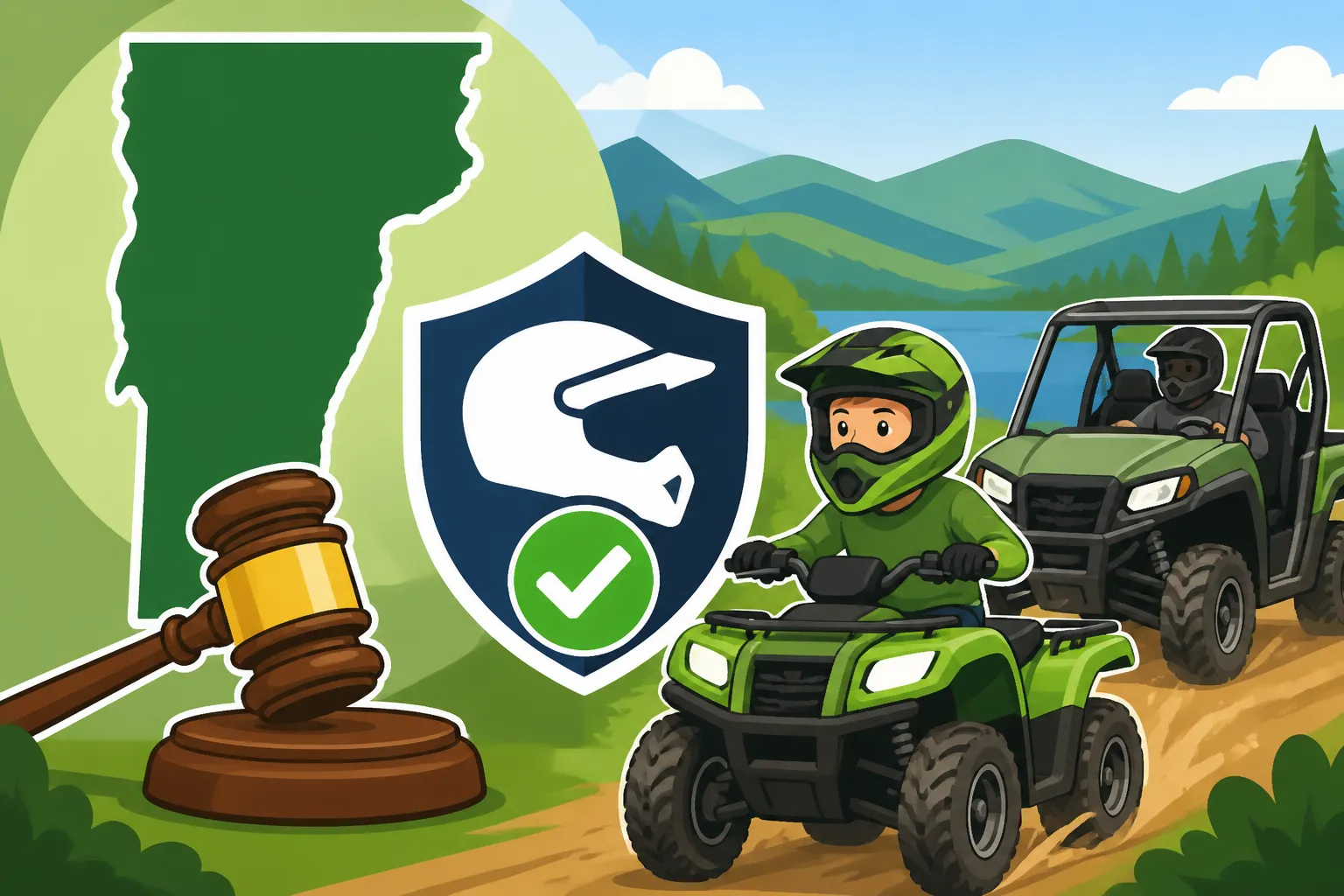
Let's cut right to the chase: In Vermont, if you're operating or riding as a passenger on an ATV (all-terrain vehicle) or UTV (utility task vehicle, often referred to as a side-by-side or ASV), you must wear an approved helmet, regardless of your age. This isn't a suggestion; it's the law. This means whether you're a seasoned adult rider with decades of experience or a young enthusiast just starting out, that helmet needs to be securely fastened before you even think about putting the machine in gear.
The emphasis here is on "approved." This isn't just any old helmet. The law specifies that helmets must meet certain safety standards. You'll typically find helmets certified by the Department of Transportation (DOT) for street use, or by organizations like Snell or ASTM for off-road use. These certifications mean the helmet has undergone rigorous testing to prove its ability to protect your head in a collision. You should always look for the certification sticker inside or on the back of the helmet. Riding with a non-certified helmet, even if it feels protective, might not meet the legal requirement, and more importantly, might not provide adequate protection. It’s all about ensuring that critical piece of gear can truly do its job when it matters most. For more details on what counts, check out [Vermont Helmets Meeting FMVSS or ASTM].
The "Age Limit" Misconception
Many states have varying helmet laws for motorcycles or even bicycles, often with specific age cutoffs – for example, riders under 18 must wear one, while adults have a choice. This creates a natural assumption that ATV helmet laws might follow a similar pattern. However, Vermont's law simplifies things by making it universal. There is no "age limit" below which a helmet is required; instead, the requirement applies to all ages.
This misconception often stems from comparing ATV laws to other vehicle types, or from riders' experiences in different states with less stringent regulations. It’s easy to get confused when you travel from a state that allows adults to ride helmet-free to Vermont, where everyone is required to be covered. The spirit of Vermont's law is clear: head protection is non-negotiable for anyone on an ATV or ASV. This proactive stance acknowledges the unique risks of ATV riding, such as rollovers, impacts with trees or rocks, and sudden stops, where head injuries can be particularly severe. It’s also why many riders opt for additional protection, like the sturdy, protective gear that companies like SuperATV offer, beyond just the basic helmet.
Passenger Helmet Rules
It's not just the operator who needs to be protected; passengers are equally vulnerable. Vermont's law extends the helmet requirement to every single person on the machine. So, if you're carrying a friend, a family member, or a child, they too must be wearing an approved, properly fitted helmet. This is especially critical when you consider the dynamics of carrying a passenger. The machine handles differently, and a passenger might not have the same instinctual control over their balance as the operator.
Imagine a scenic ride through the Northeast Kingdom. You've got your helmet on, ready to explore, but your child, excited by the view, isn't wearing one. Not only are you putting them at serious risk in the event of an unforeseen bump or sudden stop, but you're also breaking the law. [Vermont Passengers Must Wear Helmets] emphasizes this point clearly. It’s the operator’s responsibility to ensure all passengers, regardless of their age or relationship to you, are fully compliant with the helmet law. This includes ensuring their helmet fits correctly and is securely fastened – a loose helmet is almost as dangerous as no helmet at all, as it can come off upon impact.
Specific Scenarios for Younger Riders and Helmet Use
While the universal helmet rule covers everyone, there are additional considerations and requirements when younger riders are involved. These often intertwine with helmet use, reinforcing the importance of safety from an early age.
Riders Under 18 and Safety Course Requirements
For riders under the age of 18, Vermont doesn't just require a helmet; it also mandates the completion of an approved ATV safety course. This course is a cornerstone of safe riding education, teaching young operators about machine handling, risk awareness, and proper gear usage, which naturally includes helmets. While the course itself doesn't impose an age limit on helmet wearing (because, as we've established, it's universal), it certainly reinforces the necessity of wearing one every time you ride.
Think of it this way: the safety course provides the knowledge, and the helmet provides the protection. They go hand-in-hand. A young rider completing the course will learn not only that they need a helmet, but why it's so critical, the types of helmets that are safe, and how to fit it properly. This foundational training is vital for developing responsible riding habits that last a lifetime. [Vermont ATV Safety Course Required Under 18] is a critical piece of legislation ensuring our younger generation is well-prepared and protected before hitting the trails. The skills learned, from hazard avoidance to emergency braking, are all performed while wearing a helmet, making it an integral part of the learning process.
Direct Supervision and Helmet Compliance
Vermont law also includes provisions for direct supervision of riders under certain ages, usually under 16. If you're an adult supervising a young rider, part of your responsibility is to ensure they are wearing their helmet. "Direct supervision" means you are close enough to the rider to immediately intervene if necessary, and that certainly extends to making sure they're geared up correctly.
Consider a scenario where a parent is supervising their 14-year-old on a designated VASA trail. The parent is riding behind, keeping a watchful eye. It's not enough for the parent to just assume the child put on their helmet. The adult supervisor must verify it's on, fastened, and fits well. This often means a quick check before leaving the staging area or trailhead. This layer of supervision is an extra safety net, ensuring that younger, less experienced riders are not only complying with the law but are genuinely protected. [Vermont Supervision Rules Under 16] outlines these responsibilities, underscoring the legal and moral obligation supervisors have to ensure comprehensive safety measures are in place, including proper helmet use.
Riding on Private Land vs. Public Trails
A common question that arises is whether these helmet laws apply if you're riding on private land that you own or have permission to use. While the general rule of thumb for ATVs registered for trail and road use is that the helmet law applies broadly, regardless of the land type, there can sometimes be nuances depending on how specific statutes are interpreted for truly isolated private property. However, from a safety perspective, the risks of riding an ATV don't diminish simply because you're on private land. Rollovers, collisions, or falls can happen anywhere.
Therefore, even if you're just zipping around your own backyard or a friend's sprawling property, wearing a helmet is always the smartest, safest choice. While the immediate threat of a warden issuing a ticket might be lower on your own plot, the threat of a serious head injury remains constant. Most experienced riders, and certainly the VASA clubs that maintain the extensive trail network, will always advocate for helmet use, no matter the terrain or ownership. Companies like SuperATV promote responsible riding, and that includes always wearing a helmet, whether you're navigating complex trails or just practicing in a field. It simply isn't worth the risk.
Why Vermont's Helmet Law is Crucial for Everyone
Sometimes, laws can feel like an inconvenience. But in the case of Vermont's universal helmet law for ATVs and UTVs, it's truly about protecting lives and preventing devastating injuries. It’s a measure born from understanding the very real dangers associated with these powerful machines.
Protecting Your Most Important Asset
Let's be brutally honest for a moment: your brain is your most important asset. It's what allows you to ride, to enjoy the beautiful Vermont scenery, to spend time with loved ones, and to live your life to the fullest. A traumatic brain injury (TBI) can change everything in an instant, leading to long-term physical, cognitive, and emotional challenges that impact not just the rider but their entire family.
A helmet acts as a crucial barrier, absorbing and distributing the force of an impact that would otherwise be concentrated on your skull. It can literally be the difference between walking away from an accident with bumps and bruises, or facing a life-altering injury. Whether it's a low-speed tip-over on a muddy section or an unexpected collision with a tree branch on a tight trail, your head is always at risk. The law simply formalizes what common sense and years of accident data have shown: helmets save lives and prevent severe injuries. This isn't just about avoiding a ticket; it's about safeguarding your future and the future of those you care about who ride with you.
Legal Consequences of Non-Compliance
Beyond the profound personal safety reasons, there are very real legal repercussions for not adhering to Vermont's helmet law. If you're caught riding or allowing a passenger to ride without a properly fastened, approved helmet, you can expect to face fines. Wardens, state police, and local law enforcement officers on designated town roads are well aware of these regulations and will enforce them.
These penalties are not just a slap on the wrist. They can include monetary fines, and repeated offenses could lead to more serious consequences. Imagine being pulled over on a trail in Essex County or on an open town road near Brighton because you or your passenger skipped the helmet. Not only will your ride be cut short, but you'll also have a fine to pay, impacting your wallet and potentially your riding record. [Vermont Fines for Road Violations] can add up quickly, making that "inconvenient" helmet suddenly seem like a very small price to pay. It’s a clear signal from the state that safety isn't optional.
Insurance Implications
While you should always prioritize safety regardless of financial implications, it's worth considering how non-compliance with the helmet law might affect your ATV insurance. [Vermont ATV Insurance Requirements] mandate that all ATVs and ASVs operated on public land, designated roads, or VASA trails carry liability insurance. But having a policy doesn't automatically cover everything, especially if you were operating in violation of state law.
In the event of an accident, if it's discovered that you or your passenger were not wearing a helmet as required by law, your insurance company might dispute or even deny certain claims related to head injuries. While liability coverage typically protects you from claims made by others, your personal injury protection or medical payments coverage could be affected. Insurance policies often contain clauses relating to illegal activities or non-compliance with safety regulations. You wouldn't want a moment of carelessness to jeopardize your medical treatment or financial stability after an already traumatic event. Always carry proof of your Vermont insurance right on your machine when you're out riding, just in case a warden asks.
Choosing the Right Helmet and Ensuring a Proper Fit
With the understanding that helmets are a must for everyone, the next step is ensuring you have the right helmet and that it fits correctly. This isn't a one-size-fits-all situation, especially when outfitting young riders.
Certified Helmets and Standards
As mentioned earlier, Vermont law requires approved helmets. This typically means helmets that meet specific safety standards established by organizations like the Department of Transportation (DOT), the Snell Memorial Foundation, or the Economic Commission for Europe (ECE).
- DOT Certification (FMVSS 218): This is the minimum standard for helmets sold for use on public roads in the United States. A DOT-certified helmet is designed to protect against impact and penetration. You'll see a DOT sticker on the back.
- Snell Certification: Snell is a non-profit organization that develops its own, often more rigorous, helmet testing standards. A Snell-certified helmet offers a higher level of impact protection than the DOT minimum. Helmets with this certification are highly recommended, especially for aggressive off-road riding.
- ECE Certification (ECE R22.05): This is a European standard, widely recognized globally, and is also considered a very high standard for helmet safety.
Always look for these labels when purchasing a helmet. They are your guarantee that the helmet has been tested and proven to offer a certain level of protection. While a helmet from SuperATV might be tempting for its style and features, always confirm it carries the necessary safety certifications before making a purchase. Never compromise on these certifications; they are literally life savers.
Fitting a Helmet Correctly
A helmet can only do its job if it fits properly. A helmet that's too loose can shift during an impact, offering little protection, while one that's too tight can be uncomfortable and distracting. This is especially crucial for children, whose heads are still developing and whose helmets need to be replaced as they grow.
Here's a quick guide to ensuring a good fit:
- Measure Your Head: Use a cloth measuring tape to measure the circumference of your head just above your eyebrows and ears. Compare this measurement to the helmet manufacturer's sizing chart.
- Try it On: The helmet should feel snug all around your head, with no pressure points. It should not be uncomfortably tight, but it should definitely not wobble or slide around.
- Check for Movement: With the strap fastened, try to move the helmet from side to side and front to back. Your skin should move with the helmet; if the helmet slides independently, it's too big.
- Chin Strap: The chin strap should be snug, allowing only one or two fingers to fit between the strap and your chin. It should be securely buckled. [Fastening a Helmet the Way Vermont Law Requires] isn't just about having it on, but having it correctly on.
- Vision: Ensure your field of vision isn't obstructed.
For children, remember they grow quickly. Regularly check their helmet fit before each riding season. A child often needs a new helmet sooner than an adult.
Maintenance and Replacement
Helmets aren't designed to last forever, and their protective qualities can degrade over time or after an impact.
- Cleanliness: Regularly clean the helmet's exterior with mild soap and water. Remove and wash the interior pads if possible, to keep it fresh and odor-free.
- Storage: Store your helmet in a cool, dry place, away from direct sunlight or extreme temperatures, which can degrade materials.
- Inspect Regularly: Before each ride, quickly inspect your helmet for any cracks, dents, or frayed straps. Even a small crack can compromise its integrity.
- Replace After Impact: This is critical! If your helmet has been involved in any kind of impact, even if it looks fine on the outside, the internal foam might be crushed, rendering it useless for a subsequent impact. Always replace a helmet after it has taken a hit.
- Age: Most manufacturers recommend replacing helmets every 3-5 years, even if they haven't been in an accident, as materials can degrade.
By being diligent about proper fit and maintenance, you ensure that your helmet, and your passenger's, provides the maximum possible protection every time you hit the Vermont trails.
Vermont ATV Helmet Law: At a Glance
To make it easy to remember, here's a quick summary of Vermont's helmet requirements:
| Rider Category | Helmet Requirement | Certification Required | Key Considerations |
|---|---|---|---|
| All Riders (Operators & Passengers) | Required | DOT, Snell, or ECE | Applies to all ages, on all types of land (public or private, registered machine) |
| Riders Under 18 | Required | DOT, Snell, or ECE | Also require completion of an approved [Vermont ATV Safety Course Required Under 18] |
| Riders Under 16 | Required | DOT, Snell, or ECE | Must be under [Vermont Supervision Rules Under 16] by an adult |
| Visiting Riders (Out-of-State) | Required | DOT, Snell, or ECE | Out-of-state registrations are recognized, but Vermont's helmet law still applies |
Vermont's ATV helmet law is straightforward: everyone wears one. It’s a clear-cut rule designed to protect every rider, regardless of age or experience, ensuring that your adventures on the beautiful trails of the Green Mountain State are as safe as they are exhilarating. So, before you head out, double-check those helmets – for yourself, for your kids, and for every passenger. Ride safe, Vermont!
Disclaimer
This article is for general informational purposes only and does not constitute professional advice. Laws, prices and regulations vary by location and change over time. Consult a qualified professional for guidance on your specific situation.