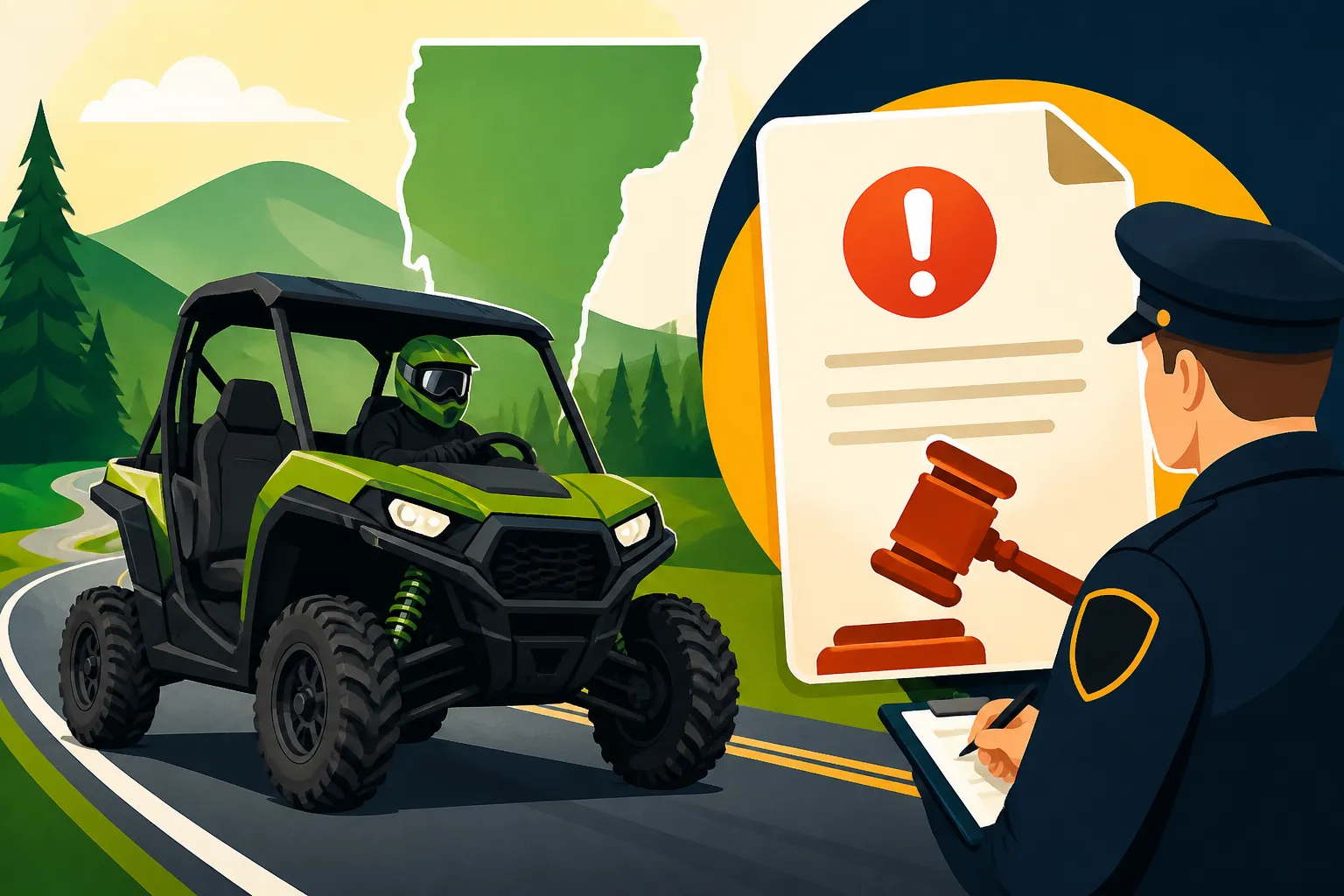
Vermont ATV Fines for Road Violations
It's incredibly frustrating to head out for a peaceful ride on your ATV or UTV, only to find yourself facing a fine for something you didn't even realize was a violation. Vermont's rules for riding ATVs and UTVs on public roads can feel like a maze, with town-specific ordinances adding another layer of complexity. This comprehensive guide is here to untangle that web, helping you understand the common road violations, the fines associated with them, and how to navigate the system to keep your rides enjoyable and penalty-free.
Understanding Vermont's ATV Road Rules and Why They Matter
Navigating Vermont's beautiful landscapes on your ATV or UTV is a fantastic experience, but it comes with the responsibility of understanding and adhering to the rules, especially when it comes to public roads. These regulations aren't just bureaucratic red tape; they're in place to ensure rider safety, protect infrastructure, and maintain peace within communities that share these routes. Getting a ticket can certainly put a damper on your day, but understanding the "why" behind the rules can help you avoid those pitfalls.
The Legal Framework: What Designates a Road as "Open"?
This is perhaps one of the most confusing aspects for many riders. Unlike some states where ATV use on all unpaved public roads might be assumed, Vermont operates on a system of explicit designation. A town's selectboard must actively vote to open specific roads or portions of roads to ATV use. This isn't a one-time decision, either; these designations often need to be renewed annually. If a selectboard doesn't take action, those roads revert to being closed to ATV traffic, even if they were open the previous year. You might assume that a dirt road, especially one that looks like a trail, is fair game, but that's a common misconception that can lead directly to a fine. It’s crucial to check local ordinances and maps provided by towns or ATV clubs to confirm routes that are legally designated for riding. [Vermont ATV Road Rules: Towns Decide] are the ones to make this call, and their decisions can vary widely from one community to the next.
Furthermore, these designated roads are typically marked with specific signage. If you don't see official "ATV Route" signs, or if the signs indicate restrictions, assume the road is not open. Riding on a road that hasn't been officially opened, even if it feels remote and unused, can quickly result in a trespass violation or a fine for operating an off-road vehicle where it's not permitted. It's a bit like driving a car on a private driveway without permission – even if there's no gate, it's still not yours to use. Always remember that what seems like common sense in one town might be a violation in another.
Essential Equipment and Registration Requirements on Vermont Roads
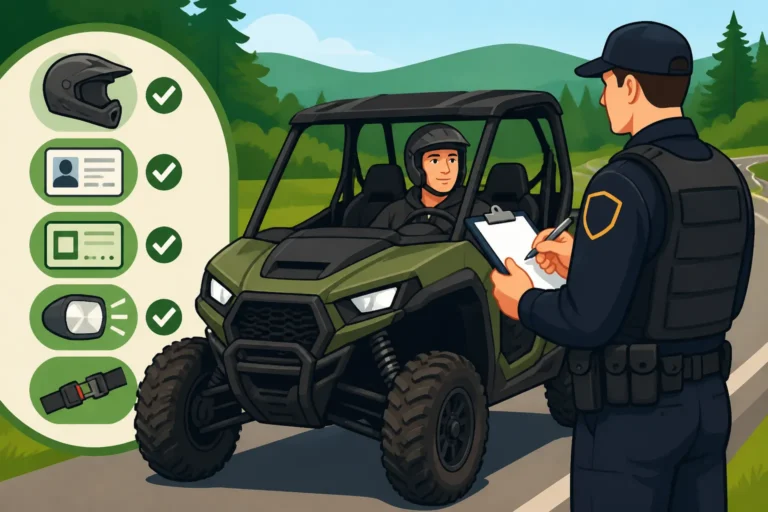
Before you even think about putting tires on a designated town road, your machine needs to be properly equipped and registered. This isn't just about being a responsible rider; it's a legal requirement that wardens and local law enforcement actively check. First and foremost, your ATV or UTV must be registered with the Vermont Department of Motor Vehicles (DMV). This involves paying a fee and obtaining a registration sticker and a plate. [Vermont ATV Registration Cost] includes these necessities, and an expired registration is a surefire way to earn a penalty. The plate itself isn't just for show; [Vermont Plate Mounted on the Rear] is where it legally needs to be, clearly visible.
Beyond registration, insurance is non-negotiable. [Vermont Requires ATV Liability Insurance] with specific minimum coverage amounts. Carrying proof of this insurance with you at all times while riding on public ways is essential. If you're stopped, and you can't produce proof of insurance, you could face a fine. Then there's the helmet law: [Vermont ATV Helmet Law for Every Rider] means everyone, regardless of age, must wear a DOT-compliant helmet while operating or riding as a passenger on an ATV or UTV on public land or designated roads. Additional [Vermont ATV Equipment Requirements] include working headlights, tail lights, and often mirrors, depending on the specific town ordinance and how it defines road-legal operation. Some aftermarket parts, like those from SuperATV, can help ensure your machine is equipped with durable and compliant lighting and mirror solutions, but always check local laws for specifics.
The Difference Between a Warning, a Waiver, and a Fine
When you're stopped by an officer for a potential violation, it's not always an immediate trip to the fine book. There's a spectrum of enforcement actions. For minor, first-time infractions, an officer might issue a verbal warning, giving you a chance to correct the issue without penalty. This often happens if the violation is easily fixable, like a slightly obscured plate or a momentary lapse in judgment that isn't endangering others. It's a moment to learn and move on.
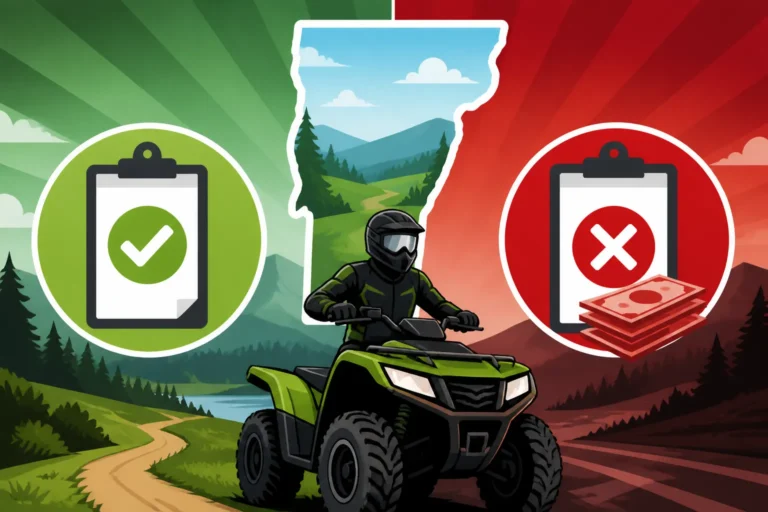
Next up is a "waiver fee," which is essentially an admission of guilt that allows you to pay a set amount without having to appear in court. This is common for many lower-level municipal ordinance violations, offering a quicker resolution. You waive your right to contest the ticket, pay the specified amount, and that's usually the end of it. [Waiver Fee or Full Fine for a Vermont Violation] explains this option further. However, for more serious offenses, or repeat violations, you might be issued a full citation that requires a court appearance or carries a more substantial fine, often with additional penalties like points on a driving record or suspension of ATV privileges. The severity of the action largely depends on the nature of the violation, whether it's a state law or a town ordinance, and the officer's discretion.
Common ATV Road Violations and Their Associated Fines in Vermont
Vermont's law enforcement takes ATV and UTV safety seriously, especially on roads. It's not uncommon for wardens and local police to be out on patrol, particularly in popular riding areas, looking for compliance with regulations. Understanding the most frequent violations can help you steer clear of trouble.
Riding on Unapproved Roads or Closed Areas
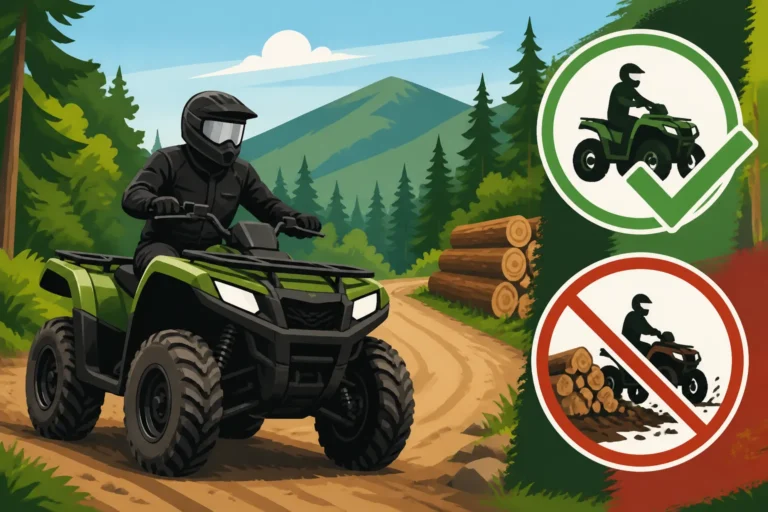
This is arguably the most common and often the most costly mistake riders make. Vermont is dotted with dirt roads, old logging paths, and Class 4 roads that look like prime riding territory. However, if a town has not explicitly opened these roads for ATV use through a selectboard vote and proper signage, riding on them is a violation. This includes riding on state highways, even to get from one section of a trail to another, unless a specific crossing point has been designated and is clearly marked. Imagine the frustration: you're just trying to connect a few sections, you think you're in the clear, and suddenly, blue lights. [Vermont ATV Rules on a Class 4 Road] are particularly tricky because while these roads are public, they are often unmaintained and are not automatically open to ATVs.
The fines for riding on unauthorized roads can escalate, sometimes incorporating trespass charges if you cross private land without permission. These aren't minor parking tickets; they can involve significant monetary penalties, and in some cases, your machine could even be impounded. Landowner permission is paramount in Vermont, and even on public lands, specific designations are needed. [Vermont Trespass Law for Riders] applies equally to ATV operators, meaning if you venture off a designated route onto private property or closed public land, you could face civil and criminal penalties. It's a reminder that a scenic shortcut might turn into a very expensive detour.
Lacking Proper Registration, Plate, or Insurance
These are straightforward violations that are easy to check and enforce, making them frequent reasons for stops and fines. If your ATV or UTV isn't registered at all, or if its registration has expired, you're immediately in violation. The DMV issues a registration sticker that needs to be prominently displayed, typically on the front fender or windshield. An unreadable or missing sticker is like having no registration at all in the eyes of the law. Beyond the sticker, your physical registration plate must be securely mounted and clearly visible. As mentioned earlier, [Vermont Plate Mounted on the Rear] is the standard requirement, but towns like Brighton might have additional local ordinances, like asking for a front plate too, though this is rare.
Perhaps even more critical is the issue of insurance. [Vermont ATV Insurance Requirements] are specific and mandatory for operating on public roads. If you're pulled over and cannot provide proof of liability insurance, you will likely face a fine. The state sets minimum coverage amounts, and simply having "some" insurance might not be enough if it doesn't meet Vermont's requirements. Penalties for these types of administrative violations can include fines that start in the dozens of dollars and can quickly climb into the hundreds, especially for repeat offenses or if multiple violations are stacked (e.g., no registration and no insurance). These are fundamental prerequisites for road use and are strictly enforced to protect everyone.
Violations Related to Rider Conduct and Equipment
Once you're legally on a designated road, how you ride and the condition of your machine become the focus. Speeding is a common issue. While many ATV trails allow for varied speeds, town roads have specific limits, often 25 mph or even lower in village areas. Ignoring these can lead to fines, just like in a car. [Vermont ATV Speed Limits on Town Roads] are there for a reason – safety for all road users, including pedestrians, cyclists, and vehicles. For instance, [Brighton's 25 mph Cap in Vermont] is a clear example of a town setting its own rules for local ATV routes.
Curfews are another critical aspect of rider conduct. Many towns that open roads to ATVs impose specific hours of operation. Riding outside these hours, especially late at night, can result in a fine. [Brighton's Night Curfew in Vermont] is one such example, where riding might be prohibited after a certain hour to reduce noise disturbances for residents. Noise itself can be a violation, even if you're within legal hours. [Vermont Muffler and Noise Rules] are in place to prevent excessively loud machines from disrupting communities. While modifying your machine for performance is common, installing an aftermarket exhaust that exceeds legal sound limits, even if it's a high-quality part, can lead to a ticket. Finally, helmet law violations are simple but serious. If you or a passenger aren't wearing a DOT-compliant helmet, or if it's not properly fastened, you can expect a fine.
Here's a quick overview of some common violations and what you might expect:
| Violation Type | Example Scenario | Initial Enforcement Action | Potential Fine Range (Illustrative) |
|---|---|---|---|
| Unauthorized Road Use | Riding a Class 4 road not designated for ATVs | Citation / Trespass Charge | $100 – $500+ |
| Expired Registration | Registration sticker is past its valid date | Waiver / Citation | $50 – $200 |
| No Proof of Insurance | Unable to show valid liability insurance | Citation | $150 – $400 |
| Helmet Violation | Rider or passenger not wearing a DOT-compliant helmet | Citation | $50 – $150 |
| Speeding on Town Road | Exceeding posted speed limit (e.g., 25 mph) | Citation | $75 – $300 (depends on speed) |
| Operating After Curfew | Riding a designated route outside permitted hours | Citation | $50 – $150 |
| Improper Plate Display | Plate missing or obscured | Warning / Waiver | $25 – $75 |
| Excessive Noise | Modified exhaust exceeding decibel limits | Citation | $100 – $300 |
Note: These ranges are illustrative and can vary based on specific town ordinances, state statutes, officer discretion, and whether it's a first or repeat offense. Always check the official Vermont statutes and local town ordinances for exact figures.
Understanding the Enforcement and Appeals Process for Vermont ATV Fines
Receiving an ATV violation can be jarring, but it's important to know who enforces these rules and what your options are if you do get a ticket. The process isn't always straightforward, but understanding your rights and responsibilities can make a big difference.
Who Enforces the Rules: Wardens, State Police, and Local Officers
In Vermont, several different agencies have the authority to enforce ATV regulations, which can sometimes add to the confusion. You're most likely to encounter game wardens from the Vermont Fish & Wildlife Department. These officers are specifically trained in outdoor recreation laws and frequently patrol trails and designated ATV routes. They are often the first point of contact for riders and are well-versed in both state statutes and local club rules.
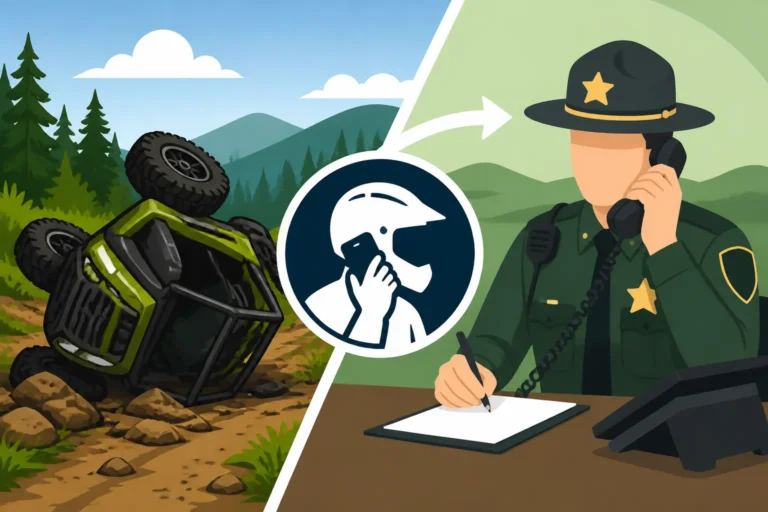
However, it's not just wardens. The Vermont State Police also have jurisdiction over all public roads and can issue citations for ATV violations. This means if you're stopped on a state highway, even for a brief crossing, a State Trooper can enforce registration, insurance, and helmet laws. Lastly, local police departments and town constables in communities that have opened roads to ATVs are also authorized to enforce their town's specific ordinances, such as curfews, speed limits, and designated route usage. [Who Enforces ATV Rules: Warden or Town Officer?] can really depend on where you are riding and the nature of the violation. It's wise to assume that any law enforcement officer you encounter has the authority to check your compliance.
What to Do If You Receive an ATV Road Violation Ticket
If you find yourself with an ATV road violation ticket, don't panic. You generally have a few options, and understanding them is crucial. First, carefully read the ticket. It will outline the specific violation, the issuing agency, and your required actions. For many municipal ordinance violations, you'll be given the option to pay a "waiver fee" by a certain date. This means you admit guilt and pay the fine without having to go to court. This is often the simplest and quickest way to resolve minor infractions.
However, if you believe you were wrongly cited, or if the violation carries significant penalties, you have the right to plead not guilty and request a court hearing. This gives you the opportunity to present your side of the story, provide evidence (like proof of valid registration or insurance if that was the issue), or argue that the law was misapplied. [Appealing a Town Ordinance Ticket] involves following the instructions on your citation for how to notify the court of your plea. This usually needs to be done within a specific timeframe, typically 20-30 days. It's always a good idea to gather any documentation or witnesses that support your case if you decide to contest the ticket. Ignoring a ticket is never a good idea, as it can lead to additional fees, license suspension, or even a warrant for your arrest.
Preventing Future Violations: Best Practices for Vermont Riders
The best way to deal with ATV fines for road violations is to avoid them altogether. Proactive steps can save you a lot of headache and money. First and foremost, know before you go. This means researching the specific town ordinances for any area you plan to ride. Maps are often available online through town websites or local ATV clubs. [Vermont ATV Road Rules by Town] vary, so what's legal in one place might not be in another. Print out maps, or have them easily accessible on your phone, and stick to the designated routes. Don't assume a dirt road is open simply because it looks like a trail.
Secondly, ensure your machine is always in compliance. This includes valid registration, a clearly displayed plate, and up-to-date liability insurance. Always carry physical or digital proof of these documents with you. [Vermont Registration Paperwork Checklist] can help you stay organized. Beyond paperwork, make sure your machine meets all equipment requirements: working headlights, tail lights, and compliant mirrors. If you’re modifying your machine, consider parts that enhance performance while still adhering to road-legal requirements. For example, some riders add durable skid plates or robust brush guards, from brands like SuperATV, to protect their vehicle on rugged trails, but these types of enhancements typically don't affect road legality unless they significantly alter vehicle dimensions or weight. If you're using aftermarket parts that change sound or width, always double-check they comply with Vermont's rules.
Finally, ride responsibly. Adhere to posted speed limits, respect curfews, and always wear a DOT-compliant helmet. Be mindful of noise, especially when passing through residential areas. Remember that ATV trails are a privilege, often granted by generous private landowners and town selectboards. Respecting the rules helps maintain positive relationships within communities, ensuring these riding opportunities continue for everyone.
Disclaimer
This article is for general informational purposes only and does not constitute professional advice. Laws, prices and regulations vary by location and change over time. Consult a qualified professional for guidance on your specific situation.