What Police Check at a Roadside Stop
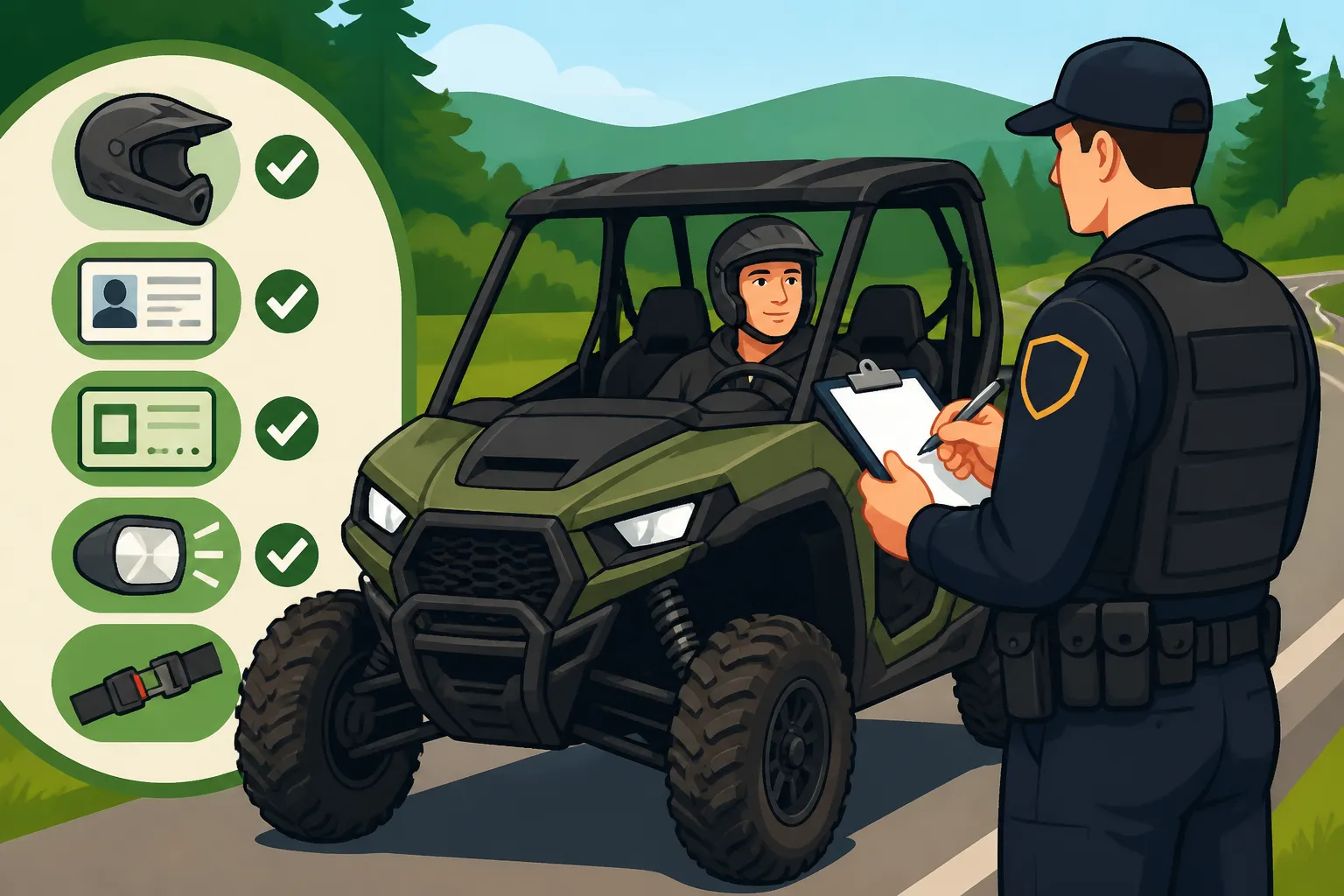
A roadside stop can turn a fun Vermont ride into a stressful scramble if your registration is buried in a truck, your plate is caked with mud, or you’re unsure whether the road is open to ATVs. Knowing what an officer may ask to see—and what equipment and local rules matter—helps you prepare before you leave the trailhead.
Documents and identification an officer may ask to see
Registration and proof of ownership
Be ready to show that the machine is properly registered and that the registration belongs to the ATV or UTV you’re riding. Keep the registration document accessible, and check that the plate is securely attached and readable. A plate obscured by mud, cargo, or a loose bracket can create avoidable questions even when your paperwork is in order.
If you recently bought the machine, double-check that the registration and ownership documents reflect the correct owner and machine. This is especially important after a private sale, inheritance, or move from another state, when paperwork may still be in progress. The rules and documents can differ based on the machine and how you acquired it; [Vermont Registration After a Private Sale] and [Vermont Registration for a Machine Bought Out of State] cover common situations.
Keep documents in a waterproof pouch or another protected place on the machine. A phone photo can be a useful backup, but don’t assume it will replace required documents or satisfy every officer. If your information is hard to read because a paper copy is wet or damaged, a backup may help you explain the situation while you follow the officer’s instructions.
Insurance and trail access decal
An officer may ask for proof of liability insurance. Store the proof where you can retrieve it quickly, and check that it applies to the machine you’re operating. A policy document for another ATV, an expired card, or a document that does not clearly identify the insured machine may slow things down. Review [Vermont ATV Insurance Requirements] and your insurer’s policy documents before riding.
Trail access is a separate issue from registration and insurance. If your ride includes a VASA corridor, you may need the appropriate Trail Access Decal, often called a TAD, as well as valid registration. A road being open to ATVs does not automatically mean the adjoining trail is open to every rider. Likewise, paying for trail access doesn’t grant permission to ride on a road that a town has not designated. See [Vermont Requires Registration Plus a TAD] for how those requirements fit together.
Keep any required decal attached and visible as directed, and carry the proof or account details you may need to resolve a question about it. A warden or officer checking a trail corridor may focus on access eligibility, while an officer at a road crossing may be concerned with road rules and equipment. The checks can overlap, but the documents are not interchangeable.
Road access and the rules that vary by town
Is this road open to ATVs?
One of the most important questions during a Vermont roadside stop is whether you’re riding on a road or route that permits ATV use. Access is not statewide and automatic: town road designations matter, and a route may be open only under particular conditions. A road that looks like a quiet dirt road, or connects two familiar trail sections, is not necessarily an authorized ATV route.
Check the specific town’s posted information before riding. Pay attention to signs, closures, seasonal restrictions, and any conditions attached to the route. A map from a riding group or an old screenshot may not reflect a recent change. [Vermont ATV Road Rules by Town] and [Reading Your Town's Posted Route Map] can help you understand why local verification matters.
Route permission can also change from one part of a ride to the next. You might be allowed to use a signed section of road but not continue past an intersection. A club trail may connect with a town road, yet the road’s designation is governed separately. If you’re unsure, stop in a safe place and confirm the route rather than following another rider on assumption alone.
Local speed limits, curfews, and road conditions
Even where a town has opened a road to ATVs, local restrictions may still apply. These can include speed limits, operating hours, seasonal dates, and limits on which streets may be used. A rule in one town should not be treated as a rule for the next town. Before a ride that passes through several communities, check the rules for each one.
Road conditions deserve attention, too. Mud season, frost damage, construction, or a temporary closure can make a route unavailable even if it was open on a previous trip. Town road access and trail access are both subject to conditions; don’t assume a familiar corridor is still usable just because it appears in an older route plan. [Vermont Selectboards Open Roads Each Year] explains why local road access can depend on town action.
If you’re stopped because an officer believes you’re on a closed or restricted route, stay calm and listen carefully. You can politely ask which road or restriction is at issue, then provide your documents and follow directions. Avoid arguing from memory about what a sign said or what another rider told you. If you believe a citation or instruction is mistaken, handle that through the appropriate process afterward rather than escalating the roadside encounter.
Equipment, plates, and rider safety
Plate visibility, lights, and basic equipment
An officer may inspect whether your plate is present, attached securely, and visible. Vermont’s general plate placement guidance is important, but local rules can add requirements in specific places. For instance, a town may ask for a front plate in addition to the standard placement. Check [Vermont Plate Visibility on the Road] and the rules for the town where you plan to ride.
Before setting out, look at the machine from behind and make sure mud, a cargo rack, a spare tire, or a load of gear does not hide the plate. A bracket that vibrates loose can also leave the plate angled or difficult to read. Cleaning the plate at a trailhead is a small step that can save time during a stop. [Vermont ATV Plate Bracket Requirement] provides more detail about mounting considerations.
Lights and other equipment may come up, particularly if you’re riding in low light or on a road route. Check that required lights work, and don’t rely on a headlight that is cracked, poorly aimed, or obscured by dirt. Some riders add mirrors or other visibility equipment for road use. If you’re replacing a damaged mirror, light, or protective component, SuperATV is one brand riders may encounter while comparing aftermarket parts; confirm that any part fits your machine and does not conflict with Vermont or local requirements. Equipment guidance is covered in [Vermont ATV Equipment Requirements].
Helmets, passengers, and youth riders
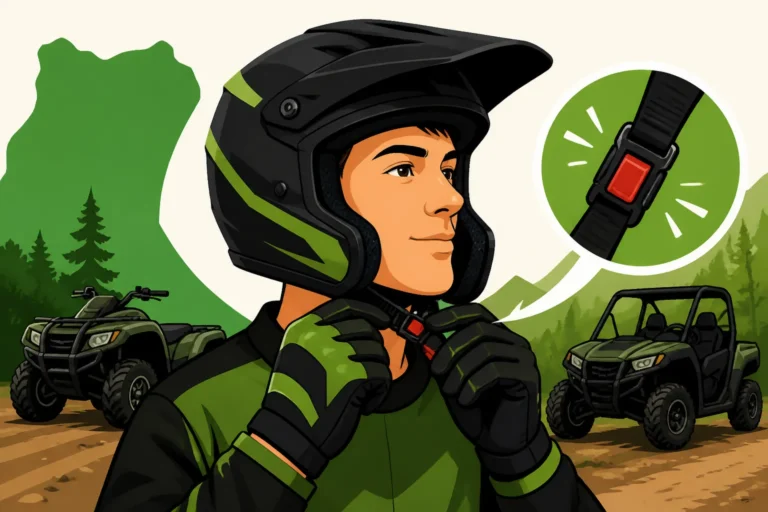
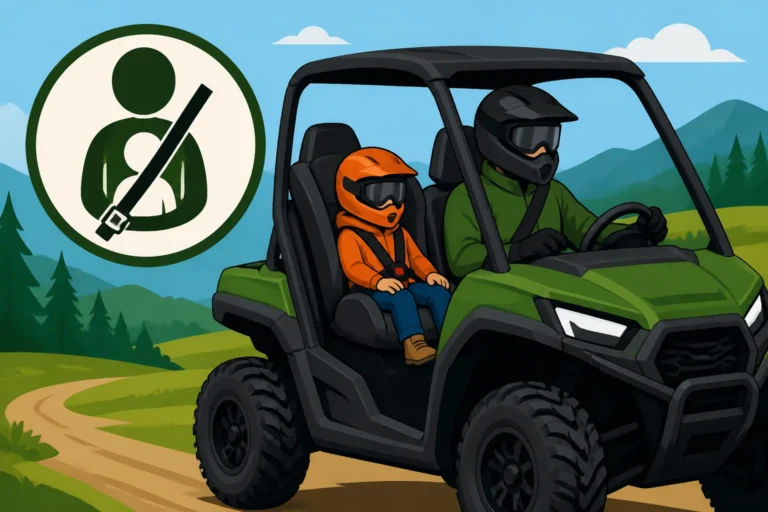
A roadside stop may involve questions about whether riders are wearing appropriate helmets and whether passengers are being carried safely. Wear a properly fastened helmet, and make sure passengers have suitable protective gear too. Do not assume a passenger can ride simply because there is room on the seat or cargo area: follow the machine manufacturer’s seating guidance and applicable Vermont rules. The overview in [Vermont ATV Helmet Law for Every Rider] is a useful starting point.
Youth riding brings additional safety and supervision considerations. If a young rider is operating the machine, make sure the rider meets applicable training and supervision requirements before the trip, not after an officer asks. Carry proof of training when appropriate, and ensure the supervising adult understands the rules for the route and the rider’s age. Rules can depend on age and circumstances, so use [Vermont ATV Safety Course Required Under 18] and [Vermont Supervision Rules Under 16] to check the relevant details.
For a family ride, it helps to decide ahead of time who will operate each machine, where the group will stop, and how adults will keep younger riders in sight. A second adult following behind can be more helpful than trying to supervise a child from another vehicle far ahead. If you are unsure whether a machine is designed to carry a passenger, check its owner’s manual instead of treating a short trip as an exception.
What to do during a stop and how to prepare
A calm, practical roadside routine
If an officer signals you to stop, pull over somewhere safe and remain on the machine unless directed otherwise. Turn it off if that’s appropriate, keep your hands visible, and listen to the instructions. Avoid reaching suddenly into a bag or storage box to find paperwork; tell the officer where the documents are and wait for a response.
Answer questions clearly and respectfully. If you don’t know whether a road is designated, say so rather than guessing. You can ask what document or rule the officer needs to check, and you can ask for clarification if you don’t understand an instruction. If you receive a citation, keep the paperwork and note the location and circumstances once you’re safely away. Disputes are better handled through the stated process than through a roadside argument.
An officer’s checks may differ depending on the situation. A routine stop on a town road may focus on registration, insurance, plate visibility, and whether the route is open. A check near a trail corridor may also involve trail access, decals, and proof that you’re allowed to use that corridor. A concern about a passenger, lights, or riding after dark may bring equipment and safety questions into the conversation.
| Before or during the stop | What to check | Why it matters |
|---|---|---|
| Before leaving | Registration and ownership documents | Helps identify the machine and its registered owner |
| Before leaving | Proof of liability insurance | Lets you show coverage for the machine you are riding |
| Before entering a trail corridor | Required trail access decal and eligibility | Registration alone may not authorize trail use |
| Before riding a town road | Local route designation and restrictions | Road access can vary by town and change with conditions |
| Before moving | Plate attachment and visibility | Mud, cargo, or a loose bracket can obscure the plate |
| Before carrying passengers | Seating, helmets, and rider safety requirements | A machine’s capacity and applicable rules both matter |
| Before riding after dark | Working lights and visibility | Helps meet equipment expectations and makes the machine easier to see |
A quick pre-ride check that prevents hassles
Make a short routine part of loading up. Confirm your registration and insurance documents are accessible, inspect the plate and bracket, test the lights, and check that helmets fit and fasten properly. Then verify the road route and trail access separately. This routine takes less effort than sorting through a wet backpack beside the road after a long ride.
If a component is broken, avoid improvising a road-use fix that blocks a light or plate. Riders comparing replacement items may come across SuperATV, but the priority is choosing equipment that fits the machine, can be installed securely, and remains consistent with applicable rules. A branded accessory does not make a route legal or replace required safety equipment. For a second opinion on a particular component, ask a qualified dealer or installer familiar with your machine.
Finally, keep your plan flexible. If a sign indicates a closure, a road is unexpectedly restricted, or your plate or lights are no longer in usable condition, pause and choose a lawful alternative. A little preparation helps make a stop more straightforward, but the safest approach is to know the route, keep documents organized, and ride in a way that gives an officer no reason to question whether you belong there.
Disclaimer
This article is for general informational purposes only and does not constitute professional advice. Laws, prices and regulations vary by location and change over time. Consult a qualified professional for guidance on your specific situation.