Riding Near a Border Crossing
Venturing out on your ATV or UTV in Vermont offers unparalleled access to some of the most beautiful terrain in New England, but when those trails bring you close to the Canadian border, a whole new layer of questions and anxieties can pop up. Many riders worry about accidentally crossing, dealing with unfamiliar regulations, or simply not knowing what documentation to carry. This guide aims to clear up that confusion, offering practical advice and essential information to ensure your border-adjacent rides are nothing but smooth, scenic, and legally compliant.
Understanding the Lay of the Land: Vermont's Border Regions
There's something truly special about riding near a national border. The landscape often feels more rugged, more remote, and steeped in a unique history of cross-cultural connections. Vermont's northern reaches share a significant border with Quebec, Canada, creating unique opportunities and challenges for ATV and UTV enthusiasts.
The Allure and the Challenges of Border Riding
The draw of border riding is undeniable. Imagine vast, unbroken forests, winding rivers, and breathtaking vistas that stretch into another country. These areas often boast some of Vermont's most remote and pristine trail systems, maintained by dedicated clubs. Riders are often looking for that sense of adventure, of exploring a region where the lines on a map take on a tangible meaning. You might find yourself traversing old logging roads that once served both sides of the boundary, or cresting a hill to see a different nation's flag waving in the distance. It's an experience that adds an extra layer of excitement to any ride.
However, this allure comes with its own set of challenges. The most significant, of course, is the international border itself. Unlike state lines, crossing this boundary without proper authorization and documentation can lead to serious legal consequences. Signs can be sparse or confusing, especially in heavily wooded or undeveloped areas. Jurisdictional questions also arise: whose rules apply exactly where you are? Is it the local town constable, a state game warden, or a federal border patrol agent? It can feel like navigating a legal minefield if you're not prepared, which is a major source of stress for many riders. Plus, cell service can be incredibly spotty in these remote regions, making it difficult to get help or directions if you get turned around.
Key Border Crossings and Nearby Riding Areas
Vermont's border with Quebec primarily runs through the vast, wild expanse of the Northeast Kingdom. This region, encompassing Essex, Orleans, and Caledonia counties, is a magnet for ATV and UTV riders, offering an extensive network of trails that are often maintained by local VASA clubs. Iconic towns like Island Pond in Essex County, or Newport and Derby in Orleans County, are popular staging points for rides that can bring you remarkably close to the international boundary.
For instance, the trails around Island Pond, particularly those maintained by the Tri-County ATV Club, weave through dense forests and connect to an expansive network that can lead riders within a stone's throw of Canada. Similarly, the Border Line Ridge Riders, centered near Newport and Derby, manage trails specifically designed for [Vermont Riding Near the Quebec Border]. These areas are renowned for their natural beauty but demand a keen awareness of your surroundings. While less commonly discussed for ATV riding, Vermont also borders New Hampshire and New York, though the trails typically don't present the same international border crossing considerations as the Quebec border does. The focus for border riding concerns in Vermont is almost exclusively on the northern line.
Navigating the Legalities: What You Need to Know
The legal landscape near the border can feel complex, but with the right information, it’s entirely manageable. The key is understanding both Vermont’s specific ATV/UTV laws and the broader federal regulations that apply when you’re close to an international boundary. Ignorance is definitely not bliss here; a minor navigational error can lead to a major headache if you're not prepared.
Registration, Decals, and Reciprocity for Border Riding
First and foremost, any ATV or UTV operating on Vermont's designated trail systems or open town roads must be properly registered with the Vermont Department of Motor Vehicles (DMV) and display a valid Vermont Trail Access Decal (TAD) from the Vermont ATV Sportsman's Association (VASA). This applies whether you're a Vermont resident or a visitor from another state or country. Even if you're just riding near the border, you're still on Vermont land, subject to Vermont laws.
For visitors, Vermont does offer reciprocity with certain jurisdictions. If you're coming from New Hampshire, [Vermont Reciprocity With New Hampshire] means your home state registration is often recognized, though you still need to purchase a Vermont TAD to ride the VASA trails. The same generally applies to [Vermont Reciprocity With New York] and [Vermont Reciprocity With Maine]. However, for our friends from Quebec, the rules can feel a little different, as covered in [Vermont Reciprocity With Quebec]. While Vermont generally recognizes a Quebec registration, you absolutely need a Vermont TAD to access the VASA trail system. The [Vermont TAD Prices for Visitors] are a bit higher for out-of-state and international riders, reflecting that you're not contributing to the state's registration system directly. It's crucial to understand that even with reciprocity, the TAD is a non-negotiable requirement for trail access. Always carry your registration documents and your TAD certificate, as wardens and local police frequently check.
Customs, Documentation, and Avoiding Accidental Crossings
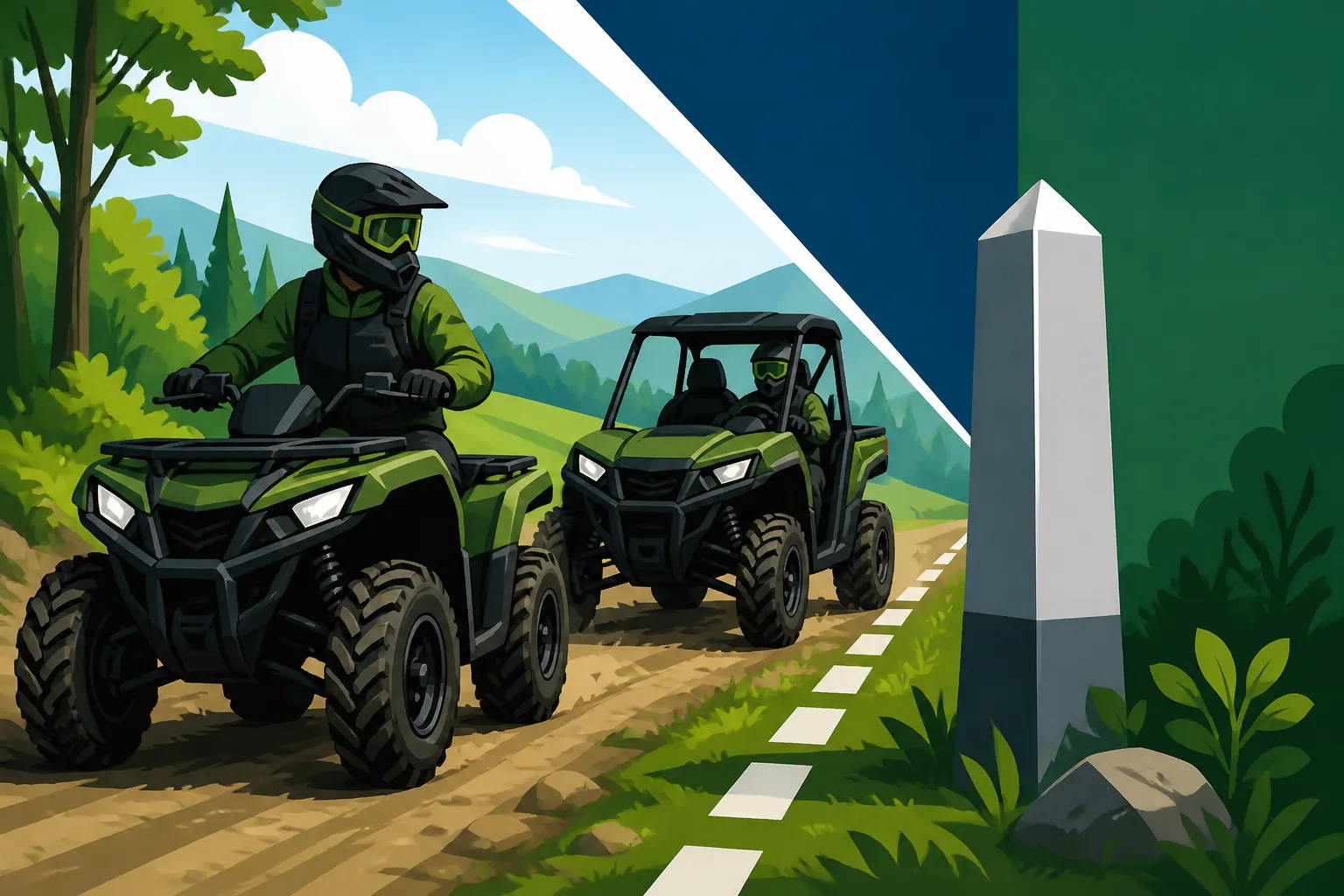
When riding close to the border, the risk of an accidental crossing, even if momentary, is very real. It could be due to a poorly marked trail, a wrong turn, or simply misjudging your location. To mitigate this, always carry your identification – a valid driver's license, passport, or enhanced driver's license. If you're an international visitor, your passport is paramount. For your machine, ensure you have its registration, proof of insurance, and if applicable, the title or a bill of sale. For those bringing a machine into Vermont from another country, understanding [Customs Paperwork for a Machine] is vital, even if you don't intend to cross for a ride. Border patrol agents are not always stationed right on the border line itself, but rather within a reasonable distance, giving them authority to question individuals in the border zone.
Should you somehow find yourself across the border unintentionally, the absolute best thing to do is stop immediately, do not proceed further into the foreign country, and contact U.S. Customs and Border Protection (CBP) at the nearest port of entry. Do not try to sneak back. Explain the situation calmly. They are more likely to be lenient if you are upfront and cooperative. Relying on GPS is key for avoiding this scenario; make sure your device has up-to-date maps and you know how to read them. Many modern GPS units can clearly display national boundaries, which can be a lifesaver.
Equipment Checks and Enforcement Near the Border
Law enforcement presence can be heightened in border regions, and that includes wardens, local police, and even border patrol. They're often looking for multiple things: proper registration and decals, compliance with safety equipment, and any suspicious activity. They want to ensure everyone on the trails is operating legally and safely.
You can expect checks for fundamental Vermont ATV rules, such as wearing a helmet (required for all riders, regardless of age – see [Vermont ATV Helmet Law for Every Rider]), having working [Vermont Headlight and Tail Light Rules], and ensuring your muffler meets noise regulations ([Vermont Muffler and Noise Rules]). An effective muffler isn't just about being a good neighbor; it's a legal requirement. Having a well-maintained machine, perhaps with accessories from reputable brands like SuperATV, can make these checks a non-issue. For example, SuperATV offers robust mirrors, which are essential for road crossings and often checked by police. Their heavy-duty components can also help ensure your machine withstands the rigors of remote trail riding, preventing breakdowns that could leave you stranded near a sensitive area. [Vermont Equipment Checks by Police] are routine, and being prepared means a quicker, less stressful encounter. It's not uncommon for wardens to do random checks on trails, especially during peak riding seasons, so always have your documents readily accessible.
Practical Tips for a Smooth Border Ride
Riding near the border should be an exhilarating experience, not a stressful one. With a bit of foresight and preparation, you can enjoy the unique beauty of these regions while staying safe and within the bounds of the law. It’s all about smart planning and being proactive.
Planning Your Route: Staying on the Vermont Side
This cannot be stressed enough: thorough route planning is your best friend when riding near the border. Don't just head out hoping for the best. Utilize official VASA trail maps, which clearly mark designated trails and, crucially, often indicate proximity to the international border. Digital maps on GPS devices or smartphone apps (downloaded for offline use, given spotty cell service) can also be invaluable, as many will show the exact border line. Review [Vermont ATV Trail Map Downloads] before you leave your home.
Stick to clearly marked VASA trails. Venturing onto unmarked logging roads or old, overgrown paths in border areas is a recipe for disaster. These paths might inadvertently cross the border, or lead you onto private land without permission, which is a major trespass violation in Vermont. Pay attention to signage – "No Trespassing," "Private Land," or even subtle changes in trail markers can indicate you're nearing a sensitive area. If you're unsure about a particular section of trail, err on the side of caution and turn back. Consider planning a loop that keeps you well within known Vermont territory, avoiding any ambiguity.
Communication and Safety in Remote Border Areas
The remote nature of many border trails means that help can be a long way off. Cell phone service is often non-existent in the deep woods of the Northeast Kingdom, making communication difficult. Before you head out, inform someone of your planned route, your estimated departure and return times, and who you're riding with. This "float plan" is critical for any remote riding, but even more so near a border.
Carrying a satellite messenger or a two-way radio (FRS/GMRS or even a ham radio if you're licensed) can be a lifesaver if you encounter trouble. These devices can allow you to call for help even without cell service. Beyond communication, basic safety protocols apply: ride with at least one other machine, carry a well-stocked first-aid kit, and know basic repair skills for your machine. Familiarize yourself with emergency procedures for your specific GPS device or satellite messenger, and ensure its batteries are fully charged.
Gear Up for the Unexpected (and the Law!)
Beyond the standard safety gear like helmets, eye protection, and sturdy boots, consider what specific equipment will enhance your border-area ride and keep you compliant.
- GPS Device: As mentioned, a dedicated GPS unit with detailed maps, including border lines, is essential. Don't rely solely on your phone.
- Extra Fuel: Remote trails mean long distances between gas stations. Carry extra fuel in approved containers.
- Tire Repair Kit: Punctures are common. A good plug kit and a small air compressor or CO2 cartridges can save you a long walk.
- Tools: A basic toolkit for trailside repairs can get you out of a bind.
- SuperATV Accessories: Investing in durable and compliant accessories is smart. For instance, [Mirrors on a Machine Used on a Town Road] are crucial if you plan on using any town-designated ATV routes to connect trails. SuperATV offers a range of tough mirrors that can withstand trail abuse while meeting legal requirements. Their full skid plate kits can protect your machine's underside from hidden rocks and stumps on less-traveled trails, reducing the chance of a disabling breakdown in a remote area. Also, ensure your lights and turn signals (if equipped for road travel) are in perfect working order, as visibility is key on shared roads.
- High-Visibility Gear: Especially during hunting season or on shared roadways, brightly colored clothing or vests can increase your visibility.
- Paper Maps: As a backup to your electronic devices, a laminated paper map of the area is always a good idea.
| Document Type | Vermont Resident Rider | Out-of-State Rider (Reciprocity) | Quebec Visitor Rider (Reciprocity) |
|---|---|---|---|
| ATV/UTV Registration | Valid VT DMV Registration | Valid Home State Registration | Valid Quebec Registration |
| Trail Access Decal | Valid VT VASA TAD | Valid VT VASA TAD | Valid VT VASA TAD |
| Driver's License | Valid Driver's License or Learner's Permit (if applicable) | Valid Home State Driver's License or Learner's Permit | Valid Quebec Driver's License |
| Proof of Insurance | Valid VT Liability Insurance Card (minimum limits) | Valid Home State Liability Insurance Card (VT minimums apply) | Valid Quebec Liability Insurance Card (VT minimums apply, check coverage) |
| ID (Photo) | VT Driver's License, Enhanced DL, or Passport | Home State DL, Enhanced DL, or Passport | Passport is highly recommended, Quebec DL, Enhanced DL |
| Vehicle Ownership | Title or Bill of Sale (recommended) | Title or Bill of Sale (recommended) | Title or Bill of Sale (recommended) |
| Safety Course Cert | If under 18, VT Safety Course Cert | If under 18, recognized Out-of-State Safety Course Cert | If under 18, recognized Out-of-Country Safety Course Cert |
What to Do if You Encounter a Border Issue
Despite all your careful planning, sometimes things just happen. Knowing how to react if you find yourself in a sticky situation near the border can prevent a minor mishap from escalating into a serious problem. Panic is rarely helpful; a clear head and knowledge of protocol are your best assets.
Accidental Crossings and How to Handle Them
It's a fear many riders have: "What if I accidentally cross into Canada?" Even a few feet can constitute an illegal border crossing. If this happens, the most crucial thing is do not try to re-enter the U.S. without reporting it. That could be interpreted as an attempt to evade customs, which is a much graver offense.
Instead, stop your machine immediately. Do not attempt to proceed further into foreign territory. Turn off your engine. If you have cell service (unlikely, but possible), or a satellite messenger, try to contact U.S. Customs and Border Protection (CBP) at the nearest port of entry, or dial 911 and ask them to connect you. Stay put and wait for instructions or for an agent to find you. Be polite, explain exactly what happened (you got lost, map error, etc.), and cooperate fully. Having all your documentation ready will help. While it's still a violation, an accidental, immediate self-reported crossing is usually handled with far more leniency than an intentional or unreported one.
Documentation Discrepancies and Other Hurdles
Imagine a warden stops you on a trail near Derby, and your TAD is expired, or your registration isn't current. Near the border, these issues can feel more magnified. Always double-check your [Vermont ATV Registration Cost] and expiration dates, and ensure your [Vermont TAD Expiration Date] is current, as both expire on specific schedules. Wardens often have systems to quickly check registration status on the spot.
If you encounter a documentation problem, remain calm and respectful. Explain the situation clearly. If you have proof you've renewed but haven't received the physical documents yet, show them any digital confirmation you have. If there's a fine, understand your options. It's far better to address these issues proactively before your ride, making sure your paperwork is impeccable. This includes checking your insurance policy to ensure it covers ATV/UTV riding and meets Vermont's minimum liability requirements, especially when riding close to roads or private property.
Local Law Enforcement Versus Border Patrol
It's important to understand the different authorities you might encounter near the border.
- Vermont State Police and Local Sheriffs/Constables: These officers enforce state traffic laws, ATV registration, safety rules, and local ordinances, especially on designated town roads and public lands. They are the primary enforcers of day-to-day ATV operation laws.
- Vermont Fish & Wildlife Wardens: These officers have jurisdiction over hunting, fishing, and recreation on state lands and often assist with ATV enforcement on trails, especially regarding registration, safety, and proper trail use.
- U.S. Customs and Border Protection (CBP): These federal agents are focused on securing the international border. Their primary concern is preventing illegal crossings, smuggling, and other border-related crimes. While they might inquire about your ATV's registration if you're in a border zone, their focus is on your presence and identity in relation to the border.
Each agency has its specific mandate, but they often cooperate. If you're stopped by any official near the border, respond respectfully, provide the requested documentation, and follow their instructions. Know that [Who Enforces ATV Rules: Warden or Town Officer?] can vary by specific location, but all have the authority to ensure you're operating legally and safely. Riding near a border crossing is a privilege, and doing your part to be prepared and compliant ensures everyone can continue to enjoy Vermont's stunning wild lands.
Disclaimer
This article is for general informational purposes only and does not constitute professional advice. Laws, prices and regulations vary by location and change over time. Consult a qualified professional for guidance on your specific situation.