Who Pays When a Rider Hits a Farm Gate
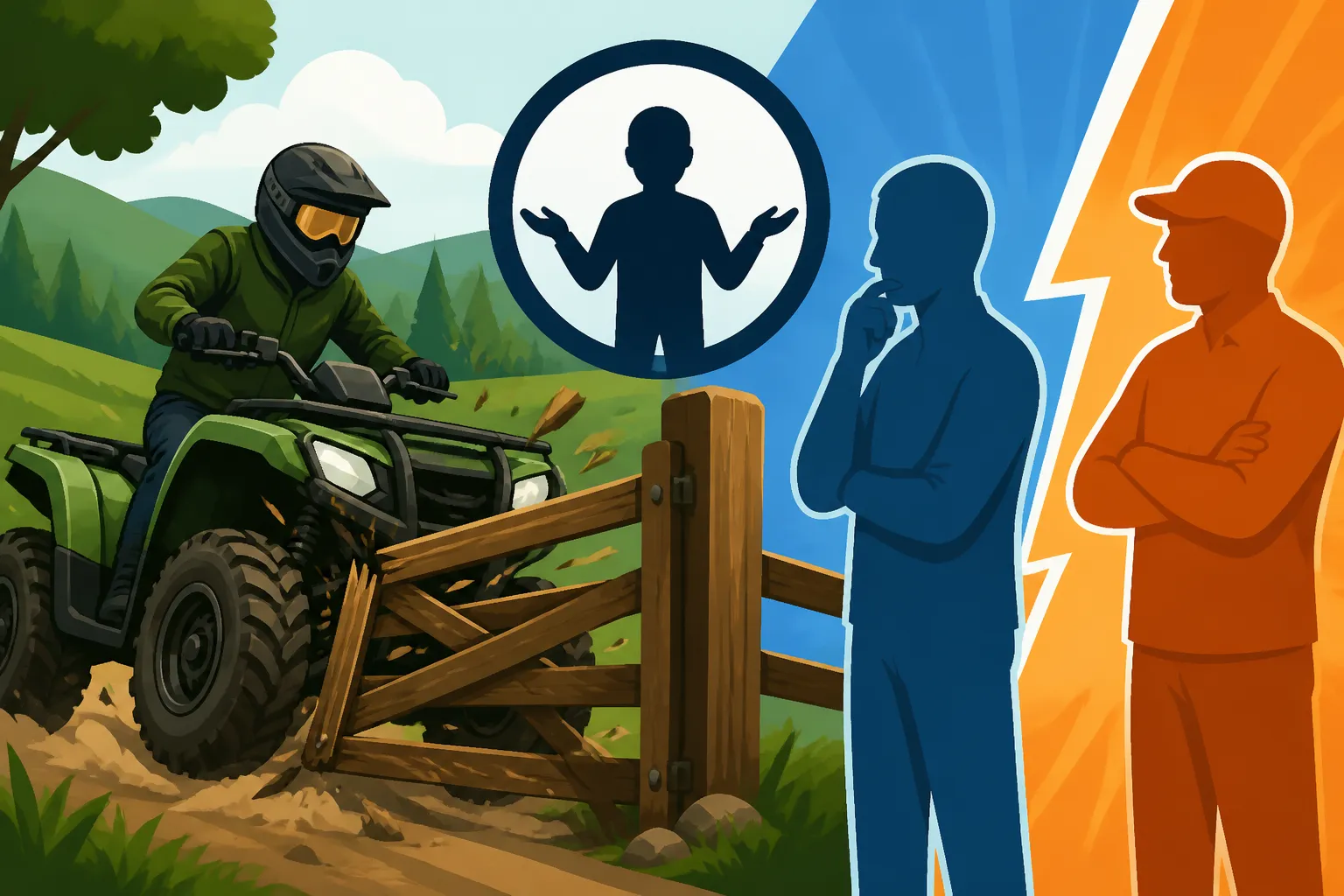
It's a beautiful day out on the trails, the engine humming, the Vermont scenery a blur of green or gold, and then bam! — a momentary lapse, a misjudgment, and suddenly, you've connected with a farm gate. Your heart sinks. Beyond the immediate shock and the potential damage to your machine, the question immediately pops into your head: "Who pays for this?" It's a valid, stressful concern that many riders silently worry about, and it touches upon the very foundation of how we enjoy ATV riding in Vermont. This guide will walk you through the complexities of liability when an ATV rider accidentally, or perhaps not so accidentally, damages a farm gate on Vermont's private lands, helping you understand the financial and community impact.
Understanding Liability on Vermont's Trail System
Riding ATVs in Vermont offers incredible access to diverse landscapes, often thanks to the generosity of private landowners. This privilege, however, comes with significant responsibilities, especially when it comes to respecting property boundaries and infrastructure like farm gates.
The Importance of Landowner Permission
Imagine for a moment, being a farmer in Vermont. Your family has worked this land for generations, and every fence post, every gate, represents an investment of time, money, and sheer hard work. Now, picture yourself graciously allowing ATV trails to cross your property, opening up your private land for others to enjoy the beauty of Vermont. This is the bedrock of the entire VASA (Vermont ATV Sportsman's Association) trail system. The vast majority of our trails are not on public land but are maintained through informal agreements and the good faith of private citizens.
This permission, though, is incredibly fragile. When a gate is damaged, it's not just a matter of a broken piece of wood or metal; it's a breach of trust. Landowners open their gates (sometimes literally) to riders, and the unspoken agreement is that their property will be respected and protected. An incident involving a damaged farm gate can immediately lead to the revocation of that permission, and it often impacts more than just the individual rider involved. A landowner might decide to close off an entire section of trail, affecting dozens or even hundreds of riders who rely on that corridor. It's a stark reminder that [Vermont Landowner Permission Holds the System Together]. The consequences extend far beyond a repair bill; they threaten the very existence of beloved riding areas for everyone.
Vermont's ATV Insurance Requirements
Now, let's talk about the practical side of protection: insurance. Most riders know that if you plan to hit any designated town roads with your ATV in Vermont, you absolutely need liability insurance. This isn't just a suggestion; it's the law. [Vermont Requires ATV Liability Insurance] for operating on these shared public ways. The minimum coverage typically includes bodily injury and property damage, designed to protect you financially if you cause an accident involving another person or their property.
The crucial question often becomes: "Does this liability insurance extend to an incident on private land, like hitting a farm gate?" In many cases, yes, your standard ATV liability policy should cover third-party property damage, even if it occurs on private land where you have permission to ride. However, and this is a significant "however," policies can vary widely. Some might have exclusions for certain types of incidents or locations. It's imperative that every rider understands their own policy's specifics before an incident occurs. Pull out your policy documents or call your insurance agent. Ask direct questions: "If I accidentally hit a farm gate on a VASA trail, would my policy cover the repair costs?" Knowing the answer beforehand can save you a tremendous amount of stress and potential out-of-pocket expenses. [Vermont ATV Insurance Requirements] are not just for road riding; they offer a crucial safety net for these unexpected moments on the trails.
Determining Fault and Financial Responsibility
When a farm gate meets an ATV, the immediate aftermath often involves assessing what happened and, more importantly, whose responsibility it is to fix it. This isn't always a straightforward answer and can hinge on the circumstances of the incident.
Accidental Damage vs. Reckless Behavior
There's a significant difference between an unavoidable accident and damage caused by a disregard for safety or trail rules. Picture this: you're navigating a winding section of trail after a recent rain, the mud is slick, and despite your best efforts to maintain control, your ATV slides unexpectedly, glancing off a sturdy farm gate that was perhaps a little too close to the corner. That's a genuine accident. You weren't trying to damage anything; it was an unfortunate consequence of challenging conditions. In such a scenario, while still responsible for the damage, the intent and context are clear.
Now, imagine a different scene: a rider flying down a trail at excessive speed, attempting a jump over a small hump, or perhaps trying to squeeze through a gate that was clearly too narrow for their machine, ignoring posted signs or common sense. This isn't an accident; this is reckless behavior. Such actions demonstrate a blatant disregard for property, safety, and the rules designed to protect both riders and landowners. If your machine, perhaps equipped with heavy-duty components from SuperATV designed for aggressive riding, is used in a reckless manner that results in damage, the consequences can be far more severe. Not only might you face the full cost of repairs, but you could also be subject to [Vermont ATV Fines for Road Violations] if the incident involved a designated town road or if local ordinances were violated. Furthermore, local VASA clubs and wardens take a dim view of such actions, which can lead to suspension of trail access or further legal repercussions. The distinction matters profoundly when determining the path forward for compensation and accountability.
The Role of Property Owners and Trail Maintenance
While the rider generally holds the ultimate responsibility for operating their machine safely, there are rare instances where the condition or placement of a gate might factor into an incident. For example, if a gate were completely hidden by overgrown brush, unmaintained to the point of structural instability, or located in a way that creates an undue hazard not typical of trail riding, it could complicate the discussion of fault. However, it's crucial to understand that even if a gate isn't perfectly maintained, it almost never completely absolves the rider of responsibility. As riders, we assume a certain level of risk and a duty of care to navigate obstacles safely.
The reality is that VASA clubs, through their dedicated volunteers, work tirelessly to maintain the trails, including bridges, signage, and, yes, farm gates. They install clear signage, ensure gates are functioning, and often make improvements to prevent such incidents. When you ride with a [Vermont Trail Access Decal Explained] (TAD), a portion of those funds goes towards supporting these efforts. Riders are expected to be observant, read signs, and adapt to trail conditions. Whether your ATV is equipped with standard gear or aftermarket enhancements from SuperATV, designed for better visibility or protection, the onus remains on the rider to operate within their limits and the trail's conditions. Any damage incurred, regardless of a gate's minor imperfections, usually falls squarely on the rider's shoulders, underscoring the importance of vigilance and respect for the trail infrastructure that is provided by generous landowners.
The Financial and Practical Implications
When an ATV impacts a farm gate, the initial shock gives way to a very real question about how to make things right. This isn't just about money; it's about preserving access and relationships.
Out-of-Pocket Costs and Insurance Claims
Let's assume the worst: you've hit a farm gate, and damage has been done. What happens next financially? If you have liability insurance, the first step is to contact your provider immediately and initiate an insurance claim. They will typically guide you through the process, which might involve documenting the damage with photos, getting estimates for repair or replacement from the landowner, and possibly an adjuster reviewing the scene. Remember, your policy will likely have a deductible, which is the amount you're responsible for paying out-of-pocket before your insurance kicks in. So, even with coverage, there will almost certainly be some direct cost to you.
If, for whatever reason, your liability insurance doesn't cover the incident (perhaps you didn't have the right coverage, or the damage falls below your deductible), then you are fully responsible for all repair or replacement costs directly to the landowner. This can involve anything from a simple weld on a bent metal gate to replacing an entire custom-built wooden gate, posts, and associated fencing. The costs can range from a few hundred dollars to well over a thousand, depending on the gate's complexity and materials. Think about the labor involved in setting new posts, re-hanging a heavy gate, or even custom fabricating a piece of hardware. These are not trivial expenses. While your machine might have protected itself with a robust bumper or SuperATV skid plates, those don't fix the farmer's gate. It's a stark reminder that responsible riding means being prepared for these financial realities. In some cases, a voluntary offer to help with the physical repair work, alongside covering material costs, can go a long way in mending relationships.
The Broader Impact on Trail Access
Beyond the immediate financial burden on the rider, a damaged farm gate carries a much heavier, long-term cost for the entire ATV community in Vermont. The VASA trail system, as we discussed, is almost entirely reliant on the goodwill and generosity of private landowners. These individuals volunteer their land, often at personal inconvenience, for riders to enjoy. When a gate is damaged, whether by accident or recklessness, it represents a breach of that trust.
Consider the ripple effect: one incident, even if quickly resolved, can make a landowner reconsider their participation in the trail program. They might think, "Is it really worth the hassle? What if it happens again, or what if someone gets hurt?" If a landowner decides to pull their permission, an entire section of trail can be lost, sometimes permanently. This affects not just the individual club responsible for that section but the continuity of the wider VASA network. Imagine a popular multi-town loop suddenly having a critical segment closed because of one damaged gate. It impacts everyone, from local riders to visitors traveling from out of state. [Vermont Landowner Permission Holds the System Together], and every incident threatens that delicate balance.
This is why [Vermont Trail Etiquette on Private Land] is so critical. It's about more than just saying "thank you"; it's about actively demonstrating respect for the land and the trust placed in us. Local clubs, like the Tri-County ATV Club or the Border Line Ridge Riders, spend countless hours fostering these relationships, cleaning up, maintaining signs, and building infrastructure. A single moment of carelessness can undo years of dedicated volunteer work. When an incident occurs, it can even lead to more rigorous enforcement by landowners or local officials. [Vermont ATV Accident Reporting] often comes into play, creating a formal record that can exacerbate the situation. Maintaining access means prioritizing preservation and respect over fleeting thrills.
| Scenario | Rider Action | Landowner Impact | Financial Responsibility | Broader Trail Impact |
|---|---|---|---|---|
| Accidental Hit | Momentary loss of control, slick conditions | Annoyance, inconvenience, cost | Rider's insurance (with deductible) or out-of-pocket | Minimal, if handled respectfully and quickly |
| Reckless Behavior | Excessive speed, stunts, ignoring signs | Frustration, distrust, anger | Rider fully responsible, potential fines | Significant, risk of trail closure, negative publicity |
| Unmaintained Gate | Gate was structurally weak, poorly marked | Contributing factor, but rider still responsible | Shared responsibility might be argued, but rare | Landowner may be less likely to host trails |
| Hit & Run | Rider damages gate and leaves without reporting | Anger, betrayal, significant distrust | Rider fully liable if caught, potential legal charges | High risk of immediate trail closure, severe damage to reputation |
Disclaimer
This article is for general informational purposes only and does not constitute professional advice. Laws, prices and regulations vary by location and change over time. Consult a qualified professional for guidance on your specific situation.