Riding Under an Instructor’s Eye
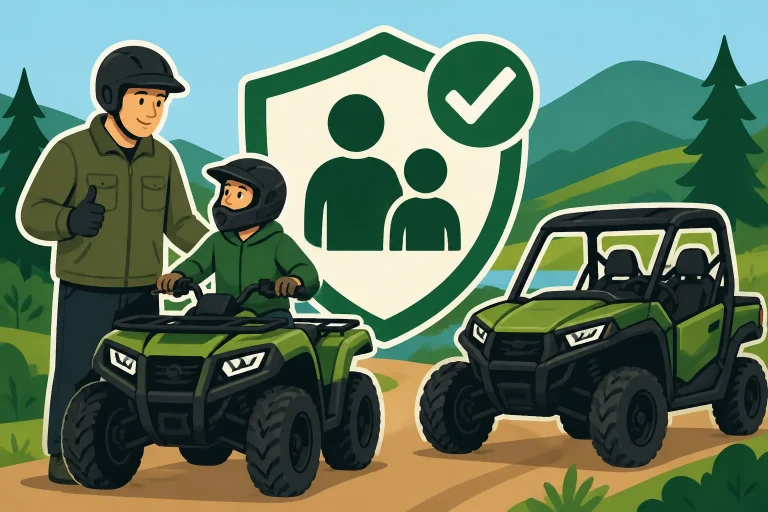
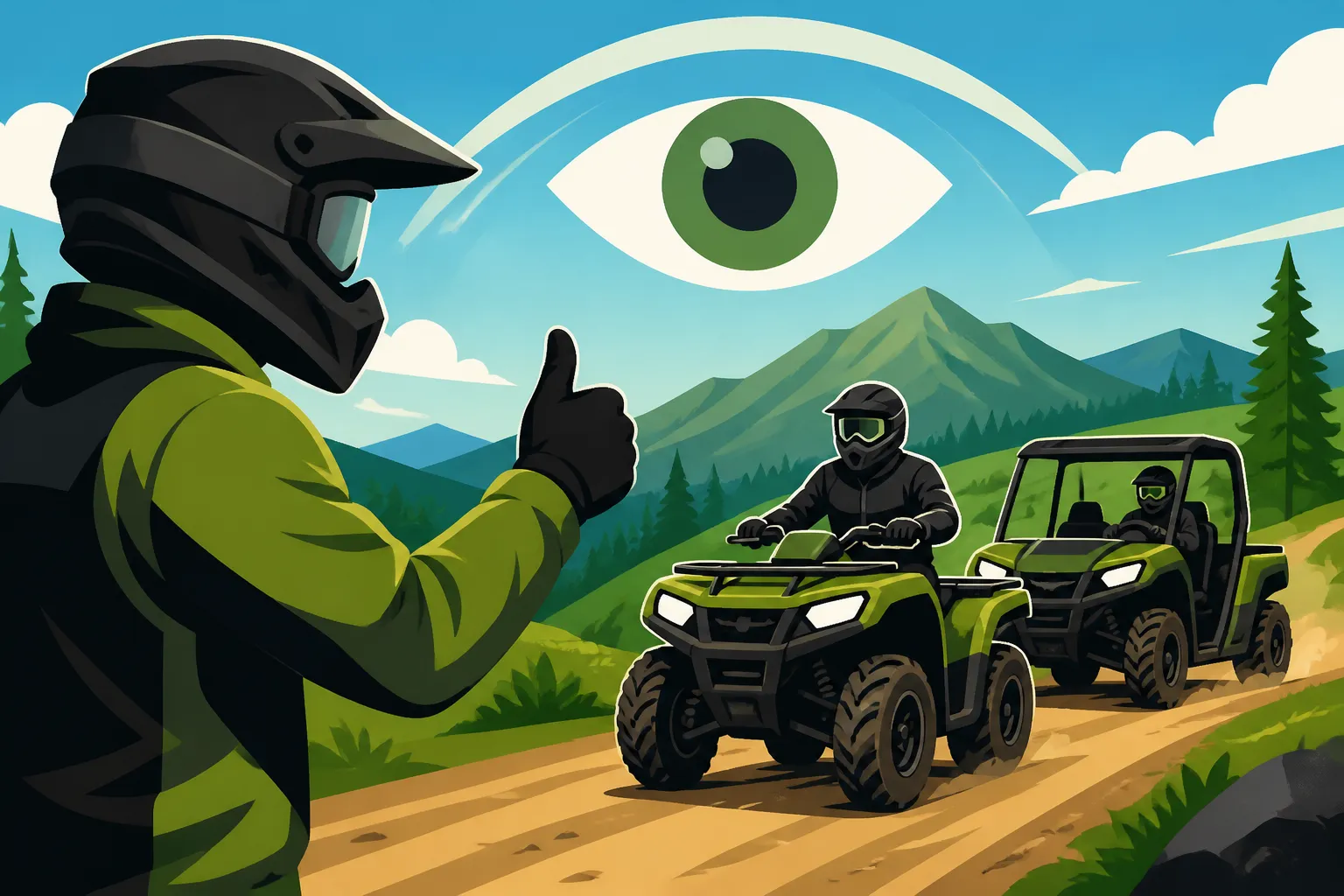
Riding under an instructor’s eye can help a new ATV rider build sound habits, but it can also raise a practical question: what does supervision actually allow in Vermont? The key is to separate coaching from legal permission. An instructor can teach and monitor a ride, but riders still need to follow the rules for the machine, the land, and any road crossing.
What instructor supervision does and does not mean
An instructor can help a learner understand controls, choose an appropriate pace, and respond to changing trail conditions. That guidance is valuable, particularly for a young or inexperienced rider. It is not, by itself, permission to ride anywhere or a substitute for checking which Vermont rules apply to the rider and machine.
The phrase “under an instructor’s eye” can mean different things: taking a formal safety course, practicing with an experienced adult, or joining a guided outing. Those situations are not automatically interchangeable. The Department of Motor Vehicles directs ATV riders to a Vermont State Police-approved online safety course for training and more information, and its ATV Manual, form ID VN-023, contains ATV rules and regulations. Check those official materials for current training requirements rather than assuming that informal coaching counts as course completion.
The same distinction applies to supervision. Having an instructor nearby does not create access to private land, make an unregistered machine eligible for a trail, or allow a rider to ignore road rules. It is best to treat coaching as one part of a safe outing—not as a general legal exception.
| Situation | What supervision can help with | What it does not settle |
|---|---|---|
| Skills practice | Controls, braking, turns, stopping, and trail awareness | Whether the land is open to riding |
| A formal safety course | Structured instruction and access to course information | Whether a specific ride meets every registration or access rule |
| A public-highway crossing | Adult oversight for a younger operator | Permission to ride along the highway |
| A club trail ride | Staying alert and following marked routes | Whether the machine and rider meet all applicable requirements |
A supervised practice session is most useful when everyone knows the plan before the engine starts. Agree on where the learner will ride, how the instructor will communicate, where to stop, and what to do if the learner becomes uncomfortable. Keep the first practice focused on basic handling in a place where riding is permitted, rather than trying to learn new skills while keeping up with a faster group.
For a fuller explanation of the course and its place in a rider’s preparation, see Vermont Safety Course for an Adult. For younger learners, Vermont Safety Course Minimum Age may help identify the questions to check before signing up.
Who may supervise and when the rule applies
Do not treat “supervision” as a single rule that covers every situation. Vermont’s stated age-related supervision rule in the supplied Department of Motor Vehicles information is specifically about crossing a public highway: operators under 16 years of age must be supervised by someone 18 or older to make that crossing. That requirement does not, on its own, say that an adult’s presence makes every road or trail ride lawful.
A highway crossing is a short but high-risk part of a ride. Before approaching one, the instructor should have the rider slow down, stop where appropriate, and understand the route across. The adult should be in a position to watch the crossing and respond, not simply assume that the rider will follow from memory. Consult Vermont ATV Crossing a State Highway for the crossing rules and Who Can Legally Supervise a Rider Under 16 for the supervision question.
It is also important not to mix up an instructor’s role with a general adult riding companion. A person may be a capable coach without being the person who satisfies a specific legal supervision rule. If the rule applies to the situation, confirm the adult’s eligibility and the exact requirement in the Department of Motor Vehicles’ manual or other official guidance before riding.
For youth riders, machine size and rider ability deserve separate attention. According to the Department of Motor Vehicles, children under 12 years old should never drive an ATV with an engine size greater than 70 cc, and youth under 16 years old should never drive one with an engine size greater than 90 cc. These limits are not a substitute for judging whether a particular machine is manageable for the rider. A young operator may still need a smaller, easier-to-control machine even when it falls within the stated engine-size guidance.
An instructor should be prepared to stop the session if the learner cannot control the machine consistently, is distracted, or is trying to ride beyond their skill level. A useful coaching standard is whether the rider can start, stop, steer, and follow the agreed signals calmly—not whether they can keep pace with an experienced adult. Keep the pace low enough that the instructor can observe the rider and intervene safely.
If the rider is 15, the article Vermont ATV Rules for a 15-Year-Old can help focus the questions to confirm before a ride. For other ages, use the ATV Manual VN-023 and the state’s current safety-course information instead of assuming that one age-related rule answers every question.
Set up a supervised ride on permitted land
Before coaching begins, confirm that the ride is allowed at the location. Vermont ATV users must ensure they have permission to be on someone’s property before venturing out, according to the Department of Motor Vehicles. An instructor’s presence does not replace the landowner’s permission. Nor does a trail being visible or physically passable establish that it is open to ATVs.
VASA, the Vermont ATV Sportsman’s Association, is the statewide association of local ATV clubs authorized by and in partnership with the State of Vermont to develop and manage ATV trails, according to the Department of Motor Vehicles. On a club trail, follow the marked route and any applicable club directions. The Department of Motor Vehicles advises all users to remain on marked trails to protect landowner property and ensure safety; it also advises motorized and other fast-moving users to keep their speed in check and remain vigilant.
Public land has its own limits. According to the Department of Forests, Parks and Recreation, ATVs may be used on state lands exclusively on specific road crossings designated by the Agency of Natural Resources. Do not assume a state forest or other public parcel is open for general ATV riding. Check the relevant official guidance and trail information before planning a lesson there.
A practical pre-ride routine can make instruction clearer:
- Confirm permission to use the property or trail, and verify that the route is open to ATVs.
- Check that the machine is appropriate for the rider and is in safe working condition.
- Explain the practice area, signals, stopping points, and what the learner should do if separated.
- Demonstrate a skill before asking the rider to try it, then give one instruction at a time.
- Keep the learner on the agreed marked route and adjust the pace to the rider, not the group.
- Stop if conditions, traffic, fatigue, or the rider’s confidence make continuing unsafe.
An instructor should also talk through what happens when the route changes. If a marked section is blocked or a trail is wet or damaged, do not use the lesson as a reason to create a new route across private property. Stop and choose an authorized alternative. The Department of Motor Vehicles’ guidance to remain on marked trails is especially important for a learner, who may be focused on the machine and less likely to notice boundaries or signs.
The machine itself needs to be the right kind of vehicle for the rules being discussed. According to the Department of Motor Vehicles, an ATV has two or more low-pressure tires of 10 psi or less and must not be wider than 72 inches. If it is unclear whether a side-by-side or other machine meets Vermont’s ATV definition, check the official registration information before assuming that ATV rules apply in the same way. The page Vermont’s 72-Inch, 2,500-Pound ATV Definition explains the definition and is useful when the machine’s classification is uncertain.
Prepare the paperwork and choose the right training
Training does not replace registration. Vermont permits residents and non-residents to register ATVs, and the Department of Motor Vehicles says legally registered out-of-state ATVs may operate in Vermont with a valid registration. Non-resident reciprocity applies to owners of ATVs and snowmobiles, but that should not be read as permission to ride on every trail or property. Confirm that the machine’s registration is valid and that the place you plan to ride is open to it.
First-time ATV registrants must complete the Vermont Registration Application, form VD-119, according to the Department of Motor Vehicles. The first All-Terrain or All-Surface Vehicle registration is subject to Purchase and Use Tax unless an exemption applies. Since registration paperwork and tax treatment depend on the circumstances, check the DMV’s current ATV Registration information before submitting an application. See Registering an ATV With the Vermont DMV for the registration process and Vermont Reciprocity for Out-of-State Machines for questions about an out-of-state machine.
For instruction, use the Vermont State Police-approved online ATV safety course and the ATV Manual VN-023 as the starting points. A course can provide structured material; a supervised practice ride can help apply skills in a controlled setting. Neither should be treated as a replacement for checking the applicable rules. The Department of Motor Vehicles also provides information on ATV registration, and its manual covers rules and regulations that apply beyond the skills taught in a lesson.
Before a ride, make a short checklist that the learner can understand:
- Is this machine registered as required, and is its registration valid?
- Is the route open, and do we have permission to ride there?
- Does the learner know where the practice area begins and ends?
- Does the adult know where to stand or ride to observe without pressuring the learner?
- Is a road crossing part of the route, and if so, have the age-related supervision rule and crossing instructions been checked?
- Does the learner know how to stop the practice and get help?
A good lesson should end with a debrief, not just a tally of laps. Ask the rider what felt easy, what felt uncertain, and which control or trail situation deserves more practice. If a skill still feels awkward, repeat it in a suitable area rather than moving to a harder trail. The aim is a rider who can make deliberate decisions—not merely someone who completed a supervised ride.
Sources
- Department of Motor Vehicles — Registering Your All-Terrain Vehicle | Department of Motor Vehicles (checked November 3, 2026)
- Department of Motor Vehicles — Off-Road Vehicles | Department of Motor Vehicles (checked November 3, 2026)
- Department of Motor Vehicles — ATV Manual | Department of Motor Vehicles (checked November 3, 2026)
- Department of Forests, Parks and Recreation — All Terrain Vehicles | Department of Forests, Parks and Recreation (checked November 3, 2026)
- Department of Motor Vehicles — Registering Your All-Terrain Vehicle | Department of Motor Vehicles (checked November 3, 2026)
- Department of Motor Vehicles — Registering Your All-Terrain Vehicle | Department of Motor Vehicles (checked November 3, 2026)
- Department of Motor Vehicles — Off-Road Vehicles | Department of Motor Vehicles (checked November 3, 2026)
- Department of Motor Vehicles — Off-Road Vehicles | Department of Motor Vehicles (checked November 3, 2026)
- Department of Motor Vehicles — VN-023-ATV_Driver_Manual.pdf (checked November 3, 2026)
Disclaimer
This article is for general informational purposes only and does not constitute professional advice. Laws, prices and regulations vary by location and change over time. Consult a qualified professional for guidance on your specific situation.