What Changes for a Rider Who Turns 16
Turning 16 can change who must supervise a Vermont ATV or UTV rider, but it does not end every age-based requirement. A teen may be able to ride without an adult directly alongside them, while still needing safety training and the right trail access. Here’s what changes at 16, what stays in place until 18, and what to check before a ride.
What changes when a Vermont rider turns 16
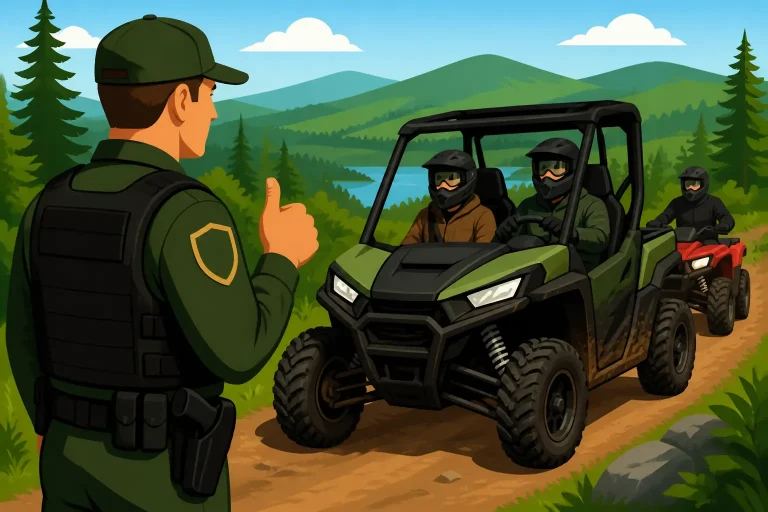
The main change is supervision. Vermont’s age rules distinguish riders under 16 from riders who are 16 or 17. A rider younger than 16 generally must operate under direct adult supervision. Once the rider turns 16, that particular supervision requirement no longer applies in the same way.
That does not mean a 16-year-old can ride anywhere, on any machine, or without meeting other requirements. The change is about age-based adult supervision—not a blanket exemption from Vermont’s operating rules. The machine still needs to meet the rules for the place it is being ridden, and the rider must follow applicable trail, road, equipment, and safety requirements.
| Rider’s age | Adult supervision | Safety training | What to keep in mind |
|---|---|---|---|
| Under 12 | Age restrictions apply; do not assume a child may operate a machine | Requirements depend on the situation and applicable rules | Check the rules for the machine and riding location before allowing a child to operate |
| 12 through 15 | Direct adult supervision is generally required | A safety certificate may be required | Supervision does not replace training, permission, registration, or trail access |
| 16 or 17 | The under-16 supervision requirement no longer applies | The safety certificate requirement still applies to riders under 18 | Riding independently does not mean riding without legal or safety obligations |
| 18 and older | No age-based adult supervision requirement | The youth certificate requirement no longer applies | Other operating rules, access conditions, and safety obligations still apply |
The key milestone is therefore not simply “old enough to ride alone.” A 16-year-old may no longer need an adult directly supervising every ride, but still falls within Vermont’s under-18 safety-training rules. The distinction is explained further in Vermont Safety Course Binds at 18, Not 16.
“Without adult supervision” also does not mean that a teen should be sent out without a plan. A parent or guardian may still set stricter family rules, and a landowner, club, event organizer, or trail operator may impose conditions on access. A teen should know the route, have a way to contact someone, and understand what to do if the machine breaks down or the group gets separated.
The birthday matters, but so does the type of riding. Riding on a private property permission route, a designated trail corridor, and a town road are not interchangeable situations. Vermont’s rules for town roads can depend on local decisions, posted routes, and ordinances. Turning 16 does not automatically open a road or trail that is closed to ATVs or UTVs. See Vermont ATV Road Rules by Town before planning a route that uses public roads.
What does not change at 16
The under-18 safety certificate requirement
A rider who is 16 or 17 is still under 18. Vermont’s youth safety-course requirement therefore remains relevant after the supervision rule changes. If the teen has not completed an accepted course, turning 16 is not a reason to skip it.
The certificate and supervision rules answer different questions:
- Supervision rules address whether a younger rider must have an adult directly supervising operation.
- Safety training rules address whether a rider in the covered age group must complete an approved safety course.
- Access rules address whether the machine and rider may use a particular trail, road, or property.
Meeting one requirement does not cancel the others. A teen who has a certificate may still need supervision if under 16. A 16-year-old who no longer needs that supervision may still need the certificate. A trained rider may still be turned away from a trail if the machine lacks required access credentials or the route is closed.
Vermont’s safety-course rules include age and exception details, so families should confirm that a course and certificate will be accepted for the rider’s situation. The certificate is described as not expiring, but the rider should keep proof available rather than rely on someone else to verify the record. For course details, see Vermont ATV Safety Course Required Under 18 and Vermont Safety Certificate Lookup.
Completing a course before the rider turns 16 can make the transition simpler. It gives the teen time to learn safe control, riding etiquette, and the rules before taking on more responsibility. It also avoids confusing “I’m old enough to ride without direct supervision” with “I no longer need training.”
Registration and trail access
Turning 16 does not register a machine, transfer a registration, or provide trail access. The machine’s paperwork and access credentials remain separate from the rider’s age.
For riding on Vermont trails that require a Trail Access Decal, the machine needs the applicable decal even if the rider has a safety certificate. A Vermont registration and a trail access decal serve different purposes. Registration identifies the machine under state requirements; the decal is tied to access on participating trail systems. Visitors should check the rules that apply to their home-state registration as well as Vermont trail access.
A parent should confirm that the machine the teen plans to ride is properly documented and that the required decal is current and attached as directed. The age of the rider does not make an expired decal valid or allow an unregistered machine onto a route that requires registration. Start with Vermont Requires Registration Plus a TAD and, for a nonresident machine, Vermont Out-of-State Machines Still Need a TAD.
Trail access is also not permission to use every parcel or corridor. Vermont’s ATV trail network depends on landowner permission and designated routes. A trail can be unavailable because permission has changed, a club has closed a section, or conditions have made riding unsafe. Check the current route information before leaving, and stay on marked corridors rather than treating a map line as general permission to ride nearby land.
Road access and equipment rules
A rider’s 16th birthday does not convert every public road into an ATV or UTV route. Road use depends on whether the road or segment is legally open to the machine, along with any local restrictions. Town rules may cover route locations, hours, seasons, speed, and required equipment. A road that is open in one town may be closed in another.
The machine must also meet the applicable equipment requirements for the place it is used. Lights, brakes, plate placement, and other requirements may matter when riding on routes where those rules apply. Check the rules for the exact machine category: an ATV and an all-surface vehicle (ASV) may be treated differently.
A 16-year-old should also understand that a legal route can still be a demanding environment. Town roads may include traffic, blind corners, gravel, farm equipment, and changing surfaces. Before a teen rides on a road route, verify that the route is open, the machine is eligible, and the rider knows the required operating practices. Can You Ride an ATV on the Road in Vermont? explains why local road access needs a separate check.
How to prepare a teen to ride independently
Turning 16 shifts more responsibility to the teen, but families can make that transition gradual. The goal is not just to comply with age rules; it is to confirm the young rider can make safe decisions when an adult is not riding directly beside them.
- Confirm the rider’s age and training status. Check the date of birth and whether the teen has completed the required safety course. Keep a copy of the certificate with the rider or in a place the adult can access quickly.
- Identify the machine and its class. Know whether the vehicle is an ATV or an ASV, who owns it, and whether its registration and equipment are in order. Do not assume rules for one category automatically apply to the other.
- Choose a route that is actually open. Check current club or trail information and any town route designations. Confirm that the route permits the machine being used and that no temporary closure is in effect.
- Check trail access credentials. Confirm whether the machine needs a Vermont Trail Access Decal or another form of access authorization. Do not confuse a registration plate with a trail decal.
- Set a ride plan. Agree on the route, expected return time, turnaround point, and what to do if the group is delayed. For a first independent ride, keep the route familiar and avoid remote or complicated connections.
- Review communication and breakdown plans. Cell service can be unreliable in some rural areas. Decide how the teen will contact help, and make sure the rider knows what to do if the machine cannot continue.
- Inspect the machine and required gear. Check tires, controls, brakes, lights, fuel or battery level, and protective gear before departure. Make sure clothing and helmet requirements are met for the riding situation.
- Set family rules that are stricter when needed. Vermont’s minimum requirements do not prevent a parent or guardian from limiting where, when, or with whom a teen rides.
For a rider who has only operated under close adult supervision, start with a short, familiar route rather than a long day away from help. A teen’s ability to handle a machine should be judged by more than age: consider experience, judgment, the vehicle’s size and power, terrain, weather, and whether the teen can respond calmly to a problem.
The adult can still play an important role after the legal supervision threshold changes. Riding nearby, checking in at agreed points, or following the same route on a separate machine can provide support without treating the teen as incapable. The point is to expand independence in a way that matches the rider’s skills.
Know which exception or setting applies
Some rules may differ depending on where the machine is operated, the rider’s training, and whether the land is private property or part of a designated trail system. Do not assume that a rule for riding on family land automatically applies on a club corridor or town road. Likewise, an exception to one requirement may not remove other obligations.
If a family is relying on an exception, check the exact conditions before riding. Confirm who must be present, what counts as direct supervision, what property qualifies, and whether the exception applies to the machine and activity in question. The rules for supervision are covered in What Direct Supervision Means and Vermont Course Exception on Family Land.
A practical pre-ride check for 16- and 17-year-olds
A quick check can prevent the most common mistake: treating the 16th birthday as if it removes every restriction. Before a teen rides, confirm each of these separately:
- The rider is at least 16, if relying on the change to the under-16 supervision rule.
- The rider has any safety certificate required for someone under 18.
- The machine is properly registered for its use.
- The required trail access decal or other access authorization is current.
- The route is open to the machine and rider.
- Any town-road conditions, curfews, or local restrictions have been checked.
- The machine has required equipment in working order.
- The teen knows the route, return plan, and procedure for an emergency.
A simple comparison helps keep the age milestones straight:
| Question | At 16 | At 18 |
|---|---|---|
| Does the under-16 direct-supervision rule still apply? | Generally, no | No |
| Does the youth safety-certificate requirement still matter? | Yes, because the rider is still under 18 | The under-18 requirement no longer applies |
| Does age alone authorize access to a trail or road? | No | No |
| Do registration, access, and equipment rules still matter? | Yes | Yes |
For families, the most useful takeaway is to treat 16 as a change in supervision—not as a general release from Vermont’s ATV and UTV rules. The rider still needs to understand training, access, route, and equipment requirements. When those pieces are checked separately, a teen can take on more independence without relying on a mistaken assumption about what a birthday changes.
Disclaimer
This article is for general informational purposes only and does not constitute professional advice. Laws, prices and regulations vary by location and change over time. Consult a qualified professional for guidance on your specific situation.