Vermont Safety Course Minimum Age
If you’re planning an ATV or UTV ride with a child in Vermont, it’s easy to confuse the age for taking the safety course with the rules for operating a machine. The course minimum is 12, but age also affects certification and adult supervision. Here’s how those requirements fit together and what to check before riding.
Vermont’s Minimum Age for the Safety Course
The minimum age to take Vermont’s ATV safety course is 12. A child younger than 12 cannot complete the course yet, so don’t treat course registration as something to arrange at the last minute before a planned ride. Confirm the child’s age and course eligibility when you choose a course. For the basic requirement that applies to young operators, see Vermont ATV Safety Course Required Under 18.
The minimum course age is a threshold for taking the training. It is not a statement that every 12-year-old may ride any ATV or UTV, in any location, without other restrictions. Machine size, the place of use, supervision, landowner permission, and trail-access rules may all matter. The course certificate addresses training; it does not replace those other requirements.
| Rider’s age | Course and riding point to keep in mind |
|---|---|
| Under 12 | Below Vermont’s minimum age for taking the safety course. Check applicable riding restrictions before planning any use. |
| 12 through 15 | May take the course; riders under 16 are also subject to supervision rules. |
| 16 or 17 | May take the course and still falls within the under-18 certificate requirement. The under-16 supervision rule no longer applies based on age alone. |
| 18 or older | The under-18 certificate requirement no longer applies, but other operating, access, and safety rules still do. |
The course is relevant because Vermont requires a safety certificate for riders under 18, subject to applicable exceptions. Completing a course before a child’s first ride can make planning easier, but the certificate doesn’t grant permission to use a particular trail or road. Read Vermont’s Minimum Course Age of 12 alongside the rules for the location where the machine will be used.
The course requirement lasts through age 17
A common mistake is to assume that the course requirement ends when a young rider turns 16. The relevant threshold is 18: a rider who is 16 or 17 is still under 18 and should plan to meet the certificate requirement unless a specific exception applies. Turning 16 changes the supervision rule, not the age threshold for certification. Vermont Safety Course Binds at 18, Not 16 explains that distinction.
A completed certificate does not need to be renewed just because a rider gets older. Vermont safety certificates do not expire, so taking the course at an eligible age can satisfy the training requirement for future riding. Keep a record of the certificate in case the rider needs to show proof later. More detail is available in Vermont Safety Certificates That Never Expire.
How Age, Certification, and Supervision Fit Together
The course and the supervision requirement are separate parts of the rules. A rider can be old enough to take the course and still need an adult present while riding. In particular, Vermont’s supervision rules apply to riders under 16. Completing the course does not remove that age-based requirement.
That means a 12-, 13-, 14-, or 15-year-old should not assume that having a certificate is enough to ride independently. Before heading out, identify who will supervise the rider and confirm that the planned location and activity are allowed. The details of direct supervision matter; read Vermont Supervision Rules Under 16 rather than relying on a general assumption that an adult somewhere nearby is sufficient.
At 16, the under-16 supervision rule no longer applies based on the rider’s age. But a 16- or 17-year-old remains under the age-18 certificate requirement. A rider in that age group may therefore no longer need supervision under that particular rule but still needs to satisfy the training requirement, unless an exception applies.
Exceptions are specific, not a general substitute for training
Vermont has exceptions associated with circumstances such as riding on family land or under an instructor’s supervision. Don’t assume that a family connection to the property automatically makes every ride exempt, or that any adult’s presence counts as instructor supervision. The conditions matter, and an exception for one setting may not carry over to public routes or club trails.
If you think an exception applies, verify the exact conditions before relying on it. Start with Vermont Course Exception on Family Land and Vermont Course Exception on Family Land only where the described circumstances match your plan. When in doubt, completing the course is a straightforward way to avoid building a ride plan around an uncertain exception.
It also helps to keep the categories clear:
- Training means the rider has completed the course and holds the required certificate.
- Supervision concerns who must be present for a rider under 16.
- Permission and access concern whether the rider may use the land, route, or trail.
- Equipment and operation concern how the machine is set up and ridden.
Meeting one requirement does not automatically satisfy the others. For example, a safety certificate does not grant permission to cross private land, and parental permission does not replace a required certificate.
Taking the Course and Keeping Proof
A family can plan the course well before a riding trip. Check the current options through the appropriate Vermont safety-course provider, confirm that the child meets the minimum age, and read the enrollment and completion instructions. An online option may be available, but availability and course details can change; confirm current information before enrolling. Where to Sign Up for Vermont’s Online Course is a useful next step.
A practical sequence is:
- Check the rider’s age. The minimum age to take the course is 12. If the child is younger, don’t assume that registering early or attending with a parent changes the age requirement.
- Review the current course instructions. Confirm whether the course is online or in person, what materials are needed, and how completion is recorded.
- Allow time to finish. Avoid waiting until the day before a trip. A rider may need time to work through the course and complete its final assessment.
- Save the certificate. Keep a paper or digital copy in a place the family can find again. See Printing Your Vermont Safety Certificate for record-keeping guidance.
- Carry proof when appropriate. Before riding, check how proof should be kept and presented. Carrying Proof of Training covers that practical step.
Don’t confuse a course completion certificate with a trail-access decal. The certificate documents training; a decal is a separate access requirement for applicable Vermont trails. Riders planning to use the VASA trail system should check the rules for both. Start with Vermont TAD: The Trail Access Decal Explained and confirm that the machine and rider meet the requirements for the route.
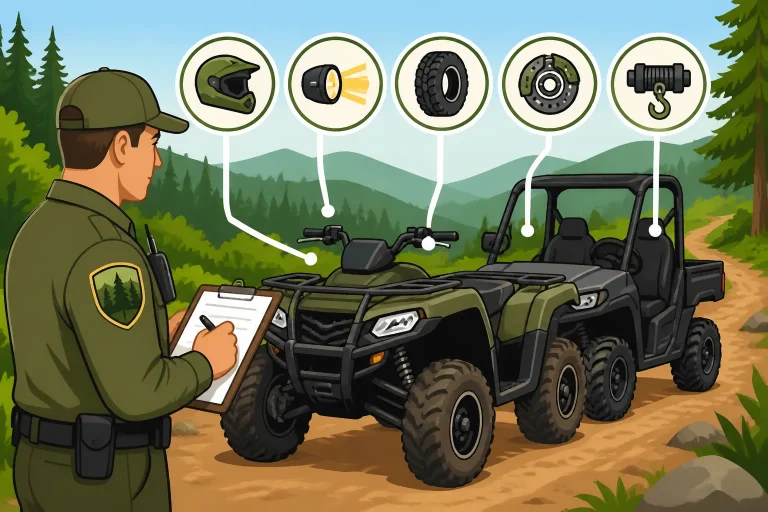
Training also isn’t a substitute for a machine that suits the rider. A young operator should be able to reach and use the controls, understand the owner’s manual, and follow the manufacturer’s age and passenger guidance. A course can teach important safety concepts, but it cannot make an oversized, unfamiliar, or poorly maintained machine appropriate for a child.
Planning a Ride for a Young Operator
Before setting a date, work through the requirements in the order that affects the trip. First, confirm the rider’s age and whether the course certificate is required. Then determine whether the rider needs adult supervision. Finally, confirm that the specific land or trail is open to the machine and that any separate access requirements are met.
A short checklist can prevent last-minute problems:
- Course: Is the rider at least 12 to take the course, and does the rider under 18 have the required certificate or a clearly applicable exception?
- Supervision: If the rider is under 16, have you confirmed who must supervise and what direct supervision means?
- Location: Is riding permitted on this property, road, or trail? Permission to ride on private family land should not be treated as permission to use a public route.
- Machine: Is the ATV or UTV suitable for the rider, and can the rider operate it safely?
- Access documents: Does the planned trail system require a separate decal or other proof?
- Proof: Can you locate the training certificate and any required machine or access documents?
For a family ride on private property, confirm the landowner’s permission and check whether the particular circumstances qualify for an exception. For a ride on a club trail, verify the access rules before leaving home. A rider’s age and training status don’t determine whether a corridor is open or whether the family has the required access credentials.
Be especially cautious when a child will ride a different machine from the one used during training. The course covers general safety, but machine handling can vary with size, controls, braking, and passenger setup. Give the young rider a chance to become familiar with the machine in a safe, permitted area, with the required adult supervision in place. Don’t add passengers unless the machine is designed for them and the applicable rules allow it.
If the child is close to an age threshold, check the rules for the rider’s age on the actual date of the planned trip. A birthday can change which requirement applies, but it does not automatically resolve every other issue. A 16-year-old, for example, is no longer under the under-16 supervision rule based on age, yet remains under 18 for the certificate requirement.
The simplest plan is to complete the course once the child reaches 12, retain the certificate, and treat supervision and trail access as separate checks. That approach avoids relying on a misunderstanding of what the course does. It also gives parents time to review the route, prepare the machine, and explain safe riding expectations before the family reaches a trailhead.
Disclaimer
This article is for general informational purposes only and does not constitute professional advice. Laws, prices and regulations vary by location and change over time. Consult a qualified professional for guidance on your specific situation.