Riding on Land Your Parents Own
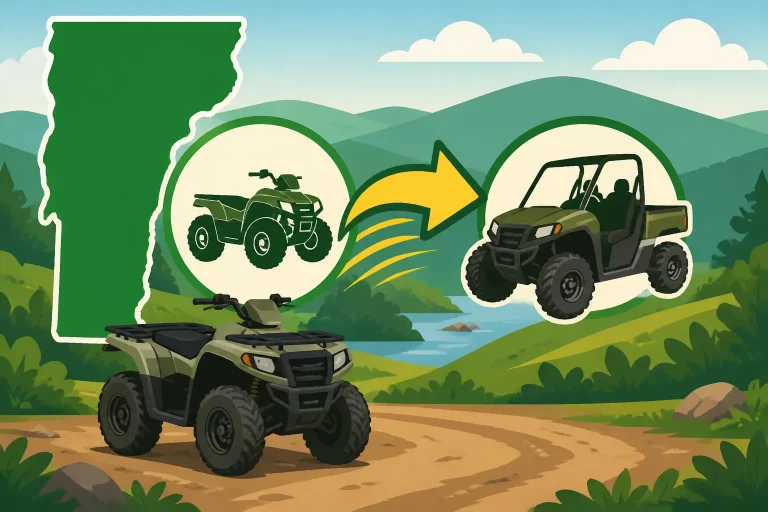
Riding an ATV or UTV on land your parents own may seem like a straightforward way to get started in Vermont. But family ownership does not automatically settle questions about training, registration, trail access, permission, or safe riding. The key is to separate riding on a private parcel from riding on a marked trail, town road, or someone else’s property.
What changes when the land belongs to your parents
A parent’s ownership can matter, especially when you are riding entirely on that parent’s property. It gives the landowner a way to authorize your use of the parcel, but it is not a blanket exemption from Vermont’s ATV rules. The answer can depend on the rider’s age, the machine, where it is operated, and whether the ride leaves the property.
Start with the boundaries of the land. A family parcel may include a driveway or woods road, but that does not necessarily mean every route through it is private or open to ATVs. A route could cross another owner’s land, connect to a public road, or form part of a trail corridor with separate access conditions. If you are unsure where the property ends, confirm the boundaries before riding.
Permission should also be specific. A parent may own the land but still want limits on where and when a machine can be used, who can ride, or whether guests may come along. Agree on those limits before starting the machine. Permission to ride on a parcel does not automatically extend to a neighbor’s land, an adjoining trail, or a public road.
Vermont rules include a limited safety-course exception connected with riding on land owned by a parent or guardian. Treat that as a narrow exception, not a general waiver. Its conditions matter, and it should not be assumed to apply to a ride that leaves the family property or takes place under different circumstances. Check the current requirements before relying on it; Vermont Course Exception on Family Land explains the issue in more detail.
The main distinction is where the machine goes:
| Where you ride | What the parent’s ownership may mean | What to check |
|---|---|---|
| Entirely within the parent’s private parcel | The owner can give permission for use of that land | Safety rules, the rider’s age, machine suitability, and any applicable registration requirements |
| On a route that crosses another property | Ownership of the starting parcel does not authorize crossing the other land | Permission from that landowner and any trail-access conditions |
| On a VASA trail | The family parcel does not replace trail-system access requirements | Registration, the required Trail Access Decal, and the route’s current status |
| On a town road | A private driveway or nearby parcel does not make the road a private route | Whether the road is open to ATVs and the town’s rules |
| In a neighboring state or province | Vermont family ownership does not determine the other jurisdiction’s rules | Local registration, access, and youth requirements |
A useful rule of thumb is to think of the parcel as one part of the ride, not as a pass that covers every connected route. If the planned ride goes beyond the parent’s land, check each additional area separately.
Course, age, and supervision are separate questions
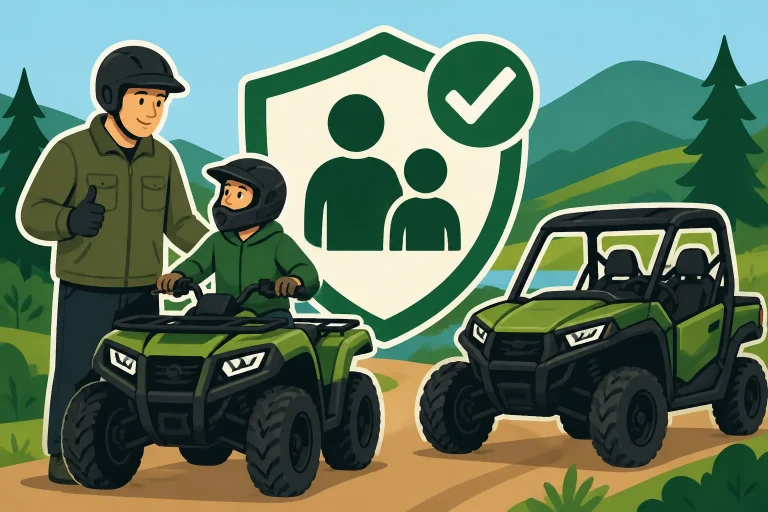
Parents often ask whether a child needs a safety certificate to ride at home. The family-land exception may affect the course requirement in specific circumstances, but it does not mean that every young rider can use every machine without conditions. Age, supervision, the type of operation, and the location all matter.
Before a young person rides, confirm what Vermont requires for that rider’s age and situation. Do not rely only on a parent’s permission or on the fact that the machine is on family land. For background on how the age-related requirements work, see Vermont ATV Safety Course Required Under 18, Vermont Riders Under 16 Need an Adult, and Vermont Safety Course Binds at 18, Not 16.
Supervision should be practical, not just nominal. A parent or other supervising adult should be able to see or otherwise monitor the rider, respond quickly, and help if the machine rolls, gets stuck, or has a mechanical problem. A young rider exploring a distant part of a large parcel may be harder to supervise than one using a short, familiar route close to the house.
The machine should also match the rider. A smaller quad is not automatically safe for a child simply because it is marketed as a youth model. Consider whether the rider can reach and operate the controls, use the brakes, steer, and stop the machine reliably. For a UTV, do not assume that a passenger seat makes it suitable for a child or that all passengers can ride safely in every model. Follow the manufacturer’s instructions and the applicable Vermont rules.
A practical pre-ride check can help parents catch problems before a short ride becomes a difficult one:
- Confirm the rider’s age-related requirements and whether the family-land course exception applies.
- Choose a machine the rider can control, and confirm that the operator understands its controls.
- Set clear boundaries, including places to avoid and what to do if the rider loses the route.
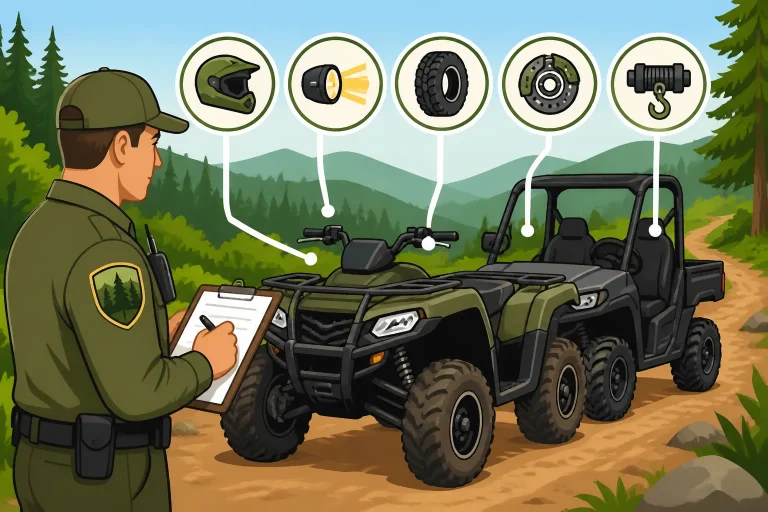
- Check the machine’s brakes, throttle, tires, steering, lights, and protective equipment.
- Make sure the rider has appropriate protective gear and knows how to stop and ask for help.
- Keep supervision close enough to be effective, particularly for a new rider.
A course can still be worthwhile even when an exception may apply. Training gives a new rider a structured introduction to controls, hazards, and responsible operation. Parents can use Vermont Safety Certificate Lookup to understand how certificate records are handled, and Vermont Safety Course for an Adult may be useful if an adult in the household wants formal training too.
Private land does not automatically replace registration or trail access
Registration, a Trail Access Decal, and permission to ride are different things. Parents’ ownership addresses access to their property. Registration concerns the machine’s status under Vermont requirements. A Trail Access Decal is associated with access to the trail system covered by that program. Having one does not automatically provide the others.
For a machine used only on private family land, the requirements may differ from those for riding on public ways or organized trail corridors. Because the answer can depend on the machine and how it is used, do not assume that staying on private land makes registration unnecessary. Check the machine and intended use against Vermont’s current requirements. Do You Need to Register an ATV in Vermont? and Vermont Requires Registration Plus a TAD explain how these questions differ.
If the ride uses VASA trails, check the access requirements before leaving home. A parent’s permission to cross the family parcel does not supply access to the trail network, and a trail decal does not authorize riding on a private parcel where the owner has not granted permission. Review Vermont TAD for a Visitor’s Machine if the machine is registered outside Vermont, and Vermont Reciprocity for Out-of-State Machines if you are visiting or using an out-of-state registration.
The same separation applies to roads. A town road does not become an ATV route just because it borders a parent’s property or is the easiest way to reach a trail. Check the specific road and local rules before riding on it. See Can You Ride an ATV on the Road in Vermont? and Vermont ATV Road Rules by Town for the difference between land access and road access.
If the route crosses another owner’s property, obtain permission before riding there. A family relationship with one landowner does not transfer to the next parcel. For shared corridors or marked trails, follow the access rules for that system rather than treating the route as an informal extension of the family property. Vermont Landowner Permission Rules and Vermont Landowner Permission Holds the System Together provide more context on why permission matters.
For a visitor riding a machine registered elsewhere, sort out requirements before the trip. Reciprocity can address whether another jurisdiction’s registration is recognized, but it does not itself grant permission to ride on private land or provide every form of trail access. Keep the registration and access questions distinct, and confirm that the planned route is actually open to the machine.
Make a family-land riding plan
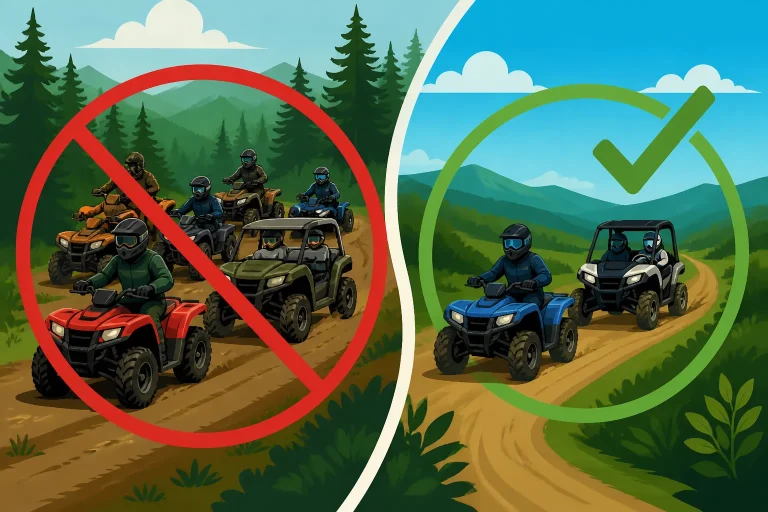
A short plan can prevent misunderstandings, especially when several relatives use the property or the route changes with weather, logging, or seasonal work. Agree on a specific riding area rather than saying only “stay on our land.” Point out gates, wet ground, steep slopes, machinery, livestock, buildings, and areas where the owner does not want traffic.
Make sure every rider understands where the property ends. A familiar route can still lead to a boundary crossing, especially in wooded areas or where old roads continue beyond the parcel. If a route reaches a public road or trail, stop and confirm the access rules before continuing. When permission from a neighboring owner is needed, get it directly rather than assuming it has been granted.
Consider the effect of repeated riding on the land. Wet soil can rut quickly, and a route that seems firm on one day may become damaging after rain. Keep machines away from streams, drainage areas, gardens, and other sensitive spots unless the landowner has identified an appropriate route. Set expectations for speed, noise, time of day, and avoiding nearby homes. A parent’s permission does not remove the need to respect neighbors or protect the property.
A basic emergency plan is useful even on familiar land. Make sure the rider knows how to stop the machine, where to return, and how to contact an adult. Keep a phone or other communication method available where service allows, and tell someone which route the rider is using. For longer rides or a group, carry basic first-aid supplies. A practical kit can include a first-aid item or protective gear sourced from Amazon, but equipment is no substitute for supervision and a safe route.
Before each ride, check for changed conditions: a newly closed route, a fallen tree, active work, damaged fencing, or a washout. If the route connects to a trail system, verify that the trail is open rather than relying on a map saved from an earlier season. Access can change when landowner permission or trail conditions change.
If you are uncertain about any part of the plan, ask the right question of the right source. Confirm vehicle-registration requirements with the Vermont DMV, trail-access requirements with the relevant trail organization, and road access with the local town. For a young rider, verify the course and supervision rules before treating the family-land exception as applicable.
The safest way to think about riding on land your parents own is simple: ownership can provide permission for that parcel, but it does not automatically settle every other requirement. Confirm the youth rules, keep the ride within authorized boundaries, and check separately before using trails, roads, or adjoining property.
Disclaimer
This article is for general informational purposes only and does not constitute professional advice. Laws, prices and regulations vary by location and change over time. Consult a qualified professional for guidance on your specific situation.