Vermont Landowner Permission Holds the System Together
A Vermont ATV ride can appear to follow a public trail, then turn across a farm lane, timber lot, or private driveway. That access depends on permission, and it can change when a landowner needs the property back. This guide explains how private-land access supports Vermont riding, what riders can do to protect it, and how to prepare when a corridor closes.
Why private land matters to Vermont ATV and UTV riding
Many riding corridors cross working property
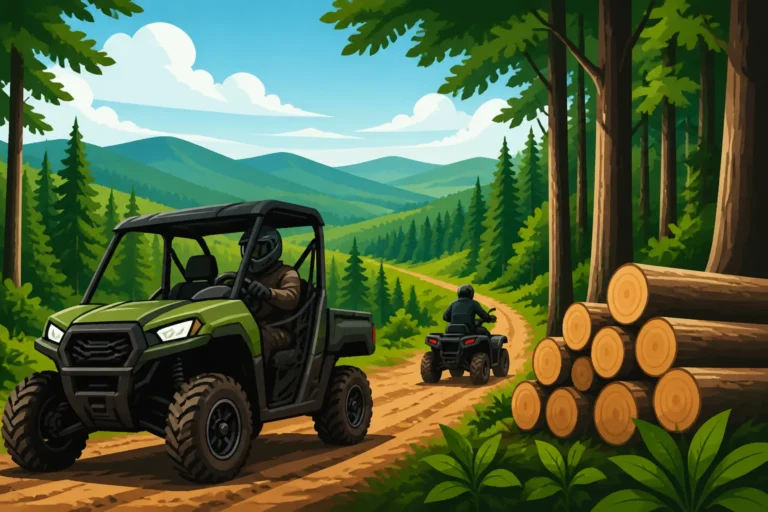
Vermont’s riding network is not simply a collection of public trails. Corridors may pass over private timberland, farmland, and other property, often connecting sections that would otherwise be isolated. A route on a map can feel like a continuous trail, but the land beneath it may belong to several different owners.
That arrangement makes riding possible, but it also means access is conditional. A landowner may allow a marked corridor to cross their property without opening the rest of the land to machines. Permission for one route does not mean permission to explore nearby woods, use a different track, or leave the corridor to reach a scenic spot.
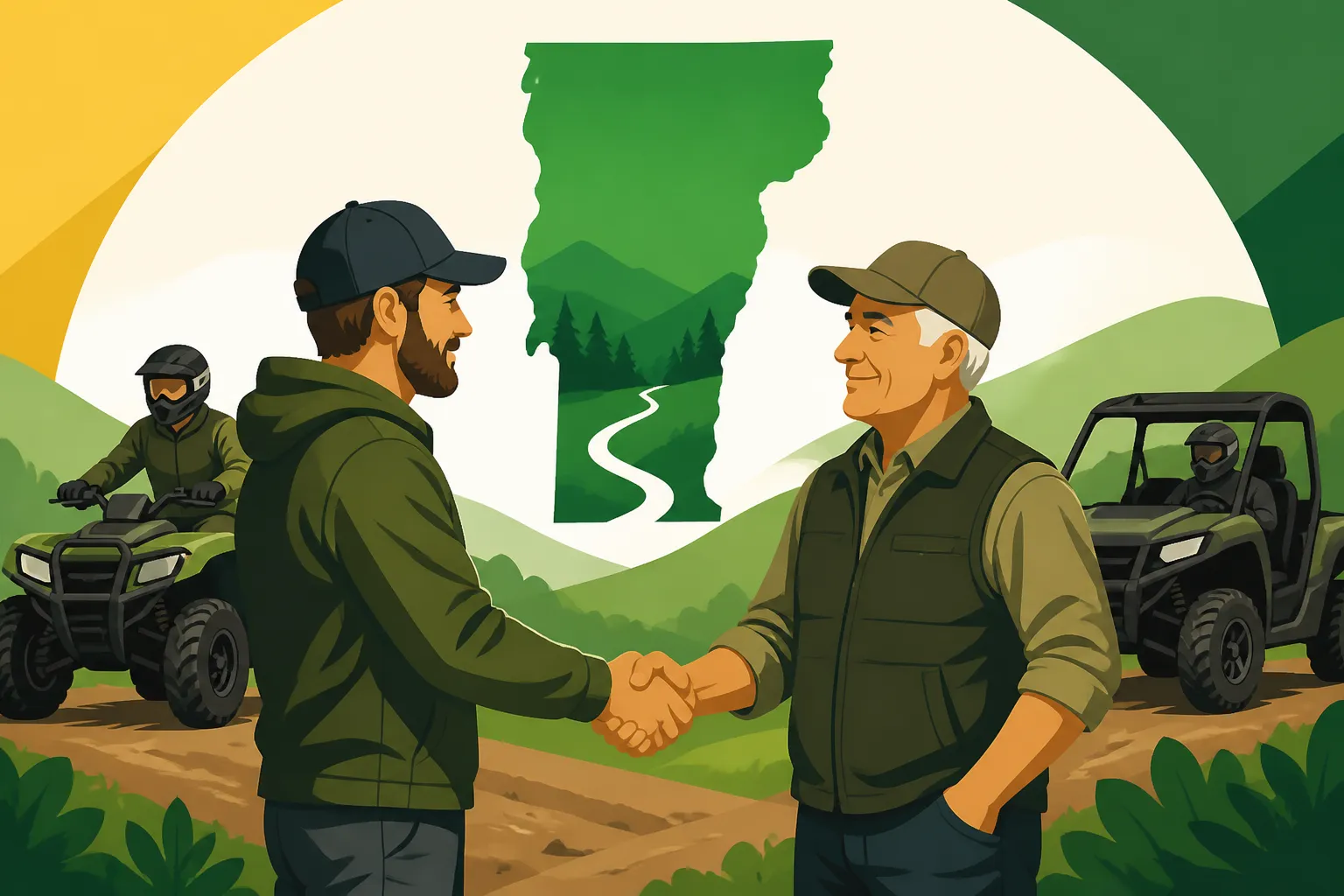
This is why [Vermont's Trails Run on Private Land] is more than a general observation. Private-property access is part of the practical foundation of many Vermont riding experiences. Clubs and riders have to treat it as a relationship to maintain, not as a permanent public right.
Permission is not the same as ownership or unrestricted access
When a landowner agrees to allow a trail across their property, that does not transfer ownership of the land or make the route available for every kind of use. The permission may apply to a particular corridor, activity, season, or set of conditions. Riders should follow the marked route and the rules communicated by the club or landowner.
It is also important to separate a club trail from a town road. A route may connect with a road or use a designated road section, but that does not mean every nearby road or driveway is open to ATVs. Town road access and private-land trail access can involve different rules and permissions. For road questions, see [Vermont ATV Road Rules: Towns Decide].
A useful mental model is to think of a marked trail as a specific invitation with boundaries. If the route bends away from a house, crosses a field, or passes a gate, those details matter. They are not optional suggestions, and they do not authorize riders to make their own shortcut.
How landowner permission shapes the riding network
Clubs help connect landowners and riders
Local clubs often play a central role in coordinating access, maintaining trail corridors, posting signs, and communicating changes. A club may know which section has been rerouted, where a landowner has asked riders to stay especially quiet, or which gate needs to remain closed. That local knowledge is difficult to replace with a broad map alone.
If you are planning a ride in an unfamiliar area, find the club responsible for the corridor before unloading your machine. [Finding the VASA Club That Maintains Your Local Trail] can help you start in the right place. A local club is also the natural place to ask about current route notices, trail etiquette, seasonal closures, and how to report a damaged sign or washout.
This relationship benefits riders as much as property owners. A clearly maintained corridor is easier to follow, and timely notices can prevent an unnecessary trip to a closed trailhead. If riders respect the boundaries and clubs can respond to landowner concerns, access is more likely to remain workable over time.
Permission can be narrow, conditional, and changeable
A landowner may grant access to a corridor while asking that riders avoid a wet field, keep away from livestock, or pass a residence quietly. Those requests are not minor courtesies. They can be the difference between a trail coexisting with a working property and becoming a source of conflict.
Access can also change. A landowner might need to close a route for forestry work, repairs, property use, or another concern. Even a trail that riders have used for years should not be treated as guaranteed. [Why a Landowner Can Close a Trail Overnight] explains why a familiar route can become unavailable with little notice.
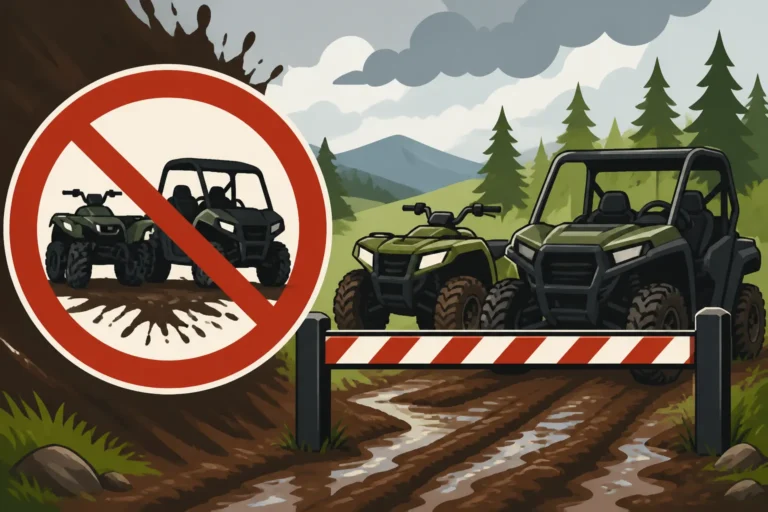
A closure may be frustrating, especially if it changes a planned loop or adds a long detour. Still, trying to bypass the closure can make the situation worse. Stay out of the closed area, check for an authorized reroute, and contact the responsible club if the signs are unclear. Never assume that a gap in a fence or a worn track is permission to proceed.
What responsible riding looks like on private property
Stay on the marked corridor and respect boundaries
The simplest way to protect access is to stay on the marked route. Do not cut across a field because the line looks shorter, widen a trail to get around a puddle, or follow tire tracks into an unmarked section. A route that appears convenient may cross a boundary or damage the property the corridor is meant to pass through.
Gates deserve particular care. If a gate is closed, leave it as you found it unless trail instructions specifically say otherwise. If you open a gate as part of an authorized route, close it securely behind you. A gate left open can let livestock wander, create a safety issue, or prompt an owner to reconsider trail access. [Gates Left As You Found Them] is a useful reminder for rides that cross working land.
Follow signs even when a reroute seems inconvenient. If a trail has been shifted away from a wet spot or residence, the new line is the route to use. For more practical guidance, [Staying on the Marked Corridor] covers the basic principle: ride only where access has been established and indicated.
Noise, speed, and group behavior affect future access
A single rider may pass a home quickly, but the experience changes when a group accelerates, revs engines, or pauses to talk beside a residence. Keep your speed controlled near homes and farms, avoid unnecessary throttle, and move through sensitive areas without lingering. If a group is waiting for someone, choose a place where stopping is permitted and does not block a driveway, gate, or work area.
Group leaders have a special responsibility. Before setting out, explain that everyone needs to follow the same corridor, obey signs, and avoid spinning tires or riding side by side where the trail is narrow. A rider who takes a shortcut can affect the entire group’s relationship with a landowner, even if the others behave carefully.
The broader principles in [Vermont Trail Etiquette on Private Land] apply whether you are riding alone or with a club. Be considerate around farm activity, timber operations, homes, and other trail users. If you encounter a landowner or worker, slow down, give space, and follow any reasonable direction about stopping or rerouting.
| Trail situation | Responsible response | Why it matters |
|---|---|---|
| A marked corridor crosses private land | Stay on the marked route | Permission may apply only to that corridor |
| A gate is closed | Leave it closed unless instructions say otherwise | An open gate can affect livestock and property security |
| A trail sign indicates a closure | Turn around or follow the posted reroute | Bypassing a closure can damage land and jeopardize access |
| A muddy section is difficult | Use an authorized route or turn back | Riding around it can widen the trail and harm vegetation |
| A home or farm is nearby | Reduce noise, pass calmly, and keep moving | Quiet riding helps limit disturbance |
| A map and trail sign disagree | Give priority to posted local directions and check with the club | Maps may not reflect a recent change |
Preparing for route changes and closures
Check local information before towing to a trailhead
A route that was open on a previous visit may have changed. Before loading machines, check the local club’s notices and trail information rather than relying entirely on memory or an old screenshot. Weather, maintenance, landowner requests, and seasonal conditions can all affect which sections are usable.
A map is helpful for understanding the general layout, but it does not grant access by itself. Use [Reading a VASA Club Trail Map] to become familiar with the route system, then confirm that the corridor you plan to ride is open. If a trailhead notice, club update, or on-the-ground sign indicates a closure, follow that information.
Digital tools can help with planning and orientation. For example, onX Offroad can be useful for reviewing route context and locating your position, but a digital line should not be treated as proof that a trail is open or that a landowner has granted permission. Check local club guidance and posted signs before entering a corridor.
Build a backup plan rather than forcing a closed route
A closure does not always mean the entire ride is over, but it does mean you need an authorized alternative. Plan a shorter loop, choose another trail area, or return the way you came if that is permitted and safe. Do not create a new connection across private property because the mapped route ends or a barrier blocks the way.
It helps to think through the practical details before leaving home. If a section is closed, can your group turn around safely? Is there enough fuel for a different route? Does the alternative involve a public road, and if so, is that road open to ATV use under local rules? Answering those questions in advance is less stressful than making decisions beside a closure sign with a trailer full of machines waiting.
For trip planning, [Vermont Trail Conditions Before You Tow] is a helpful companion topic. onX Offroad may support navigation, but use it alongside local trail information rather than as a substitute for it. Where routes are remote or cell service is uncertain, save the information you need before leaving coverage and carry a backup navigation method.
When access is unclear or a trail is closed
Do not treat a physical track as permission
A worn track, tire marks, or an open-looking gate can be misleading. Someone may have used the area for a different purpose, the corridor may have moved, or a landowner may have withdrawn permission. If there are no clear signs and you cannot confirm that a route is open, do not assume it is an authorized trail.
The same caution applies to land that looks unused. A quiet field or logging road can still be private property, actively managed, or temporarily closed. Riding through can damage crops, disturb equipment or animals, and create a conflict that affects future access for other riders. [Vermont State Land Is Mostly Closed to ATVs] is another important reminder that public ownership does not automatically mean riding is allowed either.
When you are uncertain, stop before entering the questionable section. Check the nearest trail sign or map, contact the club that maintains the area, and choose a confirmed route while you wait for clarification. If you are on an authorized trail and encounter a closure, turn back instead of trying an unmarked alternative.
Report concerns through the right local channels
If a sign is missing, a gate is damaged, or a trail appears blocked, report the issue to the responsible club. Share the location as clearly as possible and explain what you observed without moving barriers or attempting repairs unless you have been asked to help. A useful report can help the club check the area and communicate with the landowner.
If a landowner or worker asks riders to stop or leave a section, remain calm and comply. Avoid arguing about what a map seems to show. The immediate priority is to leave the area safely and notify the club afterward so it can determine what guidance to provide. A respectful response protects everyone involved and is more likely to preserve a useful conversation.
The principle behind [Vermont Trail Closures Landowners Request] is straightforward: a closure is a signal to stop using that section, not an obstacle to work around. Riders may be disappointed, but treating closures seriously helps maintain trust between clubs, landowners, and the people who use the trails.
Disclaimer
This article is for general informational purposes only and does not constitute professional advice. Laws, prices and regulations vary by location and change over time. Consult a qualified professional for guidance on your specific situation.