Tires for Wet Vermont Clay
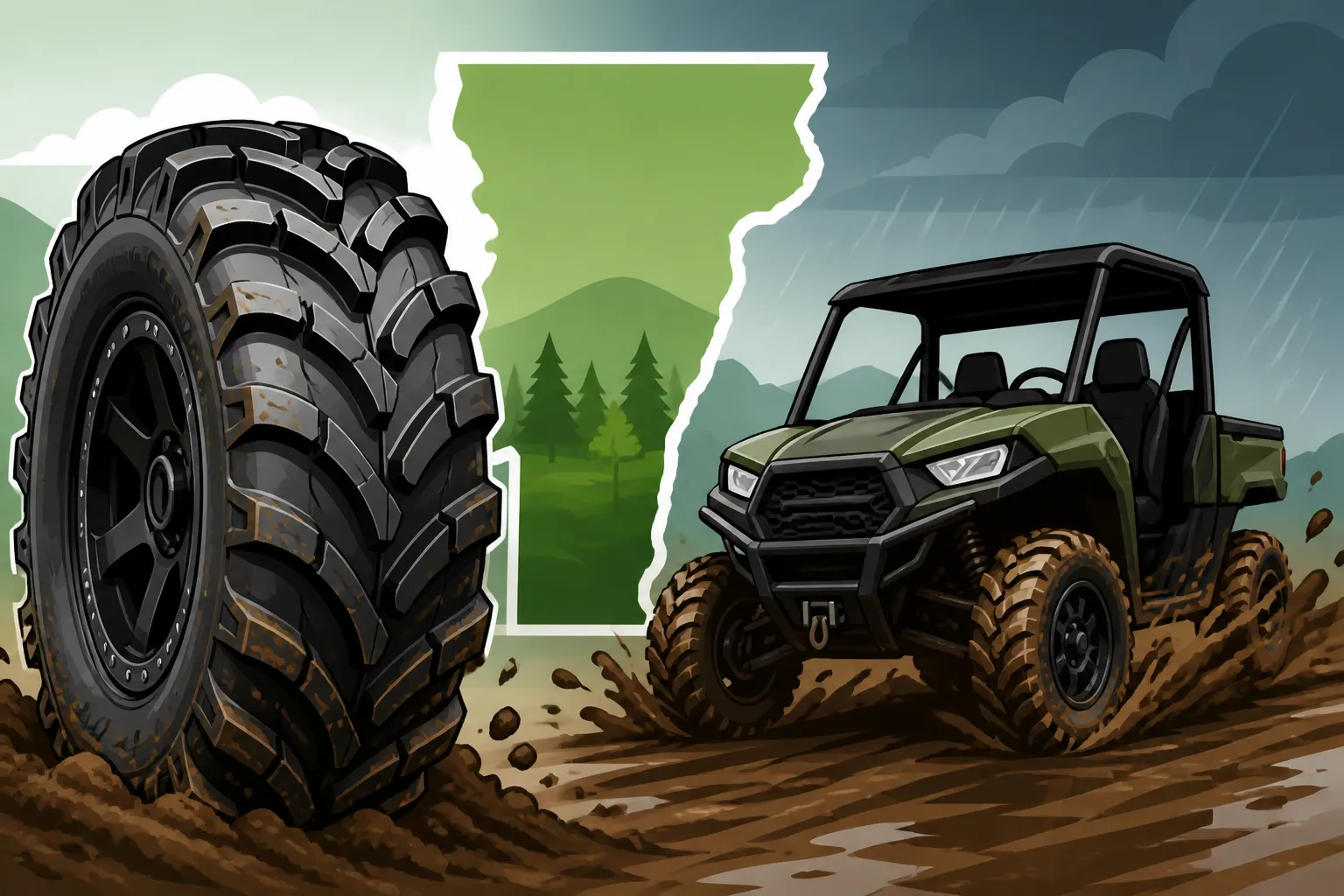
Wet Vermont clay can turn a familiar trail into a slick, rutted surface in minutes, and the wrong tire setup makes steering and braking feel unpredictable. The right tires help, but tread choice is only part of the answer: tire condition, pressure, machine weight, riding technique, and trail conditions all matter. This guide explains how to choose and use ATV and UTV tires for muddy Vermont terrain.
What wet Vermont clay demands from ATV and UTV tires
Why clay feels different from ordinary mud
Clay can be especially slippery when wet because it sticks to the ground and builds up on tires. Instead of shedding cleanly, it may pack between tread lugs, leaving less open tread to grip the surface. A tire that works well in loose, deep mud may not feel as sure-footed on a slick clay slope or a hard-packed trail coated with wet soil.
Vermont riding can also involve changing surfaces over a short distance. You might move from clay to exposed roots, gravel, rocks, or a wet bridge approach in one ride. A tire that bites aggressively in one patch may feel harsh or skittish on another. That is why choosing a tire solely for its deepest-lug appearance can backfire: traction in mud is useful, but predictable handling across mixed terrain matters too.
Conditions change with weather and use. A section that felt manageable in the morning may be churned up after repeated passes or a rain shower. Before heading out, check Vermont Trail Conditions Before You Tow and pay attention to posted closures. If the ground is soft enough to rut, choosing a different route or postponing the ride can protect both your machine and the trail.
What tread patterns can and cannot do
Open tread with widely spaced lugs can help a tire clear mud as it rotates. Taller lugs may provide more bite in deeper or softer ground, but they can also make a machine feel less settled on hard surfaces. Very aggressive tread is not a guarantee of control on slick clay: if the tire spins, it may polish the surface, dig a hole, or throw mud without moving the machine forward.
A more moderate all-terrain tread can be a practical choice for riders who encounter clay, gravel, roots, and firmer trails in the same outing. It may not claw through deep mud as readily as a dedicated mud tire, but it can offer a more balanced feel when the terrain changes. For many recreational riders, consistent steering and braking are more useful than maximum bite in one specific condition.
Sidewall design and tire construction matter as well. Bias-ply and radial tires can feel different under load and over uneven ground, but neither construction automatically suits every Vermont rider. Compare the manufacturer’s specifications, intended terrain, load rating, size, and fitment requirements for your machine. A tire that is too wide, too tall, or otherwise outside the machine’s approved fitment can create clearance, handling, or drivetrain concerns.
How to choose tires for your machine and riding style
Start with fitment, load, and your usual routes
Before comparing tread, confirm the tire sizes and load requirements specified for your ATV or UTV. A side-by-side carries more weight than many quads, especially with passengers, cargo, or tools aboard. Its tires need to be suitable for the machine’s weight and intended use. Do not assume a tire that fits a friend’s machine is appropriate for yours, even if the machines look similar.
Think about where you ride most often. If your regular routes include short muddy stretches between firmer sections, a versatile trail tire may make more sense than a specialized mud tire. If deep, soft mud is a routine part of your riding and your machine is equipped for it, a more aggressive pattern may be worth considering. Be realistic about the trade-offs: aggressive tires can affect ride comfort, steering effort, noise, and wear on firmer ground.
Also consider the kind of routes you plan to use. A map can help you understand where a trip goes and identify alternatives if a route does not suit your group or conditions. Some riders use onX Offroad when planning a route, but still check local trail guidance before leaving. A mapping app is a planning aid, not a substitute for posted signs, current club information, or respecting a closure.
| Tire or setup choice | Potential benefit on wet terrain | Possible trade-off |
|---|---|---|
| Open, aggressive mud tread | Can help clear soft mud and find bite | May feel less settled on hard or mixed surfaces |
| Moderate all-terrain tread | Can balance mud traction with everyday trail handling | May struggle more in deep, sticky mud |
| Correct machine-specific fitment | Helps maintain intended clearance and handling | Limits choices to compatible sizes and ratings |
| Pressure set to the manufacturer’s guidance | Supports the tire and machine as designed | May not feel ideal if the tire is damaged or overloaded |
| Worn or damaged tires replaced | Restores usable tread and reduces avoidable risk | Requires checking condition and fitment before purchase |
Choose for control, not just maximum traction
A tire should help you steer and slow down as well as move forward. If a machine surges ahead but slides sideways on a cambered trail, the setup may not be giving you the predictable control you need. Consider how the tire behaves during gentle turns, slow climbs, and controlled stops on suitable ground—not only how quickly it spins through a muddy patch.
Tire size and width deserve particular care. Wider tires can spread a load over more surface, but they are not automatically better in every muddy situation. A change in size can affect clearance, steering, and how the machine behaves under load. Check the owner’s manual and tire maker’s guidance before changing dimensions, and ask a knowledgeable dealer or mechanic if you are unsure.
Vermont trails can include rock and other hard obstacles alongside mud. If your routes have rough sections, tire choice is only one part of preparation; appropriate protection and careful line selection matter too. For another piece of that setup, see Skid Plates for Rocky Sections. The goal is a machine that suits the whole ride, not a tire that excels only in the muddiest spot.
Set up and ride carefully on slick clay
Check pressure and tire condition before riding
Use the pressure recommended for your machine and tire combination as your starting point. The right figure depends on the machine, tires, load, and manufacturer guidance, so a generic pressure number is not a safe shortcut. Check pressure with a gauge when the tires are cool, and inspect them for cuts, bulges, damaged lugs, punctures, and uneven wear.
Avoid making large pressure changes simply because a trail looks muddy. Running tires too low can increase the chance of sidewall damage, bead problems, or poor handling; excessive pressure can reduce the tire’s ability to conform to uneven ground. If you are considering an adjustment for a specific use, stay within the machine and tire manufacturers’ recommendations and understand how the change affects handling.
Before a longer outing, look over the machine as well as the tires. Check that wheels are secure, steering responds normally, and mud has not built up in areas that could affect operation. On a UTV, a heavier load or extra passengers can change how the machine responds on slick ground. For longer trips, basic preparation such as carrying recovery gear and planning for changing conditions is part of responsible riding; Packing for a Full Day Out covers other useful items to consider.
Use smooth inputs and avoid creating ruts
On slick clay, abrupt throttle, braking, and steering can break traction. Apply power gradually, keep a steady pace that suits the terrain, and leave room to slow down before a turn or descent. If the tires begin spinning, more throttle may only dig deeper. Ease off, reassess the line, and avoid repeatedly attacking the same soft patch.
Choose a line that gives the tires a chance to stay in contact with the ground. Look ahead for firmer edges, roots, rocks, or drainage features, but do not leave the marked corridor or damage vegetation to find a shortcut. If a section is too slick for your group, turn around where it is safe rather than widening the trail by driving around a muddy spot. Riding Around a Wet Section offers more guidance on handling a troublesome stretch without making it worse.
Ruts are not just cosmetic. Repeated wheelspin can deepen them, make the route harder for the next rider, and contribute to erosion. Club-managed routes depend on riders respecting trail conditions and closures, particularly where private landowners allow access. The principles in Vermont Trail Etiquette on Private Land are worth keeping in mind when deciding whether to continue or call it a day.
Plan around Vermont mud and changing trail conditions
Know when the best tire is not enough
A capable tire cannot make a closed or unsafe trail suitable to ride. Spring thaw, heavy rain, and repeated traffic can leave surfaces vulnerable to damage. If a club or landowner closes a route, follow the closure rather than trying to push through because your machine has aggressive tread. Vermont Mud Season Closures explains why seasonal access restrictions can matter for riders and trails.
Before you travel to a trailhead, check for relevant updates and make a backup plan. onX Offroad can help you prepare a route and consider nearby alternatives, while club notices and official signs should guide decisions about access. Do not assume a route is open merely because it appears on a map or was rideable on a previous visit. Local access can change, and private-land permission is essential to much of Vermont’s riding network.
It is also sensible to match the route to the least experienced rider and least capable machine in your group. A challenging clay climb may be manageable for one rider but too much for another, especially when tires are worn or the machine is carrying passengers. Use Vermont Trail Difficulty Ratings as one part of route planning, then adjust for rain, recent traffic, and your group’s actual experience.
Keep a recovery plan without turning trouble into trail damage
Carry recovery equipment appropriate to your machine and know how to use it before you need it. A tow strap, for example, is only helpful when it is suitable for the load and attached at a proper recovery point. Keep people clear of a tensioned strap, and follow the equipment manufacturer’s instructions. Never use a damaged strap or improvise an attachment to a part that is not designed for recovery.
If a tire loses grip, stop early and assess the situation. Spinning the tires can bury the machine and damage the trail. If you cannot proceed without causing further damage, back out carefully if that is safe, or use appropriate recovery help. For practical preparation, Tow Straps on a Muddy Loop discusses why recovery gear belongs in the plan before a muddy ride begins.
After the ride, remove packed mud and inspect the tires again. Look for lodged stones, torn lugs, punctures, and damage that may have been hidden by dirt. Clean the machine in a suitable place rather than washing mud into a storm drain or sensitive area. A careful inspection helps you catch problems before the next ride, when a small cut or slow leak could become a much bigger headache.
Disclaimer
This article is for general informational purposes only and does not constitute professional advice. Laws, prices and regulations vary by location and change over time. Consult a qualified professional for guidance on your specific situation.