Signing In at a Trailhead Box
Arriving at a Vermont ATV trailhead and finding a sign-in box can leave you wondering whether you need to fill it out, what details to provide, and whether signing in replaces a trail pass. This guide explains how to handle the logbook, what to check before riding, and how to protect your group’s privacy while respecting the clubs and landowners who make access possible.
Why Vermont Trailheads Use Sign-In Boxes
What the logbook is for
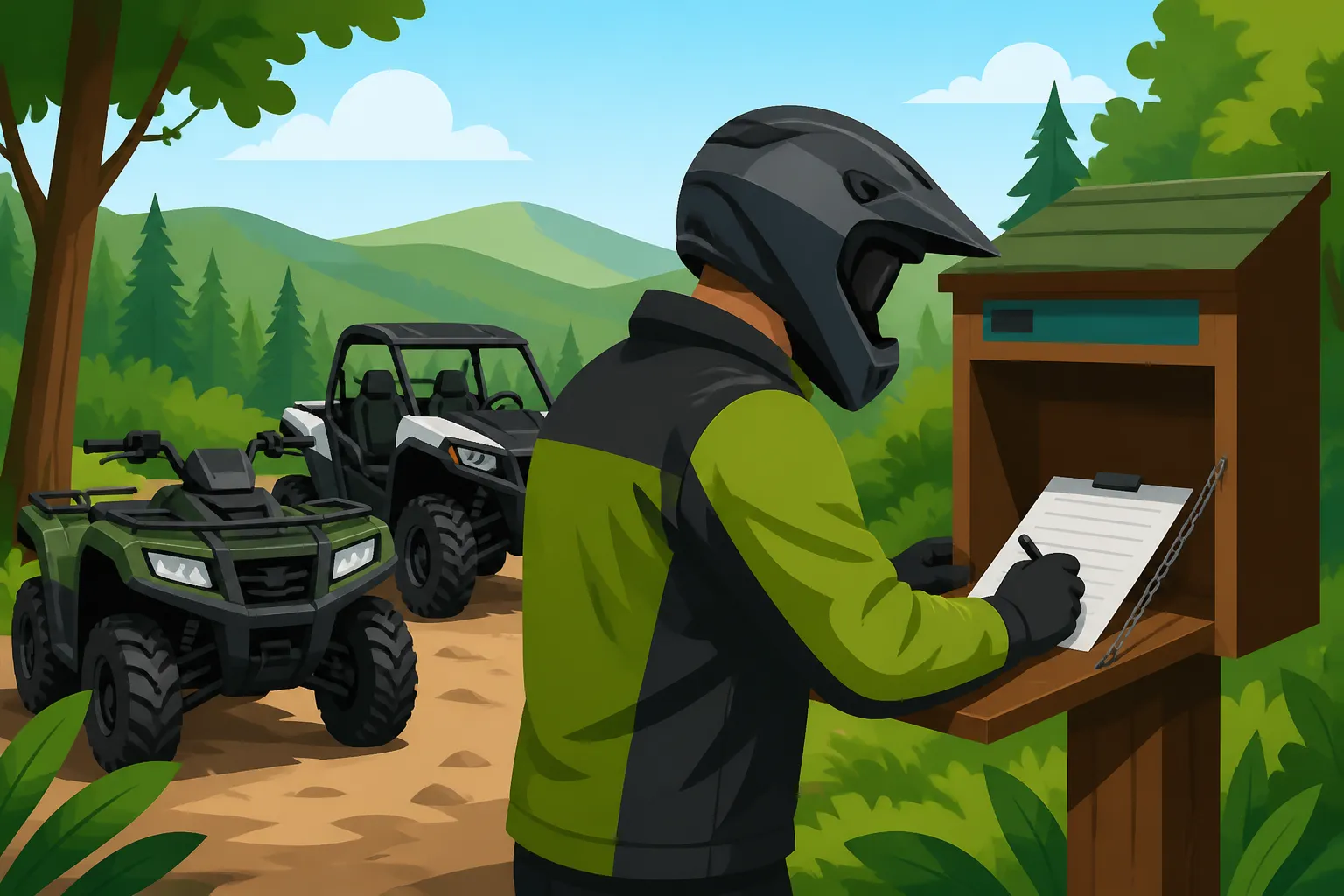
A trailhead sign-in box is a simple way for a club or landowner to keep track of trail use. The form may ask for a date, your name, the number of riders or machines in your group, and where you plan to ride. Some locations may request additional details, while others may use a different check-in process.
Those entries can help trail stewards understand how busy a corridor is, identify patterns in use, and support conversations about maintaining access. If a landowner sees that a route is used responsibly, organized information about traffic may help explain why the corridor matters. A log can also provide useful context if a club is investigating a closure, a damaged section, or an incident reported near the trailhead.
The exact purpose and instructions can differ by location. Read the posted sign before filling anything out. A box at one trailhead may be intended for every riding group, while another may ask only for a specific type of information. Follow the local instructions rather than assuming every Vermont trailhead works the same way.
Sign-in is not a substitute for access requirements
A common point of confusion is whether writing your name in a trailhead log gives you permission to ride. It does not automatically do so. A sign-in sheet is separate from requirements such as valid registration, a Vermont Trail Access Decal where required, and any applicable safety or riding rules. Review [Vermont Requires Registration Plus a TAD] before setting out, especially if you are visiting from out of state.
Likewise, signing in does not open a closed trail or override a gate, posted notice, or landowner restriction. Private land is a major part of Vermont’s trail system, so riders need to stay on authorized corridors and respect closures. The guidance in [Vermont Trail Etiquette on Private Land] is useful even when the route looks quiet and there is no one nearby to remind you.
Think of the logbook as one small part of a responsible ride, not the document that grants access. If a sign says the trail is closed, the logbook is missing, or the instructions are unclear, pause and check with the local club or posted information before proceeding.
How to Sign In at a Vermont ATV Trailhead
Check the sign and complete the requested details
Before removing the clipboard or opening the box, read the posted directions. The sign may specify whether each machine or each group should sign in. It may also explain where to leave the form, whether to take a tag, or how to use an electronic check-in. Avoid guessing if the instructions are explicit.
If the sheet asks for the basics, write clearly and keep the entry factual. For example, a group of three machines should not enter as a single machine just because one person is holding the pen. If the form asks for the number of riders, use the actual count, not the number of vehicles. If a field does not apply, follow the form’s directions rather than adding unrelated personal details.
| Trailhead request | Practical way to respond |
|---|---|
| Date | Enter the date of the ride as requested |
| Name or group name | Use the name the form asks for; avoid listing extra personal information |
| Number of machines | Count the machines actually entering the corridor |
| Number of riders | Include all riders in the group if requested |
| Planned route or destination | Provide only the route information requested |
| Contact details | Share them only if the form asks, and write legibly |
| Check-out or return information | Complete it if the sign or form specifically requests it |
If the box contains a pencil or pen, return it where you found it. Close the container securely so rain, wind, or snow does not damage the forms. A soggy clipboard may sound like a small problem, but repeatedly replacing paperwork creates extra work for volunteers and makes the log less useful.
Have one person handle the group entry
For a group ride, it is usually easiest to choose one person to read the directions and complete the entry accurately. Before that person writes, confirm the number of machines and riders with the group. This avoids the familiar trailhead scramble where people are unloading helmets, checking straps, and trying to remember who arrived in which vehicle.
If each machine or rider must sign separately, follow that instruction instead. Do not assume one entry covers everyone simply because you arrived together. If a group is large, let riders know the process before they spread out or start engines. A few minutes of coordination at the parking area is easier than trying to reconstruct the group count after everyone has left.
Keep the entrance clear while you sign in. If other riders are waiting, move your machines out of the way and finish the paperwork from a safe spot. Before starting, make sure each rider knows the route plan, where the group will regroup, and what to do if someone becomes separated.
What to Do Before Leaving the Trailhead
Confirm the trail is open and your equipment is ready
A trailhead sign-in box is a good reminder to stop and check more than the form. Look for closure notices, reroute information, posted rules, and signs about landowner requests. Conditions can change after rain, washouts, or trail work, so an old plan may not match what is open when you arrive. For practical trip planning, check [Vermont Trail Conditions Before You Tow] before loading up and driving to the staging area.
Use a club map or other reliable local information to confirm that your intended corridor is authorized. [Reading a VASA Club Trail Map] can help you understand how to follow the marked route and avoid treating an unmarked connection as an approved trail. A phone mapping tool such as onX Offroad can be useful for orientation and trip planning, but a digital map should not override posted closures or local club directions. Confirm access with the responsible club when anything conflicts.
Before riding, make sure the machines have the required documents and equipment, and that riders understand the route and applicable rules. Keep the plate and any required decal visible as directed; [Vermont TAD Placement on the Machine] covers a detail that is easy to overlook when a machine has been recently cleaned, repaired, or fitted with new accessories. The sign-in sheet does not replace carrying required proof or following trail rules.
Leave the trailhead ready for the next group
After signing in, put the form and writing tool back where they belong. Close the box and check that you have not left trash, packaging, or loose gear in the parking area. If you notice a damaged sign, a full or soaked logbook, a blocked entrance, or a hazard, report it to the appropriate club contact when practical instead of trying to make an unauthorized repair.
Keep the group together as you pull away, and ride slowly around the trailhead. People may be unloading machines, walking dogs, or moving between trailers and vehicles. Once on the corridor, follow posted signs and avoid creating new tracks around muddy or damaged sections. The trail’s condition and continued access depend on riders treating the property with care.
If your group is unsure what a sign means or encounters a warden, stop safely and cooperate. A check may involve confirming that riders have the appropriate access and are following the rules. [What a Trail Warden Checks] can help you understand why it is worth having your paperwork and decal in order before you leave the staging area.
Common Sign-In Questions
What if the box is empty, damaged, or missing?
An empty box does not necessarily mean the trail is closed, and a missing box does not mean it is open. Look for other posted instructions, gates, closure notices, or contact information nearby. If the access status is not clear, contact the local club or land manager before riding rather than relying on another group’s assumption.
If a sign-in sheet is full, do not remove old pages or write on a sign, map, or other surface. Follow any alternate instructions posted at the trailhead. If none are provided, make a note of the problem and report it to the club when you can. A missing pencil or damaged box is a maintenance issue, not a reason to leave litter or alter the setup.
A mapping app can help you find your way to a staging area, but it cannot confirm that a particular trail remains open. onX Offroad may be useful for viewing a route during planning; still, check local club information and on-site notices before riding. A route line on a screen is not permission to cross private property.
Should you share your full itinerary or personal information?
Provide the information the trailhead form requests, but do not add sensitive details that are not asked for. A logbook is not the place to write a home address, detailed travel schedule, or information about people who are not part of your riding group. If contact information is requested, enter only what is necessary and make sure you are comfortable sharing it in a public log.
For safety, it can still be sensible to tell someone you trust where you are riding and when you expect to return. That is a separate precaution from filling out a public trailhead form. Keep your group’s plan realistic, especially if you are unfamiliar with the area or expect limited cell service.
Planning ahead helps avoid rushed decisions at the box. onX Offroad can be one tool for reviewing a route before departure, while local trail signs and club information remain essential for confirming access. Bring a paper map or another backup when you may be riding beyond reliable cell coverage, and agree on a meeting point in case the group gets separated.
A few careful minutes at the trailhead can make the rest of the ride smoother: read the instructions, enter only the requested details, verify access, and leave the logbook ready for the next riders. That routine respects volunteers and landowners while helping your group start the day with a clear plan.
Disclaimer
This article is for general informational purposes only and does not constitute professional advice. Laws, prices and regulations vary by location and change over time. Consult a qualified professional for guidance on your specific situation.