Culverts Washed Out After Rain
A heavy Vermont rain can turn a familiar trail into a risky guessing game: water may hide a washed-out culvert, a weakened crossing, or a newly formed drop-off. If you find storm damage while riding or are planning a trip after rain, this guide explains how to respond, check conditions, and avoid making the damage worse.
Why a Washed-Out Culvert Is More Than a Puddle
What rain can do to a trail crossing
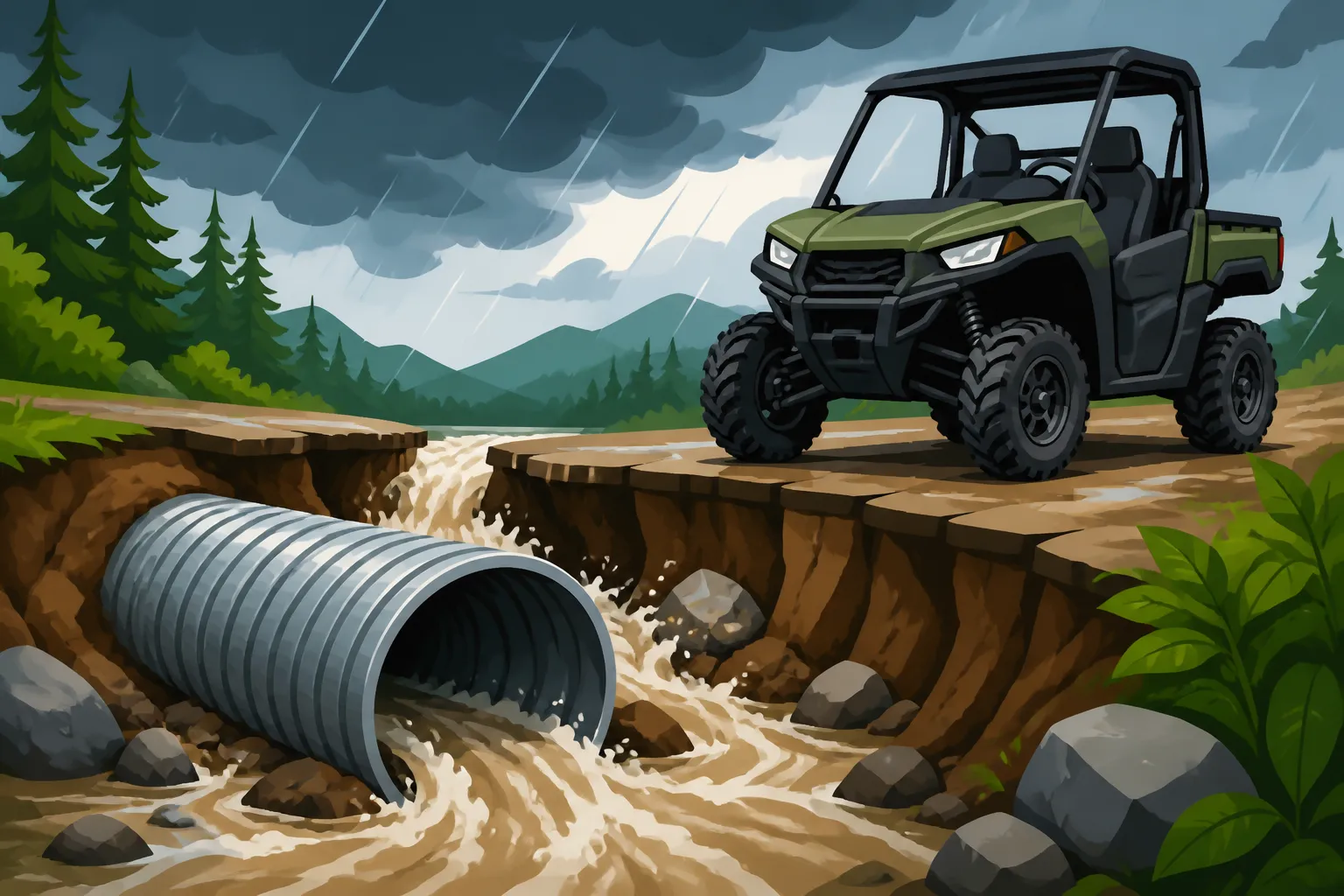
A culvert moves water beneath a trail or road. When runoff exceeds what it can handle—or debris blocks the opening—water may spill over the trail, scour away soil, or undermine the surface around the pipe. The crossing can look passable from one side while its support has already been washed out underneath.
That uncertainty is what makes a damaged culvert especially dangerous for an ATV or UTV. A shallow-looking stream can hide a sharp edge, a deep hole, exposed rocks, or a soft bank. Water can also keep moving soil after the rain stops, so a crossing that seemed stable earlier in the day may change quickly.
The damage is not always dramatic. You might see a dip in the trail, a cracked edge, a pipe partly exposed, or sediment piled up where water has slowed. Any of those signs can point to a crossing that needs to be treated with caution. Don’t assume a machine’s ground clearance, tires, or winch make it safe to test.
Why Vermont trail conditions can change quickly
Vermont’s slopes, wooded corridors, and narrow trail crossings can concentrate runoff. A storm may leave one section muddy but intact and another section badly eroded. Conditions can also differ between nearby trails, depending on drainage, soil, elevation, and how much water flowed through a particular area.
The main frustration is that a route you rode without trouble last weekend may not be safe today. Even a trail report from earlier in the day may miss damage caused by a later downpour. Before heading out, check for updates through the relevant club or trail network, and review Vermont Trail Conditions Before You Tow rather than relying only on how the route looked on your last visit.
A navigation app such as onX Offroad can help you understand where a mapped route goes and where you are in relation to it. But a mapped line is not a live inspection of a culvert. Treat onX Offroad as one planning aid, not confirmation that a storm-damaged crossing is open or safe.
Warning signs that mean stop
If you arrive at a crossing and see fresh erosion, exposed pipe, a missing section of trail, fast-moving water, or a bank that appears undercut, stop well back from the edge. Don’t ride closer just to get a better look: the ground near the washout may be unstable, and a heavy machine can break off more of it.
A simple decision guide can help when you’re tired, wet, or with a group that’s eager to keep moving:
| What you see | Safer response |
|---|---|
| Water covering the trail and the bottom is not clearly visible | Do not enter the water |
| Fresh hole, drop-off, exposed culvert, or collapsed trail edge | Stop well back and turn around if safe |
| Official closure sign, tape, gate, or blocked route | Do not pass the closure |
| Minor mud with no visible structural damage | Continue only if the route is open and conditions are safe |
| Unclear crossing or conflicting reports | Assume it is not safe and seek current information |
A winch, tow strap, or another vehicle does not make a failed culvert stable. Pulling a machine across a compromised edge can add strain to the soil and put both people and equipment in danger.
What to Do When You Find Storm Damage
Stop, assess from a safe distance, and turn back
First, bring the group to a stop before reaching the damaged section. Choose a firm place well away from the edge, not a soft shoulder that could slump under a parked machine. Keep riders together, especially if visibility is poor or the trail is narrow.
Look for a safe way to retreat without approaching the washout or cutting across vegetation. If turning around requires backing up, do it slowly and deliberately, with someone guiding from a position where they are not in the machine’s path. On a steep or slick trail, don’t improvise a turn that could send a machine sliding toward the damaged area.
Never try to cross beside the culvert because that spot appears shallower, or make a new bypass through the woods. A detour can damage land, create erosion, and place riders on a route that has not been approved. Vermont’s trail network depends on permission and care on private property, as explained in Vermont Trails Run on Private Land and Vermont Trail Etiquette on Private Land.
Report the location and describe what you saw
Once you are at a safe stopping point, note the location as precisely as you can. Useful details include the trail name or corridor, nearby junctions, a GPS pin, the direction you were traveling, and what appears damaged. If you take a photo, do so from a safe distance without walking onto the unstable edge.
A clear report is more useful than a general message such as “the trail is washed out.” For example: “On the marked corridor north of the signed junction, the crossing has a fresh hole at the downhill edge; the culvert pipe is visible, and water is still flowing over the trail.” Stick to what you observed, and avoid guessing about how deep the washout is or whether a machine could cross it.
Share the information with the trail organization or local contact responsible for that route. If you’re unsure who handles it, Who to Call About Vermont Trail Conditions is a useful place to start. You can also check for an official closure or reroute before planning another ride. Vermont Trail Closures After a Storm covers why post-storm closures are part of keeping riders and trails safer.
Respect closures and avoid creating a bypass
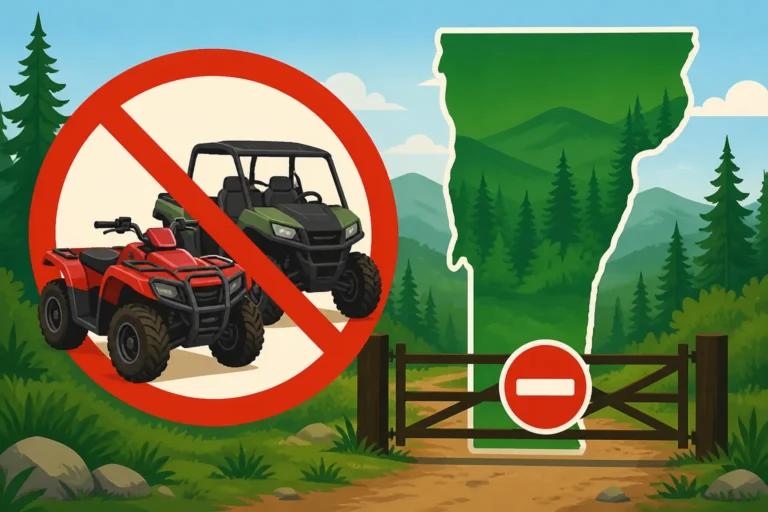
If a trail has been closed, stay out—even if you can see tire tracks beyond a barrier or another rider says they made it through. A closure may protect people from a hazard that is difficult to judge from a distance, or give a club and landowner time to assess the crossing. Conditions may also shift before repairs begin.
Riding around a barrier can cause more harm than the original washout. A new track can widen the damaged area, disturb vegetation, or lead onto property without permission. Follow the marked route and any posted reroute; Staying on the Marked Corridor explains why that matters on a shared trail system.
Landowners may also ask for access to stop while a problem is assessed or repaired. Don’t move a gate, remove warning tape, or treat a temporary closure as optional. In Vermont, the permission that allows a trail to cross private land is important to the network’s continued use. Why a Landowner Can Close a Trail Overnight offers more context for why access can change.
How to Plan a Ride After Heavy Rain
Check current information before towing
Before loading your ATV or UTV, look for trail updates from the club or organization responsible for the route. Check again on the day of the ride if rain has continued or new storms have passed through. A map may show where the trail runs, but it does not necessarily show current washouts, temporary closures, or a club’s latest reroute.
onX Offroad may help with route orientation and locating your position, particularly when a group is unfamiliar with an area. Still, compare what the app shows with current local trail information and signs on the ground. If the map and a posted closure disagree, follow the closure. When you cannot confirm whether a crossing is open, choose another route rather than towing a machine to a trailhead and hoping for the best.
Leave room in your plan for turning around. That can feel disappointing after a long drive, especially when everyone has taken time off, but a short ride or a change of destination is better than getting trapped on the wrong side of a failed crossing. For broader planning, Vermont ATV Trails: The VASA System explains the network context, while Vermont Trail Closures After a Storm is relevant when weather has recently affected access.
Treat mud season and saturated ground with care
A trail can remain vulnerable after rain has stopped. Waterlogged soil may rut under tires, and a small rut can channel more runoff during the next storm. If your tires are sinking, the trail surface is breaking apart, or you need repeated throttle to get through, stop before the damage grows.
Mud season closures deserve particular attention. A route that is open in drier weather may be closed when soil is soft and easily damaged. Don’t rely on a familiar track or another rider’s tire marks as proof that riding is permitted. Check the relevant updates and Vermont Mud Season Closures before setting out.
If an open route is muddy, ride smoothly and stay on the established corridor. Avoid spinning tires, widening the trail to go around a wet patch, or forcing a machine through standing water when you can’t see the surface. Those choices can worsen erosion and create hazards for the next group.
Make a practical plan for your group
Before starting, agree on what the group will do if it reaches a washed-out crossing. Pick a turnaround point that everyone understands, keep riders together, and make sure each person knows not to cross a closure or create a bypass. This is especially useful when the group includes new riders or people on machines with different sizes and capabilities.
Carry a charged phone and any navigation tools you normally use, but don’t count on reliable cell service in every wooded or remote area. A GPS pin or downloaded map can help you describe where a problem is, while a paper map or a known trail junction can provide a backup reference. onX Offroad can be part of that navigation setup, but riders should still be ready to backtrack if the route is blocked or conditions are unsafe.
If you discover damage, report it and move on without disturbing the site. Don’t place branches, rocks, or makeshift markers in a way that could be mistaken for an official trail sign. The most useful thing a rider can do is communicate the hazard clearly and leave the route in a condition that helps the club, landowner, or trail manager assess it.
Disclaimer
This article is for general informational purposes only and does not constitute professional advice. Laws, prices and regulations vary by location and change over time. Consult a qualified professional for guidance on your specific situation.