Trail Work Weekends and What They Involve
A Vermont trail work weekend is usually less about dramatic construction and more about steady, practical tasks: clearing brush, checking signs, repairing small drainage problems, or helping a local ATV club prepare a corridor for riders. If you’re wondering what to bring, what the work involves, or whether volunteering means you can ride afterward, this guide explains how to show up prepared and respect the land and club rules.
What a Vermont ATV trail work weekend involves
Typical jobs volunteers take on
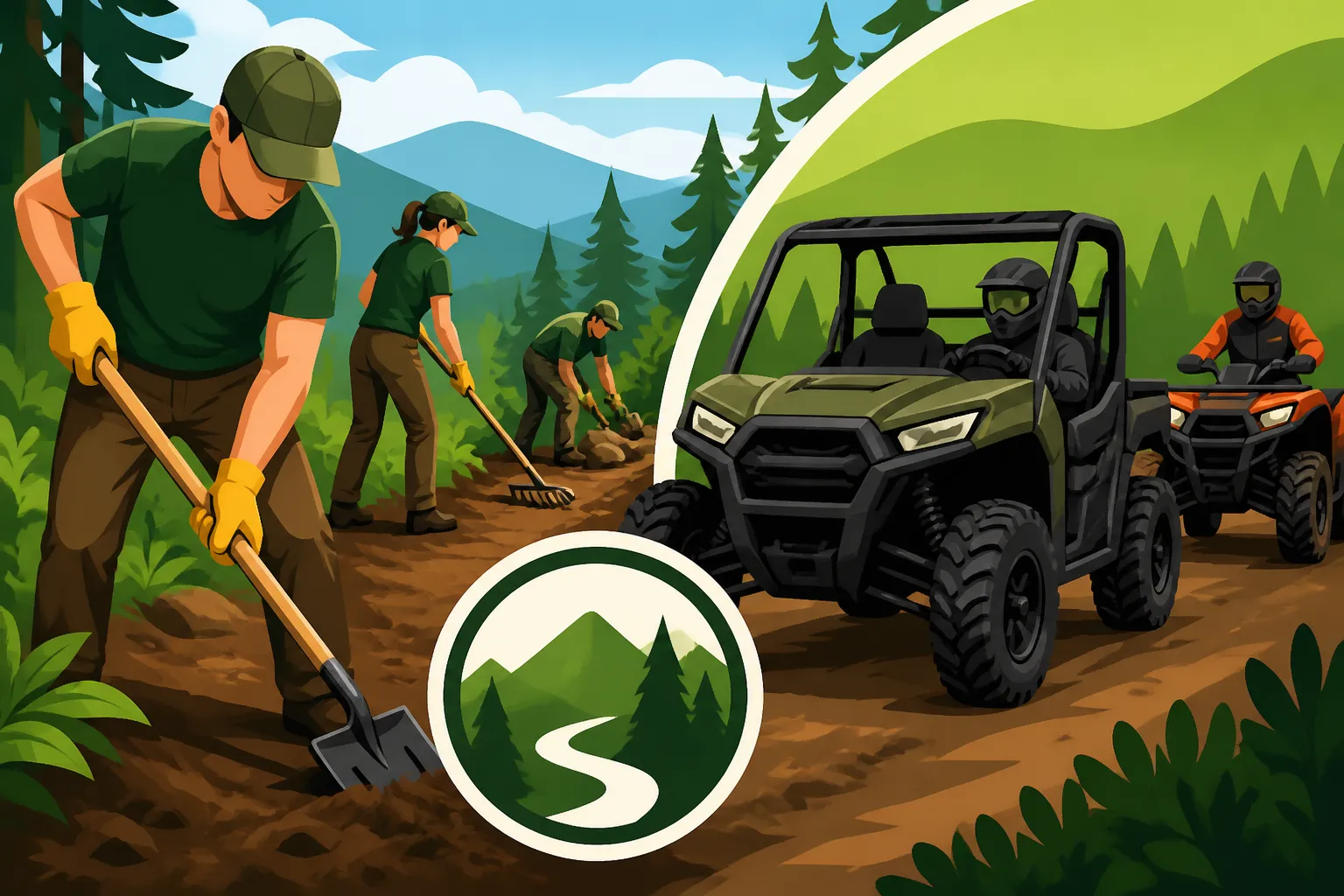
The work depends on the trail’s condition, the season, and what the maintaining club has permission to do. A group might clear branches from a corridor, trim back brush, remove litter, replace a damaged marker, or help inspect a bridge and report a concern. Some workdays are mostly walking and checking; others involve using hand tools or moving materials.
Drainage is another common focus. Water running down a trail can wash away soil, deepen ruts, or damage a culvert. Volunteers may clear debris from a drainage path or flag a problem for someone with the right equipment and authorization to address it. A small task done early can help prevent a larger maintenance issue later.
In the Northeast Kingdom, for example, a crew working near Island Pond or Newport may find that one section is dry while another is muddy or blocked by storm debris. Vermont weather and terrain can change what’s needed from one weekend to the next. The coordinator normally sets the task after checking conditions and the club’s priorities. For examples of the range of work involved, see Vermont Club Volunteer Work Days and Brushing a Corridor in Spring.
Who organizes the work and assigns tasks
Local ATV clubs are often the best place to ask about a workday. They know which corridors they maintain, what landowner permissions apply, and which tasks are appropriate for volunteers. A club may arrange a meeting point, identify a work lead, and divide the crew into small groups so everyone knows where to go and whom to check in with.
Don’t assume that a trail you ride is automatically open for volunteer work. Maintenance authority and access depend on the corridor and its arrangements with landowners. If you’re not sure which club to contact, start with Finding the VASA Club That Maintains Your Local Trail or Vermont ATV Clubs and What They Maintain. A club may direct you to another group if the location is outside its area.
Ask the organizer what work is planned before bringing equipment or inviting a group. A chainsaw, power tool, or machine may require specific experience, permission, or supervision. For many volunteers, gloves, sturdy footwear, and a willingness to follow instructions are more useful than arriving with tools the crew hasn’t requested.
How to prepare for a volunteer trail day
What to ask before you go
A few details can make the day more comfortable and prevent confusion at the trailhead. Confirm the meeting location, start time, expected end time, and whether the work involves walking, lifting, or using tools. Ask whether you need to bring lunch and water, whether there is a sign-in process, and whom to contact if you arrive late or need to leave early.
Also ask what clothing and equipment are appropriate. Conditions may differ across Vermont, even within the same county. A sunny forecast in town doesn’t necessarily mean a shaded, muddy corridor will be dry. Long pants, sturdy boots, work gloves, and weather-ready layers are sensible starting points, but the organizer can explain any task-specific needs.
| Before the workday | Why it matters |
|---|---|
| Confirm the meeting point and contact person | Trailheads and access points can be easy to confuse |
| Ask what jobs are planned | The task determines what gear and clothing make sense |
| Check whether tools are provided | Avoid bringing equipment the crew cannot use |
| Bring water, food, and weather layers | Work may take longer or feel harder than expected |
| Tell the leader about relevant experience | They can assign tasks that match your comfort and skills |
| Ask whether riding is part of the plan | Volunteering does not automatically include permission to ride |
If you use a mapping app such as onX Offroad, it can help you keep track of a meeting location or note where the crew plans to regroup. Treat that as a navigation aid, not as proof that a route is open or that you have permission to enter private property. Confirm the location and access instructions with the work leader.
What to bring and what to leave behind
For a typical hand-work day, consider bringing water, a snack or packed lunch, work gloves, eye protection if recommended, sturdy footwear, and a rain layer. A small first-aid kit and a charged phone are also useful. If you have a specific medical concern or physical limitation, tell the organizer privately so they can help you choose an appropriate task.
Leave powered equipment at home unless the work lead specifically asks for it. Tools can create serious hazards when people are unfamiliar with the work plan, when there are several crews in a small area, or when the club does not have permission to use them there. The same goes for bringing an ATV or UTV to move materials: ask first, and follow the club’s instructions about where machines may travel.
A volunteer day is not a good time to improvise a route, cut a shortcut, or remove a barrier because it looks inconvenient. A marker or gate may be there for a reason. When in doubt, stop and ask the crew leader rather than making a change on your own.
Working safely and respecting the corridor
Follow the work plan and know your limits
At the start of the day, listen to the briefing. The leader may explain the work area, the boundaries of the task, hazards to watch for, and how the group will communicate. If instructions are unclear, ask before starting. A short question can prevent a volunteer from clearing the wrong section or entering an area where work is not authorized.
Be honest about your experience. If you haven’t used a tool before, say so. You can still contribute by carrying supplies, gathering litter, checking signs, or helping with other low-risk tasks. If the job feels unsafe or beyond your ability, pause and tell the leader. There’s no prize for pushing through discomfort, especially on uneven ground where a stumble or strain can affect the whole crew.
Watch for changing conditions. Wet leaves, mud, loose rocks, and hidden holes can make a familiar corridor surprisingly awkward to walk. Keep a safe distance from anyone using tools or equipment, and don’t assume they can hear you over a machine. A work leader’s directions take priority over what seems like the quickest way to finish.
Respect private land and changing access
Vermont riding corridors may cross private land, so a maintenance day is also a chance to help protect the relationships that make access possible. Stay within the work area, avoid disturbing nearby property, and follow any instructions about gates, parking, or where to walk. Leave a gate as you found it unless the landowner or work lead directs otherwise; Gates Left As You Found Them explains why that small habit matters.
A volunteer assignment doesn’t grant general access to the property, and it doesn’t necessarily mean you may ride the corridor after the work is done. Confirm separately whether riding is permitted, which route is open, and whether any club requirements apply. The route may be closed because of mud, landowner concerns, maintenance, or another condition. See Vermont Trail Etiquette on Private Land and Why a Landowner Can Close a Trail Overnight for more on respecting access boundaries.
If you’re using onX Offroad to orient yourself, compare what you see with the work leader’s directions and current club information. A mapped line can be helpful for finding a location, but it should not overrule posted signs or permission instructions. Keep to the designated corridor, as described in Staying on the Marked Corridor.
After the workday and how to stay involved
Close out the task properly
Before leaving, check in with the work leader. They may want to know what was completed, what remains, or whether the crew noticed a washout, damaged sign, blocked culvert, or other issue that needs follow-up. Sharing clear observations is often more useful than attempting an unapproved repair on the spot.
If you took photos for the club, ask where they should be sent and whether the location details are useful. A simple note such as “marker missing near the bend after the bridge” is more actionable than a photo with no context. Don’t post images that reveal private access details if the club or landowner has asked volunteers to keep that information limited.
Pick up personal trash and return any borrowed tools as directed. If you arrived by ATV or UTV, follow the organizer’s instructions for leaving the site and don’t assume the work area is now an authorized riding route. Ask about trail status before planning a ride. Vermont Trail Conditions Before You Tow can help remind riders why checking conditions before heading out matters.
Keep contributing between weekends
You don’t need to be available every weekend to be useful. Clubs may need help with occasional workdays, sign checks, event support, cleanup, or sharing reports about conditions. Ask how the club communicates opportunities and whether there are tasks suited to beginners, families, or volunteers who can only spare a few hours.
If you enjoyed the day, tell the coordinator what kinds of tasks you’re comfortable doing next time. Someone who likes walking the corridor and spotting problems may be a better fit for inspection work than for hauling materials. Another volunteer might have relevant tool experience. Matching people to appropriate jobs makes the day safer and more productive.
You can also help by being thoughtful when you ride. Follow current closures, avoid widening muddy sections, and don’t create new tracks around wet spots. When a club reroutes a corridor, use the signed route and check with the club if anything is unclear. How VASA Signs a Trail Reroute offers useful context for understanding why a marked route may change.
Disclaimer
This article is for general informational purposes only and does not constitute professional advice. Laws, prices and regulations vary by location and change over time. Consult a qualified professional for guidance on your specific situation.