Leaving a Trailhead Cleaner Than You Found It
A ride can leave more behind than tire tracks: snack wrappers, muddy boot prints, a loose strap, or a blocked space that makes the next trailer struggle to park. Vermont trailheads are often shared, limited-access spaces, so small oversights can frustrate other riders and landowners. This guide explains how to prepare, ride, and pack up in a way that leaves the access point ready for the next person.
Prepare before you reach the trailhead
Pack for the cleanup you might need to do
The easiest cleanup is the one you planned for before the ride. Bring a sturdy trash bag, a few smaller bags for separating wet or dirty items, and gloves for picking up anything you would rather not handle bare-handed. A small broom or brush can help with loose mud around your trailer or parking space, while a towel is useful for wiping down gear before it goes into the vehicle.
Think through the ordinary things that become litter when a group is tired or in a hurry: food wrappers, drink containers, tissues, zip ties, packaging from replacement parts, and scraps from trail-side repairs. Give one bag a specific job—trash only—and keep it somewhere easy to reach. If it is buried beneath helmets and riding gear, it is less likely to be used when someone opens a snack.
It also helps to bring a separate container for items that should not go in a public trash bin, such as oily rags, used absorbent material, or damaged batteries. Take these home and dispose of them appropriately. A trailhead is not a dumping place for vehicle fluids, broken parts, or household waste, even if a bin is available for ordinary litter.
Check the access details before you unload
Vermont riding access can depend on the particular trail, club, landowner, and conditions. Confirm that the route is open and that your group has the required access before heading out. A legal parking spot near a trail does not automatically mean the trail itself is open to riding. Vermont Trail Conditions Before You Tow is a useful reminder to check conditions and access before committing to the trip.
If you use a mapping tool such as onX Offroad to plan a route, treat it as one part of your preparation rather than a substitute for current local information. Compare the route with the relevant club or land manager’s guidance, and pay attention to posted signs at the trailhead. A line on a map cannot tell you whether a landowner has temporarily closed a corridor, whether a bridge is out, or whether a route is currently suitable for your machine.
Parking deserves the same attention. Arrive with a plan for where the truck and trailer will go, especially when several vehicles are traveling together. Vermont Trailheads With Trailer Parking can help riders think about staging, but always follow signs and on-site instructions. Do not block a gate, driveway, road, turnaround, emergency access, or the space another vehicle needs to leave.
| Before leaving home | Why it helps | What to bring or check |
|---|---|---|
| Confirm the route is open | Prevents riding into a closure or restricted area | Current club or land manager information |
| Check parking arrangements | Reduces crowding and blocked access | Trailer plan and any posted parking rules |
| Pack out supplies | Keeps wrappers and repair waste from being left behind | Trash bags, gloves, small container |
| Review the machine and trailer | Avoids loose parts or fluids being left at the staging area | Tie-downs, basic tools, absorbent material |
| Agree on group habits | Makes cleanup a shared responsibility | One person to check the parking area before departure |
Use the trailhead with care
Keep parking areas open and orderly
At a busy staging area, a vehicle parked a little too far into the lane can create a surprisingly large problem. A trailer may need room to turn, another rider may be waiting to unload, and someone could need to pass through for access unrelated to recreation. Park only where permitted, keep equipment within your space, and avoid spreading coolers, ramps, helmets, and tools across the area.
Unload efficiently, but do not rush in a way that leaves gear behind. Keep small items together in a tote or the vehicle rather than placing them on the ground where they can be kicked under a truck or blown away. If the parking area is unpaved, avoid spinning tires or making unnecessary turns that churn up soft ground. A damaged shoulder or muddy rut may remain long after your group has left.
Before you leave the parking area for the trail, check the basics: everyone has what they need, your trailer is secured, and no belongings are sitting beside the vehicle. If a group is using a trailhead sign-in box, follow the instructions posted there and make sure the box remains usable for the next rider. Signing In at a Trailhead Box covers that small but important part of using shared access responsibly.
Leave gates, signs, and trail features as you found them
A gate is there for a reason, and its position matters. If a gate is closed, do not assume it is acceptable to go around it. If local instructions allow riders to pass through, close it again exactly as directed. Leaving a gate open can affect livestock, property access, or the landowner’s willingness to keep a corridor available. Gates Left As You Found Them is a good principle to keep in mind throughout the ride.
Signs, trail markers, barriers, and trailhead information should be treated as working equipment, not souvenirs or decorations. Do not move, remove, cover, or alter them. If a sign has fallen or a marker appears damaged, report it to the appropriate club or land manager rather than trying to make an unapproved repair. A quick photo and a clear description of the location can make the report more useful.
The same care applies to natural features and trail edges. Do not widen the route to get around a wet spot, cut through vegetation to create a shortcut, or throw branches and rocks into a drainage area. A detour that seems minor to one rider can become a new track that draws more traffic and increases erosion. Vermont Trail Etiquette on Private Land explains why staying on the marked corridor matters in a trail network that depends on continued landowner cooperation.
Ride in a way that prevents extra cleanup
Keep trash and repair waste contained
A snack wrapper can slip out of a pocket when a rider reaches for a phone or adjusts a glove. A loose bottle can bounce out of a storage compartment. Make it easy to keep these items contained: use a secure bag or compartment, close it after every stop, and avoid leaving food packaging on a machine’s rack while riding.
Trail-side repairs need a little extra thought. Keep bolts, broken straps, wire, packaging, and old parts in a container or bag rather than setting them down on the ground. If you change a part, account for the old one before moving on. A small metal piece can be difficult to see in leaves or gravel and may cause trouble for another rider, a landowner, or an animal.
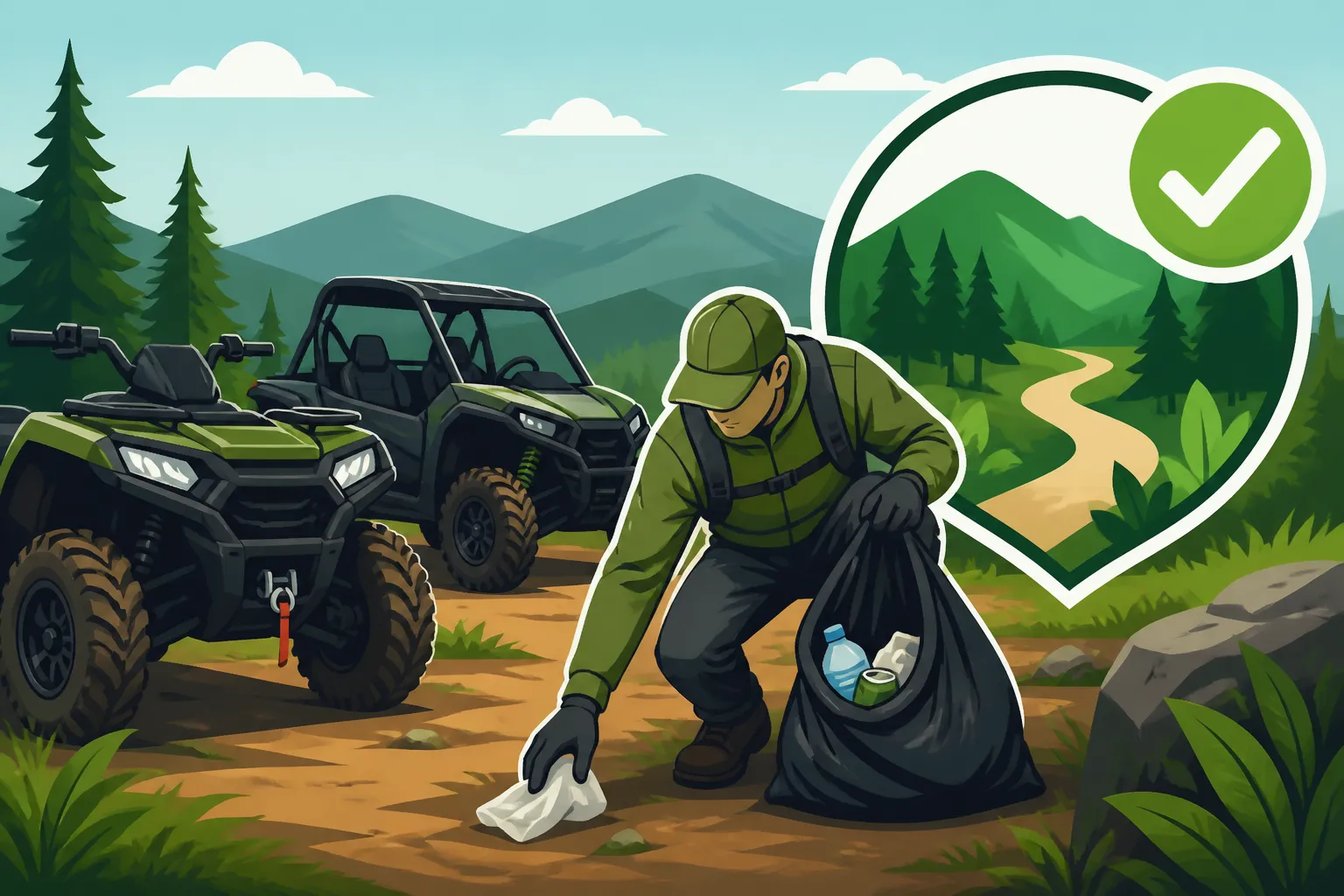
If you see litter, use judgment. Picking up a clean wrapper or empty bottle is a simple way to improve the area, provided it is safe to do so. Do not handle needles, chemical containers, unknown fluids, or sharp debris without appropriate equipment. Note where the item is and contact the responsible club or land manager. Responsible cleanup is helpful; putting yourself or others at risk is not.
Avoid turning a wet or damaged spot into a bigger problem
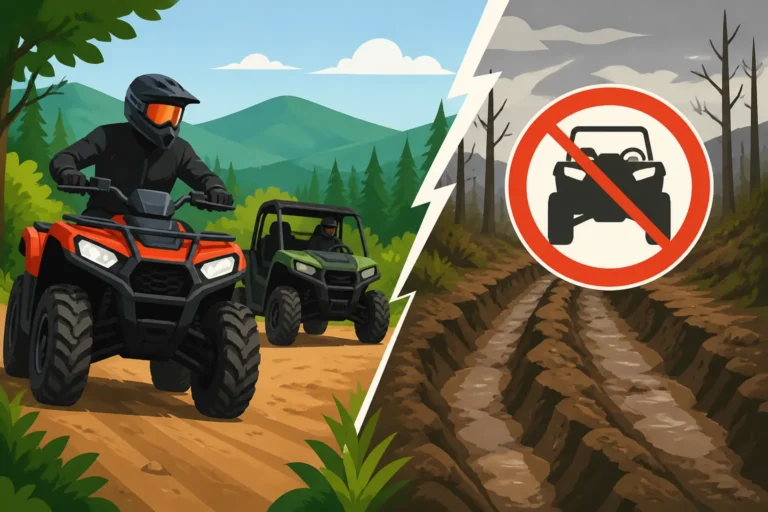
Mud is part of riding in Vermont, but there is a difference between riding a designated route and creating a new one. If you encounter a wet section, follow the marked corridor and any posted direction. Do not widen the trail by driving around the edge, and do not leave the authorized route to find firmer ground. Repeated bypasses can tear up vegetation and make a manageable wet spot much larger.
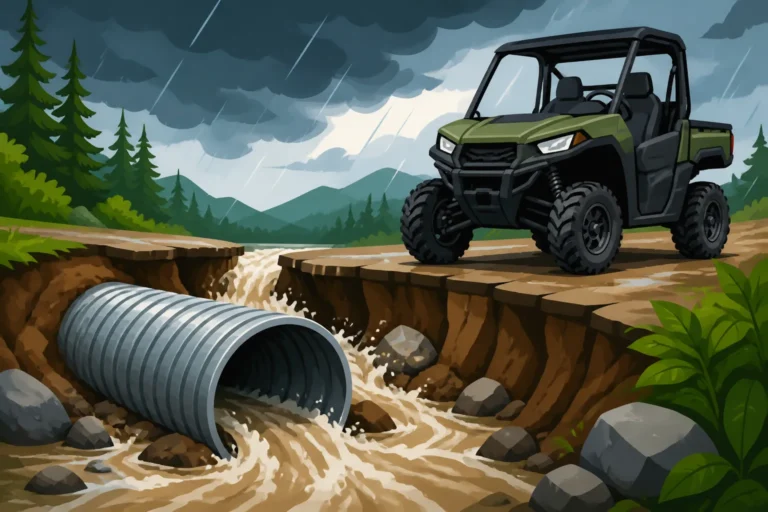
If conditions look unsafe or the trail appears damaged, stop and assess rather than pushing through simply because your group has already arrived. A washed-out culvert, damaged bridge, or deep rut may need attention from the club before riders continue. Share what you observed with the appropriate organization and include a clear location. Vermont Trail Closures Landowners Request helps explain why a closure or reroute should be respected, even when it changes the day’s plan.
A current map can help you understand the planned route, but it cannot replace attention to signs and conditions on the ground. If you use onX Offroad or another mapping tool, check that your group is still following an authorized corridor and pause when the route does not match what you see. Do not treat a digital track as permission to cross a closed section or private land outside the marked route.
Make cleanup part of the ride home
Do a final walk-around before you leave
The end of a ride is when people are most likely to overlook something. Everyone is tired, machines are muddy, and the group may be eager to get on the road. Before loading up, have one person do a slow walk around the parking area while another checks the truck and trailer. Look beneath the machines, around the ramps, beside the tires, and near any spot where the group stopped to eat or make a repair.
Use a simple order so the check does not become a vague “Does everyone have everything?” routine:
- Collect all food and drink packaging.
- Pick up tools, straps, gloves, and loose machine parts.
- Check the ground under and around each vehicle.
- Secure trash and dirty gear inside the vehicle or trailer.
- Confirm that the parking space, lane, and access points are clear.
- Check posted instructions before leaving the site.
If a public bin is present, use it only for the kind of waste it is meant to accept. Do not leave bags beside an overflowing bin, place vehicle fluids in a regular trash container, or assume another person will take care of bulky waste. When in doubt, pack it out.
Share responsibility across the whole group
Cleanup works better when it is not quietly assigned to the person who cares most. Before the ride, ask each rider to carry their own wrappers and personal waste. During the ride, the group can agree that whoever stops for a repair checks the ground before moving on. At the end, make the walk-around a normal part of loading rather than an optional favor.
For a larger outing, decide who will check the sign-in area, who will collect shared waste, and who will confirm that trailers are not blocking access. Keep the jobs simple and rotate them on future rides. If your group is helping with a formal work day, follow the club’s instructions about tools, disposal, and which areas volunteers are authorized to maintain. Vermont Club Volunteer Work Days and Vermont Trail Volunteer Days offer related ways to think about supporting the network beyond a single ride.
The trail system depends on goodwill as much as it depends on machines and maps. Many Vermont corridors cross land where continued access relies on riders behaving respectfully. Leaving a trailhead tidy will not solve every trail-use challenge, but it sends a clear message: your group understands that access is shared, and you are willing to do your part to protect it.
A clean departure also sets a useful example for newer riders and kids in the group. If they see adults take the extra minute to gather a dropped wrapper or close a gate properly, those habits become part of the ride rather than a lecture afterward. And when you use onX Offroad to plan future outings, pair that route planning with the same on-the-ground care: follow local guidance, respect closures, and leave the staging area ready for the next group.
Disclaimer
This article is for general informational purposes only and does not constitute professional advice. Laws, prices and regulations vary by location and change over time. Consult a qualified professional for guidance on your specific situation.