Which Safety Certificates Vermont State Police Accept
A safety-course card from another state may look official, but that does not automatically make it acceptable for riding an ATV in Vermont. The key question is whether Vermont recognizes the course and whether you can show proof of completion when asked. Here’s how to assess a certificate, what to carry, and what the certificate does—and does not—allow you to do.
Which ATV safety certificates Vermont State Police accept
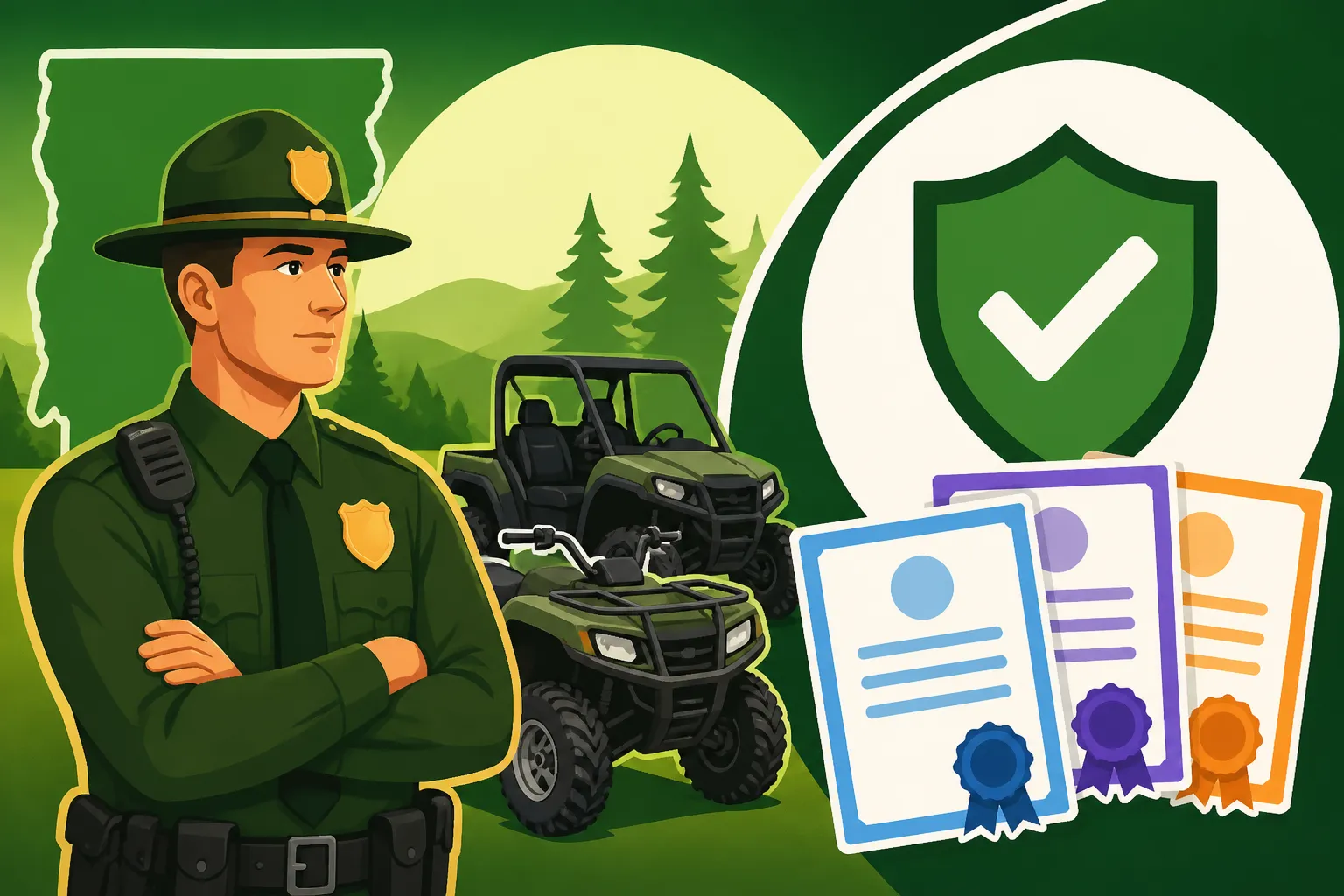
For a rider who must meet Vermont’s ATV safety-training requirement, the most reliable proof is an official certificate showing successful completion of a Vermont-recognized ATV safety course. A certificate from another state may also qualify if Vermont recognizes the course as meeting its requirements. The state where you took the course, the course type, and the details printed on the certificate can all matter.
Do not rely on a document simply because it says “safety” or “off-road.” A course for snowmobiles, motorcycles, boating, or general driver education is not automatically an ATV safety certificate. Nor is a registration receipt, a club membership card, a trail access decal, or proof that you enrolled in a class.
A useful certificate should make it possible to confirm:
- The rider’s name, spelled clearly enough to match their identification or other records
- That the course covered ATV safety, rather than a different vehicle or activity
- That the rider completed the course, not merely registered for it
- The issuing organization or authority
- A completion date or certificate number, if one is provided
The format alone does not decide whether a certificate qualifies. An online course can be legitimate if it is one Vermont accepts; an in-person course is not automatically accepted just because it took place in a classroom. The important point is recognition of the course, not whether the rider studied online or in person.
Vermont’s safety-training rule applies to young riders, and a safety certificate may be required even when the machine is registered and the rider has permission to use it. Review Vermont ATV Safety Course Required Under 18 for the age-related requirement, and Vermont’s Minimum Course Age of 12 for information about when a young rider can take the course.
| Proof a rider has | Does it establish ATV safety-course completion? | What to check |
|---|---|---|
| Certificate from a Vermont-recognized ATV course | Usually the clearest proof | Name, course type, and successful completion |
| Certificate from another state | Possibly, if Vermont recognizes that course | Confirm recognition before riding |
| Online course certificate | Possibly; the format alone is not enough | Confirm the course itself is accepted |
| Class enrollment confirmation | No; it shows registration, not completion | Obtain the completion certificate |
| Snowmobile or motorcycle safety card | Not automatically | Check whether it specifically meets Vermont’s ATV requirement |
| Registration, insurance, or trail decal | No; these serve different purposes | Carry the safety certificate separately |
If a certificate is unclear, incomplete, or issued by a provider you do not recognize, do not wait for a roadside check to find out whether it counts. Ask the Vermont authority responsible for the course or safety requirement to confirm the specific course and document. When asking, give the course provider’s name, the exact course title, how it was delivered, and what appears on the certificate. A vague question such as “Will my card work?” can be difficult to answer without those details.
Out-of-state and online certificates
Visitors often arrive with a certificate earned where they live. Vermont may recognize qualifying out-of-state ATV safety courses, but riders should not assume that every state’s course, private training card, or online completion record automatically transfers. The safest approach is to verify the exact course before travelling, rather than infer acceptance from the fact that another state issued a card.
The distinction is between a credential that documents a recognized ATV safety course and a document that merely shows some kind of training. A provider’s certificate can look polished without proving that Vermont accepts its course. Conversely, a straightforward certificate from a recognized program may be adequate even if it does not resemble a Vermont-issued card.
Before relying on an out-of-state certificate, check these points:
- Confirm the vehicle category. The course should be for ATVs, not just motorcycles, snowmobiles, or recreational vehicles in general.
- Confirm the issuing program. Identify the agency or organization that authorized or delivered the course.
- Check that the rider completed it. A registration email, payment confirmation, or unfinished-course screen is not proof of completion.
- Ask whether Vermont accepts that specific course. Provide the course name and issuer; do not ask only whether “out-of-state cards” are accepted.
- Keep the answer and certificate accessible. If a course provider or authority confirms acceptance, save the response with the certificate in case questions arise later.
The course’s online format is not a shortcut around this check. Some online courses may meet Vermont’s requirement, while other online courses may be intended for a different jurisdiction or purpose. Use Out-of-State Safety Courses Vermont Will Count when sorting out whether a certificate earned elsewhere can be used in Vermont, and Vermont Reciprocity for Out-of-State Machines for the separate question of whether an out-of-state machine can be used in Vermont.
A safety certificate is also different from reciprocity for registration or trail access. A visiting rider may have a valid registration from home and still need to meet Vermont’s rider-training rules. Likewise, an accepted safety certificate does not register the machine or provide permission to ride on a particular trail. Those are separate requirements. See Vermont Visitors Registering at Home First and Vermont Requires Registration Plus a TAD for related issues that can apply to visitors.
If a young rider has taken a course in another state, make the inquiry using the rider’s age and the exact course details. A certificate may demonstrate training, but age-related supervision rules still apply. Review Vermont Riders Under 16 Need an Adult and What Direct Supervision Means before planning a ride with a child.
What to carry if your certificate is checked
A certificate only helps if you can produce it. Before leaving home, confirm that the rider’s name and completion information are readable, and take the original or a clear copy. If you use a digital copy, make it available offline; cell service can be unreliable in riding areas. Keeping a paper copy as a backup is a practical precaution, especially for a group travelling with several young riders.
Do not assume that a photograph of a card will satisfy every officer or resolve a question about an unfamiliar program. A paper copy, an official downloadable certificate, or another document supplied by the course issuer may be easier to review. If the certificate is available through a provider account, save or print it before the trip rather than relying on a password reset at the trailhead.
For a family or group, organize proof by rider. One adult carrying a stack of mixed cards can make it hard to show whose certificate belongs to whom. A simple folder or secure phone file can include each rider’s certificate and relevant course details. Keep the certificate separate from the machine’s registration and insurance documents so it is easy to find.
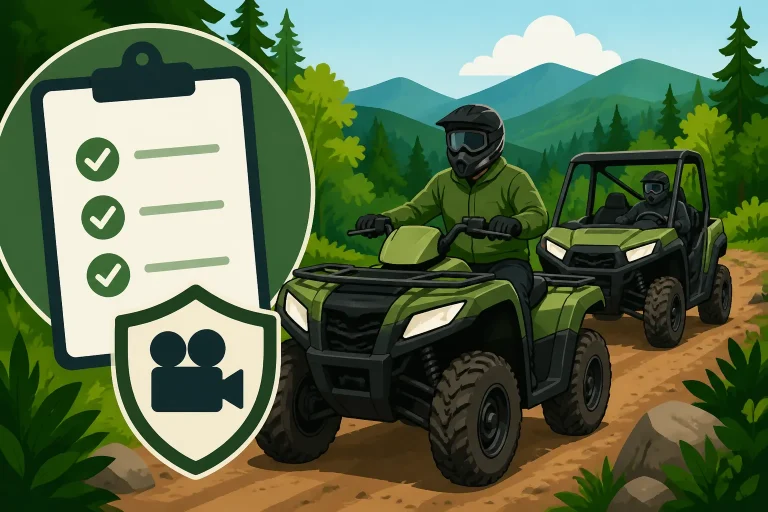
A quick pre-ride check can help:
- Match the certificate to the rider who will be operating the machine.
- Make sure the document shows course completion, not just enrollment.
- Check that the course is for ATV safety and is one Vermont accepts.
- Save a readable copy on the rider’s phone or with the supervising adult.
- Carry a paper backup when practical.
- Review any separate age, supervision, registration, insurance, and trail-access requirements.
If an officer asks about training and the rider has an out-of-state credential, answer plainly and show the certificate. If the document does not identify the course clearly, be prepared to explain who issued it and where the rider completed it. Do not present a different vehicle’s safety card as an ATV certificate or assume that a registration document proves training.
The certificate itself may not have an expiration date, but that does not mean every record remains easy to retrieve forever. Keep the original, save a copy, and note the course provider’s contact information. Vermont safety certificates are described as not expiring, but a damaged or lost card can still cause an avoidable problem when proof is requested. See Why an ATV Safety Certificate Never Expires and Vermont Safety Certificate Lookup for related questions about validity and finding records.
A safety certificate is not permission to ride anywhere
An accepted certificate proves a limited thing: that the rider completed qualifying ATV safety training. It does not replace machine registration, insurance, a trail access decal, landowner permission, or compliance with local rules. A rider can have a valid certificate and still be prohibited from using a particular road, trail, or property.
That distinction matters most for families planning a trip. Before riding, check each requirement separately:
- Age and supervision: A certificate does not cancel rules that apply to a rider’s age or supervision. Training and the legal conditions for operating a machine are separate.
- Registration: The machine may need valid registration even if the operator holds a safety certificate. Start with Registering an ATV With the Vermont DMV if you need to sort out the machine’s status.
- Trail access: Access to a trail system may require a separate decal or other authorization. A course card is not a trail pass.
- Insurance: A safety certificate does not provide liability coverage. Check Vermont ATV Insurance Requirements before riding.
- Where riding is allowed: A certificate does not grant access to private land or automatically open a town road. Verify permissions and local designations; Vermont ATV Road Rules: Towns Decide explains why road access can vary by town.
For visiting riders, it is sensible to settle these questions before loading the machines. Confirm that the safety course is recognized, bring proof of completion, and then check the separate requirements for the machine and the intended route. If the rider’s document is from another state or an unfamiliar online provider, ask for confirmation using the course’s exact name rather than relying on a general assumption.
A valid certificate is useful proof of training, but it is only one part of a lawful and prepared ride. Keep it legible and available, verify uncertain out-of-state credentials in advance, and treat training, registration, insurance, supervision, and trail access as separate checks.
Disclaimer
This article is for general informational purposes only and does not constitute professional advice. Laws, prices and regulations vary by location and change over time. Consult a qualified professional for guidance on your specific situation.