Vermont Visitors Registering at Home First
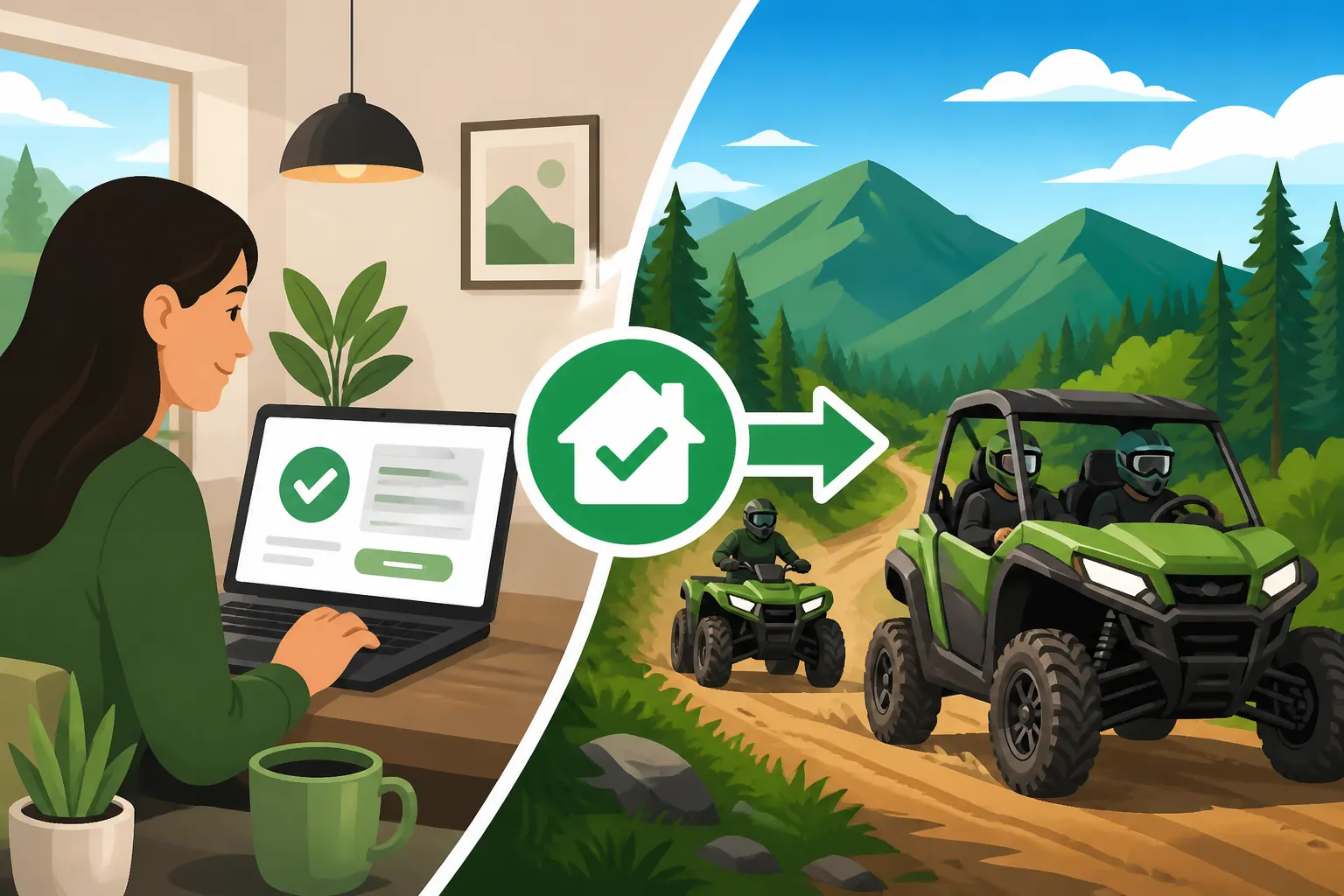
If you’re bringing an ATV or UTV to Vermont, sorting out registration before you leave can prevent a frustrating stop at a trail entrance. The key is to keep three things separate: your home-state registration, Vermont trail access, and any local rules for roads or routes. Here’s what to check, what to carry, and where an out-of-state registration does not replace a Vermont requirement.
Why registering at home is the right first step
A Vermont visit does not automatically mean you need Vermont registration for a machine that is properly registered where you live. Vermont generally recognizes valid out-of-state registrations for visiting machines, but that recognition is not a substitute for making sure your own registration is current and valid. The rules in your home jurisdiction determine what you need to do before transporting the machine.
Start with the registration authority in the state or province where the machine is normally kept. Confirm that the registration covers the specific vehicle you plan to bring, whether it is called an ATV, UTV, side-by-side, or another class of off-road vehicle. Terms and definitions are not identical everywhere. A machine that falls under one registration category at home may be classified differently in Vermont.
Before you travel, check these points:
- The registration is active for the dates of your trip.
- The registration identifies the machine you will bring, using its VIN or other required vehicle identification.
- The plate or registration display is mounted as required where you will ride.
- You have the registration card or other official proof, not just a photo of the plate.
- The vehicle is eligible to be operated in the places you intend to use it.
If the machine is newly purchased, borrowed, inherited, or registered to another person, do not assume that a receipt or the owner’s plate is enough. Ask the home jurisdiction what documents establish valid registration for your situation. A dealer’s temporary paperwork may also have limits on where or how long the machine can be operated. Confirm those details before setting out.
Vermont’s recognition of out-of-state registration is a practical starting point, not a blanket guarantee that every machine can be ridden on every Vermont trail or road. For the broader reciprocity question, see Vermont Reciprocity for Out-of-State Machines. The underlying point is simple: arrive with a valid registration from home, then check Vermont’s separate access and operating requirements.
Registration does not equal trail permission
Visitors sometimes treat registration as an all-purpose pass. It is not. Registration identifies the vehicle and establishes that it is registered under the applicable system. It does not, by itself, grant permission to ride a private trail, open a town road, or satisfy every Vermont trail-access condition.
Vermont’s VASA trail network uses a separate Trail Access Decal, commonly called a TAD. A properly registered machine from another state may still need a Vermont TAD to ride on VASA and participating club trails. Registration and trail access are different requirements, so plan for both rather than expecting one document to cover the other.
| What you need | What it does | What to check before traveling |
|---|---|---|
| Home registration | Shows the machine is registered under the rules that apply at home | Valid dates, correct machine, required display and proof |
| Vermont TAD | Provides access to eligible VASA and club trail corridors | Current purchase options, machine coverage and placement |
| Insurance proof | Shows that the machine has required coverage | Policy applies to the machine and the type of riding |
| Local road permission | Determines whether a town road or route is open to ATVs | Current town designations, signs and local rules |
| Ownership documents | Helps establish who owns or may operate the machine | Especially important for a borrowed or recently purchased vehicle |
The distinction is explained in Vermont Requires Registration Plus a TAD. If your trip is mainly for club trails, sort out the decal before the ride and confirm that it is valid and displayed as directed. A registration from home does not waive the TAD requirement for trails that require one.
What to arrange before you cross into Vermont
Make a short pre-trip check several days before departure. That leaves time to resolve a registration problem, request missing paperwork, or clarify whether a particular trail area is open. A last-minute assumption can leave you with a machine and trailer but no legal place to ride.
Confirm the machine’s registration status
Check the expiry date and the machine details on your registration record. Make sure the VIN on the machine matches the paperwork. If the machine is registered under a name different from the person bringing it, carry documentation that explains the arrangement, such as permission from the owner or relevant purchase paperwork. Requirements can vary, so confirm what the issuing jurisdiction accepts.
If you are visiting from Quebec, New Hampshire, Maine, or New York, look for guidance specific to that registration system. Vermont has reciprocity information for some neighboring jurisdictions, but rules may depend on the machine, the documents it carries, and where it will be ridden. Related explanations include Vermont Reciprocity With Quebec, Vermont Reciprocity With New Hampshire, and Vermont Reciprocity With Maine. Do not assume that a rule for one neighboring jurisdiction applies to another.
If the machine is not registered at home, do not treat a planned Vermont visit as an exception. Ask the relevant motor-vehicle or off-road vehicle authority what registration is required and whether the machine can be operated while paperwork is pending. If you cannot establish that it is legally registered for the intended use, contact the appropriate Vermont authority before riding.
Arrange the TAD separately
A TAD is for eligible trail access, not a replacement plate or registration. Check the current purchase process and terms before your trip, because availability and procedures can change. Visitors can review Vermont Visitors Buying a TAD Online for the online route and Vermont TAD for a Visitor’s Machine for visitor-specific considerations.
Read the current instructions closely when buying. Confirm which machine the decal applies to, how it must be attached, and whether any membership or club component is included in the purchase. A decal bought for one vehicle should not be assumed to cover another. If you are bringing several machines, check the rules and costs for each rather than ordering one decal and dividing access among the group.
Keep the TAD visible and intact in the location specified by the current instructions. A decal stored in a glove box may not satisfy a display requirement. If it arrives shortly before the trip, apply it as directed and allow it to adhere properly before riding.
Check insurance and safety requirements
Vermont’s registration and access requirements do not replace insurance obligations. Review the policy for the exact machine and make sure it covers the kind of riding you intend to do. A policy for a street vehicle, for example, should not be assumed to cover off-road use. Ask the insurer directly if the policy wording is unclear, and carry the required proof with the machine.
For more detail, see Vermont ATV Insurance Requirements. A visitor should also check any rules that apply to the age and experience of riders in the group. Do not assume a safety course certificate from home is automatically accepted for every Vermont requirement. See Vermont ATV Safety Course Required Under 18 and verify whether a particular certificate qualifies before traveling with a young rider.
What to carry and how to handle checks
Keep the documents easy to reach, but protect them from water and mud. A basic packet may include:
- The current registration card or official registration document.
- Proof of insurance, if required for the machine and the place you will ride.
- The TAD purchase confirmation or other relevant access record.
- Ownership or permission documents if the machine is borrowed, recently bought, or registered to someone else.
- Safety-course documentation for riders who may need it.
- A current trail map or official route information for the area.
A phone photo can be useful as a backup, but it is not always accepted as a substitute for the document required by a rule or enforcement officer. Carry the original or an officially accepted digital record when the issuing authority provides one. A small waterproof document pouch can keep papers together; products sold through retailers such as Amazon are one way to find one, but choose a pouch that stays closed and does not interfere with safe storage on the machine.
During a check, an officer or trail warden may ask to see documents related to registration, trail access, insurance, or the rider’s eligibility. Requirements depend on the situation, so keep the paperwork accessible rather than buried in luggage. What a Trail Warden Checks offers more context on the kinds of questions a trail check can involve.
Before leaving the staging area, compare the registration information with the machine itself. Confirm the plate is attached securely, readable, and not hidden by gear. Check that the TAD is in the required place and that the machine is the one covered by it. If the plate has been damaged or lost, address that through the issuing jurisdiction; do not use an improvised display as a substitute unless the authority specifically permits it.
A quick document check is especially useful when several people are traveling together. Each machine may have a different owner, registration term, or insurance policy. Give each rider responsibility for knowing where their own paperwork is kept, while making sure the group has a backup copy of essential information.
Where home registration stops helping
A valid registration from home solves only the registration question. It does not override Vermont’s land-access rules or a town’s decision about road use. Many ATV trails cross private land, and access can depend on the landowner’s permission and club arrangements. A mapped corridor is not an invitation to ride beyond its marked boundaries.
Do not use a town road simply because it connects two trails on a map. Local road access can depend on a town’s current designations, posted signs, seasonal conditions, and restrictions. Check the route with reliable, current information and obey closures. Where a road is not open to ATVs, registration and a TAD do not make it legal to ride there.
Similarly, a visitor should not assume that a trail shown on an older map remains open. Landowner permission can change, and clubs may reroute or close corridors because of weather damage, maintenance, or other concerns. Check local club information shortly before riding. Stay on signed, authorized corridors, and do not bypass gates or ride around a closure.
If you are uncertain whether a machine or route qualifies, pause and ask before unloading. Useful questions include:
- Is this machine’s home registration recognized for the kind of riding planned?
- Does the specific trail require a Vermont TAD?
- Is the trail currently open, and does the route cross onto a town road?
- Does the rider meet the applicable age, supervision, and safety requirements?
- Does the insurance policy cover this machine and this type of use?
For visitors, registering at home first is usually the cleanest way to begin. It gives you the home-jurisdiction documents to present and lets you focus on Vermont’s separate trail, insurance, and local-access requirements. Keep those obligations distinct, check current instructions before departure, and carry proof for every machine in the group.
Disclaimer
This article is for general informational purposes only and does not constitute professional advice. Laws, prices and regulations vary by location and change over time. Consult a qualified professional for guidance on your specific situation.