What Direct Supervision Means
A young rider may be allowed to operate an ATV only when an adult provides direct supervision, but that phrase can be easy to misread. In Vermont, supervision means more than being somewhere on the same property or reachable by phone. Here’s how to think about an adult’s role, what it does not replace, and how to plan a ride without assuming a child meets every other requirement.
What direct supervision means in practice
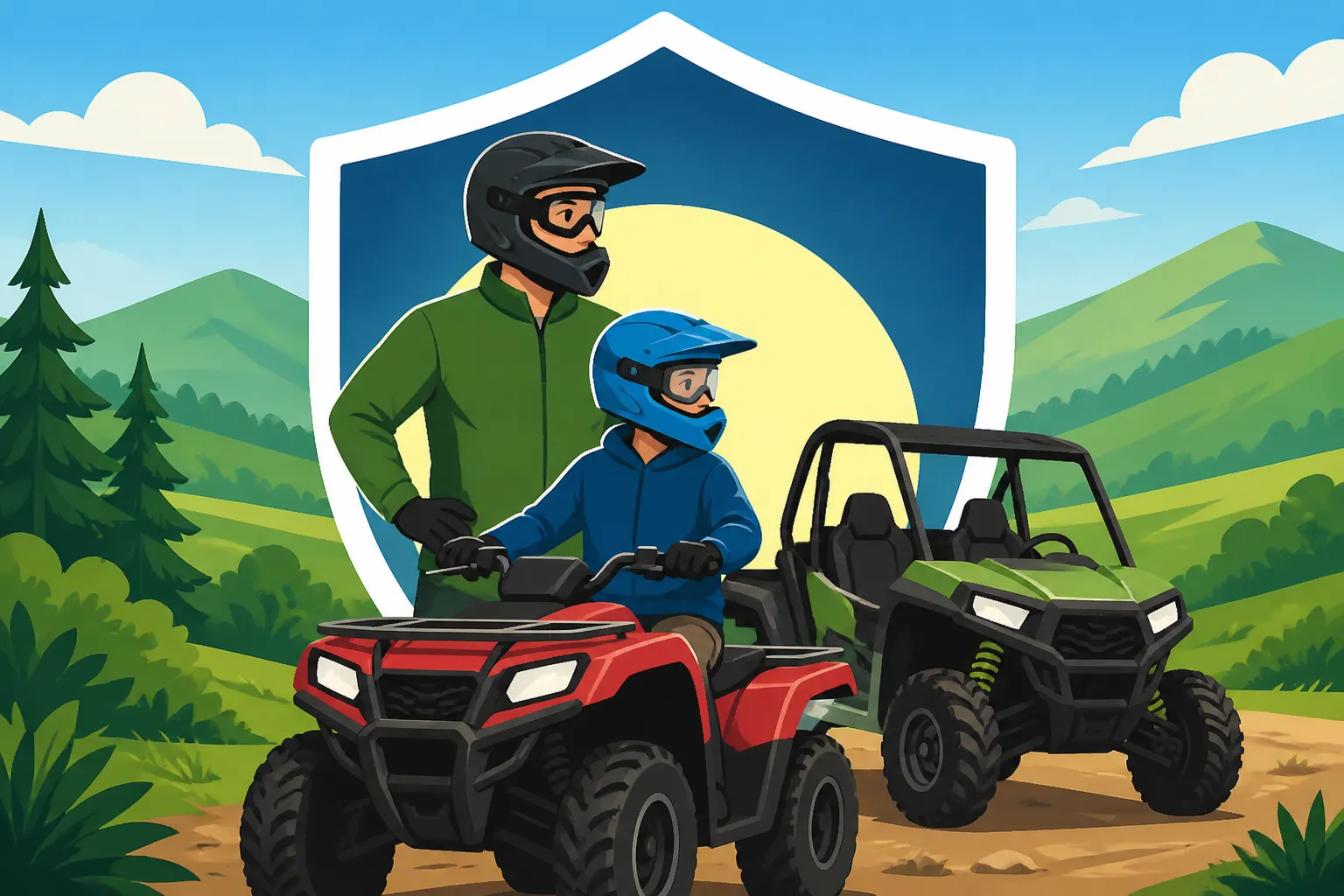
Direct supervision is active oversight while a young rider operates the machine. The supervising adult should be with the rider, paying attention to where they are going and what is happening around them, and close enough to respond if the situation becomes unsafe.
It is not the same as simply giving permission. An adult who drops off a child at a trail, waits at home, or rides far ahead without keeping track of the child is not providing meaningful direct oversight. A phone call or a location-sharing app can help with communication, but it cannot substitute for an adult who is physically present and attentive.
Vermont’s supervision requirements for riders under 16 should be treated as a safety obligation, not a box to check. The practical test is whether the adult can monitor the young rider’s actions and step in promptly if needed. A group ride can make that harder: an adult may be present but unable to see a child who has fallen behind, taken a wrong turn, or stopped out of sight.
| Situation | Does it provide meaningful direct supervision? | Why it matters |
|---|---|---|
| An adult rides nearby and keeps the young rider in view | Generally the clearest approach | The adult can watch the rider and respond to problems |
| An adult stays at a trailhead while the child rides away | No | The adult cannot monitor the ride or intervene promptly |
| An adult rides far ahead and assumes the child will follow | Not reliably | A gap can leave the child out of sight and without immediate help |
| An adult is nearby but distracted by a phone or another task | Not reliably | Physical presence alone does not mean the rider is being monitored |
| An adult accompanies the child but has no way to keep pace or communicate | Risky and potentially inadequate | The adult may be unable to maintain oversight if the group separates |
The table is a practical guide, not a substitute for the precise rule that applies to a particular machine, rider, and location. Before heading out, review Vermont Supervision Rules Under 16 and Who Can Legally Supervise a Rider Under 16 for the related age and eligibility questions.
Stay close enough to respond
There is no sensible one-size-fits-all distance for every ride. A wide, open area with a slow-moving youth machine is different from a narrow corridor with bends, uneven ground, other riders, or limited visibility. The adult should position themselves so they can keep track of the young rider and help quickly if something goes wrong.
That may mean riding beside or just behind the child at a pace the child can handle. It may also mean choosing a route with good sightlines, limiting the group to a manageable size, and stopping when the trail becomes too difficult to supervise safely.
If terrain or traffic makes it impossible to keep the rider in view, do not rely on the idea that the child is probably nearby. Stop, regroup, and choose a safer route or riding arrangement.
Keep attention on the young rider
Direct supervision requires attention. An adult who is busy navigating for a large group, helping another rider, or looking at a phone may not be able to supervise effectively. Assign one adult to keep the child in sight, and make sure the rest of the group understands that the young rider will not be rushed or left behind.
The adult should also be ready to make a conservative call. A child who is tired, upset, overwhelmed by the machine, or struggling with the terrain may need to stop. Supervision includes noticing when a ride is no longer appropriate and ending or changing it.
Who may supervise, and what supervision does not replace
For Vermont riding rules that call for adult supervision of a rider under 16, the adult must meet the applicable age and eligibility requirements. The relevant age threshold is not permission to assume that any adult can supervise in any circumstance. Check the rule for the specific riding activity and location, and do not confuse a parent’s permission with a legal supervision requirement.
An adult also needs to be capable of doing the job. A person who cannot keep up, is impaired, or is otherwise unable to monitor the child is not a safe choice just because they are old enough. If you are unsure whether a particular adult qualifies under the rule, confirm the requirement before the ride rather than relying on an informal interpretation.
Direct supervision is only one part of legal and safe riding. It does not automatically provide a required safety certificate, registration, trail access, landowner permission, or compliance with local rules. Those requirements can apply separately.
Training is a separate question
Vermont’s youth rules include safety-training requirements, and supervision does not automatically waive them. Check Vermont ATV Safety Course Required Under 18 and Vermont Safety Course Minimum Age to see how training requirements apply to the rider. A certificate and an adult’s presence serve different purposes: training helps the rider understand safe operation, while supervision helps an adult monitor the ride in real time.
Do not assume that completing a course means a child can ride without an adult when supervision is required. The reverse is also true: an adult accompanying a child does not necessarily excuse the child from a training requirement.
There may be specific exceptions tied to the place or circumstances of a ride. For example, rules relating to family land or instruction can differ from ordinary riding conditions. Before relying on an exception, read Vermont Course Exception on Family Land or Vermont Instructor Supervision Exception as applicable and confirm that the facts match the exception. A family connection or an informal lesson does not, by itself, establish that an exception applies.
Trail access and machine paperwork are separate too
A supervised rider still needs lawful access to the place where they are riding. Vermont trail access may involve a Trail Access Decal, and a machine registered elsewhere may still have separate Vermont access requirements. An adult’s presence does not make a closed trail open or replace required access credentials. See Vermont Requires Registration Plus a TAD and Vermont Out-of-State Machines Still Need a TAD when planning a trail ride.
Likewise, permission to ride on private land should come from the landowner or someone authorized to give it. An adult supervising a child cannot grant permission to use property they do not control. Road access may also depend on local designations and rules. Do not treat supervision as a general authorization to ride anywhere.
How to plan a supervised ride
A little planning makes it easier to maintain meaningful supervision without turning the outing into a stressful exercise. Use a route and pace that match the child’s ability, agree on how the group will stay together, and decide in advance what to do if anyone loses sight of the others.
- Confirm the rider’s requirements. Check the applicable age, training, and supervision rules before the ride. If the child’s age or the type of machine raises a question, resolve it before arriving at the trail.
- Choose an appropriate route. Consider the child’s experience, machine size, visibility, surface, traffic, and the availability of safe places to stop. Avoid routes where bends, steep sections, or group congestion will make it hard to keep the child in view.
- Set the adult’s role. Name the person responsible for supervising the young rider. Make sure that adult can focus on the child rather than splitting attention among several riders or tasks.
- Agree on a simple regrouping plan. Decide where the group will stop and what everyone should do if riders become separated. Tell the child not to continue farther down an unfamiliar route alone.
- Check the machine and protective equipment. Make sure the machine is appropriate for the rider and in safe working condition. Use the protective gear required for the ride and teach the child to stop if something feels wrong.
- Reassess during the ride. Fatigue, weather, trail conditions, and the child’s confidence can change. Slow down or end the ride if the adult can no longer supervise effectively.
An adult should avoid sending a young rider ahead to “check the trail” or follow a route the adult has not confirmed. If the group reaches a junction or an unclear section, stop together and make the next decision as a group. These small habits reduce the chance that a child will become separated or enter a place the adult did not intend to ride.
Examples that often cause confusion
The parent is at the property, but the child rides out of sight. Being on the same property is not the same as direct supervision if the adult cannot monitor the child’s location and respond to a problem. Stay together or use an area where the adult can maintain a clear view.
The adult leads the group at a fast pace. If the child cannot keep up, the adult may lose sight of them. Set the pace around the young rider, not the most experienced rider in the group.
Several children ride with one adult. One adult may have trouble supervising multiple young riders, especially if they are on different machines or spread across a trail. Keep the group small enough that the adult can track everyone, or arrange additional responsible adults.
The child is riding on private land. Private property does not automatically eliminate every safety, training, or supervision rule. Check the exact rule and any applicable exception; do not infer one from the fact that the land belongs to a relative.
The adult is in another vehicle or at a nearby meeting point. Being available by phone is useful in an emergency, but it is not a replacement for staying with the young rider when direct supervision is required.
The child has completed a safety course. Training is valuable, but it does not necessarily remove an age-based supervision requirement. Treat the course and the adult’s role as separate obligations.
If a ride involves public trails, town roads, or property managed by another person, check the rules for that location as well. Different settings can bring different access conditions. A safe plan is one where the adult knows where the child may ride, remains close enough to supervise, and can stop the ride when conditions change.
Before you leave
Use this quick check to catch the most common planning gaps:
- Confirm the child’s age-related supervision and training requirements.
- Make sure the chosen adult meets the applicable eligibility rules and can actively supervise.
- Choose a route where the adult can keep the young rider in view and respond promptly.
- Confirm that the machine, registration, trail access, and land permissions are in order.
- Set expectations for pace, stops, regrouping, and what to do if the group separates.
- Recheck conditions during the ride and stop if the child or adult can no longer manage the situation safely.
The central idea is straightforward: direct supervision means an adult is actively accompanying and monitoring the young rider, not merely nearby or reachable. When the route, group size, or terrain makes that impossible, change the plan. And when a legal detail is uncertain, verify it before riding rather than treating adult presence as a cure-all.
Disclaimer
This article is for general informational purposes only and does not constitute professional advice. Laws, prices and regulations vary by location and change over time. Consult a qualified professional for guidance on your specific situation.