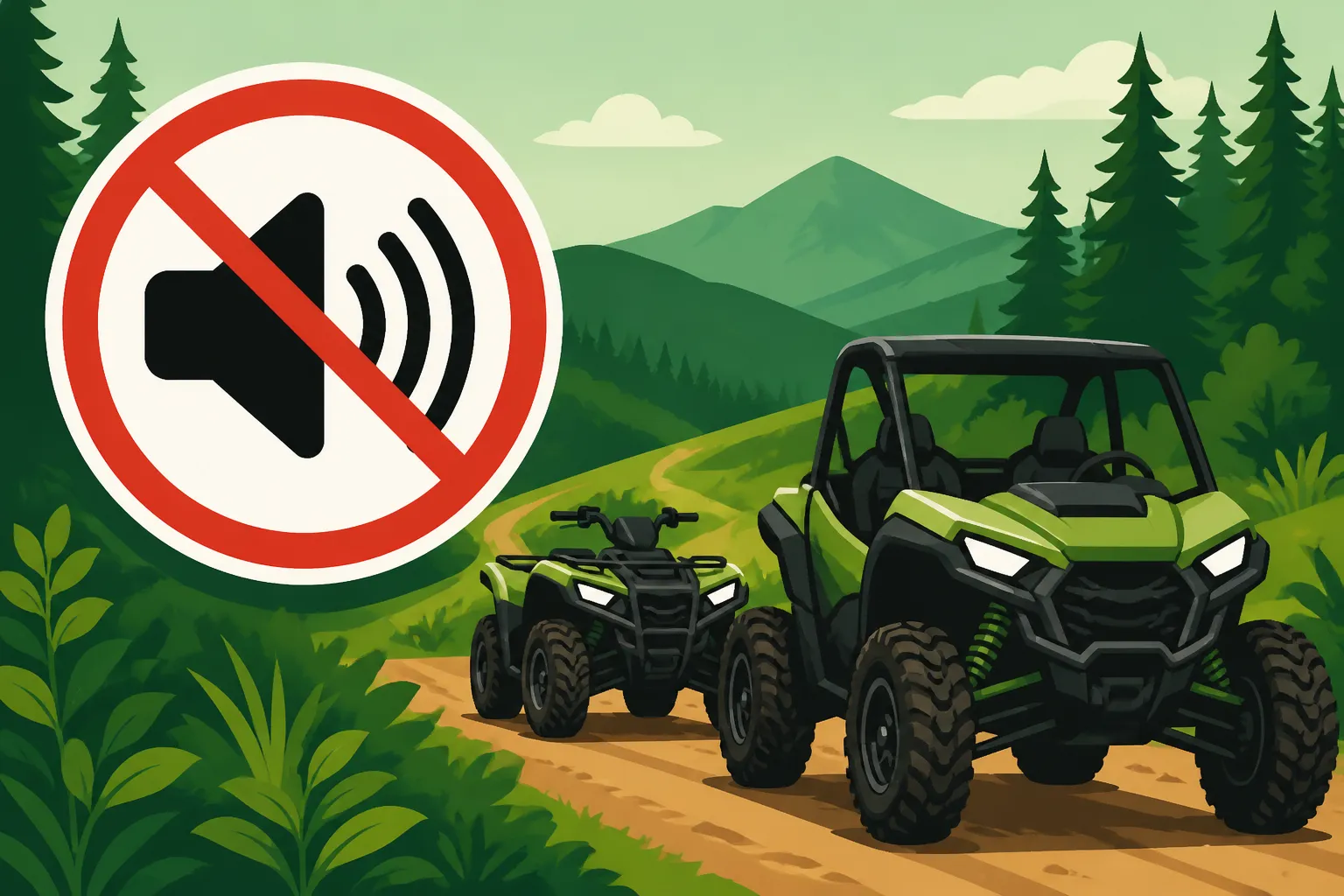
Vermont Sound Limits on the Trail
A loud ATV or UTV can draw complaints, disrupt wildlife and put access to a riding area at risk. Vermont riders need to know what the basic muffler rules require, whether a decibel number applies, and how trail or town rules may differ. The practical takeaway: keep the exhaust system intact and quiet, and check the rules for the exact route you plan to ride.
What Vermont’s noise rules mean for ATV and UTV riders
Vermont’s baseline requirement is about both equipment and how you ride. An ATV must have a muffler in good working order, and riders must not operate a machine in a way that creates excessive or unusual noise. A damaged, removed, bypassed or deliberately altered exhaust can create a problem even if the machine is being used on a trail rather than a public road.
That standard matters because a machine can be noisy for reasons beyond a modified exhaust. A loose heat shield, leaking exhaust joint, worn packing in a silencer or damaged muffler can make an otherwise ordinary machine noticeably louder. The rules are not just about aftermarket parts: a faulty stock system can also deserve attention.
For riders, the important distinction is that Vermont’s baseline rule is not best understood as a single decibel number that automatically makes every machine legal or illegal in every setting. A number you see online may refer to a particular test method, a club or event policy, or another state’s rules. Don’t assume that a reading below a number you found online gives you permission to ride anywhere or settle whether your exhaust meets Vermont requirements.
This is also why sound-meter readings can be misleading. The result changes with distance, angle, ground surface, engine speed, wind and background noise. A measurement taken beside a machine in a driveway is not necessarily comparable to a formal test or an enforcement decision. A phone app or a consumer sound meter can help you notice that your machine has become louder, but it does not replace a legal standard or a sound inspection.
| Situation | What to keep in mind |
|---|---|
| Riding on a club trail | Follow Vermont’s equipment and noise rules, plus the access rules for that corridor and its maintaining club. |
| Riding on a town road | Check the town’s route rules as well as statewide requirements. |
| Attending an organized ride | Ask the organizer whether the event has additional equipment or noise conditions. |
| Checking a machine at home | A sound meter can help identify a change, but an informal reading is not a legal determination. |
| Replacing an exhaust part | Choose a system that preserves effective noise control and is suitable for the machine and its intended use. |
A properly functioning muffler is only one part of safe, lawful equipment. Review Vermont ATV Equipment Requirements for other requirements that can apply to a machine, and check Vermont’s ATV Statute in Plain English if you need a broader overview of the state rules.
Why trail and town rules can add another layer
Vermont’s trail access is not the same as unrestricted public access. Much of the trail network crosses private land, and permission to use a corridor depends on landowners, clubs and the conditions attached to that access. A rider may satisfy the baseline equipment rule and still be asked to leave if they ignore a club’s operating requirements or ride in a way that threatens continued permission.
That context is especially important for noise. Even without a universal number that resolves every situation, repeated loud riding near homes, farms or other users can lead to complaints. Landowners may reconsider permission, and a club may close or reroute a corridor if it cannot maintain a workable relationship with the people whose property the trail crosses. See Vermont Trails Run on Private Land and Vermont Landowner Permission Holds the System Together for more on why considerate riding affects trail access.
A town road is a different setting from a club trail. Towns decide whether particular roads are open to ATVs, and their ordinances can set operating conditions for those routes. A machine that is acceptable on one corridor is not automatically acceptable on every town road. Before riding a marked road connection, review the local route rules in Vermont ATV Road Rules by Town and the specific signs or notices along the route.
The same caution applies to organized rides and special events. An organizer may set conditions for participants, and a club may communicate additional expectations for its corridors. Ask before arriving rather than assuming that a trail decal or a machine’s registration settles every issue. For more on access, see Vermont Requires Registration Plus a TAD.
A complaint also does not need to be expressed as a decibel reading to matter. A resident may report repeated noise, a club may investigate whether a rider is following its rules, or an officer may assess the machine and circumstances. Keep your exhaust in good condition, avoid unnecessary revving and ride considerately near homes. Riding Quietly Past Houses offers more practical advice for reducing disturbance.
How to check and reduce your machine’s noise
If your ATV or UTV seems louder than it used to be, start with maintenance rather than assuming you need a new exhaust. A small leak or loose component can change the sound considerably. Check the owner’s manual for service guidance, and use a qualified mechanic if you are unsure how to inspect or repair the system.
A sensible check includes:
- Listen for a sudden change. A new rattle, sharp ticking sound or stronger exhaust note may indicate a leak or a loose part.
- Inspect visible exhaust components while the machine is cool. Look for damage, missing fasteners, obvious gaps or parts that appear to have shifted. Do not touch a hot exhaust.
- Keep the muffler and related parts intact. Avoid removing components or using a bypass that makes the machine louder.
- Use parts suited to the machine. If replacing a component, confirm that it is designed for your make and model and retains effective noise control.
- Ask a mechanic to check uncertain repairs. A professional can identify leaks or internal muffler problems that are difficult to spot from the outside.
- Check the rules for your destination. Ask the trail club or event organizer about any additional requirements before setting out.
A basic sound meter can be useful for comparing your machine’s sound before and after maintenance, as long as you take readings under similar conditions. Some riders look at consumer meters or phone accessories sold through retailers such as Amazon, but treat those readings as a rough comparison, not proof of compliance. Distance, engine speed and the surrounding environment can all affect the result.
Noise-conscious riding matters even when the machine is mechanically sound. Avoid revving repeatedly while stopped, especially near homes or at a trailhead. Use a steady throttle where conditions allow, and don’t race or accelerate aggressively through settled areas. If another rider asks you to reduce noise near a home or shared-use section, take the request seriously; preserving access benefits everyone who uses the corridor.
If a trail is posted with additional rules, follow the sign and ask the maintaining club if the wording is unclear. Do not assume that another rider’s modified machine or a lack of visible enforcement means the route has no noise expectations. A club’s current requirements can change, so check before a trip or organized ride rather than relying on an old social media post or a rule remembered from a prior season.
What to do if you receive a noise complaint
Stay calm and avoid turning a roadside conversation or trailhead request into an argument. If an officer or trail representative raises a concern, ask what part of the machine or conduct needs attention. A specific description—such as an exhaust leak, a missing muffler component or riding aggressively near homes—gives you something practical to check.
If the concern is about the machine, arrange an inspection before riding the same route again. If it is about where or how you rode, review the signs, club guidance and town ordinance for that location. Keep notes about the route and the rule you were told to follow, especially if the issue involves a local access condition rather than a repair.
For a broader look at what may be checked on a ride, see Vermont Warden Checks on the Trail. If a corridor changes or closes after complaints, Vermont Trail Closures Landowners Request explains why access can be affected.
The best approach is simple: keep the muffler functional, avoid modifications that increase noise, and treat local trail conditions as part of the rules—not optional suggestions. A quiet machine is less likely to disturb neighbors and helps protect the landowner relationships that make Vermont riding possible.
Disclaimer
This article is for general informational purposes only and does not constitute professional advice. Laws, prices and regulations vary by location and change over time. Consult a qualified professional for guidance on your specific situation.